Updated: July 2026 | Reading Time: 21 Minutes
You’re at the emergency vet — or you’re about to be — and you want to know one specific number: how much does it cost just to walk through that door and have someone look at your dog?
That question matters because the exam fee is the first charge on every emergency vet bill. It shows up before bloodwork, before X-rays, before any treatment. And if you don’t know what to expect, it can feel like a shock when the front desk asks for it before the vet has even seen your pet.
Here’s the real number — and everything that comes after it.
Quick Answer Emergency Vet Exam Cost in the USA
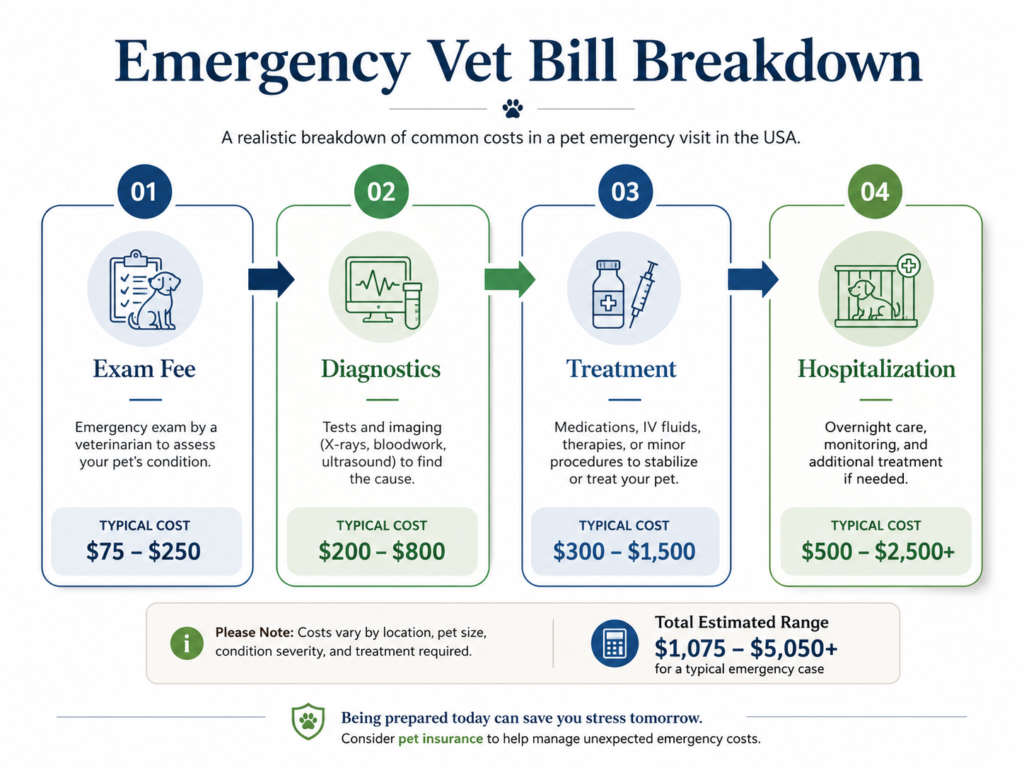
The national average cost for an emergency vet exam ranges from $107 to $246 for dogs and $113 to $260 for cats, depending on location and the type of facility. The exam fee covers the physical triage and assessment only, and hospitalization are all charged separately on top of it. At an after-hours or overnight emergency clinic, an additional surcharge of $50–$200 is added on top of the standard exam fee.
Average Emergency Vet Exam Fee
$107–246
After Hours
+$50–200
Typical Total Entry Cost
$180–500
At a Glance: 2026 Emergency Exam Fee Summary
| Visit Type | Exam Fee Only | After-Hours Surcharge | Total Exam Entry Cost |
|---|---|---|---|
| Daytime urgent care clinic | $100 – $200 | None | $100 – $200 |
| Evening emergency clinic | $130 – $250 | $50 – $150 | $180 – $400 |
| Overnight / 24-hour ER | $150 – $300 | $75 – $200 | $225 – $500 |
| Holiday / weekend ER | $150 – $300 | $100 – $200 | $250 – $500 |
| Specialist referral hospital | $200 – $350 | $75 – $200 | $275 – $550 |
These are exam fees only — bloodwork, X-rays, treatment, medications, hospitalization — is itemized separately.
Table of Contents
- What the Emergency Exam Fee Actually Covers
- What the Exam Fee Does NOT Cover — The Charges That Follow
- After-Hours Surcharge: The Hidden Cost Most Owners Don’t Expect
- Emergency Exam Cost by Region: What State You’re In Changes the Number
- Emergency Exam Cost vs Urgent Care vs Regular Vet
- What a Realistic Total Emergency Bill Looks Like
- Does Pet Insurance Cover the Emergency Exam Fee?
- What To Do If You Can’t Pay the Exam Fee Right Now
- Action Checklist
- FAQ
What the Emergency Exam Fee Actually Covers
The emergency exam fee — sometimes called the triage fee or consultation fee — is what the clinic charges for a veterinarian to physically assess your pet. It covers one specific thing: the vet’s time and expertise in examining your dog, taking vitals, and determining what needs to happen next.
What’s included in the exam fee:
- Initial triage assessment by a licensed veterinarian
- Physical examination — weight, heart rate, respiratory rate, temperature, mucous membrane color
- Visual and hands-on assessment of the presenting symptom
- Clinical determination of urgency and next steps
- Verbal explanation of findings and recommended diagnostics or treatment
Want to know the full emergency bill instead of just the exam fee? Read our complete guide to Emergency Vet Costs in the USA: What You’ll Really Pay by State.
What’s not included:
Running bloodwork, taking an X-ray, administering medication, starting IV fluids, or admitting your pet overnight — is a separate line item.
The exam/triage fee at an emergency or after-hours vet typically runs $160, with most between $114 and $200 — before any treatment. That range comes from real owner-submitted invoices. The number you’ll see on your bill is the exam fee line only.
This is why an “emergency exam fee” search produces a different answer than “how much does an emergency vet visit cost.” The visit total — once diagnostics and treatment are added — is a much larger number.
Why emergency exam fees are higher than regular vet fees:
The exam fee alone is $100–$250 at an emergency clinic versus $50–$80 at a regular vet. The premium exists because emergency hospitals maintain fully staffed facilities around the clock — veterinarians, technicians, and support staff present at 3 AM on Christmas Day — plus advanced diagnostic equipment kept on immediate standby. So the base exam fee and per-item pricing run 30–50% higher than a daytime general-practice vet.
What the Exam Fee Does NOT Cover — The Charges That Follow
This is the section that prevents the biggest surprise. Most owners who feel blindsided by emergency vet bills aren’t surprised by the exam fee — they’re surprised by what comes after it, often within the first hour.
The typical charges that follow the exam fee:
| Service | Cost Range |
|---|---|
| Basic bloodwork (CBC + chemistry panel) | $150 – $400 |
| Urinalysis | $45 – $100 |
| X-rays (per view) | $100 – $400 |
| Ultrasound | $200 – $600 |
| IV catheter placement | $40 – $75 |
| IV fluid therapy | $50 – $250 |
| Pain injection (first dose) | $30 – $100 |
| Anti-nausea injection | $25 – $75 |
| Oxygen therapy | $75 – $200 per hour |
| Biohazard/medical waste fee | $2 – $15 |
| After-hours surcharge (if not already listed) | $50 – $200 |
Based on 491 real vet invoices, fees typically add $20–$200+ to your bill depending on the visit type. Emergency visits add the after-hours surcharge ($100–$300) on top of the exam.
If your dog needs advanced imaging after the exam, MRI is one of the most expensive diagnostic tests. Here’s what dog owners typically pay across the U.S.
A realistic first-hour bill:
Your dog comes in at 11 PM limping severely after an apparent leg injury. The vet examines her (exam fee: $175), determines X-rays are needed to rule out a fracture (two views: $300), administers a pain injection while waiting for results ($65), and places an IV catheter for fluids while the images are processed ($55). You haven’t received a diagnosis yet. Your bill so far: approximately $595 — before any treatment decision has been made.
That’s not unusual. The diagnostic process at an emergency clinic frequently generates $400–$800 in charges before treatment even begins, because the vet cannot safely treat without knowing what’s wrong.
The two charges owners most often don’t expect:
Biohazard/medical waste disposal fee ($2–$15): This appears on nearly every invoice involving injections, blood draws, or surgery. It covers the legally mandated disposal of sharps and contaminated materials. Small, but confusing when you don’t expect to see it.
New client setup fee ($0–$50): Many emergency hospitals charge a one-time intake fee for first-time patients. This covers creating your dog’s electronic record. It’s separate from the exam fee.
After-Hours Surcharge: The Hidden Cost Most Owners Don’t Expect
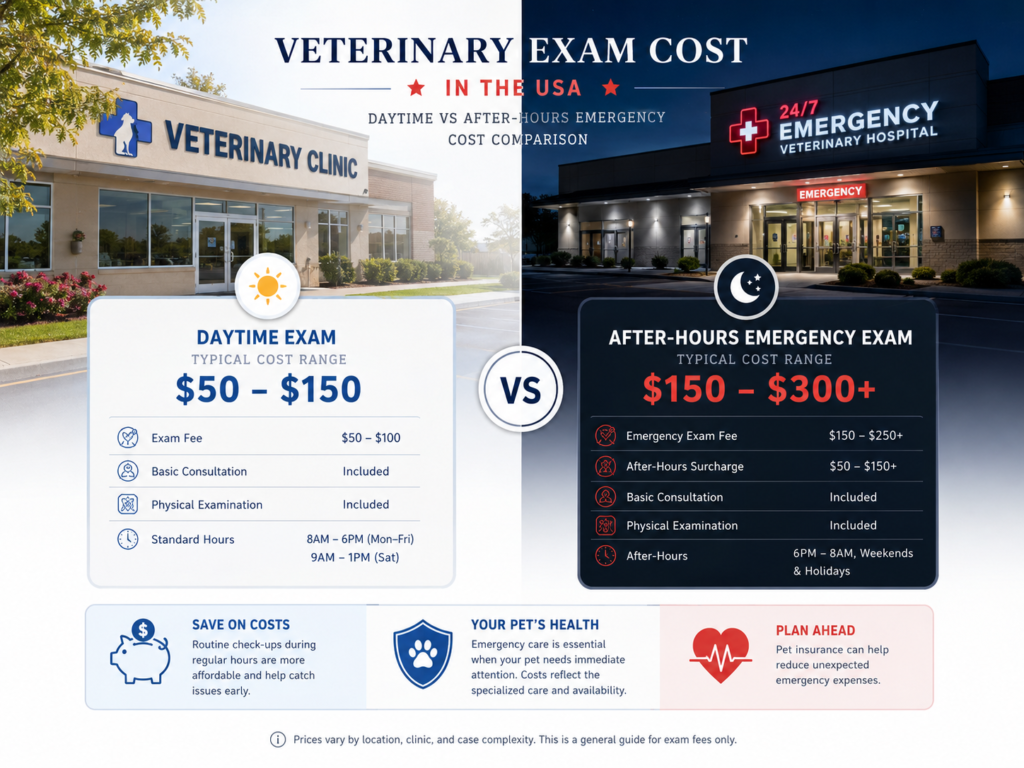
The after-hours surcharge is one of the most consistently overlooked charges in emergency veterinary care — and one of the most important to understand before you arrive.
After-hours and weekend emergency vet visits cost 50–100% more than regular daytime appointments. That premium doesn’t just apply to the exam fee — at most facilities, it applies to every procedure performed during the visit.
Wondering how much the entire overnight ER visit could cost? See our complete breakdown of Emergency Vet Visit Cost at Night in the USA.
How after-hours surcharges work:
Most emergency clinics add a flat surcharge to the bill for visits outside standard business hours. This fee covers the cost of maintaining overnight staff, on-call specialists, and around-the-clock facility operation.
After-hours surcharge ranges from $100–$300 for evening, weekend, and holiday staffing premium.
When surcharges typically apply:
| Time Window | Surcharge Applied? |
|---|---|
| Daytime weekday (urgent care clinic) | ❌ Usually not |
| Evening (after 6–8 PM) | ✅ Yes at most ERs |
| Overnight (10 PM – 6 AM) | ✅ Yes, higher rate |
| Weekend | ✅ Yes |
| Federal holidays | ✅ Yes, often highest rate |
The procedure markup:
After-hours surcharges add 50–100% to all procedures at emergency clinics. The same X-ray that costs $150 during regular hours may cost $250–$300 at midnight.
This is the part most owners don’t realize until checkout. It’s not just that the exam fee is higher — it’s that every blood draw, every injection, and every X-ray taken after hours carries the same premium. A $700 diagnostic workup during a daytime urgent care visit becomes $1,050–$1,400 at a 24-hour ER for the same set of tests.
When it’s unavoidable: Life-threatening emergencies — suspected bloat, difficulty breathing, uncontrolled bleeding, toxin ingestion with symptoms — cannot wait for morning. The surcharge is real but irrelevant when the alternative is your dog’s death.
When the surcharge is avoidable: A single episode of vomiting in an otherwise alert dog, a minor cut that is bleeding slowly and controllably, mild limping with no trauma history — these often can wait safely for an urgent care clinic opening at 7–8 AM, saving you $200–$400 in after-hours premiums.
Emergency Exam Cost by Region: What State You’re In Changes the Number
The national average exam fee of $107–$260 masks significant geographic variation. Where you live is one of the most powerful determinants of what you’ll actually pay.
Regional cost multipliers for emergency vet fees:
| Region | Cost vs. National Average | Emergency Exam Fee Range |
|---|---|---|
| Hawaii | +40% | $150 – $360 |
| California | +35% | $145 – $350 |
| New York / New Jersey | +25–30% | $134 – $338 |
| Massachusetts / Connecticut | +25% | $134 – $325 |
| Texas (major cities: Austin, Dallas, Houston) | +10–15% | $118 – $300 |
| Florida | +5–10% | $112 – $286 |
| Midwest (Illinois, Ohio, Indiana, Iowa) | -5 to 0% | $102 – $246 |
| Southeast (Georgia, Tennessee, North Carolina) | -5 to -10% | $96 – $234 |
| South (Alabama, Mississippi, Arkansas) | -18–22% | $88 – $203 |
Hawaii and California sit at the top — 40% and 35% above the national average, respectively. Massachusetts and New York run 25–30% higher. Most Midwest and Southern states are below average: Mississippi (22% below), Arkansas (20% below), Alabama (18% below). These differences compound on expensive procedures.
Urban vs. rural within the same state:
State-level data also hides the urban-rural divide. A coastal metro like San Francisco, New York, or Boston commonly runs 30 to 50 percent above the national average, while a rural clinic in the Midwest or South often sits below it.
Upstate New York prices closer to Midwestern averages. Rural Texas prices far below Austin or Houston. The state you’re in matters — but the city you’re in matters more.
Why geographic price variation exists:
Urban centers such as New York City, San Francisco, or Boston face significantly higher commercial rent, property taxes, and insurance premiums. These fixed overhead costs are embedded into service pricing. A clinic paying Manhattan lease rates cannot price identically to a clinic operating in a rural Midwestern town.
This isn’t price gouging — it’s overhead. The vet in Manhattan and the vet in rural Mississippi both went to the same schools, use the same equipment, and administer the same medications. The difference is entirely in what it costs to keep the lights on.
Emergency Exam Cost vs Urgent Care vs Regular Vet
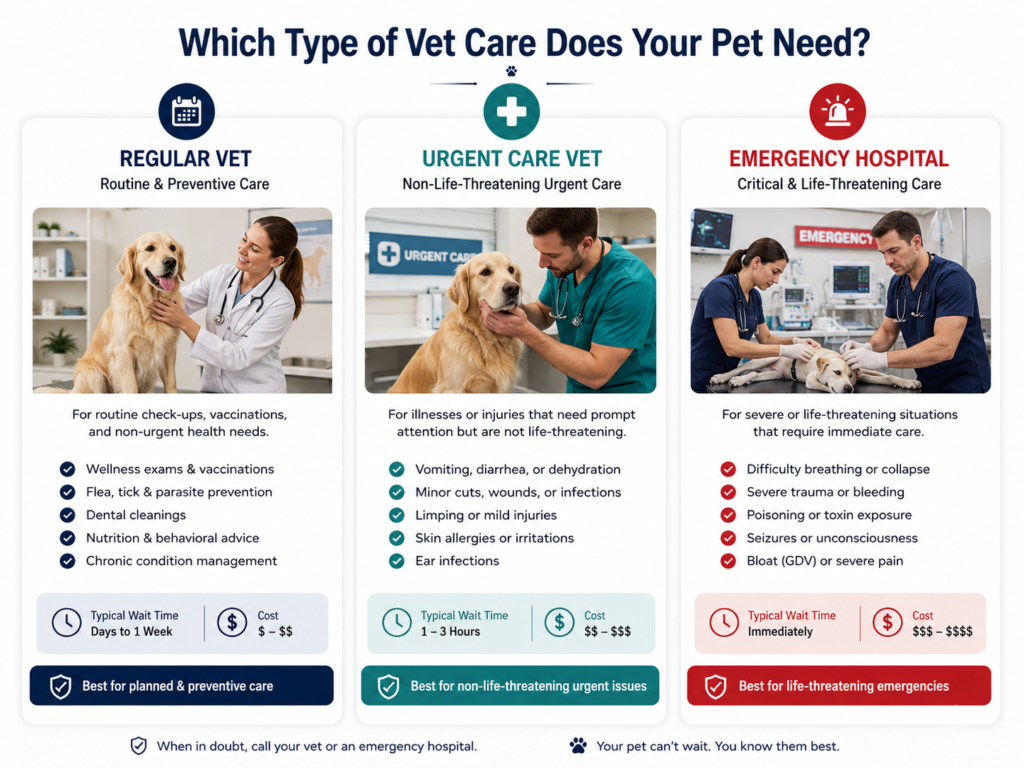
Not every situation requires a full emergency hospital. Understanding the cost difference between facility types can save you several hundred dollars when the situation isn’t life-threatening.
| Facility Type | Exam Fee | After-Hours? | Best For |
|---|---|---|---|
| Regular vet (scheduled appointment) | $50 – $80 | ❌ Daytime only | Routine care, non-urgent illness |
| Same-day sick visit (regular vet) | $80 – $130 | ❌ Daytime only | Illness that needs attention within 24 hours |
| Urgent care vet clinic | $100 – $200 | ✅ Evenings/weekends | Non-critical issues needing same-day care |
| 24-hour emergency hospital | $150 – $300 | ✅ Always | Life-threatening emergencies |
| Specialty/referral hospital | $200 – $350 | ✅ Varies | Specialist-level emergency care |
We explain these price differences in much more detail in our guide comparing Emergency Vets vs Regular Vets.
An urgent care vet visit in 2026 costs $100–$200 for the exam — more than a regular vet ($50–$80) but less than a 24-hour emergency clinic ($150–$300).
The cost difference on a full visit:
For a dog with moderate vomiting and mild lethargy who is still alert and hydrated:
- At an urgent care clinic (morning visit): Exam ($150) + bloodwork ($200) + IV fluids ($100) + anti-nausea injection ($50) = $500 total
- At a 24-hour ER (2 AM visit): Exam ($200) + after-hours surcharge ($150) + bloodwork ($280) + IV fluids ($150) + anti-nausea injection ($75) = $855 total
Same dog. Same condition. Same outcome. $355 difference — just from choosing the right facility at the right time.
When you should never delay for cost reasons:
For anything that looks like a genuine emergency — suspected bloat, difficulty breathing, seizures, known toxin ingestion, uncontrolled bleeding — do not delay for cost reasons. These conditions deteriorate fast and the cost of delay is usually much higher than the cost of the ER visit.
Symptoms that can typically wait for urgent care or morning:
- Single vomiting episode, otherwise alert and active
- Mild limping with no trauma, weight-bearing
- Minor scrape or small cut with controlled bleeding
- Soft loose stool, one episode, no blood, otherwise normal
Symptoms that require immediate emergency care:
- Distended abdomen with unproductive retching (bloat)
- Difficulty breathing or blue/gray gums
- Seizure lasting more than 2 minutes or multiple seizures
- Unconsciousness or extreme weakness/collapse
- Known ingestion of a significant toxin (xylitol, rodenticide, large amount of chocolate)
- Uncontrolled bleeding
- Eye prolapse or severe eye trauma
- Obvious broken bone or suspected spinal injury
What a Realistic Total Emergency Bill Looks Like
The exam fee is the number people search for. But what they’re actually trying to understand is what they’ll owe at checkout. Here’s the full picture by situation.
Scenario 1: Dog ate something possibly toxic (alert, no symptoms yet)
- Emergency exam + triage: $175
- After-hours surcharge: $125
- Induced vomiting / activated charcoal: $200 – $350
- Monitoring for 2 hours: $75 – $150
- Estimated total: $575 – $800
Scenario 2: Dog vomiting repeatedly, lethargic, needs diagnostics
- Emergency exam: $200
- After-hours surcharge: $150
- Bloodwork (CBC + chemistry): $280
- Abdominal X-rays (2 views): $250
- IV fluids and catheter: $175
- Anti-nausea medication: $65
- Estimated total: $1,120 – $1,400
Scenario 3: Dog hit by car, fracture suspected
- Emergency exam: $225
- X-rays (3 views): $350
- Pain management: $85
- IV catheter + fluids: $175
- Overnight hospitalization: $450
- Orthopedic specialist consultation next morning: $300
- Estimated total before surgery: $1,585 – $2,200+
Scenario 4: Dog with GDV/bloat (emergency surgery required)
- Emergency exam + triage: $225
- Bloodwork: $280
- Abdominal X-ray: $200
- Emergency GDV surgery: $3,000 – $6,000
- ICU hospitalization (2–3 nights): $1,500 – $3,500
- Estimated total: $5,000 – $10,000+
For major procedures, surgery is often the biggest expense. Here’s what common emergency dog surgeries cost in the USA.
Most serious emergencies — bloat, blockages, trauma, poisoning — land between $1,000 and $8,000 once imaging, surgery, and hospitalization are added. Most ER hospitals ask for an upfront deposit, often 50 to 100 percent of the low estimate, before treatment begins.
The deposit requirement: Most emergency clinics require a significant deposit — often 50–100% of the estimated total — before beginning treatment on expensive cases. On a $4,000 surgery estimate, that means $2,000–$4,000 due before your dog goes into the operating room. This is why having CareCredit already in place before an emergency matters.
Does Pet Insurance Cover the Emergency Exam Fee?
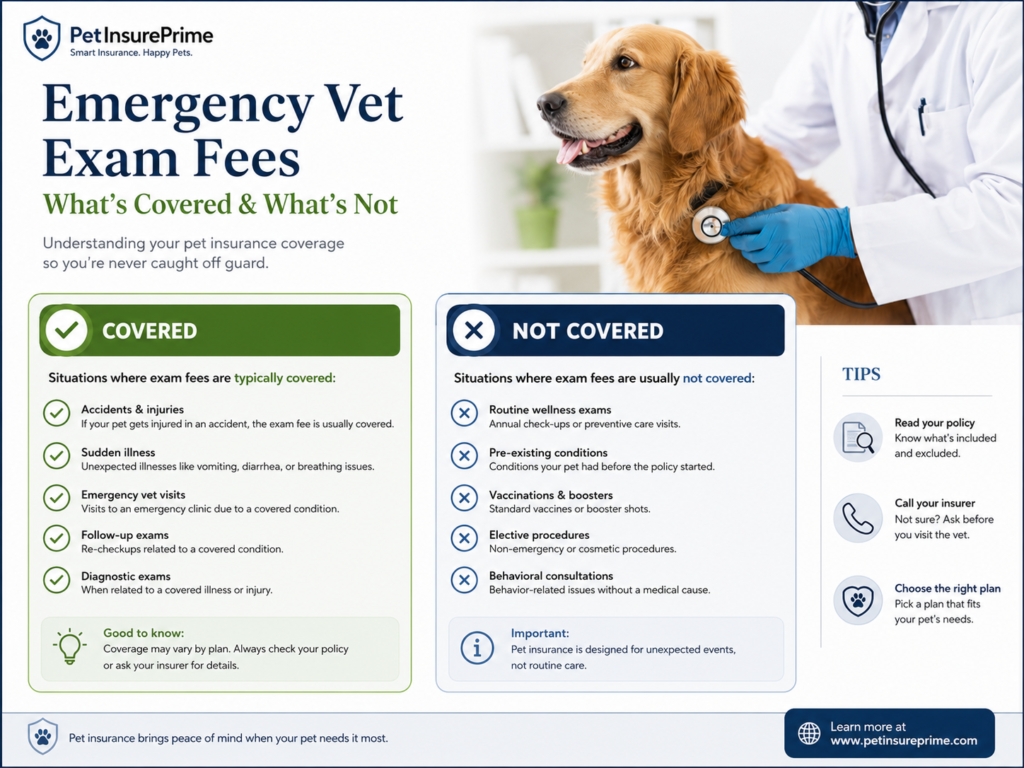
Yes — most comprehensive accident-and-illness plans cover the emergency exam fee as part of the covered visit. But the details matter.
Which insurers cover exam fees:
Exam fee coverage varies significantly by insurer: ASPCA Pet Health Insurance and Embrace include exam fees in their base plans, while most other insurers — including Healthy Paws, Trupanion, and Lemonade — exclude them or require a wellness add-on.
| Insurer | Emergency Exam Fee Covered? |
|---|---|
| ASPCA Pet Health Insurance | ✅ Yes — included in base plan |
| Embrace | ✅ Yes — included in base plan |
| Fetch | ✅ Yes — included |
| MetLife Pet | ✅ Yes — included |
| Healthy Paws | ❌ No — exam fees excluded |
| Trupanion | ❌ No — exam fees excluded |
| Lemonade | ❌ No — excluded from standard plan |
| Nationwide | ✅ Yes — included |
If you’re new to pet insurance, start with our beginner-friendly guide explaining how pet insurance works in the USA.
If your insurer doesn’t cover exam fees, the $107–$300 emergency exam charge comes out of pocket even on an otherwise fully covered visit. On a large bill this is a minor line item. On a $400 visit for a moderate emergency, it’s a meaningful percentage.
The after-hours surcharge and insurance:
Emergency surcharges are generally covered as part of a claim when the visit itself is covered. If your insurer covers the emergency visit, it covers the surcharge too. The surcharge appears as a line item on your invoice and is included in your reimbursement calculation.
Many owners are surprised that exam fees aren’t always covered. Read our complete guide to what pet insurance doesn’t cover.
The reimbursement reality:
Pet insurance reimburses you after the fact — you pay the full bill at checkout, then file a claim and receive reimbursement typically within 5–15 business days. At a 24-hour emergency clinic at 2 AM, you need to be able to pay the full bill before you leave, regardless of insurance. Insurance helps after the crisis — not during it.
Not every emergency visit is covered. Learn when pet insurance covers emergency vet visits and when it doesn’t.
The one exception: Trupanion’s direct payment program, where enrolled clinics submit the claim at checkout and you pay only your deductible amount. At enrolled facilities, Trupanion pays the clinic directly in real time.
What To Do If You Can’t Pay the Exam Fee Right Now
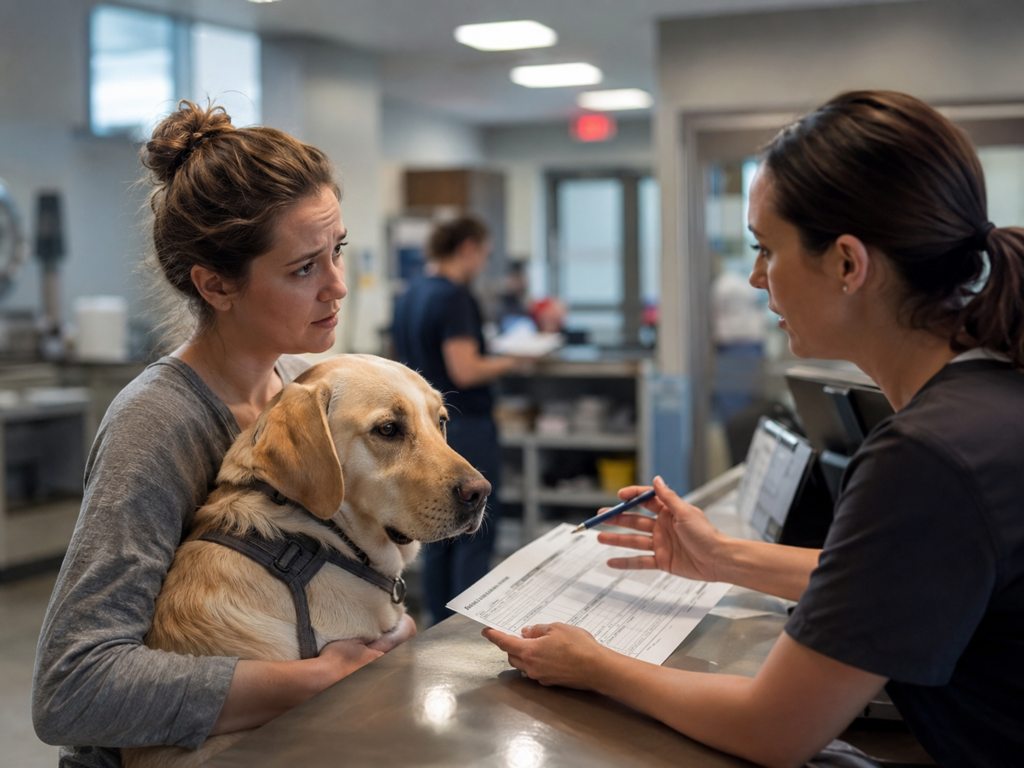
The exam fee must be paid before the vet begins the assessment at most emergency clinics. If you’re at the desk and you can’t cover it, here are your real options.
1. Tell the clinic immediately — before triage. Emergency clinics deal with financial hardship regularly. If you tell the front desk upfront that you’re in a difficult financial situation, many clinics will work with you — sometimes by authorizing essential stabilization before payment, sometimes by connecting you to their financial assistance contact.
2. Apply for CareCredit at the desk. Most emergency hospitals have a CareCredit application kiosk or tablet at the front desk. CareCredit, Scratchpay, payment plans, and charitable funds exist so you rarely have to choose between your cash and your pet’s life. Application takes minutes and approval is often instant.
Compare CareCredit, Scratchpay, and other financing options in our complete Vet Payment Plans guide.
3. Ask about Scratchpay. If CareCredit doesn’t approve you, Scratchpay is a veterinary-specific financing option that’s often easier to qualify for and has no deferred interest. Many emergency clinics accept both.
If financing isn’t enough, these organizations may be able to help with emergency veterinary bills.
4. Ask what’s essential for immediate stabilization. If the full exam and diagnostic workup isn’t financially possible, ask: “What is the minimum you can do right now to assess whether this is immediately life-threatening?” Some clinics will triage for a reduced initial fee to determine urgency before committing to a full workup.
5. Call your regular vet’s after-hours line. Many veterinary practices have after-hours triage lines staffed by a vet or technician. Describing your dog’s symptoms over the phone can sometimes help you determine whether the situation can safely wait until morning — avoiding the emergency exam fee entirely.
Still worried about paying? Here’s exactly what happens if you can’t pay a vet bill in the USA.
Action Checklist
Do this now, while your dog is healthy:
- [ ] Find the nearest 24-hour emergency animal hospital and save the address and phone number
- [ ] Find the nearest urgent care vet clinic and note their hours (often cheaper for non-critical situations)
- [ ] Apply for a CareCredit card now — before any emergency — so you have it available at checkout
- [ ] Check your pet insurance policy: does it cover exam fees, or are they excluded?
- [ ] Know your pet insurance annual deductible status so you can quickly assess your out-of-pocket exposure
- [ ] Save ASPCA Animal Poison Control in your phone: (888) 426-4435
- [ ] Know the symptoms that require immediate ER care vs. those that can wait for urgent care
- [ ] If uninsured, consider enrolling now — a single emergency visit often exceeds a full year of premiums
Still comparing insurance? Learn about waiting periods before buying a policy.
Frequently Asked Questions
How much is an emergency vet exam fee in the USA?
The national average emergency vet exam fee ranges from $107 to $246 for dogs and $113 to $260 for cats. At 24-hour emergency hospitals in major metro areas, exam fees often fall toward the higher end of that range. Evening, overnight, weekend, and holiday visits may also include an additional after-hours surcharge.
What does the emergency exam fee cover?
The emergency exam fee covers the veterinarian’s physical triage and assessment of your pet — taking vitals, performing a hands-on examination, and determining what diagnostics or treatment are needed. It does not cover diagnostics, medications, vaccines, or procedures, which are separate line items added to the bill.
Is the emergency exam fee the same as the total emergency vet bill?
No. The exam fee is only the initial assessment charge. Once diagnostics, medications, imaging, treatment, hospitalization, or surgery are added, the total emergency vet bill is usually much higher. Moderate emergencies often cost $800–$1,500, while severe cases can exceed several thousand dollars.
Why is the emergency vet exam fee more expensive than a regular vet?
Emergency hospitals operate 24/7 with veterinarians, technicians, advanced diagnostic equipment, and ICU facilities always available. Those higher operating costs are reflected in emergency exam fees, which are typically higher than routine daytime veterinary visits.
Is there an after-hours surcharge?
Yes. Many emergency hospitals charge an additional after-hours fee for evening, overnight, weekend, or holiday visits. The surcharge varies by hospital and location and is added on top of the emergency exam fee.
Does pet insurance cover the emergency exam fee?
Coverage varies by insurer and policy. Some plans include emergency exam fees, while others exclude them or require an optional add-on. Always review your policy before relying on coverage.
Do I need to pay before the vet sees my dog?
Many emergency clinics require payment or a deposit before diagnostics or treatment begin. For life-threatening emergencies, staff may stabilize your pet immediately before discussing payment, depending on the hospital’s policies.
Is the emergency exam fee different for dogs vs. cats?
Usually only slightly. Emergency exam fees for dogs and cats are generally similar, although total treatment costs can differ based on the pet’s size, condition, medications, and procedures required.
Can I avoid the emergency exam fee by calling first?
If your dog’s symptoms are non-critical, calling the clinic’s triage line or your regular vet’s after-hours line before driving in can help you determine whether an emergency visit is necessary. For genuinely critical symptoms — suspected bloat, difficulty breathing, collapse — don’t call. Go immediately.
What is a realistic total emergency vet bill?
For moderate emergencies, many owners spend roughly $800–$1,500, including the exam, diagnostics, and initial treatment. Serious emergencies requiring surgery or hospitalization can cost $3,000–$7,500 or more. Actual costs depend on your pet’s condition, location, and the treatment required.
Can I ask for a cost estimate before treatment?
Yes. Most emergency veterinary hospitals can provide a written treatment estimate after the initial exam. Review the estimate carefully and ask questions before approving diagnostics or treatment whenever possible.
What You Should Do Next
If you’re reading this from a waiting room right now — you’re about to be called in. The exam fee is real, it’s due at the desk, and everything on this page has just prepared you for what that invoice is going to look like.
Ask for an itemized estimate before any diagnostics begin. Know what each line item costs before you say yes. And if the total is beyond reach, say so at the desk before treatment starts — not after.
If you’re reading this at home while your dog is fine — use that moment. Apply for a CareCredit card tonight. Find your nearest urgent care clinic’s hours. Check whether your pet insurance policy covers exam fees. These five minutes now are worth more than any amount of scrambling at 2 AM with a sick dog and an empty wallet.
If your dog may need surgery after today’s exam, check our Emergency Dog Surgery Cost guide so you know what costs may come next.
External Authority Sources
- CareCredit Emergency Vet Cost Guide
- AVMA (American Veterinary Medical Association)
- ASPCA Animal Poison Control Center: (888) 426-4435
- Veterinary Emergency and Critical Care Society (VECCS)
- VetReceipt (real invoice data)
Disclaimer
This article is for informational and educational purposes only. Cost data reflects 2026 national averages from NAPHIA, Insurify, and MetLife Pet Insurance and will vary based on your dog’s age, breed, location, and the specific plan you choose. PetInsurePrime does not sell pet insurance and receives no compensation from any insurance provider. Always compare multiple quotes and read your policy documents carefully before enrolling.
PetInsurePrime | Independent • Research-Based | Helping US dog owners understand real vet costs and coverage options — without the sales pressure.
Pingback: Dog Blood Test Cost in the USA (2026): Real & Test Prices Guide
Pingback: Dog Endoscopy Cost in the USA (2026): Complete Guide to Real Prices, Hidden Fees & What Comes Next - PetInsurePrime
Pingback: Dog Pancreatitis Treatment Cost: What You'll Pay in the USA
Pingback: Emergency C-Section Cost for Dogs: What to Pay in 2026