
Updated: June 2026 | Reading Time: 17 Minutes
Your dog got hurt at 9 PM on a Saturday, and your regular vet’s office is closed. The nearest option open right now is a 24-hour emergency hospital, and you already have a feeling this is going to cost more than a normal visit. You’re right — but “more” can mean anywhere from a little to a lot, and knowing the real gap helps you plan for what’s coming.
Quick Answer : Emergency Vet vs Regular Vet Cost
The emergency exam and triage fee alone averages $135 for dogs, with a national range of $107–$246, according to CareCredit’s 2026 cost data — compared to $50–$80 for a routine exam at a regular vet. The full visit total typically runs $800 to $1,500 for a standard emergency evaluation with diagnostics and initial treatment, while serious cases involving surgery, imaging, or hospitalization commonly reach $2,000 to $8,000+. The wide range exists because published figures sometimes mean the exam fee alone and sometimes mean the whole visit — this article is explicit about which is which throughout.
Table of Contents
- Emergency Vet vs Regular Vet Cost: How Much More Does Emergency Care Cost?
- How Much Does an Emergency Vet Visit Cost?
- Emergency Vet vs Regular Vet Cost: The Real Difference
- Why Does Emergency Vet Care Cost More?
- What Is Included in an Emergency Vet Bill?
- Emergency Vet Cost by Common Emergency
- Emergency Vet Cost by State in the USA
- What Makes an Emergency Vet Bill More Expensive?
- Emergency Vet vs Urgent Care vs Regular Vet: Which One Should You Choose?
- When Does Your Dog Need an Emergency Vet?
- Can You Wait Until the Regular Vet Opens?
- Emergency Vet vs. Urgent Care vs. Regular Vet
- When Is an Emergency Vet Actually Necessary?
- How to Reduce an Emergency Vet Bill Without Delaying Care
- How to Pay for an Emergency Vet Bill
- Does Pet Insurance Cover Emergency Vet Visits?
- What Questions Should You Ask an Emergency Vet Before Treatment?
- FAQ
Emergency Vet vs Regular Vet Cost: How Much More Does Emergency Care Cost?
A regular veterinary visit usually costs less because it is scheduled during normal office hours and generally involves a routine examination. For dogs, a standard vet visit can range from about $56 to $129, depending on location and the services provided.
Emergency veterinary care costs more because the hospital provides urgent assessment, diagnostics and treatment, often outside normal business hours. In 2026, the average emergency vet exam for a dog is about $135, with typical costs ranging from $107 to $246.
The bigger difference comes when your dog needs tests or treatment. Bloodwork, X-rays, ultrasound, IV fluids, medication, hospitalization or surgery can add hundreds or thousands of dollars to the emergency bill. For example, current national data puts emergency X-rays at about $334, ultrasound at $483, and overnight hospitalization at a veterinary clinic at about $619.
So, the emergency exam itself may not seem dramatically higher than a regular visit, but the total emergency bill can become much larger when urgent diagnostics, treatment or hospitalization are required.
How Much Does an Emergency Vet Visit Cost?
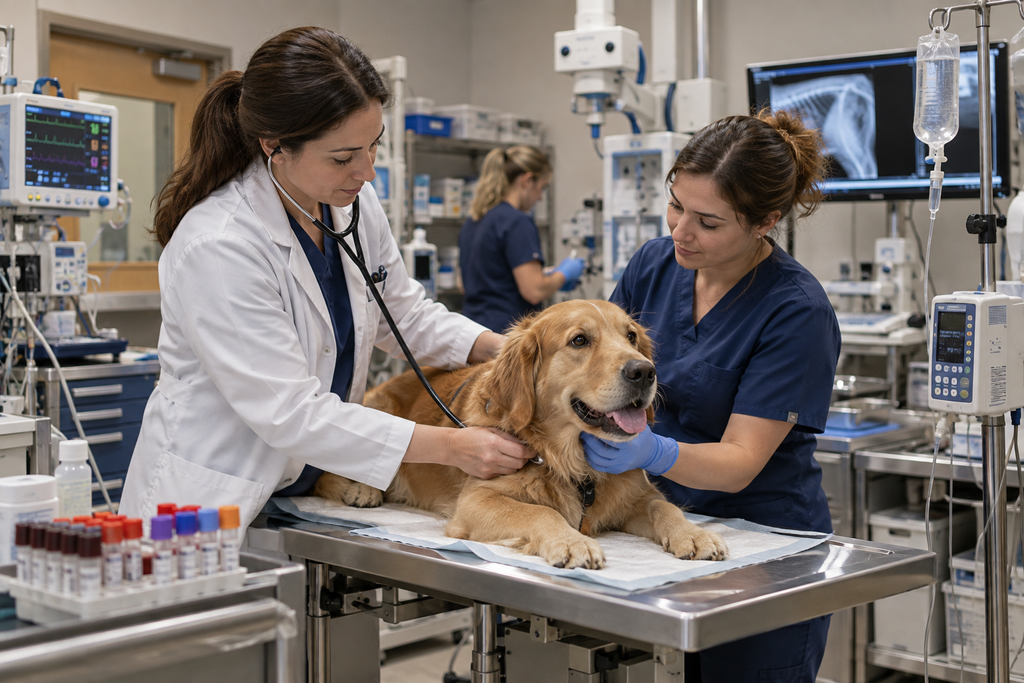
An emergency vet visit for a dog typically starts with an ER exam fee of about $107–$246, with a national average of $135, according to 2026 CareCredit data.
But the exam fee is only the starting point. Your total emergency vet bill can increase significantly once the veterinarian adds bloodwork, X-rays, ultrasound, IV fluids, medications, hospitalization, or surgery.
For example, current CareCredit data puts average costs at around $104 for a CBC blood test, $334 for emergency X-rays, $483 for an ultrasound, $130 for an IV catheter and one bag of fluids, and $619 per night for hospitalization at a veterinary clinic.
| Emergency Vet Cost | Average for Dogs |
|---|---|
| ER exam | $135 |
| Blood test (CBC) | $104 |
| Emergency X-rays | $334 |
| Ultrasound | $483 |
| IV catheter + fluids | $130 |
| Hospitalization/night | $619 |
The final price depends on your location, the severity of your dog’s condition, diagnostic tests, treatment required, and whether hospitalization or surgery is necessary. A straightforward emergency may cost a few hundred dollars, while serious cases requiring surgery or intensive care can reach several thousand dollars.
Read Related Article… Emergency Vet Costs in the USA (2026): What You’ll Really Pay by State
Emergency Vet vs Regular Vet Cost: The Real Difference
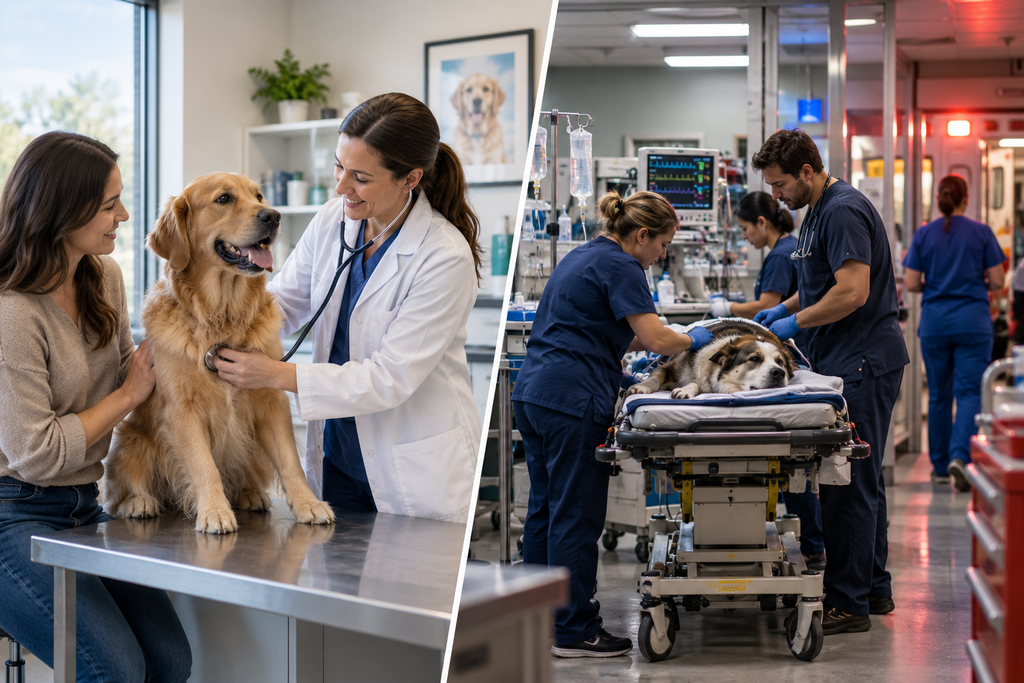
| Cost Component | Regular Vet | Emergency Vet |
|---|---|---|
| Exam fee | $50–$80 | $107–$246 (avg. $135) |
| Bloodwork | $80–$150 | $80–$200 |
| X-rays | $100–$200 | $150–$250 |
| Ultrasound | $150–$300 | $300–$500 |
| Hospitalization (per day) | Rarely offered | $200–$600 |
| After-hours/emergency surcharge | Not applicable | Often built into the exam fee |
Emergency exam fees frequently already include an after-hours surcharge rather than billing it as a separate line — ask your hospital directly if you want that breakdown.
Regular vet pricing reflects a scheduled, daytime-only practice with lower overhead. Emergency hospital pricing reflects 24/7 staffing, more advanced equipment kept ready at all times, and a patient population that’s, by definition, more urgent than a routine checkup.
Why Does Emergency Vet Care Cost More?
Emergency hospitals operate on a fundamentally different cost model than a daytime general practice, and that difference shows up directly in your bill.
24/7 staffing means veterinarians and technicians are paid to be available around the clock, not just during business hours. Nights, weekends, and holidays carry premium pay for staff, which is reflected in exam and procedure pricing. Emergency triage requires a system for assessing and prioritizing patients quickly, adding operational cost beyond a scheduled-appointment model. Specialized equipment — advanced imaging, surgical suites, ICU monitors — sits ready at all times, whether or not it’s actively being used at any given moment. Diagnostics are often run faster and more comprehensively than a routine visit, since emergency cases need answers immediately. Critical-care monitoring and hospitalization require continuous staffing in a way routine visits never do. Specialist and referral care, common at larger emergency hospitals, carries its own premium for board-certified expertise.
What Is Included in an Emergency Vet Bill?
An emergency bill typically bundles several distinct categories, and understanding each helps explain how a quote grows from a $135 exam fee to a $2,000+ total.
Exam/triage is the starting point — assessing severity and deciding next steps. Diagnostic tests, bloodwork, X-rays, and ultrasound each add separately depending on what’s needed to understand the problem. Medications cover pain control, anti-nausea drugs, or antibiotics as appropriate. IV fluids are common for anything involving dehydration, shock, or ongoing treatment access. Procedures — anything from wound repair to a minor surgical intervention — are priced individually. Hospitalization adds a daily rate if your pet needs to stay for monitoring. Surgery, when needed, is typically the largest single line item.
Emergency Vet Cost by Common Emergency
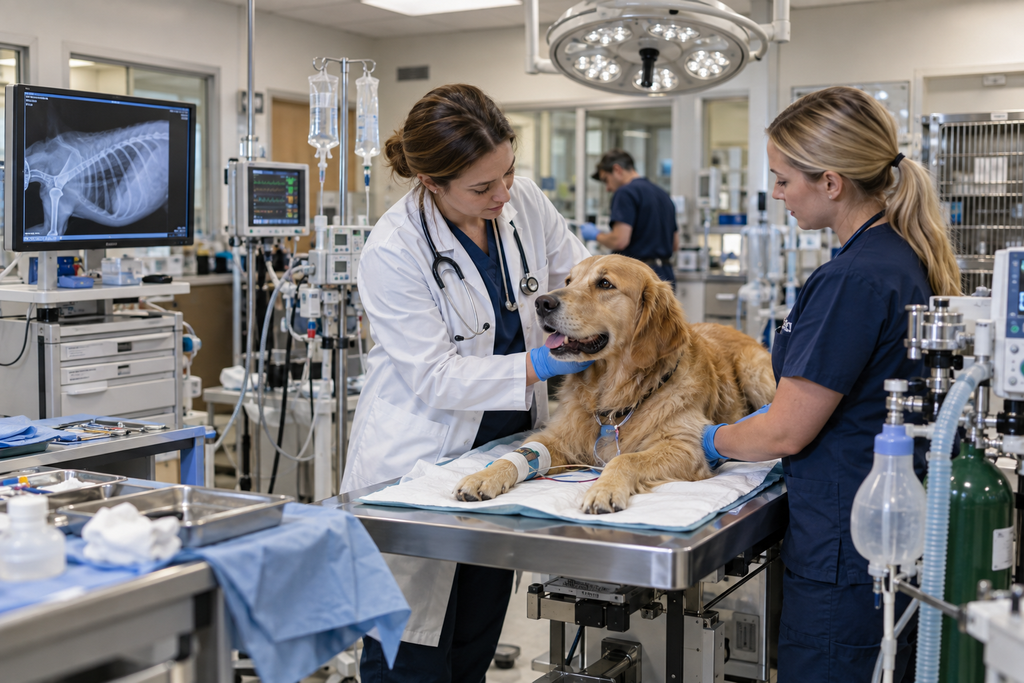
| Emergency | Typical Cost Range |
|---|---|
| Vomiting/diarrhea (uncomplicated) | $300–$800 |
| Poisoning | $250–$3,000+ (varies enormously by toxin) |
| Foreign body/obstruction | $1,500–$8,500 |
| Trauma (moderate) | $500–$3,000 |
| Bloat/GDV | $3,000–$8,000 surgery; $7,000–$12,000 total |
| Breathing problems (oxygen therapy) | $1,200–$1,900+ full episode |
| Seizure (single episode, stable) | $300–$1,000 |
| Emergency C-section | $1,500–$4,000+ |
| Emergency surgery (general) | $1,500–$5,000+ |
| Overnight hospitalization | $200–$600/day standard; $500–$2,000+/day ICU |
These ranges reflect full treatment cost, not exam fees alone — for the deep-dive breakdown on any specific condition, see the dedicated cost guide linked from that row’s topic.
Read Related Article… How Much Does Dog Stomach Surgery Cost? 2026 Cost Guide by Surgery Type
Read Related Article… Dog GDV Surgery Cost in the USA: Is $5,000–$10,000 Normal? (2026)
Emergency Vet Cost by State
Location shifts pricing meaningfully. Urban, high-cost-of-living areas — particularly California, New York, and the Pacific Northwest — commonly run 25–50% above national rates for comparable emergency care, driven by higher facility overhead, rent, and staffing costs in those markets. Rural and lower-cost-of-living regions generally track closer to, or below, national averages, though rural areas may also have fewer emergency hospital options, meaning less ability to shop around during an actual emergency.
What Makes an Emergency Vet Bill More Expensive?
Beyond the base emergency premium, several specific factors push an individual bill higher. Severity of the condition is the biggest driver — a stable, straightforward case costs far less than one requiring intervention. Diagnostics add up quickly when multiple tests are needed to understand what’s wrong. Surgery is typically the single largest line item when required. Hospitalization and ICU care add a daily rate that accumulates fast, especially for multi-day stays. Location matters, as covered above. Specialist involvement — a board-certified surgeon or criticalist — carries a premium over general emergency staff. After-hours timing specifically (late night, holidays) can add its own surcharge on top of standard emergency pricing. Multiple procedures in a single visit each add their own cost rather than being bundled into one flat fee.
Emergency Vet vs Urgent Care vs Regular Vet: Which One Should You Choose?
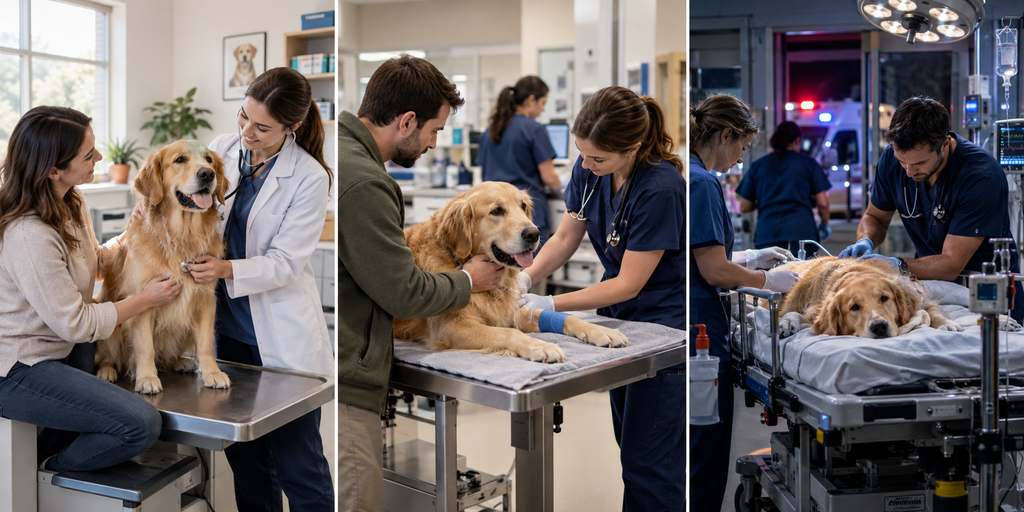
Choosing between a regular vet, urgent care clinic, and emergency vet usually depends on how serious your dog’s condition is, how quickly they need treatment, and what services are available nearby.
A regular vet is usually appropriate for routine exams, vaccinations, mild illnesses, follow-up care, and non-urgent problems. Routine dog vet visits typically cost less than emergency care.
Urgent care can be useful when your dog needs same-day veterinary attention but does not appear to have a life-threatening emergency. Availability and services vary by clinic, so calling ahead is important.
An emergency vet is appropriate when your dog may need immediate or intensive treatment. Signs that can require emergency care include difficulty breathing, unresponsiveness, seizures, severe bleeding, pale or blue gums, serious trauma, or suspected poisoning.
| Situation | Where to Go |
|---|---|
| Routine checkup or vaccination | Regular vet |
| Mild illness or non-urgent problem | Regular vet |
| Needs same-day care | Urgent care |
| Severe vomiting or worsening symptoms | Urgent care or emergency vet |
| Difficulty breathing or collapse | Emergency vet |
| Major trauma or suspected poisoning | Emergency vet |
Emergency care generally costs more because it may involve rapid triage, diagnostics, treatment, hospitalization, or surgery. A 2026 CareCredit estimate puts the average emergency exam for dogs at about $135, before additional treatment costs.
Can You Wait Until the Regular Vet Opens?
If your dog is stable, alert, breathing normally, and not showing signs of a serious emergency, you may be able to wait for your regular veterinarian or contact an urgent-care clinic. But waiting is not appropriate when symptoms could indicate a life-threatening problem.
Seek emergency veterinary care now if your dog has difficulty breathing, uncontrolled or heavy bleeding, pale or blue gums, collapse, seizures, severe weakness, loss of consciousness, a swollen or painful abdomen, repeated unproductive retching, suspected poisoning, serious trauma, or an inability to stand or walk. These signs can require immediate treatment.
For less severe problems—such as mild, stable limping, minor wounds, mild coughing, or other symptoms without weakness or breathing difficulty—calling your regular veterinarian or an urgent-care clinic for guidance may be appropriate. Availability and recommended care can vary by location and your dog’s condition.
If you’re unsure, call your veterinarian or a local emergency hospital rather than waiting based only on an online symptom list. Your regular clinic may have an after-hours recording or referral arrangement with an emergency hospital.
When Does Your Dog Need an Emergency Vet?
Your dog may need an emergency vet if the problem could be life-threatening or is getting worse quickly. Seek emergency veterinary care immediately if your dog has difficulty breathing, collapses or becomes unresponsive, has a seizure, has uncontrolled bleeding, or shows signs of severe pain or shock.
Other situations that can require immediate care include being hit by a car or suffering major trauma, suspected poisoning, a swollen or painful abdomen, repeated attempts to vomit without producing anything, severe weakness, inability to stand or walk, or a serious eye injury.
Repeated vomiting or diarrhea can also become an emergency, especially when accompanied by blood, weakness, dehydration, or reduced responsiveness. If you suspect your dog swallowed a toxin or foreign object, contact a veterinarian or emergency hospital promptly rather than waiting for symptoms to appear.
If you are unsure whether your dog’s symptoms can safely wait until your regular veterinarian opens, call a veterinary hospital and describe the symptoms before deciding to wait. Emergency hospitals can help determine how urgently your dog needs to be seen.
Emergency Vet vs. Urgent Care vs. Regular Vet
| Regular Vet | Urgent Care | Emergency Vet | |
|---|---|---|---|
| Routine problems | ✅ | ||
| Same-day, non-life-threatening issue | ✅ | ||
| Life-threatening emergency | ✅ | ||
| After-hours availability | Sometimes | Usually | |
| 24/7 | Usually no | Often | |
| Typical total visit cost | $70–$250 | $150–$700 | $800–$10,000+ |
Urgent care clinics fill the gap between a regular vet and a full emergency hospital — appropriate for problems that need same-day attention but aren’t immediately life-threatening, such as stable limping, mild vomiting without other symptoms, or a minor wound. They typically cost less than a full emergency hospital but more than a routine daytime visit, and aren’t available everywhere or at all hours.
When Is an Emergency Vet Actually Necessary?
Certain signs warrant an emergency vet immediately, regardless of cost: difficulty breathing, pale or blue gums, a swollen or hard belly with unproductive retching, uncontrolled bleeding, collapse, suspected poisoning, seizures, inability to urinate, or severe trauma. These are situations where delay genuinely risks your pet’s life, and cost should not factor into the decision to seek immediate care.
When in doubt about a potentially life-threatening situation, contact a veterinarian or emergency veterinary hospital immediately rather than trying to self-assess severity from home.
How to Reduce an Emergency Vet Bill Without Delaying Care
Cost reduction and delaying necessary treatment are two different things — this section is about the former, never the latter.
Ask for a written, itemized estimate before agreeing to treatment. Ask specifically what’s medically urgent right now versus what could reasonably wait or be discussed after stabilization. Ask about treatment alternatives at different price points, when your vet believes more than one medically reasonable option exists. Ask about payment options before assuming you have none. If your pet’s condition is stable enough to safely wait or travel, compare a nearby regular vet or urgent care clinic for follow-up care rather than having everything handled at emergency-hospital rates.
How to Pay for an Emergency Vet Bill
If the bill is more than you can cover right now, tell the vet team directly and immediately. Ask about an in-house payment plan, particularly if you’re an established client. Apply for CareCredit or Scratchpay — both can often approve within minutes and pay the hospital directly; see our full CareCredit vs. Scratchpay comparison for which fits your situation. Apply to emergency veterinary grant programs like RedRover Relief or Frankie’s Friends in parallel with financing. For the complete breakdown of every option — financing, grants, teaching hospitals, and more.
Read Related Article… Can’t Afford an Emergency Vet Bill? 15 Real Ways Dog Owners Find Help (2026)
Read Related Article… Vet Payment Plans: Can You Make Monthly Payments to a Vet? (2026)
Does Pet Insurance Cover Emergency Vet Visits?
Many accident-and-illness pet insurance plans cover emergency vet visits, but coverage depends entirely on your specific policy — and importantly, pet insurance typically works on a reimbursement model, meaning you pay the vet first and get reimbursed afterward, not the other way around.
Your deductible applies first, then your reimbursement percentage (commonly 70–90%) applies to the remaining eligible costs, up to your annual limit. Your waiting period matters too — a new accident is often covered sooner than a new illness, but this varies by insurer. Pre-existing conditions — anything diagnosed or symptomatic before your policy started — are typically excluded from coverage, even if the emergency visit itself is new.
What Questions Should You Ask an Emergency Vet Before Treatment?
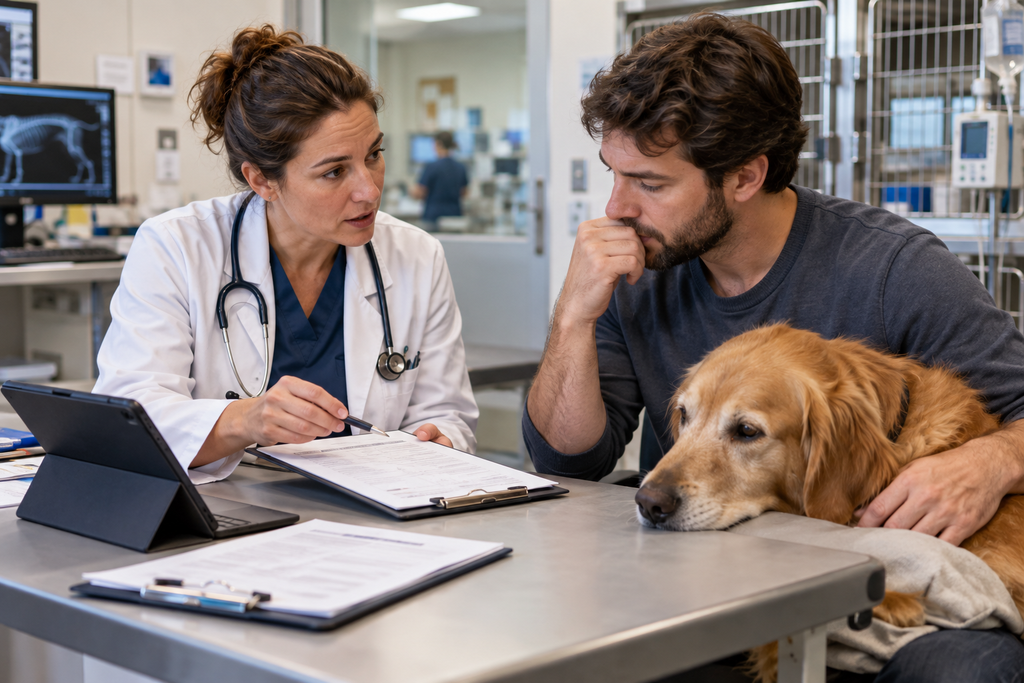
Before approving treatment, ask the emergency vet to explain what needs to happen now, what it will cost, and what other options may be available. A written, itemized estimate can help you understand the difference between the exam, diagnostics, treatment, medications, and hospitalization.
Ask these questions:
- Can I get an itemized estimate before treatment begins?
- Which treatments or tests are medically urgent right now?
- What is the estimated total cost, from the low end to the high end?
- What does each diagnostic test help determine?
- Are there medically reasonable alternatives that cost less?
- What could cause the final bill to go above this estimate?
- Can you contact me before additional costs are added?
- What happens if we wait until my regular vet opens?
- Does my dog need to stay overnight, or could they go home after stabilization?
- What follow-up treatment, medication, or rechecks will be needed?
If money is a concern, tell the veterinary team your budget early. Ask whether treatment can be staged safely, whether payment or financing options are available, and which costs are unavoidable versus potentially deferrable.
For a life-threatening emergency, don’t delay necessary stabilization simply to negotiate the estimate. Ask the cost questions while the veterinary team addresses the immediate medical problem.
Frequently Asked Question
How much does an emergency vet visit cost?
For dogs, the national average emergency vet exam costs about $135, with a typical range of $107–$246. Diagnostics, medications, treatment, hospitalization, or surgery can increase the total significantly.
Are emergency vets more expensive than regular vets?
Yes. Emergency veterinary care generally costs more because emergency hospitals provide unscheduled, urgent care and may have advanced diagnostics, treatment, and hospitalization available. A routine dog vet visit can average about $56–$129, compared with about $135 for an emergency exam.
How much does emergency vet surgery cost?
The cost depends heavily on the procedure and your dog’s condition. For example, CareCredit’s 2026 data lists average costs of about $1,218 for emergency pyometra surgery and $2,331 for bladder stone removal surgery in dogs. More complicated procedures can cost considerably more.
Can I pay an emergency vet bill in installments?
Sometimes. Ask the hospital whether it offers payment plans or accepts veterinary financing. You can also ask about financing options such as CareCredit. Payment policies vary between veterinary hospitals, so ask before treatment whenever the situation allows.
Does pet insurance cover emergency vet visits?
Many accident-and-illness pet insurance policies can cover eligible emergency veterinary expenses, but coverage depends on the policy. Pre-existing conditions may be excluded, and many plans require you to pay the veterinarian first and receive reimbursement later.
What should I do if I can’t afford emergency vet care?
Tell the veterinary team about your financial limits as early as possible. Ask for an itemized estimate, which treatment is medically urgent, whether there are medically appropriate alternatives, and what payment or financing options are available. Cost concerns can affect treatment decisions, so having the conversation early can help you understand your options.
External Authority Sources
- CareCredit — Emergency Vet Visit Cost and Veterinary Financing (national exam fee data)
- Healthy Paws Pet Insurance — claims-based cost breakdown
- MetLife Pet Insurance — cost data
- AVMA (American Veterinary Medical Association)
Disclaimer: This article is for informational and educational purposes only. Cost data reflects 2026 national averages from NAPHIA, Insurify, MetLife Pet Insurance, VetCostCalc, Pawlicy Advisor, and Spot Pet Insurance, and will vary based on your dog’s age, breed, location, and the specific hospital you visit. PetInsurePrime does not sell pet insurance and receives no compensation from any insurance provider. Always call ahead to confirm pricing and consult a licensed veterinarian for advice specific to your pet’s symptoms.
PetInsurePrime | Independent • Research-Based | Helping US dog owners understand real vet costs and coverage options — without the sales pressure.