
Updated: September 2026| Reading Time: 17minutes
Your dog has been in labor for hours with no progress, or your vet just used the word “dystocia” and mentioned surgery. Whatever brought you here, you need two things right now: to get your dog and her puppies safe, and to understand what this is going to cost you.
Quick Answer : Emergency C-Section Cost for Dogs
An emergency C-section for a dog can cost roughly $1,500 to $4,000 or more in the U.S., while planned C-sections are often less expensive. Your final bill depends on the emergency hospital, location, timing, diagnostic testing, anesthesia, surgical complexity, and whether the mother or puppies need additional care. Published veterinary sources show a wide range, so treat these figures as planning estimates—not a guaranteed price.
Table of Contents
- How Much Does an Emergency C-Section Cost for a Dog?
- Emergency vs. Planned C-Section Cost
- When Is a Planned C-Section Cheaper Than an Emergency C-Section?
- How Much Does a Dog C-Section Cost If It’s an Emergency at Night?
- What Does the Cost of a Dog C-Section Include?
- What Can Make an Emergency C-Section More Expensive?
- Example Dog C-Section Veterinary Bills
- Emergency C-Section Cost by Location and Veterinary Setting
- Does Pet Insurance Cover Emergency C-Sections?
- Can You Get Pet Insurance After Your Dog Is Already Pregnant?
- What If You Can’t Afford a $2,000–$4,000 Emergency C-Section?
- What Should You Ask the Vet If You Can’t Pay the Full Amount?
- When Does a Dog Need an Emergency C-Section?
- What Happens If a Puppy Is Stuck During Labor?
- Questions to Ask Your Veterinarian
- FAQ
How Much Does an Emergency C-Section Cost for a Dog?
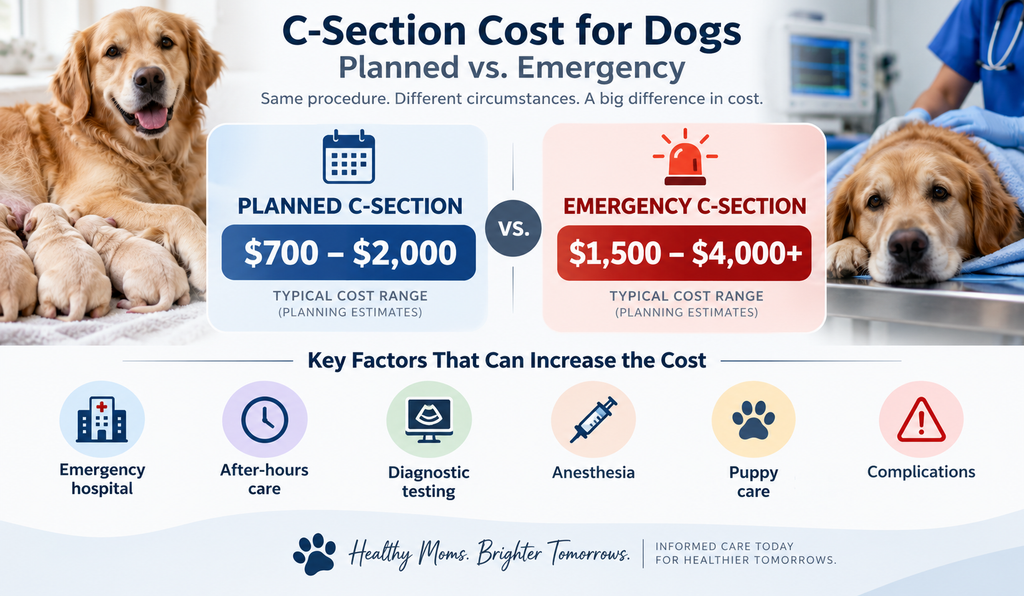
An emergency C-section for a dog typically costs $1,500 to $4,000 in the US, with published sources placing the range as broadly as $500–$4,000+ depending on how each source defines “emergency.”
The spread exists for a real reason: emergency C-section pricing depends heavily on which hospital treats your dog, what time it happens, and whether complications are involved. Multiple veterinary cost sources converge on a similar picture — GoodRx cites $1,500–$4,000 for emergency procedures versus $700–$2,000 for planned ones, while Vety cites a comparable $2,000–$4,000 emergency range against $700–$1,800 planned. A JustAnswer veterinary response put a typical small-dog emergency case “around $3,000.” One documented real claim, shared by Fetch Pet Insurance, showed a Yorkshire Terrier’s emergency C-section totaling $3,810.
Emergency vs. Planned C-Section Cost
| Factor | Planned C-Section | Emergency C-Section |
|---|---|---|
| Typical cost | $700–$2,000 | $1,500–$4,000+ |
| Timing | Scheduled in advance at a regular vet clinic | Unplanned, often after-hours or at an emergency hospital |
| Facility type | General practice veterinarian | Emergency/specialty hospital, often higher overhead |
| Risk level | Lower — controlled conditions | Higher — mother may already be in distress |
| After-hours surcharge | Not applicable | Often $300–$500 extra for night/weekend/holiday timing |
| Additional care needs | Usually minimal | More likely to include puppy resuscitation, extended monitoring |
The cost gap isn’t arbitrary — a planned C-section happens on the clinic’s schedule, with the mother stable and the team prepared in advance. An emergency procedure happens because something has already gone wrong, which means higher risk, more urgent staffing, and often after-hours facility rates layered on top of the surgery itself.
When Is a Planned C-Section Cheaper Than an Emergency C-Section?
A planned C-section is usually cheaper when your veterinarian knows in advance that your dog is likely to need surgical delivery. Scheduling the procedure during regular clinic hours allows the veterinary team to prepare the mother, puppies, staff, anesthesia, and operating room ahead of time. It also reduces the chance of paying emergency or after-hours fees.
CareCredit’s 2026 data puts the average planned dog C-section at about $1,229, with a reported range of $974 to $2,226. Emergency procedures can cost more because they may require an emergency hospital, additional diagnostics, urgent anesthesia, overnight monitoring, or treatment for complications.
A planned C-section may be worth discussing with your veterinarian if your dog is a breed with a higher risk of difficult labor, has previously experienced dystocia, or your veterinarian expects the puppies may be difficult to deliver naturally.
However, a planned procedure should only be chosen based on veterinary guidance. If your dog is already showing signs of difficult labor, waiting to schedule a cheaper procedure can put both the mother and puppies at risk.
How Much Does a Dog C-Section Cost If It’s an Emergency at Night?
If your dog needs a C-section at night, expect the total bill to be higher than a planned daytime procedure. An emergency C-section can commonly run around $1,500 to $4,000 or more, depending on the hospital, location, your dog’s condition, and whether the puppies need additional care. Emergency veterinary hospitals generally charge more outside normal business hours because they maintain overnight staffing and emergency facilities.
The C-section itself is only part of what you may pay. A nighttime emergency bill can include an emergency examination, bloodwork, X-rays or ultrasound, anesthesia, surgery, medications, monitoring, and hospitalization. If one or more puppies need resuscitation, warming, oxygen, or additional monitoring, those services can increase the final cost further.
For example, a dog arriving at an emergency hospital late at night with difficult labor might receive an emergency exam and diagnostic testing before surgery. A straightforward case may stay closer to the lower end of the range, while complications involving the mother or puppies can push the bill substantially higher.
Read Related Article… Emergency Vet Visit Cost at Night in the USA (2026): Real ER Prices & What Can Wait Until Morning
Ask the veterinary team for an itemized estimate before surgery if your dog’s condition allows it. Ask which charges are included in the surgical estimate and whether emergency, anesthesia, diagnostic, hospitalization, or newborn-care fees are separate.
If you’re worried about the cost, tell the veterinary team immediately. Ask about available financing or payment options, but don’t delay emergency veterinary care while trying to find a cheaper option. Difficult labor can become dangerous for the mother and puppies quickly.
What Does the Cost of a Dog C-Section Include?
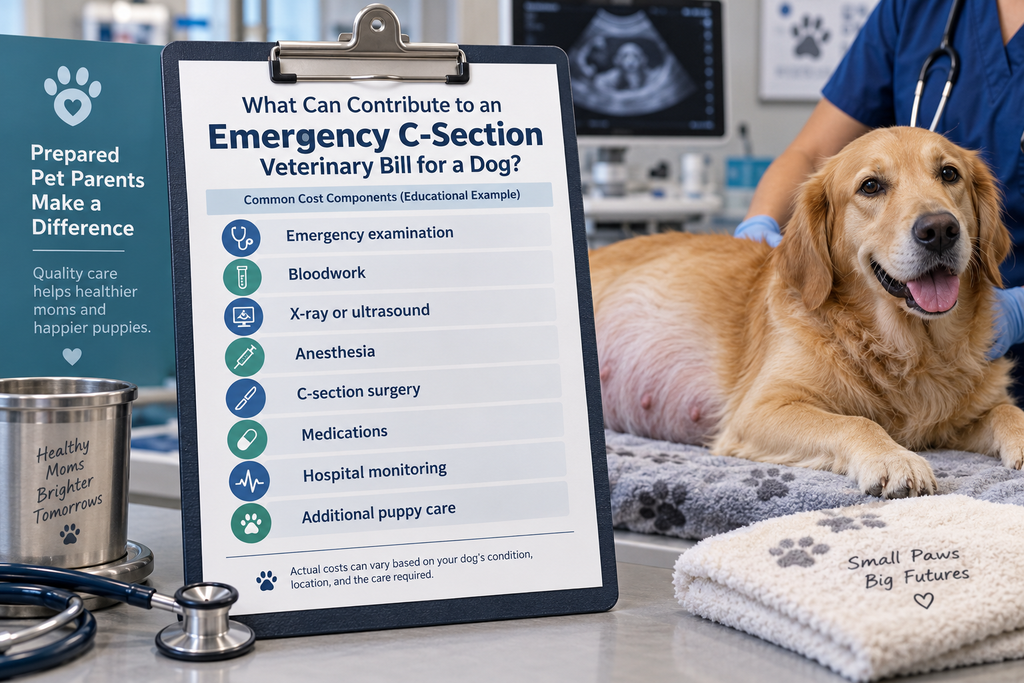
| Component | Typically Included? | Notes |
|---|---|---|
| Emergency exam | Usually yes | Initial assessment of the mother’s condition |
| Bloodwork | Often yes | Checks the mother’s overall health before anesthesia |
| Imaging (X-ray/ultrasound) | Often yes | Confirms puppy count, position, and distress |
| Anesthesia | Yes | Required for the surgical delivery itself |
| The surgery itself | Yes | The C-section procedure |
| Medications | Usually yes | Pain relief, antibiotics if needed |
| Hospitalization/monitoring | Sometimes | Depends on how the mother recovers |
| Additional care for the mother | If needed | E.g., treatment for complications during delivery |
| Additional care for puppies | If needed | Resuscitation, warming, supplemental feeding support |
A quoted “C-section price” doesn’t always mean the same thing at every clinic — some hospitals offer an all-inclusive package covering exam through recovery, while others itemize each piece separately.
Read Related Article… Emergency Vet Exam Cost in the USA (2026)
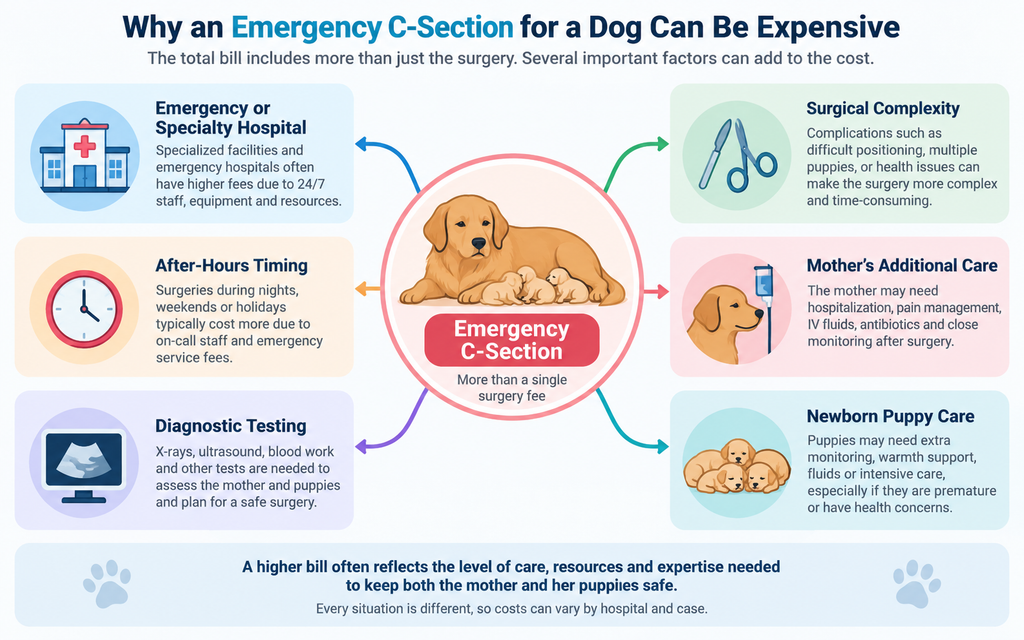
What Can Make an Emergency C-Section More Expensive?
Several specific factors push a bill toward the higher end of the range.
Facility type matters significantly — emergency and specialty hospitals generally charge more than a general practice vet, reflecting round-the-clock staffing and higher overhead. Time of day adds a direct surcharge: procedures at night, on weekends, or during holidays commonly add $300–$500 over standard daytime rates. Breed plays a role too — brachycephalic breeds (French Bulldogs, English Bulldogs, Boston Terriers) and breeds with narrow pelvises or large litters are more likely to need surgical delivery in the first place, and their anatomy can also make the procedure itself more involved. Complications — difficulty controlling bleeding, a distressed or large litter, or a mother who needs extended monitoring afterward — add cost on top of the base surgical fee. Puppy care can become its own line item if newborns need resuscitation, warming support, or supplemental feeding assistance immediately after delivery.
Example Dog C-Section Veterinary Bills
These are illustrative examples based on published cost ranges, not guaranteed prices or verified individual customer bills.
Lower-complexity emergency case: A medium-breed dog goes into labor with one puppy stuck in the birth canal. She’s brought to an emergency hospital during evening hours, gets a straightforward surgical delivery, and recovers without complications. Illustrative total: roughly $1,800–$2,400.
Typical emergency hospital case: A brachycephalic breed with a history of needing C-sections shows signs of prolonged, unproductive labor. The hospital performs bloodwork, imaging, and an emergency C-section, plus overnight monitoring for the mother and initial care for a litter of five puppies. Illustrative total: roughly $2,800–$3,800, broadly consistent with the $3,810 Fetch claims example.
Complicated case: A dog in significant distress requires emergency imaging, a difficult surgical delivery with bleeding control, extended hospitalization for the mother, and resuscitation support for multiple puppies. Illustrative total: roughly $4,000–$5,500+.
Emergency C-Section Cost by Location and Veterinary Setting
Read Related Article… Emergency Vet Costs in the USA (2026): What You’ll Really Pay by State
| Setting | Expected Cost Pattern | Why |
|---|---|---|
| Regular daytime vet | Lower | Planned staffing |
| Emergency vet | Higher | 24/7 staffing |
| Specialty/referral hospital | Higher | Advanced equipment/specialists |
| Weekend/holiday | Higher | After-hours staffing |
| Rural area | Variable | Fewer emergency facilities |
| Major metro | Often higher | Higher operating costs |
Does Pet Insurance Cover Emergency C-Sections?
Coverage here is genuinely more complicated than most other emergencies, and it depends heavily on your specific policy — do not assume either way without checking directly.
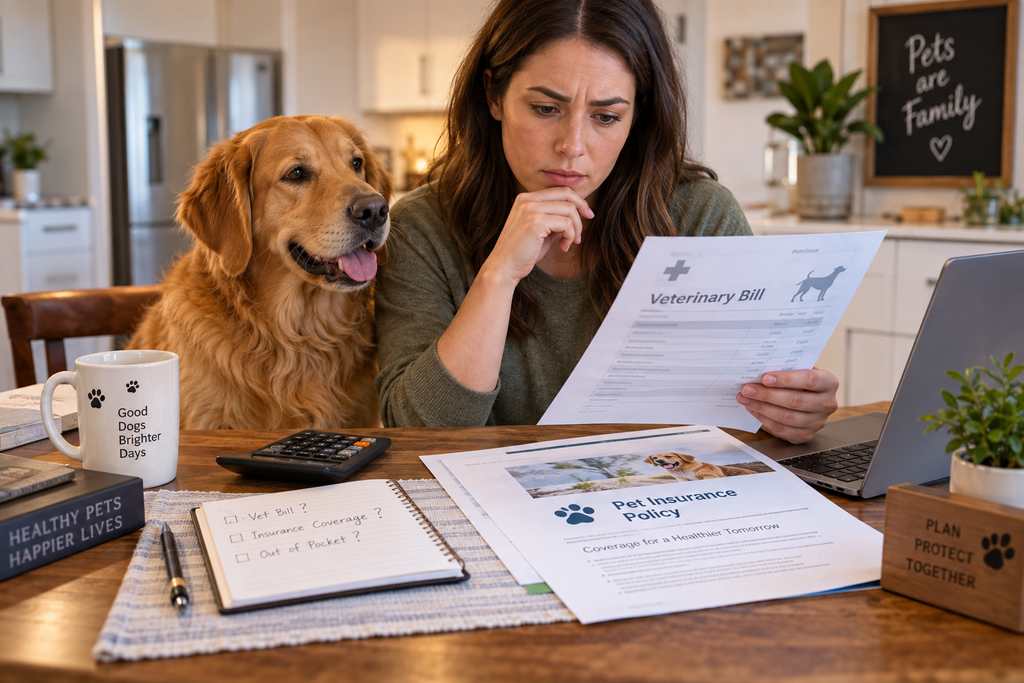
Most standard pet insurance policies exclude costs related to breeding, including planned C-sections, since pregnancy is generally treated as an elective/breeding-related condition rather than an accident or illness. However, some insurers cover an emergency C-section specifically when it’s medically necessary to save the mother’s life, sometimes through a standard accident-and-illness policy and sometimes only through a separate add-on. Fetch Pet Insurance, for example, has publicly described covering emergency C-section complications when the pregnancy occurs after the policy’s waiting period — in one documented case, reimbursing close to $2,448 of a $3,810 bill. Waiting periods matter enormously here: if your dog was already pregnant before you enrolled, or before the waiting period ended, the pregnancy is very likely to be treated as pre-existing and excluded.
Read Related Article… Does Pet Insurance Cover Surgery? What Dog Owners Need to Know
Can You Get Pet Insurance After Your Dog Is Already Pregnant?
You may be able to buy pet insurance after your dog is already pregnant, but a new policy generally won’t cover the existing pregnancy, delivery, or a C-section related to that pregnancy. Pet insurance is designed primarily for unexpected accidents and illnesses that begin after coverage starts and any required waiting period ends. Pregnancy, breeding, and whelping are commonly excluded under standard accident-and-illness policies.
There is another important issue: if your dog is already showing signs of a pregnancy-related problem before the policy becomes effective, that condition may be treated as pre-existing and excluded from coverage. Waiting periods can also prevent newly developed conditions from being covered immediately.
Read Related Article… Does Pet Insurance Cover Pre-Existing Conditions? The Truth Most Pet Owners Learn Too Late (2026)
So if your dog is already pregnant and you’re considering insurance because you’re worried about a possible C-section, don’t assume buying a policy now will pay for that delivery. Check the policy’s pregnancy, breeding, whelping, pre-existing-condition, and waiting-period exclusions before enrolling.
Read Related Article… Pet Insurance Waiting Period: How Long Before Coverage Starts? (2026 Guide)
What If You Can’t Afford a $2,000–$4,000 Emergency C-Section?
If the estimate is more than you can cover right now, say so directly to the vet team immediately — this is a true emergency for both the mother and puppies, so speed in this conversation matters.
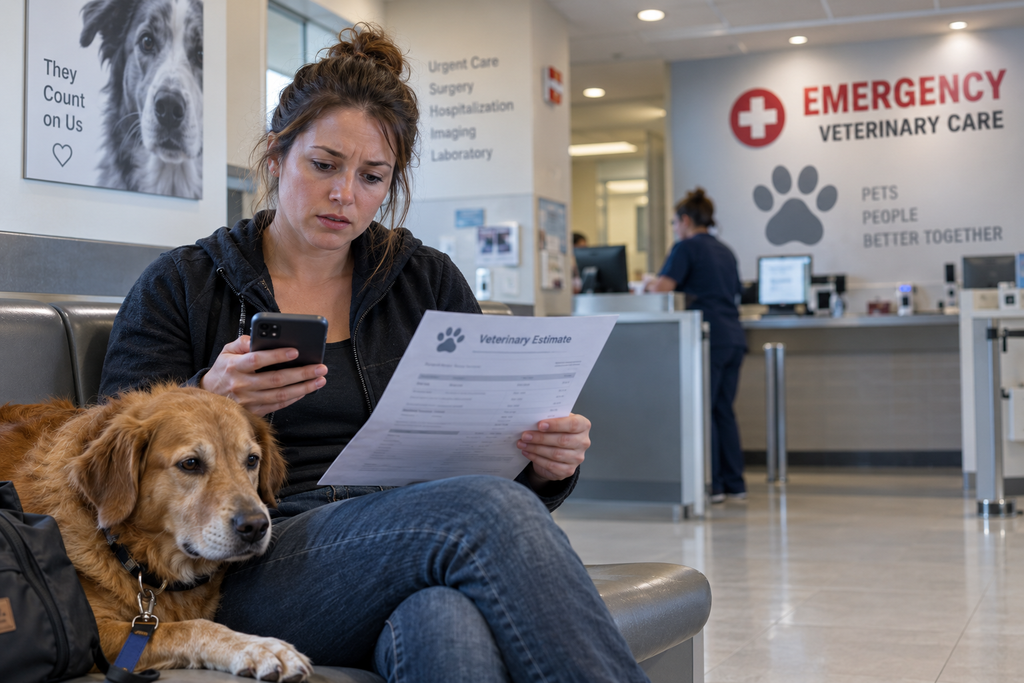
Ask for a written, itemized estimate so you understand exactly what’s being recommended. Ask specifically what’s medically urgent right now versus optional, so you understand the minimum needed to keep the mother and puppies safe. Ask about CareCredit or Scratchpay, both of which can often approve within minutes and pay the hospital directly. Ask whether the hospital accepts a partial deposit to begin surgery while you arrange the rest. If your dog is stable enough to safely wait or travel (a decision only your vet can make), ask whether a lower-cost veterinary option nearby is appropriate. For the complete breakdown of financing options, grant programs, and questions to ask before agreeing to treatment, see our full guide on what to do if you can’t afford emergency vet surgery.
Read Related Article… Can’t Afford an Emergency Vet Bill? 15 Real Ways Dog Owners Find Help (2026)
Read Related Article… Best Vet Payment Plans in the USA (2026): CareCredit vs Scratchpay
What Should You Ask the Vet If You Can’t Pay the Full Amount?
If you cannot afford the full emergency C-section estimate, tell the veterinary team before treatment begins rather than waiting until checkout. Ask for a written, itemized estimate and have the vet explain which costs are immediately necessary and which may depend on how your dog or puppies respond to treatment. Clear estimates can help you understand your expected out-of-pocket cost before making a decision.
Ask these questions:
- “What is the minimum treatment my dog needs right now?”
- “Can you give me an itemized estimate?”
- “Do I need to pay a deposit before surgery?”
- “Do you offer payment plans or financing?”
- “Do you accept CareCredit or other financing options?”
- “Could there be additional costs for puppy care or overnight hospitalization?”
- “If my dog is medically stable, is there a lower-cost option you consider safe?”
Some veterinary hospitals offer financing options for emergency care, but approval and terms vary. CareCredit, for example, can be used for eligible veterinary services when approved.
Do not delay emergency treatment while searching for a cheaper option. Ask your veterinarian what is medically safe for your dog and her puppies first.
When Does a Dog Need an Emergency C-Section?
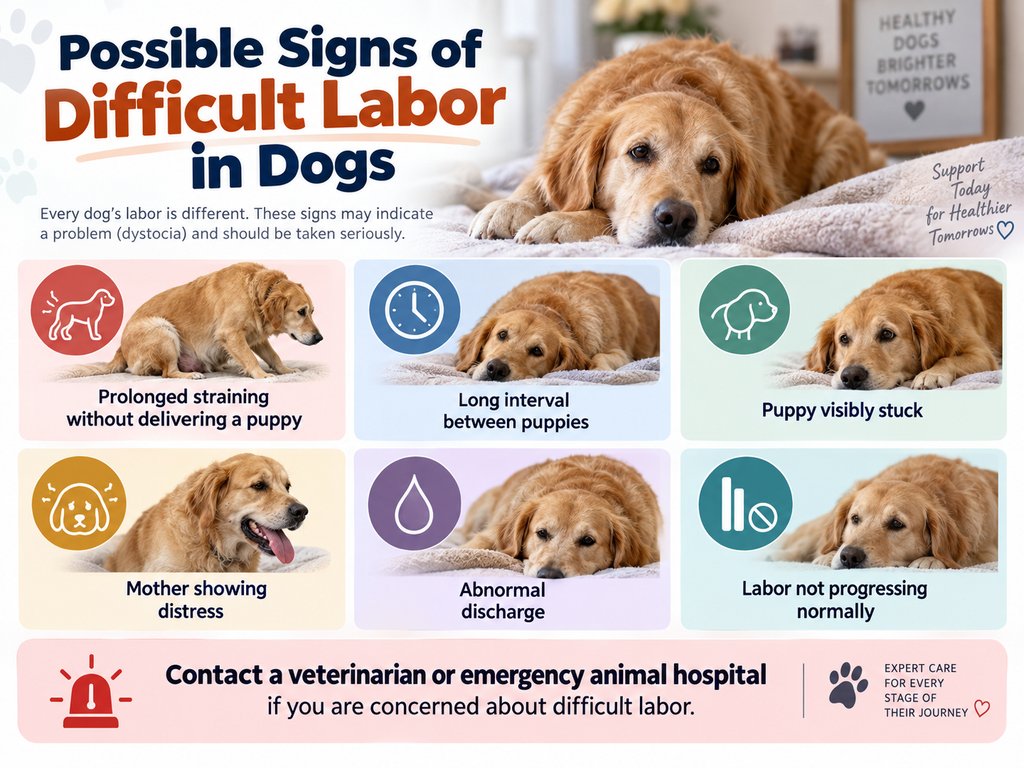
A C-section becomes an emergency when natural labor isn’t progressing safely — this is called dystocia, and it occurs in roughly 5% of dog births overall, though certain breeds face it far more often. Brachycephalic breeds (Bulldogs, Pugs, Chihuahuas) and some terriers are more prone to dystocia, often due to narrow birth canals or puppies with disproportionately large heads. Signs that may indicate a dog needs emergency veterinary attention during labor include prolonged straining without producing a puppy, more than 2–4 hours between puppies, visible distress, or a puppy visibly stuck in the birth canal. If you notice any of these signs, contact your vet or an emergency animal hospital immediately rather than waiting to see if the situation resolves on its own.
What Happens If a Puppy Is Stuck During Labor?
If a puppy is stuck in your dog’s birth canal and she cannot deliver it, treat the situation as a veterinary emergency. A stuck puppy can be caused by an abnormal position, a puppy that is too large to pass through the birth canal, or weak or exhausted uterine contractions. This condition is called dystocia, or difficult birth.
Signs that a puppy may be stuck include strong contractions for 20–30 minutes without a puppy being delivered, a puppy or fluid-filled sac visibly stuck in the birth canal, prolonged straining, obvious pain or distress, or abnormal vaginal discharge. Veterinary guidance recommends contacting a veterinarian or emergency animal hospital immediately when these signs occur.
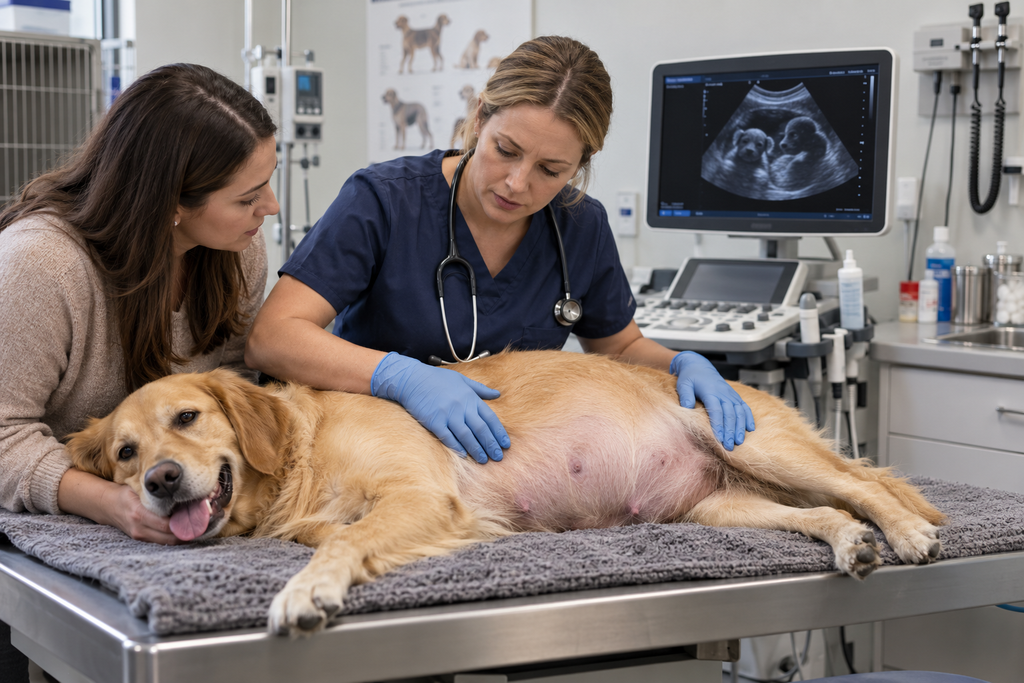
At the veterinary hospital, the team may examine the birth canal and use X-rays or ultrasound to determine the puppies’ position, number, and condition. If the puppy can be safely delivered vaginally, a veterinarian may attempt appropriate medical or obstetric treatment. If there is an obstruction, fetal distress, or labor does not respond to treatment, an emergency C-section may be necessary.
Do not try to forcefully pull a stuck puppy yourself. Aggressive manipulation can injure the puppy or mother. If your dog is actively straining and a puppy is stuck, call an emergency veterinarian while preparing to transport her.
The longer a puppy remains stuck, the greater the concern for fetal distress and complications for the mother. If you can see a puppy that is not progressing, don’t wait for the situation to resolve on its own.
Questions to Ask Your Veterinarian
- Is this quote all-inclusive, or itemized separately for exam, surgery, and aftercare?
- What’s driving the estimate toward the higher end of the range in my dog’s case?
- Do you expect the puppies to need additional care after delivery?
- Do you accept CareCredit or Scratchpay?
- If I’m insured, is there anything specific I should confirm with my provider right now?
- What symptoms should I watch for in the mother during recovery?
Frequently Asked Question
How much does an emergency C-section cost for a dog?
An emergency C-section typically costs about $1,500 to $4,000+ in the U.S. The final bill can be higher if your dog needs emergency diagnostics, overnight hospitalization, or additional care for the puppies.
Can a dog C-section cost more than $4,000?
Yes. Complicated deliveries can exceed $4,000, especially when the mother needs extended hospitalization, bleeding control, intensive monitoring, or the puppies require resuscitation or additional care.
Does pet insurance cover an emergency C-section?
It depends on the policy. Some plans may cover a medically necessary emergency C-section, while breeding, pregnancy, and planned C-sections are commonly excluded. A pregnancy that existed before coverage or during a waiting period may also be excluded. Check your policy before assuming the procedure is covered.
Can I get pet insurance if my dog is already pregnant?
You may be able to purchase a policy, but a new policy generally will not cover the existing pregnancy, delivery, or a C-section related to that pregnancy. Pre-existing-condition and waiting-period rules can also affect coverage.
What if I can’t afford my dog’s emergency C-section?
Tell the veterinary team immediately and ask for an itemized estimate. Ask whether the hospital offers financing or accepts services such as CareCredit or Scratchpay. If your veterinarian says it is medically safe, you can also ask whether another nearby veterinary facility is an appropriate lower-cost option. Do not delay emergency care while searching for cheaper treatment.
How do I know if my dog needs an emergency C-section?
Warning signs can include prolonged straining without producing a puppy, a puppy visibly stuck in the birth canal, significant distress, or unusually long gaps between puppies. Contact a veterinarian or emergency animal hospital immediately if you are concerned about difficult labor.
Which dog breeds are more likely to need a C-section?
Brachycephalic breeds such as French Bulldogs, English Bulldogs, and Boston Terriers have a higher risk of difficult births. Other factors, including puppy size, litter size, pelvic anatomy, and a previous history of dystocia, can also increase the likelihood of needing a C-section.
External Authority Sources
- Merck Veterinary Manual — Dystocia in Small Animals
- GoodRx — Dog C-Section Cost data
- CareCredit — Dog C-Section Cost Guide (Synchrony procedural cost study)
- Fetch Pet Insurance — documented claims example
- AVMA (American Veterinary Medical Association)
Disclaimer: This article is for informational and educational purposes only and is not a substitute for veterinary care. If your dog shows signs of difficult labor, contact your veterinarian or an emergency animal hospital immediately. Cost data reflects 2026 figures from multiple veterinary industry sources and will vary based on location, facility, breed, and individual case. PetInsurePrime does not sell pet insurance and receives no compensation from any insurance provider.
PetInsurePrime | Independent • Research-Based | Helping US dog owners understand real vet costs and coverage options — without the sales pressure.