
Updated: September 2026| Reading Time: 16minutes
Your dog won’t stop vomiting, hasn’t eaten in a day, and is hunched over in obvious pain. The vet says it looks like pancreatitis and wants to run tests. Before you can even think about what that word means for your dog’s health, you need to know what it means for your wallet.
Quick Answer : Dog Pancreatitis Treatment Cost
Dog pancreatitis treatment costs $200 to $1,000 for mild cases treated on an outpatient basis, and $1,500 to $6,000 for moderate-to-severe cases requiring hospitalization. Severe cases involving ICU-level care, complications, or extended hospital stays can exceed $6,000. The single biggest factor is whether your dog needs to be admitted — outpatient treatment and hospitalized treatment are essentially two different cost categories.
Quick Cost Summary
| Dog Pancreatitis Treatment Level | Typical Cost in the USA | What the Cost May Include |
|---|---|---|
| Mild / Outpatient | $200–$1,000+ | Exam, bloodwork, pancreatic testing, medications, fluids when appropriate, and dietary management |
| Moderate / Hospitalized | $1,000–$3,500+ | Diagnostic testing, IV fluids, pain and anti-nausea medications, monitoring, and 1–4 days of hospitalization |
| Severe / Complicated | $3,000–$6,000+ | Extended hospitalization, intensive monitoring, additional diagnostics, IV treatment, nutritional support, and treatment of complications |
| Critical / ICU-Level Care | $6,000+ | Intensive care, prolonged hospitalization, aggressive supportive treatment, and management of serious complications |
Published sources vary meaningfully on these ranges — see the note below on why.
| Cost Factor | Why It Matters |
|---|---|
| Hospitalization | One of the biggest cost drivers |
| Length of Stay | More hospital days = higher total bill |
| Emergency Care | After-hours/emergency facilities may cost more |
| Diagnostics | Bloodwork, pancreatic testing and imaging add to the bill |
| Complications | Organ dysfunction, shock or other problems can require intensive treatment |
| Location | Veterinary pricing varies by region and facility |
| Specialist/Referral Hospital | Advanced or specialty care can increase costs |
Table of Contents
- How Much Does Dog Pancreatitis Treatment Cost?
- Why Cost Estimates Vary So Much Between Sources
- Dog Pancreatitis Cost by Severity
- What Does Pancreatitis Treatment Usually Involve?
- What Is Included in the Cost of Treating Pancreatitis?
- What Tests Can Increase a Pancreatitis Vet Bill?
- Can Dog Pancreatitis Be Treated at Home?
- How Much Does Dog Pancreatitis Hospitalization Cost?
- How Long Does Dog Pancreatitis Treatment Take?
- What Makes Pancreatitis Treatment More Expensive?
- What Are the Long-Term Costs After Pancreatitis?
- Does Pet Insurance Cover Pancreatitis in Dogs?
- What If You Can’t Afford Pancreatitis Treatment?
- How to Prepare for a Dog Pancreatitis Vet Bill
- FAQ
How Much Does Dog Pancreatitis Treatment Cost?
Dog pancreatitis treatment costs $200 to $1,000 for mild cases managed without hospitalization, and $1,500 to $6,000 for moderate-to-severe cases requiring inpatient care — with the most severe, complicated cases sometimes exceeding $6,000.
The biggest cost divider is often whether your dog can be treated as an outpatient or needs hospitalization. Severity, diagnostics, treatment intensity, complications, location, and length of stay can all change the final bill. Mild pancreatitis is often manageable with anti-nausea medication, pain control, subcutaneous fluids, and a low-fat diet at home. Moderate to severe pancreatitis typically requires IV fluid therapy, which means an inpatient stay, and that single difference is what separates a few-hundred-dollar bill from a multi-thousand-dollar one.
Why Cost Estimates Vary So Much Between Sources
Different veterinary and pet-industry sources give noticeably different numbers for pancreatitis treatment, and it’s worth understanding why rather than picking one figure and treating it as gospel.
Petco cites $200–$1,000+ per episode. Pawlicy separates outpatient ($500–$1,000) from hospitalized cases ($1,500–$2,500). One veterinarian-authored source puts moderate cases at $1,500–$3,500, noting regional ICU day-rates around $1,000. A pet insurance industry source cites a broader $1,500–$6,000 range covering the full severity spectrum. The differences mostly come down to what’s being measured — a mild, outpatient case and a severe, ICU-level case are genuinely different cost categories, and sources that quote “one” number are usually only capturing part of that spectrum.
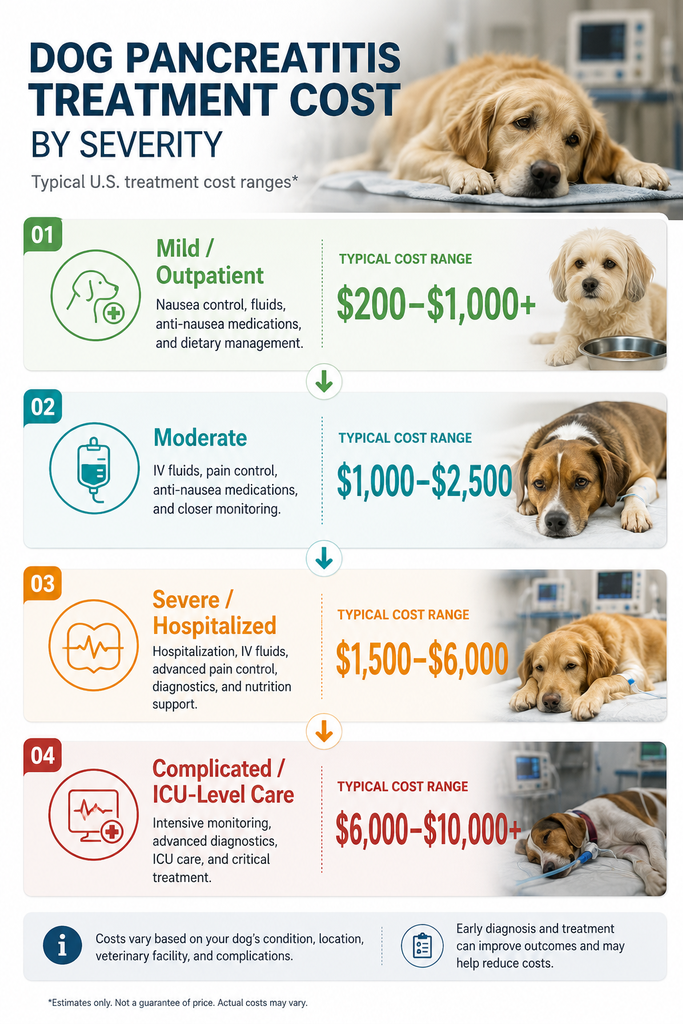
Dog Pancreatitis Cost by Severity
| Severity | Typical Cost | Typical Treatment |
|---|---|---|
| Mild / outpatient | $200–$1,000 | Anti-nausea and pain medication, subcutaneous fluids, low-fat diet, monitored at home |
| Moderate | $1,000–$2,500 | 1–2 days hospitalized, IV fluids, monitoring |
| Severe / hospitalized | $1,500–$6,000 | 2–4+ days hospitalized, IV fluids, pain management, monitoring, gradual food reintroduction |
| Complicated / ICU | $6,000–$10,000+ | Extended ICU stay, aggressive fluid therapy, treatment of shock or organ complications |
A real-world example: a dog with a mild episode after getting into fatty table scraps might be treated with anti-nausea medication and a prescription diet, going home the same day for around $400. A dog with severe, hemorrhagic pancreatitis showing signs of shock may need several days in intensive care with aggressive fluid support — a bill that can reach $7,000 or more, and severe cases carry a real risk of not fully recovering.
What Does Pancreatitis Treatment Usually Involve?
Treatment for pancreatitis in dogs is mainly supportive care, and the exact approach depends on how sick your dog is. Mild cases may be managed as outpatients with pain control, anti-nausea medication, small amounts of an appropriate low-fat diet, and fluids when needed. More serious cases may require hospitalization, where veterinarians can provide IV fluids, medications, nutritional support, and close monitoring.
The treatment plan can also include diagnostic testing to evaluate your dog’s condition and rule out other causes of vomiting or abdominal pain. Depending on the case, this may involve bloodwork, pancreatic-specific testing, or abdominal ultrasound.
For severe pancreatitis, treatment can become considerably more intensive. Dogs may need several days of hospitalization, IV medications and fluids, nutritional support, and potentially intensive care if complications or shock develop. VCA notes that many dogs with severe pancreatitis are hospitalized for about two to four days, although the length of treatment varies by individual case.
This is also why pancreatitis costs can vary so widely: a mild outpatient case may involve only an examination, testing, medication, and diet, while a severe case can involve multiple days of hospitalization and intensive monitoring.
What Is Included in the Cost of Treating Pancreatitis?
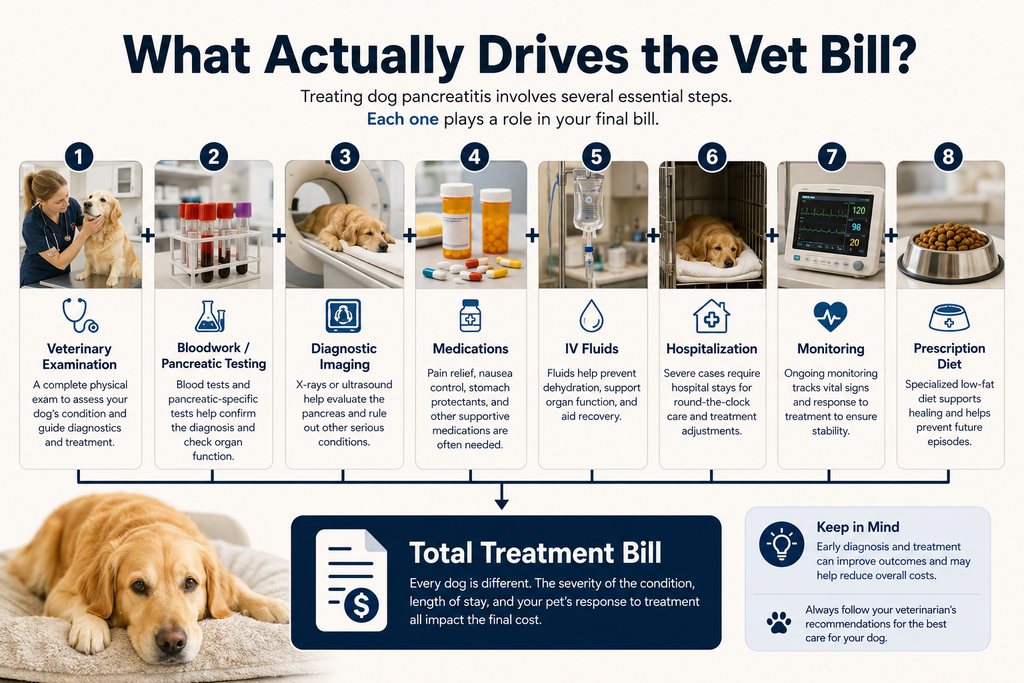
A pancreatitis bill typically bundles several categories, whether your dog is treated as an outpatient or admitted.
The exam confirms symptoms and rules out other causes of vomiting and abdominal pain. Bloodwork, including a pancreas-specific test (SPEC cPL), helps confirm the diagnosis — though this test alone catches roughly 83% of cases, so your vet may combine it with other diagnostics. Imaging, usually abdominal ultrasound, helps assess severity and rule out complications like a blocked bile duct, though ultrasound alone identifies pancreatitis in only about 68% of cases, which is why it’s typically used alongside bloodwork rather than instead of it. IV fluids address dehydration from vomiting and are central to treating anything beyond the mildest cases. Pain medication and anti-nausea medication manage the two most distressing symptoms. Hospitalization, when needed, covers nursing care and monitoring. A prescription low-fat diet is typically part of both treatment and recovery, sometimes continuing long-term for dogs with recurrent episodes.
What Tests Can Increase a Pancreatitis Vet Bill?
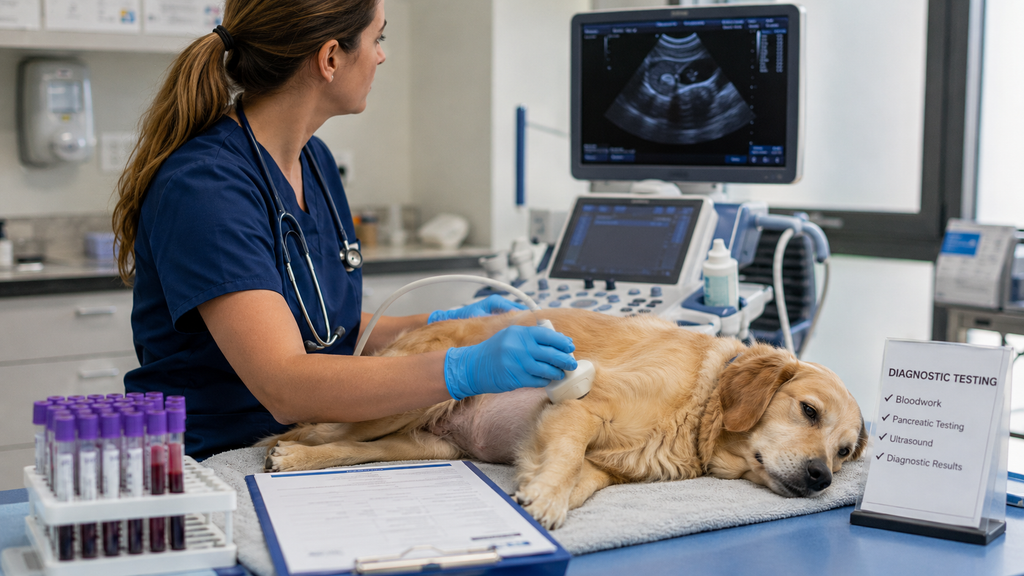
Diagnosing pancreatitis can involve several tests, and each one can add to the final veterinary bill. Your veterinarian may recommend different tests depending on your dog’s symptoms, severity, and whether other conditions need to be ruled out.
CBC and bloodwork: A complete blood count (CBC) and serum chemistry panel can help identify inflammation, dehydration, electrolyte changes, and problems affecting other organs. These tests are commonly part of the initial evaluation but do not diagnose pancreatitis by themselves.
cPLI or pancreas-specific lipase testing: A canine pancreatic lipase test (cPLI) is a more specific blood test used to support a pancreatitis diagnosis. Some clinics can perform pancreatic lipase testing in-house, while other tests may be sent to a laboratory.
Read Related Article… Dog Ultrasound Cost in the USA (2026): Real Prices, Hidden Charges & What Happens After
Abdominal ultrasound: An ultrasound can help identify pancreatic inflammation and look for complications or other abdominal problems. Its usefulness can depend on the equipment, timing, disease severity, and experience of the person performing the scan.
X-rays: X-rays do not directly diagnose pancreatitis, but they may be recommended to rule out other causes of vomiting and abdominal pain, such as an intestinal obstruction.
Repeat testing: Dogs hospitalized with pancreatitis may need additional bloodwork or imaging to monitor their condition and check for complications. These repeat tests can increase the total cost of treatment.
Read Related Article… Dog Blood Test Cost in the USA (2026): Real Prices, What Each Panel Tests, and How to Pay Less
Can Dog Pancreatitis Be Treated at Home?
Some mild cases of dog pancreatitis can be managed at home after a veterinarian has evaluated the dog and determined that hospitalization is not necessary. Treatment may include prescribed pain or anti-nausea medication, a veterinary-recommended low-fat diet, small meals, and close monitoring.
Home care does not mean treating pancreatitis without veterinary guidance. Vomiting, abdominal pain, dehydration, weakness, or loss of appetite can also occur with other serious conditions, so a proper diagnosis is important. Dogs with more severe pancreatitis may need IV fluids, injectable medications, nutritional support, and continuous monitoring in a veterinary hospital.
The financial difference can be significant. A dog that can safely recover as an outpatient may avoid several days of hospitalization, while a dog requiring IV treatment and monitoring can quickly develop a much larger veterinary bill.
If your veterinarian recommends hospitalization but cost is a concern, ask whether outpatient treatment is medically appropriate for your dog’s specific condition. Do not choose home treatment simply to avoid the hospital bill if your veterinarian believes your dog needs intensive care.
How Much Does Dog Pancreatitis Hospitalization Cost?
Hospitalization is the single biggest driver of a pancreatitis bill, typically adding $500 to $1,000 per day, with most hospitalized dogs staying 2 to 4 days, sometimes longer for severe cases.
Read Related Article… Emergency Vet Costs in the USA (2026): What You’ll Really Pay by State
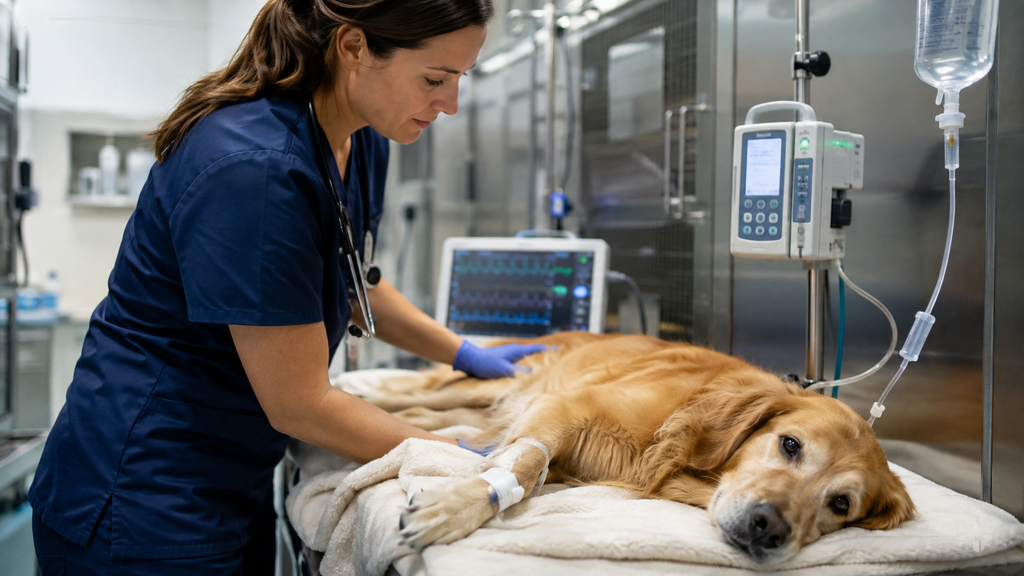
This daily rate usually covers IV fluids, medication administration, and continuous monitoring — critical for pancreatitis specifically, since a dog’s condition can change quickly and hospitalization allows staff to respond as new problems arise. Dogs with severe or hemorrhagic pancreatitis, or those showing signs of shock, may need ICU-level care, which typically carries a higher daily rate than standard hospitalization.
How Long Does Dog Pancreatitis Treatment Take?
How long dog pancreatitis treatment takes depends largely on how severe the condition is and how quickly the dog responds to treatment.
Mild pancreatitis may be managed on an outpatient basis with pain and nausea medication, fluids when needed, and a low-fat diet. PetMD notes that dogs with mild pancreatitis generally recover within one to two weeks, although treatment and dietary management may continue during that period.
Dogs with more severe pancreatitis may need hospitalization for IV fluids, medication, nutritional support, and close monitoring. VCA reports that many dogs with severe pancreatitis are hospitalized for approximately 2 to 4 days, although longer stays may be necessary when complications develop or the dog does not respond well to initial treatment.
The length of treatment can also affect the total vet bill. Each additional hospitalization day can add to the cost of fluids, medications, monitoring, diagnostics, and nursing care.
After discharge, your dog may still need several days or weeks of recovery at home, including a veterinarian-recommended low-fat diet, medications, follow-up visits, and monitoring for recurring symptoms. Dogs with chronic or repeated pancreatitis may require longer-term dietary and medical management.
What Makes Pancreatitis Treatment More Expensive?
Several factors, beyond severity itself, push a pancreatitis bill higher.
Emergency vs. regular vet visits matter, since emergency and after-hours clinics carry higher exam fees and procedure surcharges than a daytime appointment. Number of hospital days is the single largest cost multiplier — each additional day adds its own daily rate. Imaging (ultrasound specifically) adds a meaningful line item when your vet needs to rule out complications or a blocked bile duct. Complications — secondary infection, organ effects, or the development of diabetes or exocrine pancreatic insufficiency from pancreatic scarring — can extend treatment well beyond the initial episode. ICU care for the most severe cases carries the highest daily rate of any hospitalization tier. Specialist or referral hospitals, often needed for moderate-to-severe cases, typically charge more than a general practice due to higher facility overhead. Location plays a role too, with major metro areas generally running higher than rural regions.
Read Related Article… Emergency Vet Exam Cost in the USA (2026)
What Are the Long-Term Costs After Pancreatitis?
The first pancreatitis episode may be the biggest expense, but some dogs can have ongoing costs after they recover. Follow-up veterinary visits, repeat bloodwork, prescription diets, medications, and treatment for recurring episodes can add to the total over time. Dogs with repeated or severe pancreatitis may also develop longer-term problems involving the pancreas.
Diet can become an ongoing expense. Some dogs with recurrent pancreatitis may benefit from a veterinarian-recommended low-fat diet, although a permanent diet change is not necessary for every dog. Veterinary therapeutic diets can cost more than standard dog food, particularly when they need to be fed long term.
Severe or chronic pancreatic damage can also lead to conditions such as exocrine pancreatic insufficiency (EPI) or diabetes mellitus. EPI may require lifelong pancreatic enzyme replacement and, in some dogs, vitamin supplementation and additional monitoring. Diabetes can require ongoing insulin treatment, dietary management, and veterinary monitoring.
Not every dog will develop these complications, and most dogs recover without permanent problems. However, if your dog has had severe or repeated pancreatitis, ask your veterinarian whether follow-up testing, dietary changes, or long-term treatment could become part of your dog’s care plan.
Does Pet Insurance Cover Pancreatitis in Dogs?
Pancreatitis is generally covered under accident-and-illness pet insurance plans as a covered illness, as long as your policy is active, past its illness waiting period, and the condition isn’t classified as pre-existing.
Read Related Article… Pet Insurance for Dogs in the USA: How It Works (2026)
Reimbursement mechanics work the same way as any other covered illness: your deductible applies first, then your reimbursement percentage (commonly 70–90%) applies to the remaining eligible costs, up to your annual limit. The pre-existing condition question matters more here than with a sudden accident, since pancreatitis can be a recurring condition — if your dog had a documented episode before your policy started, or during the waiting period, future pancreatitis-related claims may be excluded even years later. Certain breeds, including Miniature and Standard Schnauzers, are more prone to pancreatitis, which is worth knowing but doesn’t itself affect coverage — only your dog’s actual diagnosis history does.
Read Related Article… Does Pet Insurance Cover Pre-Existing Conditions? The Truth Most Pet Owners Learn Too Late (2026)

What If You Can’t Afford Pancreatitis Treatment?
If the estimate is more than you can cover right now, say so directly to the vet team — pancreatitis treatment decisions, especially around hospitalization, often have some flexibility worth discussing openly.
Read Related Article… Vet Payment Plans: Can You Make Monthly Payments to a Vet? (2026)
Ask for a written, itemized estimate covering both the outpatient and hospitalized scenarios, so you understand the range you’re working with. Ask directly whether outpatient treatment with subcutaneous fluids is a medically reasonable option for your dog’s specific severity, rather than assuming hospitalization is the only path. Ask about CareCredit or Scratchpay, both of which can often approve within minutes and pay the clinic directly. Ask whether the clinic offers a payment plan or accepts a partial deposit while you arrange the rest. For the complete breakdown of financing options, grant programs, and questions to ask before agreeing to treatment, see our full guide on what to do if you can’t afford emergency vet surgery.
Read Related Article… Emergency Vet vs Regular Vet Cost: Why Emergency Care Costs So Much More (2026)
A note on how to use this information: these are financial questions to raise alongside your vet’s medical guidance, not substitutes for it — your veterinarian determines what level of care is medically necessary for your dog’s specific case.
Read Related Article… Can’t Afford an Emergency Vet Bill? 15 Real Ways Dog Owners Find Help (2026)

How to Prepare for a Dog Pancreatitis Vet Bill
- Ask for a written estimate covering both outpatient and hospitalized scenarios
- Ask what severity tier your vet believes applies based on the exam and bloodwork
- If hospitalization is recommended, ask for expected length of stay and the daily rate
- Call your pet insurer to confirm your illness waiting period and whether any prior episode affects coverage
- Ask whether CareCredit, Scratchpay, or an in-house payment plan is available
- Ask about the prescription diet plan, since ongoing management costs can continue after discharge
- If your dog has recurring episodes, ask your vet whether a permanent low-fat diet could reduce future costs
Frequently Asked Question
How much does dog pancreatitis treatment cost without insurance?
Mild cases treated as outpatients may cost around $200–$1,000+, while cases requiring hospitalization can cost roughly $1,500–$5,000 or more. Severe or complicated cases may cost substantially more depending on hospitalization, diagnostics, and treatment needs.
Will my dog need to be hospitalized for pancreatitis?
Not always. Mild cases may be managed at home with veterinary-directed treatment, while dogs with more severe illness, dehydration, persistent vomiting, significant pain, or systemic complications may need hospitalization and IV treatment.
How much does dog pancreatitis hospitalization cost per day?
There is no standardized national daily rate. Your total depends on the hospital, location, treatment intensity, diagnostics, and length of stay. Many severe cases require several days of hospitalization, with VCA noting that 2–4 days is common for severe pancreatitis.
Can dog pancreatitis be treated at home?
Some mild cases can be treated on an outpatient basis under veterinary supervision. Home treatment should not mean managing suspected pancreatitis without veterinary evaluation, because vomiting, abdominal pain, and loss of appetite can also occur with other serious conditions.
Does pet insurance cover pancreatitis in dogs?
Many accident-and-illness policies can cover pancreatitis when it is a covered illness and the condition is not considered pre-existing. Waiting periods, policy exclusions, deductibles, reimbursement limits, and your dog’s medical history can affect whether a claim is paid.
Can a previous pancreatitis episode affect pet insurance coverage?
Yes. A previous diagnosis or documented symptoms may be considered pre-existing, depending on the insurer’s policy. Some insurers also consider symptoms documented before coverage began, even when there was no formal diagnosis.
What if I can’t afford my dog’s pancreatitis treatment?
Tell the veterinary team what you can afford and ask for an itemized estimate. Ask whether outpatient treatment is medically appropriate, what must be done immediately, and whether the clinic offers financing or payment options. Don’t delay urgent veterinary care simply because you’re worried about the cost.
Can pancreatitis cause ongoing veterinary costs?
Yes. Some dogs experience recurring episodes or develop conditions such as diabetes or exocrine pancreatic insufficiency after severe or repeated pancreatitis. Long-term costs can include prescription diets, medications, enzyme replacement, and follow-up monitoring.
Why does dog pancreatitis cost so much more in some cases?
The biggest differences usually come from severity and whether hospitalization is required. Additional diagnostics, IV treatment, intensive monitoring, longer hospital stays, complications, and referral or emergency care can all increase the final bill.
External Authority Sources
- VCA Animal Hospitals — Pancreatitis in Dogs
- PetMD — Pancreatitis in Dogs
- AVMA (American Veterinary Medical Association)
- NAPHIA / pet insurance industry claims data
Disclaimer: This article is for informational and educational purposes only. Cost data reflects 2026 figures from multiple veterinary and pet insurance industry sources and will vary based on your dog’s size, breed, severity, location, and treatment plan. PetInsurePrime does not sell pet insurance and receives no compensation from any insurance provider. Always consult your veterinarian about your dog’s individual case.
PetInsurePrime | Independent • Research-Based | Helping US dog owners understand real vet costs and coverage options — without the sales pressure.
I was charged 1905.00 for a 3 dose regiment of Panoquell . Plus office visit of 200.00 plus injectable fluids at 130.00 plus 165.00 for the lipase test, plus 171.00 for Maropitant. Injectable.
The most $ I read for the panoquell should be $495.
Was I over charged or does this sound like proper pricing?
Thank you
Hi Daniel, thank you for sharing the details. A total of $1,905 can be difficult to evaluate without seeing the full itemized invoice, especially since veterinary medication and treatment costs can vary significantly by clinic, location, dosage, and your dog’s specific condition.
The best approach is to ask your veterinarian for a complete breakdown of the charges and confirm the medication name, dosage, and quantity. You can also ask whether the medication is available through a reputable veterinary pharmacy at a lower cost.
If you share the itemized charges (without any personal information), we can help you understand which costs appear reasonable and which ones may be worth questioning.