Updated: July 2026 | Reading Time: 24 minutes
Your vet just recommended blood work. Maybe it’s a routine annual wellness check. Maybe your dog has been lethargic and vomiting and the vet wants answers before prescribing anything. Maybe surgery is coming up and the clinic requires pre-anesthetic screening.
Read Related Article … Emergency Vet Exam Cost in the USA (2026)
Whatever the reason — you’re about to get a bill for a test your dog can’t opt out of and you can’t fully evaluate in the room. Here’s what dog blood tests actually cost in 2026, what each panel measures, why the same test can cost $80 at one clinic and $200 at another, and what you can do about it.
Quick Answer Dog Blood Test Cost in the USA
Dog blood tests cost $100–$300 on average at a regular vet in 2026. A basic CBC or chemistry panel runs $100–$150, while comprehensive panels cost $200–$300. Emergency clinics charge 50–100% more. The exam fee ($40–$80) is added on top and billed separately. The single biggest reason for price variation between clinics — something most vets don’t explain — is whether the sample is processed in-house in 20 minutes or sent to an outside reference lab overnight.
Read Related Article… Emergency Vet Costs in the USA (2026): What You’ll Really Pay by State
At a Glance: 2026 Dog Blood Test Cost Summary
| Test Type | Cost Range | Turnaround Time |
|---|---|---|
| CBC (complete blood count) only | $60 – $90 | 20–30 min in-house |
| Chemistry panel only | $80 – $180 | 20–30 min in-house |
| CBC + Chemistry (combined panel) | $100 – $200 | 20–30 min in-house |
| Comprehensive panel (CBC + Chem + T4) | $150 – $350 | 30–60 min in-house |
| Senior wellness panel (CBC + Chem + T4 + UA) | $200 – $400 | Same day |
| Pre-anesthetic blood work | $80 – $200 | 20–30 min in-house |
| Thyroid panel (T4) | $50 – $150 | Same day or send-out |
| Heartworm + tick-borne disease (4Dx) | $35 – $75 | 10–15 min in-house |
| Allergy blood test | $200 – $700 | Send-out lab, 3–7 days |
| Cancer screening (Nu.Q Vet) | $100 – $300 | Send-out lab |
| GI panel (TLI, B12, folate, PLI) | $150 – $300 | Send-out lab, 3–5 days |
| Emergency vet — any panel | 1.5–2x above | 20–30 min in-house |
Exam fee ($40–$80) charged separately at most clinics.
Table of Contents
- The Two Most Common Tests — CBC vs Chemistry Panel
- Every Dog Blood Test Type Explained With Cost
- In-House Lab vs Reference Lab — The Hidden Price Difference
- Emergency Vet Blood Work Cost vs Regular Vet
- What Dog Blood Test Results Actually Tell You
- How Age and Health Status Change What Panel You Need
- Does Pet Insurance Cover Dog Blood Tests?
- How to Reduce Dog Blood Test Cost
- Real Owner Invoice Examples
- Action Checklist
- FAQ
The Two Most Common Tests — CBC vs Chemistry Panel
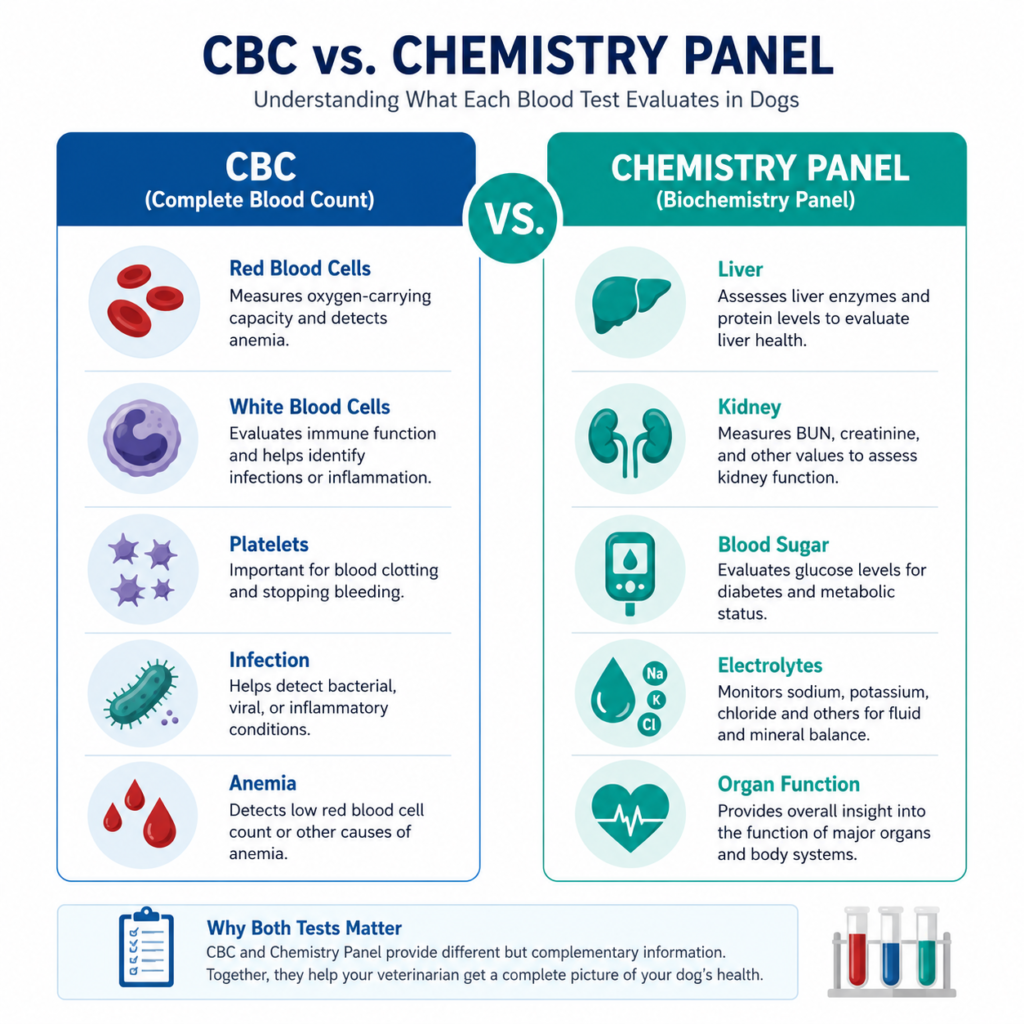
Most dog blood work recommendations come down to two core tests — either ordered separately or combined into one panel. Understanding what each measures helps you understand what you’re paying for.
CBC — Complete Blood Count
A complete blood count (CBC) counts and measures the cells floating in your dog’s blood: red cells, white cells, and platelets. It is the fastest way to flag anemia, infection, inflammation, and clotting problems. A CBC is one of the cheapest tests because most clinics can run it on an in-house analyzer in minutes.
Read Related Article … Dog X-Ray Cost in the USA (2026): Average Prices, Sedation Costs & What You’ll Actually Pay
On its own a CBC usually costs $60 to $90.
What a CBC measures:
| Value | What It Checks |
|---|---|
| RBC (Red Blood Cell count) | Anemia, dehydration, blood loss |
| HGB (Hemoglobin) | Oxygen-carrying capacity of blood |
| HCT (Hematocrit) | Percentage of blood volume that is red cells |
| WBC (White Blood Cell count) | Infection, inflammation, immune disorders, leukemia |
| Neutrophils | Bacterial infection, stress response |
| Lymphocytes | Viral infection, immune function |
| Platelets | Blood clotting ability |
A CBC answers the question: is there infection, anemia, or an immune problem? It does not tell your vet anything about organ function, blood sugar, or kidney/liver health. That requires a chemistry panel.
Read Related Article… Dog Ultrasound Cost in the USA (2026): Real Prices, Hidden Charges & What Happens After
Chemistry Panel (Biochemistry Profile)
A chemistry panel checks kidney function (BUN, creatinine), liver enzymes (ALT, ALP, AST), blood glucose, protein, electrolytes, and more.
A blood chemistry panel runs $120 to $180. Combined with a CBC, the total runs $100–$200 — typically less than ordering both separately because most clinics bundle them as a standard package.
What a chemistry panel measures:
| Value | What It Checks |
|---|---|
| BUN (Blood Urea Nitrogen) | Kidney function |
| Creatinine | Kidney filtration efficiency |
| ALT (Alanine Aminotransferase) | Liver cell damage |
| ALP (Alkaline Phosphatase) | Liver, bone, Cushing’s disease |
| AST (Aspartate Aminotransferase) | Liver and muscle damage |
| Glucose | Diabetes, insulinoma |
| Total Protein / Albumin | Liver function, nutrition, GI disease |
| Calcium | Cancer, parathyroid disease, kidney disease |
| Electrolytes (Na, K, Cl) | Hydration, Addison’s disease, vomiting causes |
| Phosphorus | Kidney disease progression |
A chemistry panel answers the question: how are the organs working? Together, the CBC and chemistry panel give your vet the most complete non-invasive picture of your dog’s internal health in a single blood draw.
Every Dog Blood Test Type Explained With Cost
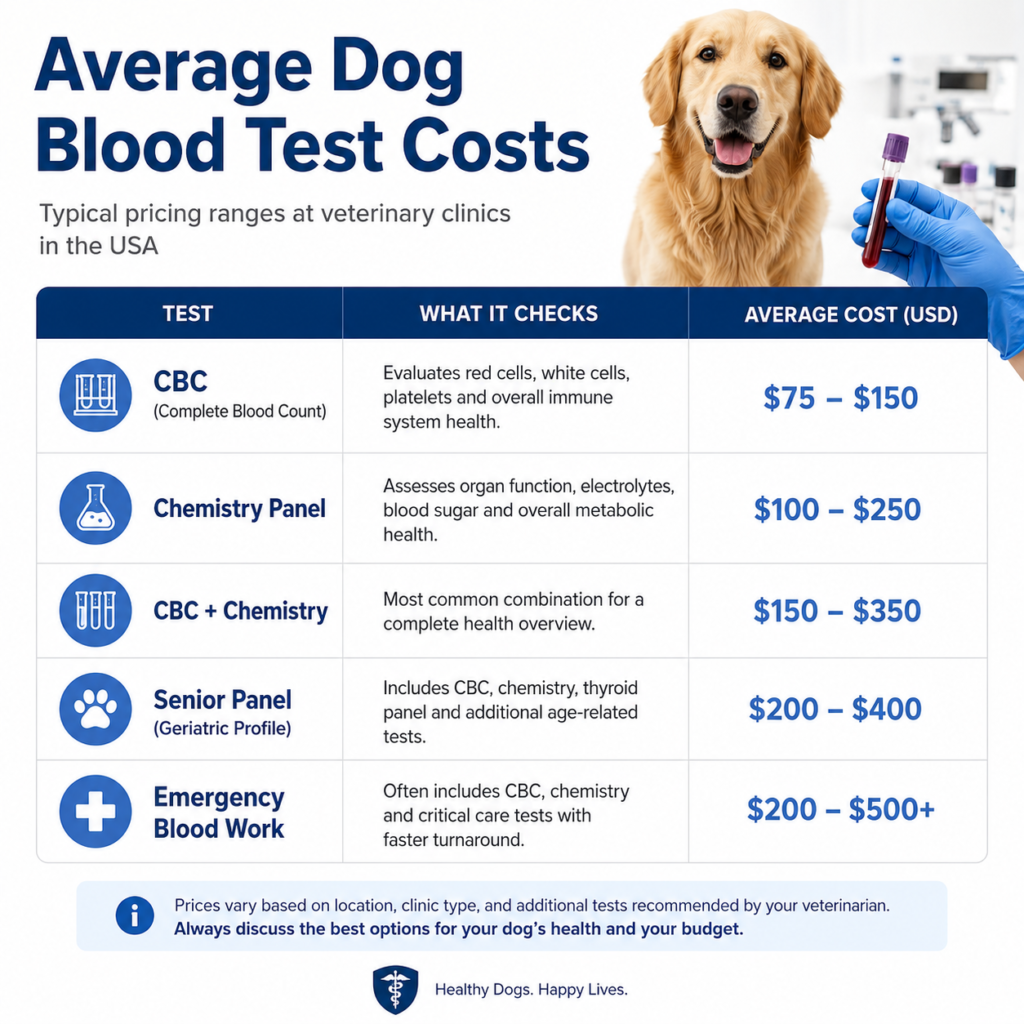
Beyond the standard CBC and chemistry panel, several specialized blood tests are commonly recommended — each targeting a specific health concern.
Pre-Anesthetic Blood Work
Before surgery, most vets require pre-anesthetic blood work to confirm the organs can safely process anesthesia. It checks kidney and liver values, blood sugar, and often a CBC. A short screen for a young, healthy dog can be as low as $80; a full panel for an older dog runs toward $200. This screen is standard for procedures like a professional dog dental cleaning or a spay or neuter surgery, both of which require general anesthesia. The blood work fee is sometimes quoted inside the procedure estimate rather than as a separate line.
Read Related Article… Dog Surgery Cost in the USA: Real Prices for 2026
This last point catches many owners off guard. An all-in dental cleaning quote that includes bloodwork at $450 is cheaper than a $350 cleaning quote where pre-anesthetic bloodwork ($100–$150) is billed separately at $500 total. Always ask: “Is pre-anesthetic bloodwork included in this estimate?”
Read Related Article…Dog Spinal Surgery Cost in the USA: What Most Owners Pay in 2026
Senior Wellness Panel
A senior wellness panel is the most complete routine screen, built for dogs roughly seven years and older. It usually combines a CBC, a full chemistry panel, a thyroid (T4) test, and a urinalysis, so it can catch kidney disease, diabetes, and thyroid problems.
Cost: $200–$400. Real-world examples: a Golden Retriever owner in Orlando paid $336 for a senior bloodwork panel; another owner in South Florida paid $201 for a comprehensive senior panel with urinalysis run in-house.
For senior dogs, this panel is the highest-value routine diagnostic available — it catches the conditions most likely to affect dogs over 7 (kidney disease, diabetes, thyroid dysfunction) at a stage where management is still cost-effective.
Thyroid Panel (T4)
A thyroid panel checks your pet’s thyroid function. Hypothyroidism, caused by underproduction of thyroid hormone, and hyperthyroidism, caused by overproduction, are common in dogs.
A thyroid panel ranges from $50 to $150. Usually added as an add-on to a CBC/chemistry combination rather than ordered alone.
Heartworm + Tick-Borne Disease Test (4Dx)
A heartworm test shows if your pet has heartworm disease and can also find certain tick-borne illnesses such as Lyme disease. The 4Dx test specifically checks for heartworm antigen plus antibodies to Lyme disease, Ehrlichia, and Anaplasma — four vectors in a single rapid in-clinic test.
Heartworm tests usually cost $35 to $75. Results in 10–15 minutes in-house. Most clinics run this annually alongside the CBC/chemistry panel as part of routine wellness.
Allergy Blood Test
Blood testing for allergies costs $200 to $700. This test identifies environmental and food allergen sensitivities through serum IgE measurement. It requires send-out to a reference laboratory and results take 3–7 days. Allergy blood testing is typically recommended by a veterinary dermatologist after other causes of chronic skin or GI symptoms have been ruled out.
Cancer Screening (Nu.Q Vet / CADET)
A blood test is available to find some common cancers in dogs. The Nu.Q Vet Cancer Screening Test detects cancer-associated nucleosomes in the blood — a relatively new screening option for high-risk breeds. Cost: $100–$300. Send-out lab, results in 3–5 days.
Read Related Article… Dog Cancer Treatment Cost in the USA (2026): Surgery, Chemo & Total Costs
Important limitation: a positive result indicates elevated cancer risk but does not confirm a specific cancer type. Follow-up imaging and biopsy are required for definitive diagnosis.
Read Related Article… Dog MRI Cost in the USA (2026): Average Cost, Insurance Coverage & Financing
GI Panel (TLI, PLI, B12, Folate)
Recommended for dogs with chronic vomiting, diarrhea, or weight loss when standard CBC and chemistry results are inconclusive. Tests for exocrine pancreatic insufficiency (EPI), pancreatitis (PLI), and small intestinal disease (B12, folate). Cost: $150–$300. Send-out lab only, results in 3–5 days.
Coagulation Panel
Tests blood clotting function — PT and aPTT values. Used for dogs suspected of rat poison (rodenticide) ingestion, dogs with unexplained bleeding, and pre-surgical screening for breeds prone to clotting disorders. Cost: $80–$200. Often run in-house at emergency clinics.
| Test | Purpose | Cost | Turnaround |
|---|---|---|---|
| CBC | Blood cells, infection, anemia | $60 – $90 | 20 min |
| Chemistry panel | Organ function, glucose, electrolytes | $80 – $180 | 20 min |
| CBC + Chemistry | Complete internal health screen | $100 – $200 | 30 min |
| Pre-anesthetic | Pre-surgery safety screen | $80 – $200 | 20 min |
| Senior wellness | Full senior health screen + thyroid + UA | $200 – $400 | Same day |
| Thyroid (T4) | Thyroid function | $50 – $150 | Same day |
| Heartworm / 4Dx | Heartworm + tick diseases | $35 – $75 | 10 min |
| Allergy panel | Food/environmental allergens | $200 – $700 | 3–7 days |
| Cancer screening | Cancer nucleosome detection | $100 – $300 | 3–5 days |
| GI panel | EPI, pancreatitis, B12/folate | $150 – $300 | 3–5 days |
| Coagulation panel | Clotting function | $80 – $200 | 30 min |
Dog Blood Test Cost by State
Example
| State | Typical Cost |
|---|---|
| California | $180–320 |
| Texas | $120–220 |
| Florida | $120–210 |
| New York | $180–330 |
| Ohio | $100–180 |
In-House Lab vs Reference Lab — The Hidden Price Difference
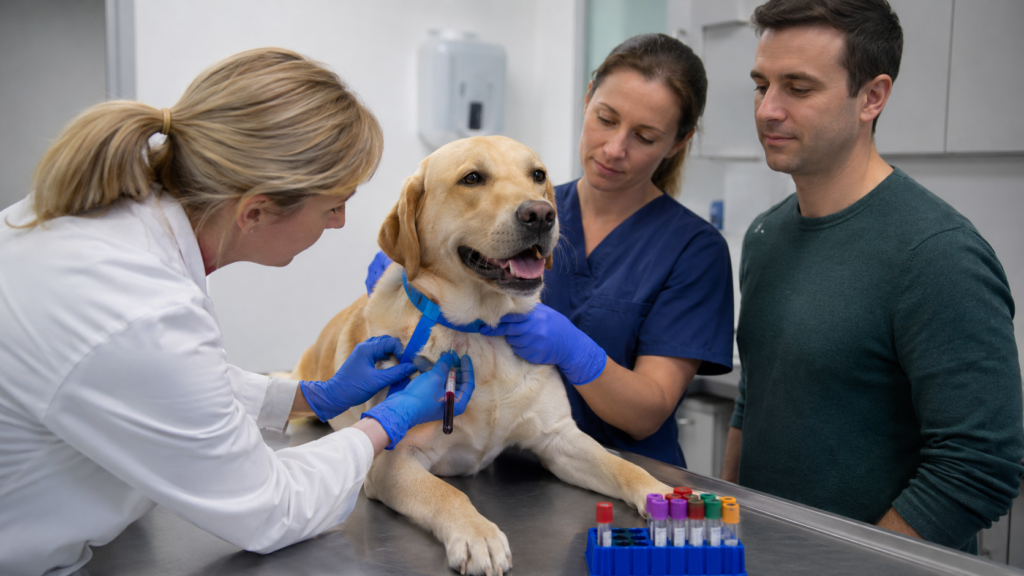
The single biggest reason for a $100+ price gap on the same panel is whether the clinic runs the sample on its own in-house machine or ships it to an outside reference lab.
This is the detail most clinics don’t volunteer — and it affects both cost and turnaround time significantly.
In-house analyzers: Most veterinary clinics own blood analysis machines that process CBC and chemistry panels in 20–30 minutes. In most veterinary clinics and hospitals, there is in-house lab equipment that is able to run many types of blood work immediately at the time it is drawn. This is a considerable advantage as results can typically be determined within 15–30 minutes. Dogs that are ill or hurt will benefit from this rapid turnaround time.
In-house testing typically costs more per test than send-out labs because the clinic is absorbing equipment costs, maintenance, and quality control overhead.
Reference labs (send-out): Clinics that send samples to external veterinary reference labs — IDEXX, Antech, and others — often charge 10–20% less for the same panel. The trade-off: results take 24–48 hours instead of 20 minutes.
Send-out labs cost 10–20% less but take 24–48 hours.
When in-house is essential:
- Emergency visits where treatment can’t wait
- Pre-surgical screening being run the morning of a procedure
- Sick visits where the vet needs results to make same-day decisions
When send-out is fine:
- Annual wellness blood work for a healthy dog showing no symptoms
- Thyroid monitoring for a stable hypothyroid dog
- Allergy panel or cancer screening that doesn’t affect same-day decisions
Asking this question saves money: “Is this test run in-house or sent to a reference lab? If I’m not in a rush, can we use the send-out lab at a lower cost?”
At a clinic with both options, this one question can save $20–$60 on a standard wellness panel with no change in test quality or result accuracy.
Emergency Vet Blood Work Cost vs Regular Vet
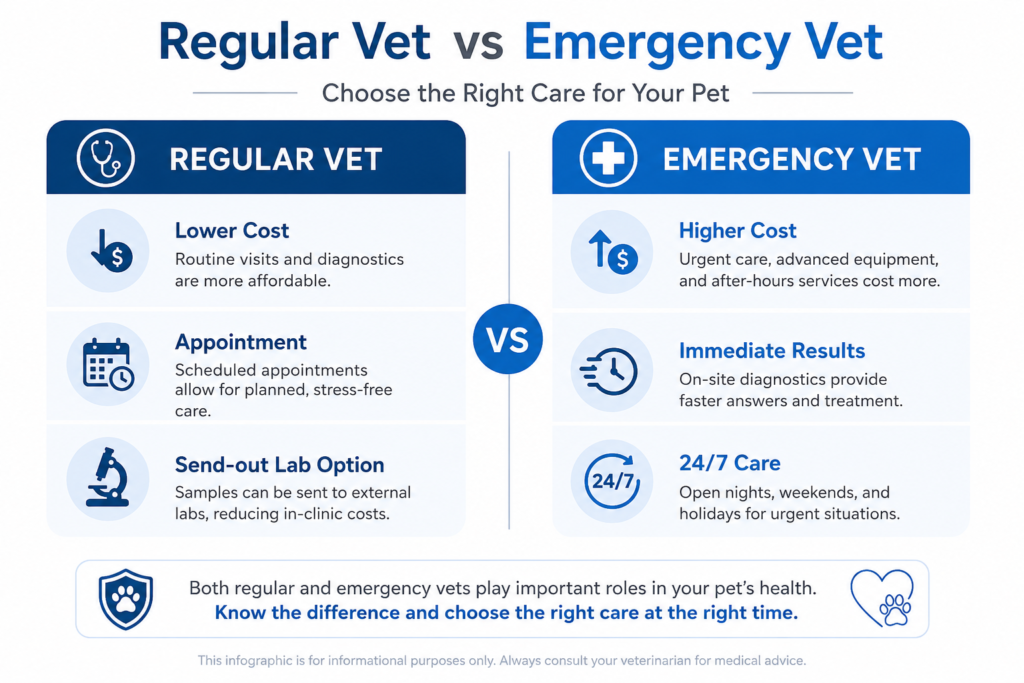
Emergency clinics charge 50–100% more due to 24/7 staffing, immediate in-house lab processing, and higher overhead costs.
The same CBC and chemistry panel that costs $120 at your regular vet Monday morning costs $180–$240 at a 24-hour emergency hospital at 2 AM Saturday. That’s before the emergency exam fee ($150–$300) and any after-hours surcharge ($50–$200) are added.
Cost comparison — same blood panel, different facility:
| Facility | CBC + Chemistry | Add Exam Fee | Realistic Total |
|---|---|---|---|
| Regular vet (daytime) | $100 – $200 | $50 – $80 | $150 – $280 |
| Urgent care clinic | $130 – $240 | $100 – $200 | $230 – $440 |
| 24-hour emergency ER | $180 – $350 | $150 – $300 | $330 – $650 |
Why emergency bloodwork is always run in-house: At an emergency clinic, there’s no option to “send it out.” Every test is run in-house because the vet cannot wait 24–48 hours to make treatment decisions on a sick dog. That always-in-house requirement means you’re always paying the in-house premium at an emergency clinic, on top of the facility’s already higher base pricing.
When emergency bloodwork is unavoidable: A dog that collapsed, is vomiting blood, is suspected of ingesting toxins, or shows signs of organ failure cannot wait until your regular vet opens. The emergency premium is real — and irrelevant when your dog’s condition demands immediate answers.
When you can avoid the emergency premium: A dog that seems slightly off, is eating less than usual, or has had mild soft stools for a day or two can typically wait for a morning sick visit at your regular vet. That decision — going tomorrow morning instead of tonight — saves $150–$250 on bloodwork alone.
What Dog Blood Test Results Actually Tell You
You paid for the test. Understanding what the results mean prevents the “I don’t know what I’m looking at” feeling when the clinic calls with values and reference ranges you’ve never seen before.
Reading your dog’s CBC results:
| Result | Low Means | High Means |
|---|---|---|
| RBC / HCT / HGB | Anemia, blood loss, bone marrow issue | Dehydration |
| WBC | Immune suppression, viral infection, some cancers | Bacterial infection, inflammation, stress |
| Neutrophils | Immune disorder, bone marrow disease | Infection, stress, steroid use |
| Lymphocytes | Viral infection, immune suppression | Chronic infection, lymphoma |
| Platelets | Clotting disorder, immune disease, tick disease | Usually not clinically significant when high |
Reading your dog’s chemistry results:
| Result | Low Means | High Means |
|---|---|---|
| BUN / Creatinine | Low protein intake, liver issues | Kidney disease, dehydration |
| ALT | — | Liver cell damage, hepatitis |
| ALP | — | Liver disease, Cushing’s disease, bone disease |
| Glucose | Insulinoma, hypoglycemia | Diabetes, stress |
| Albumin | Liver disease, GI disease, malnutrition | Dehydration |
| Calcium | Hypoparathyroidism | Cancer, kidney disease, parathyroid disease |
Important context for results:
A single value outside the reference range isn’t automatically a crisis. Reference ranges represent the middle 95% of healthy dogs — which means 5% of healthy dogs will have a value outside the range on any given test. Your vet interprets results in the context of your dog’s symptoms, history, and other values — not as a standalone number.
If a value is mildly abnormal and your dog has no symptoms, your vet will typically recommend a recheck in 2–4 weeks rather than immediate treatment. If multiple values are abnormal and symptoms are present, that combination is diagnostically more significant than any single value.
How Age and Health Status Change What Panel You Need
It depends on age and health. Healthy dogs under 7 may only need basic panels if concerns arise. Senior dogs (7+) should get comprehensive panels every 6–12 months. Dogs on long-term medications need targeted monitoring every 3–6 months.
By life stage:
| Dog Age / Status | Recommended Panel | Frequency | Estimated Cost |
|---|---|---|---|
| Puppy / young adult (under 3) | CBC + chemistry if symptomatic | As needed | $100 – $200 |
| Healthy adult (3–7 years) | CBC + chemistry + heartworm annually | Annual | $135 – $275 |
| Pre-senior (5–7 years) | CBC + chemistry + T4 + heartworm | Annual | $185 – $350 |
| Senior dog (7+ years) | Full senior panel: CBC + Chem + T4 + UA | Every 6–12 months | $200 – $400 |
| Dog on NSAIDs (Rimadyl, Meloxicam) | Liver + kidney monitoring panel | Every 3–6 months | $80 – $180 |
| Dog on phenobarbital (seizures) | Liver panel + phenobarbital level | Every 6 months | $120 – $250 |
| Dog on chemotherapy | CBC before every treatment session | Per session | $60 – $120 |
| Dog with kidney disease | BUN, creatinine, phosphorus, UA | Every 3 months | $80 – $200 |
| Dog with diabetes | Glucose curve | Every 1–3 months | $100 – $200 |
| Dog with Cushing’s disease | ACTH stimulation or low-dose dex suppression | Every 3–6 months | $150 – $300 |
The chronic condition cost reality:
Early kidney disease costs $50–$100 per month to manage, while late-stage kidney failure costs $3,000–$8,000 or more in hospitalization. Regular monitoring blood work for dogs with known conditions isn’t discretionary spending — it’s the mechanism by which expensive crises are prevented.
Does Pet Insurance Cover Dog Blood Tests?
Yes — most comprehensive accident-and-illness pet insurance plans cover blood tests when they are ordered to diagnose or monitor a covered condition.
Coverage by plan type:
| Plan Type | Blood Test Coverage |
|---|---|
| Accident & Illness (comprehensive) | ✅ Diagnostic blood work for covered conditions |
| Accident-only | ✅ Bloodwork for accident-related injuries only |
| Wellness / preventive add-on | ✅ Annual routine blood work (limited dollar amount) |
| Routine care plan | ✅ Annual wellness panels up to set limits |
What’s typically covered:
- CBC and chemistry panels ordered during a sick visit
- Pre-surgical blood work before a covered procedure
- Blood monitoring for a covered chronic condition
- Specialized panels (GI panel, thyroid, tick disease) ordered to diagnose a covered condition
What’s typically not covered:
- Routine annual wellness blood work under standard accident-and-illness plans (wellness add-on required)
- Blood work for pre-existing conditions
- Blood tests ordered during the waiting period
- Cancer screening blood work in a dog with no clinical signs (preventive, not diagnostic)
Average savings with insurance: $120–$200 per incident for covered diagnostic bloodwork.
Reimbursement math on a real blood work visit:
Sick visit for a dog with vomiting and lethargy: exam ($75) + CBC + chemistry panel ($175) + heartworm/4Dx ($55) = $305 total.
- Annual deductible: $250 (first claim of the year)
- Eligible after deductible: $55
- At 80% reimbursement: $44 back
- Your out-of-pocket: $261
Same visit, later in the policy year with deductible already met:
- Eligible: $305
- At 80% reimbursement: $244 back
- Your out-of-pocket: $61
The deductible timing reality: Blood work bills are moderate — $150–$400 for most visits. When the annual deductible hasn’t been met, a $200 blood panel may generate little to no reimbursement. Blood work becomes highly cost-effective under insurance when it’s part of a larger diagnostic workup where the deductible is already satisfied.
Wellness add-ons for routine blood work: Trupanion, Embrace, and several other insurers offer wellness add-ons that reimburse annual blood work up to a set dollar amount ($50–$200 per year). For owners who run annual wellness panels consistently, these add-ons reduce the routine screening cost meaningfully.
How to Reduce Dog Blood Test Cost
1. Bundle blood work with the annual exam. Bundle with annual exams: save 15–25% vs. standalone testing. Most clinics offer a discount when blood work is ordered alongside the annual wellness exam rather than as a separate visit. A standalone blood draw appointment costs the exam fee plus the panel. An annual exam with blood work often bundles both at a reduced combined rate.
2. Ask about in-house vs. send-out options for non-urgent wellness panels. For a healthy dog’s annual screening, there’s no clinical reason to pay the in-house premium when results aren’t needed the same day. Ask: “Can we run this through the send-out lab at a lower cost since I don’t need results today?” Savings: $20–$60 on a standard panel.
3. Ask specifically which tests are required vs. recommended. Veterinarians often include multiple add-ons in a panel recommendation. Understanding which are essential and which are optional lets you prioritize. For a young healthy dog’s routine wellness check, a 4Dx heartworm test and basic CBC/chemistry may be sufficient without adding a thyroid panel or GI panel unless symptoms warrant them.
4. Compare wellness plan pricing. Some corporate veterinary chains — particularly Banfield Pet Hospital — offer annual wellness plans that include routine blood work at a flat monthly fee. For dogs who will reliably have annual blood work, wellness plans often reduce the per-visit cost significantly. Banfield’s Optimum Wellness Plan includes CBC, chemistry, and urinalysis as part of their annual wellness package.
5. Check university veterinary teaching hospitals. For non-urgent specialist referrals that include comprehensive blood panels, university vet hospitals typically charge 20–40% less than private specialty centers for the same testing. Blood panels run through teaching hospital labs are processed by board-certified clinical pathologists with faculty oversight.
6. Avoid emergency vet clinics for non-urgent blood work. Avoid emergency clinics when possible — plan ahead for non-urgent testing. A dog that’s been slightly off for two days can usually wait until morning for a regular vet appointment. That decision saves $150–$250 in emergency facility fees on the same blood draw.
7. Ask about package deals for chronic condition monitoring. Dogs requiring blood monitoring every 3–6 months — for kidney disease, diabetes, phenobarbital use — benefit from asking whether the clinic offers a package rate for recurring monitoring panels. Some independent practices offer reduced pricing for established patients on regular monitoring schedules.
Real Owner Invoice Examples
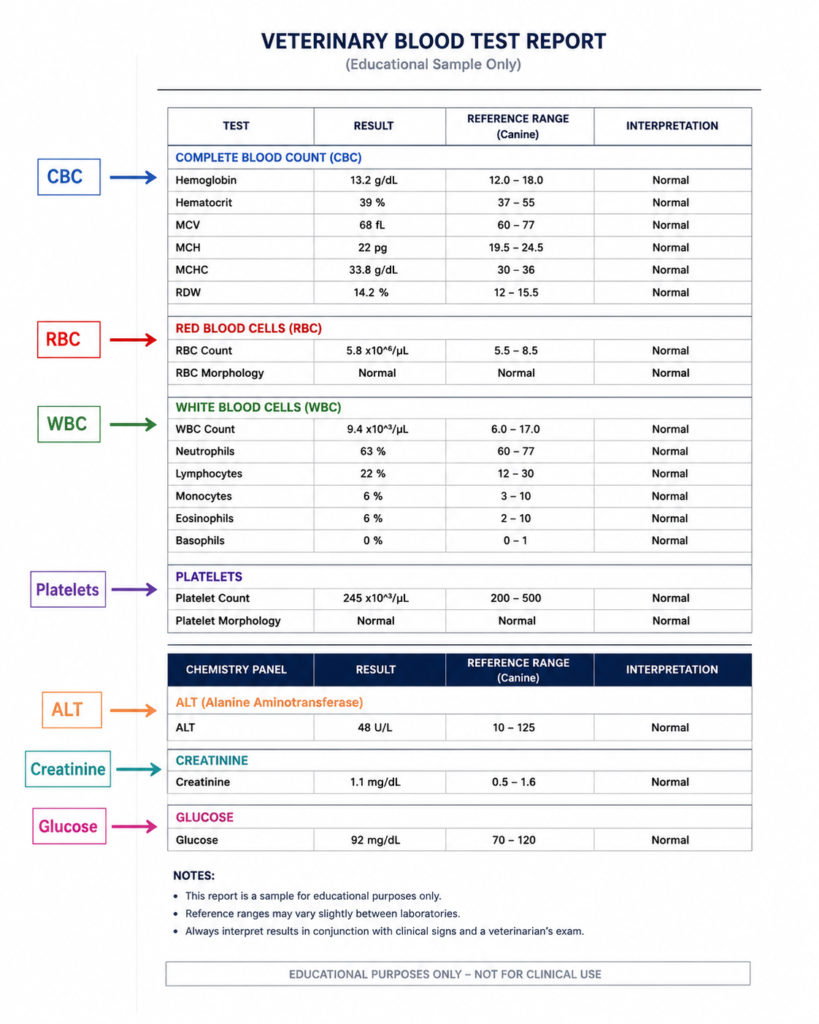
Real blood work bills from US dog owners — drawn from forum discussions and owner-submitted data:
Example 1 — Routine adult wellness, North Carolina: CBC + chemistry + heartworm/4Dx + fecal + urinalysis + thyroid: $165 (plus $54 exam fee = $219 total)
Example 2 — Senior wellness panel, South Florida: Comprehensive senior panel + urinalysis, in-house processing: $201 total including exam
Example 3 — Senior wellness panel, Orlando FL: Senior bloodwork panel (CBC + Chem + T4 + UA): $336 total
Example 4 — Senior wellness package, veterinary hospital: CBC + Chem17 (17-panel chemistry) + electrolytes + T4 + UA + fecal + 4Dx: $291.50 (plus $52 exam fee = $343.50)
Example 5 — Emergency sick visit blood work: CBC + chemistry + coagulation panel at 24-hour ER: $380 (plus $220 ER exam + surcharge = $600 total)
What these real bills show:
- Routine wellness blood work runs $165–$343 all-in at general practices across the US
- Senior panels at the higher end include more comprehensive chemistry panels (Chem17 vs. Chem10) and more add-ons
- Emergency blood work doubles the total cost primarily due to facility fees, not the blood panels themselves
Action Checklist
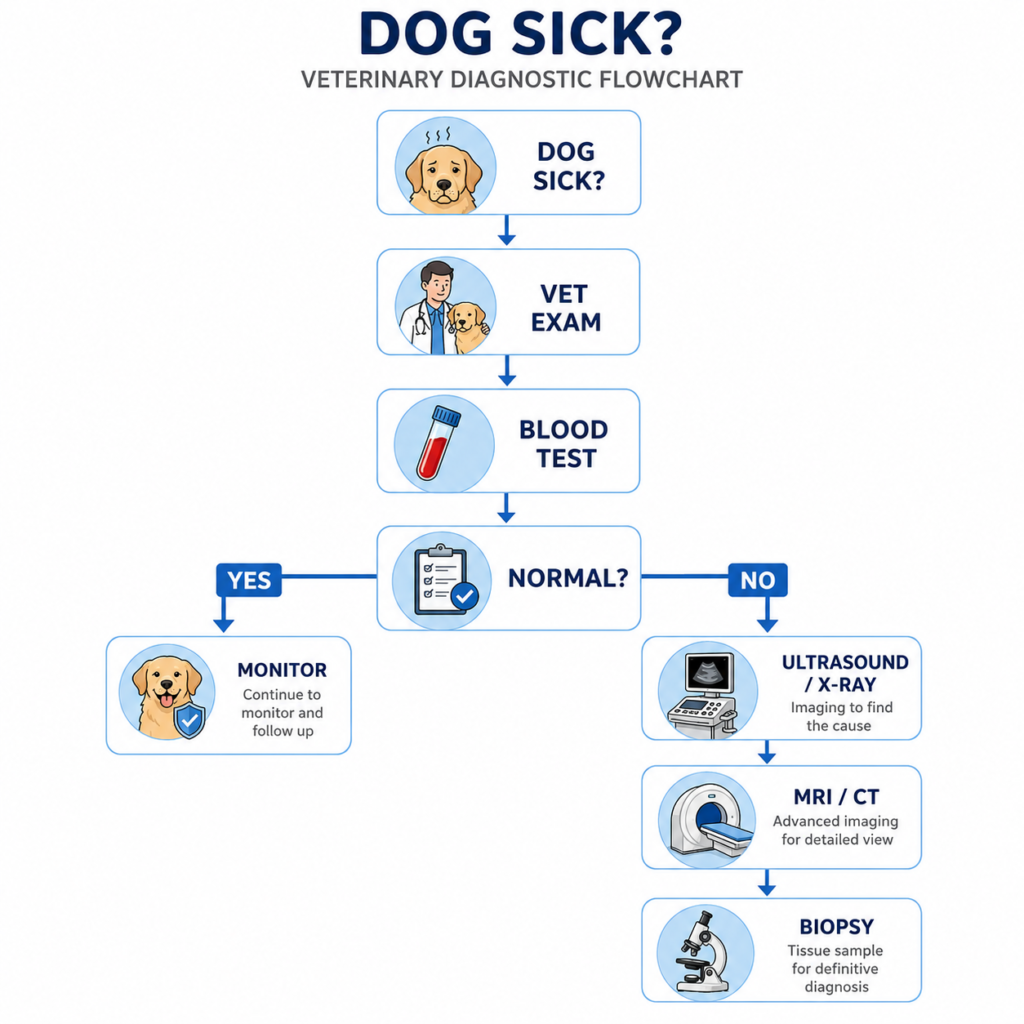
Before the blood test appointment:
- Ask whether the test is being run in-house or sent to a reference lab — and whether a send-out option is available for non-urgent wellness panels
- Ask for an itemized list of every test being ordered and what each costs separately
- Ask which tests are required vs. recommended — especially for add-ons beyond CBC and chemistry
- If recommended by your vet, fast your dog for 6–12 hours before an abdominal chemistry panel to prevent fat droplets from interfering with results. Ensure water access continues — dehydration can skew values.
- Check your pet insurance deductible status — how much of your annual deductible has already been met?
- Ask whether bundling blood work with the annual exam reduces the combined cost
At the clinic:
- Confirm the itemized quote at check-in before authorizing the draw
- Ask approximately when results will be available — and how you’ll be notified
- If results come back abnormal, ask: “Which values concern you, and what is the next step and its cost?”
After results:
- Request a copy of the full results with reference ranges for your records
- Submit your insurance claim promptly with the itemized invoice
- If a recheck is recommended, ask whether the recheck panel can use the send-out lab at reduced cost
Frequently Asked Questions
How much does a dog blood test cost in the USA?
Dog blood tests typically cost $100–$300 at a regular veterinary clinic. A basic CBC or chemistry panel usually costs $100–$150, while comprehensive panels range from $200–$300. Senior wellness panels with thyroid testing and urinalysis often cost $200–$400. Emergency veterinary hospitals generally charge 50–100% more, and most clinics bill the exam fee separately.
What is the difference between a CBC and a chemistry panel?
A CBC (Complete Blood Count) evaluates red blood cells, white blood cells, and platelets to help detect anemia, infection, inflammation, and immune disorders. A chemistry panel measures kidney function, liver enzymes, blood sugar, proteins, and electrolytes to assess organ health. Vets commonly recommend both tests together for a more complete picture of your dog’s health.
How long does dog blood work take?
Routine blood tests such as a CBC or chemistry panel are often processed in-house within 15–30 minutes. If the sample is sent to an external reference laboratory, results usually take 24–48 hours. Specialized tests, including allergy, GI, or certain cancer screening panels, may take 3–7 days depending on the laboratory.
Does pet insurance cover dog blood tests?
Most accident-and-illness pet insurance plans cover blood tests when they are medically necessary to diagnose or monitor a covered condition. Routine wellness blood work is usually covered only if you have a preventive or wellness add-on. Blood tests related to pre-existing conditions are generally excluded from coverage.
Do I need to fast my dog before a blood test?
Sometimes. Your veterinarian may recommend fasting your dog for 6–12 hours before certain blood tests because food can affect some results. Fresh water should always remain available, as dehydration may alter blood values. Follow your veterinarian’s instructions, since not every blood test requires fasting.
Why does the same blood test cost more at some vets than others?
Prices vary based on whether the test is performed in-house or sent to a reference laboratory, the clinic’s location, and the type of veterinary facility. Emergency and specialty hospitals usually charge more because they provide immediate testing, advanced equipment, and 24/7 care. Urban areas also tend to have higher veterinary costs.
How often should my dog get blood work?
Healthy adult dogs typically benefit from annual blood work as part of routine wellness care. Senior dogs often need more comprehensive screening every 6–12 months, while dogs with chronic diseases or those taking long-term medications may require monitoring every 1–6 months, depending on their condition and your veterinarian’s recommendation.
What should I do if my dog’s blood test results come back abnormal?
Don’t panic if one value is slightly outside the normal range. Ask your veterinarian which results are abnormal, what they mean, and whether additional testing is needed. Mild abnormalities may simply require a repeat blood test, while multiple abnormal results combined with symptoms often need further evaluation or treatment.
What You Should Do Next
If your vet just recommended blood work — ask two questions before you leave the exam room: “Is this being run in-house or sent out — and is there a price difference?” and “Which of these tests are required versus recommended?” These two questions can reduce your blood work bill by $30–$100 without changing the diagnostic outcome.
If your dog is a senior or on long-term medications — this blood work isn’t optional wellness spending. It’s the mechanism that catches deteriorating kidney function, rising liver enzymes, or thyroid dysfunction at a stage where management is still affordable. Skipping it to save $200 today commonly leads to a $2,000–$5,000 hospitalization that the monitoring would have prevented.
And if you don’t have pet insurance — a comprehensive plan at $40–$70/month covers diagnostic blood work, the follow-up ultrasound when something abnormal is found, and the treatment that follows. The time to enroll is before your vet finds something in the bloodwork — not after.
External Authority Sources
- PetMD — Blood Work for Dogs and Cats
- CareCredit — Dog Blood Work Cost
- VCA Animal Hospitals — Complete Blood Count in Dogs
- IDEXX Reference Laboratories
- AVMA (American Veterinary Medical Association)
Disclaimer: This article is for informational and educational purposes only. Cost data reflects 2026 national averages from NAPHIA, Insurify, and MetLife Pet Insurance and will vary based on your dog’s age, breed, location, and the specific plan you choose. PetInsurePrime does not sell pet insurance and receives no compensation from any insurance provider. Always compare multiple quotes and read your policy documents carefully before enrolling.
PetInsurePrime | Independent • Research-Based | Helping US dog owners understand real vet costs and coverage options — without the sales pressure.
Pingback: Dog Biopsy Cost in the USA (2026): Hidden Fees Types
Pingback: Does Pet Insurance Cover Blood Tests? What to Know
Pingback: Dog Seizure Treatment Cost in the USA: 2026 Price Guide
Pingback: Dog Fine Needle Aspiration Cost: 2026 USA Price Guide
Pingback: Dog Blood Transfusion Cost: What You’ll Actually Pay in 2026
Pingback: Dog Pancreatitis Treatment Cost: What You'll Pay in the USA