
Updated: July 2026 | Reading Time: 25 Minutes
Hearing that your dog has cancer is emotionally overwhelming. For many owners, the next shock comes when they see the estimated treatment costs. Between diagnostic tests, surgery, chemotherapy, radiation, and follow-up care, expenses can quickly become difficult to manage. This guide explains what dog cancer treatment typically costs in the USA, which factors affect the final bill, whether pet insurance can help, and the financial assistance options available so you can make informed decisions with your veterinarian.
Quick Answer Dog Cancer Treatment Cost in the USA
Dog cancer treatment in the USA typically costs $3,000–$20,000+, depending on the cancer type, treatment plan, your dog’s size, and location. Surgery may cost $500–$6,000+, chemotherapy $3,000–$10,000, and radiation therapy $1,000–$10,000+. Most moderate cases total $5,000–$12,000, while advanced cases requiring multiple treatments can exceed $20,000. Comprehensive pet insurance may reimburse 70–90% of eligible treatment costs if the condition isn’t pre-existing and the policy is already active. Coverage depends on your deductible, reimbursement rate, annual limit, waiting period, and whether the cancer is considered a pre-existing condition.
At a Glance: 2026 Dog Cancer Cost Summary
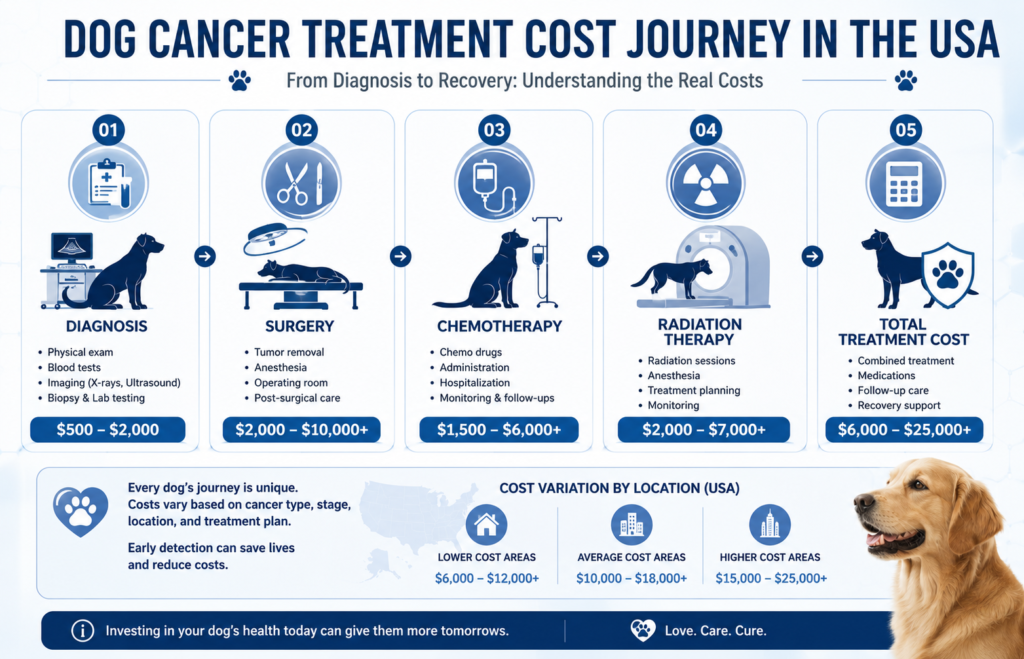
| Treatment Type | Cost Range |
|---|---|
| Diagnosis & staging workup | $700 – $3,000 |
| Tumor removal surgery (simple) | $500 – $2,000 |
| Tumor removal surgery (complex) | $2,000 – $6,000+ |
| Chemotherapy — full protocol | $3,000 – $10,000 |
| Radiation — palliative | $1,000 – $3,500 |
| Radiation — curative intent | $4,500 – $10,000+ |
| Stereotactic radiosurgery (SRS) | $1,800 – $10,500 |
| Immunotherapy (tumor vaccine) | $1,500 – $2,500 |
| Post-treatment monitoring (year 1) | $600 – $2,000 |
| Full cancer journey — moderate case | $5,000 – $12,000 |
| Full cancer journey — aggressive case | $10,000 – $20,000+ |
Table of Contents
- Step 1: Diagnosis and Staging — The Costs Before Treatment Begins
- Step 2: Surgery — What Tumor Removal Actually Costs
- Step 3: Chemotherapy — What You’re Really Paying Per Session and Total
- Step 4: Radiation Therapy — The Most Expensive and Least Accessible Treatment
- What It Costs by Cancer Type — Real Totals Per Diagnosis
- What Makes Dog Cancer Costs Higher or Lower
- The 3 Treatment Tiers — Choosing Based on Goals and Budget
- Does Pet Insurance Cover Dog Cancer Treatment?
- Financial Help for Dog Cancer in the USA
- What To Do in the First 72 Hours After a Diagnosis
- Action Checklist
- FAQ
Step 1: Diagnosis and Staging — The Costs Before Treatment Begins
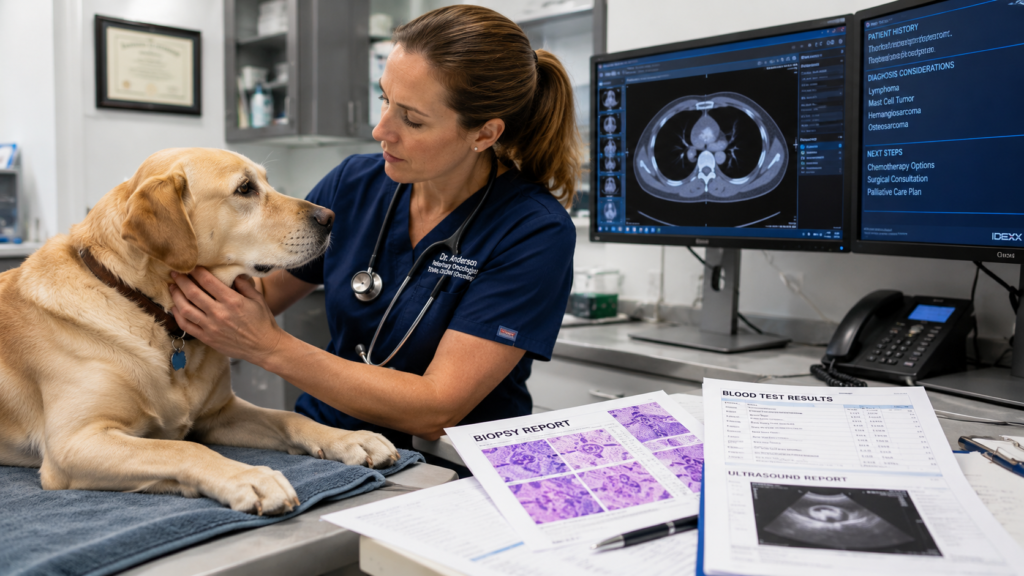
Before any treatment can start, your vet or oncologist needs to confirm what type of cancer it is, how aggressive it is, and whether it has spread. This diagnostic and staging workup is often the first major expense — and many families don’t budget for it.
Before treatment begins, expect: biopsy ($200–$500), staging bloodwork ($150–$400), chest X-rays ($150–$350 to check for spread), abdominal ultrasound ($200–$500 to check organs), and sometimes a CT scan ($800–$2,500) or MRI ($1,500–$3,000).
Full diagnostic workup breakdown:
| Test | Purpose | Cost Range |
|---|---|---|
| Oncologist consultation | Specialist evaluation, treatment plan | $150 – $500 |
| Fine needle aspirate (FNA) | First-look cell sample, no anesthesia | $50 – $200 |
| Biopsy (simple punch) | Confirms tumor type and grade | $200 – $500 |
| Biopsy (surgical/complex) | Deep or hard-to-reach masses | $500 – $2,500 |
| Staging bloodwork (CBC + chemistry) | Organ function, baseline health | $150 – $400 |
| Chest X-rays | Checks for lung spread | $150 – $350 |
| Abdominal ultrasound | Checks organs for spread | $200 – $500 |
| CT scan | Precise tumor mapping, radiation planning | $800 – $2,500 |
| MRI | Brain, spinal, soft tissue detail | $1,500 – $3,000 |
| Pathology report / histopathology | Lab analysis of biopsy sample | $150 – $400 |
The diagnostic workup alone can cost $700–$2,000+ before any treatment starts. For complex cases requiring CT scanning and specialist biopsy, staging costs can reach $400–$3,000 depending on the methods used.
Read Related Article… Dog MRI Cost in the USA (2026): Average Cost, Insurance Coverage & Financing
A common mistake is assuming the first bill — the initial vet visit where a lump is found — is the full diagnostic cost. It usually isn’t. The oncology referral, specialist consultation, biopsy pathology, and staging imaging are separate bills that arrive before your dog has received any treatment at all.
What you can ask to reduce diagnosis costs:
- Ask whether a fine needle aspirate can replace a full biopsy for the initial assessment — FNA is much cheaper ($50–$200 vs. $500+) and sometimes provides enough information to begin planning
- Ask if basic staging (chest X-rays + bloodwork) can wait until after pathology confirms the cancer type — not every cancer requires a CT scan before treatment begins
- Check whether your regular vet can run the staging bloodwork at their lower rates rather than at the specialty oncology center
Step 2: Surgery — What Tumor Removal Actually Costs
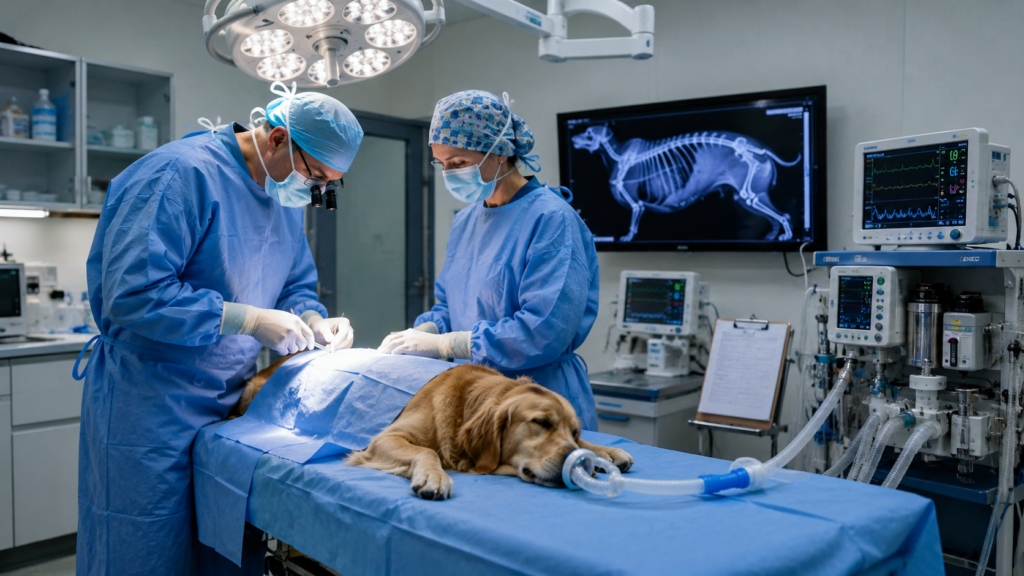
Surgery is often the first treatment recommended for solid tumors. For localized cancers caught early, it can also be the only treatment needed. The range is enormous — from a few hundred dollars for a simple skin mass to several thousand for internal tumor removal.
Surgery cost breakdown:
| Surgery Type | Typical Cost Range |
|---|---|
| Simple skin mass removal (small, surface) | $250 – $800 |
| Skin mass removal (large or multiple) | $800 – $2,000 |
| Mast cell tumor removal | $500 – $2,500 |
| Mammary tumor removal | $500 – $2,500 |
| Splenectomy (hemangiosarcoma) | $1,500 – $4,000 |
| Limb amputation (osteosarcoma) | $2,000 – $5,000 |
| Oral tumor / mandibulectomy | $1,500 – $4,500 |
| Internal abdominal tumor removal | $2,000 – $6,000+ |
| Brain tumor surgery | $4,000 – $10,000+ |
Read Related Article…. Does Pet Insurance Cover Surgery? What Dog Owners Need to Know
Dog cancer surgery cost usually ranges from $800 to $6,000+, depending on tumor type, location, imaging, pathology, and follow-up care.
What most estimates don’t include — and what inflates the final bill — is everything that surrounds the surgery itself:
- Pre-surgical bloodwork and imaging: $200–$600
- Anesthesia and monitoring: $300–$800
- Post-operative hospitalization: $200–$600 per night
- Histopathology of removed tissue (mandatory for cancer): $150–$400
- Pain medications to go home: $50–$150
- Follow-up recheck in 2 weeks: $75–$200
A mass removal quoted at $800 by the surgeon can arrive at $1,500–$2,000 by checkout when pre-surgical labs, pathology, and post-op medications are included.
Read Related Article… Dog Surgery Cost in the USA: Real Prices for 2026
The margin status question — and why it matters financially:
After surgery, the pathology lab examines the removed tissue to determine whether the tumor was removed with clean margins (no cancer cells at the edges). If margins are incomplete, a second surgery, radiation, or chemotherapy is typically recommended. That second round of costs is real and worth asking about upfront.
Ask before surgery: “If the margins come back incomplete, what are the likely next-step costs?” That question gives you a more honest total cost range before you commit.
Step 3: Chemotherapy — What You’re Really Paying Per Session and Total
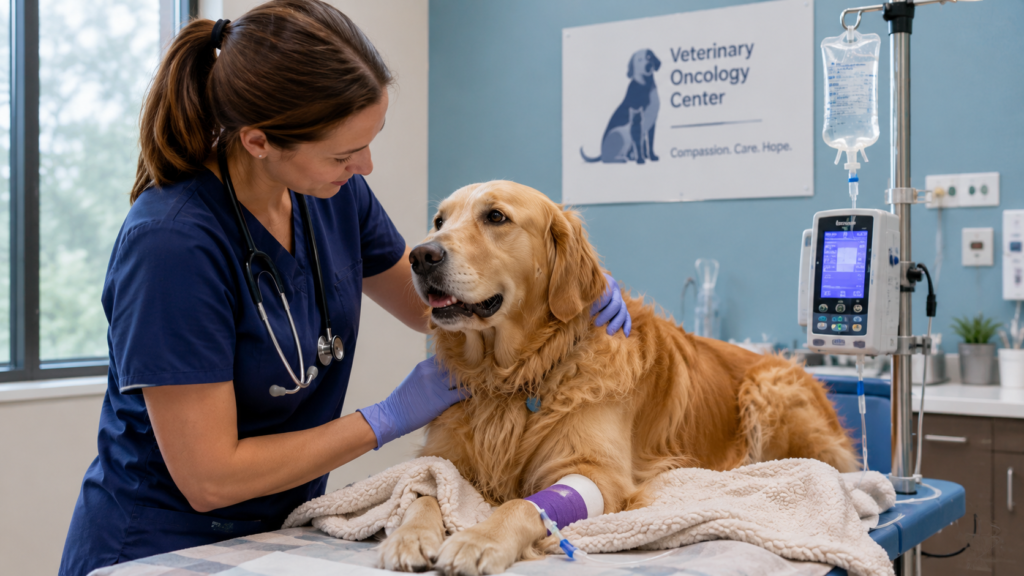
Chemotherapy is the most commonly needed treatment after a cancer diagnosis — either as the primary approach (especially for lymphoma and other systemic cancers) or as a follow-up to surgery to address remaining cancer cells.
Per-session costs:
The average cost of chemotherapy for dogs ranges from $150 to $600 per dose according to the Veterinary Cancer Society. That range covers the drug cost and administration. It doesn’t include the bloodwork required before every session, the anti-nausea medication given at each visit, or the oncologist’s monitoring fee.
What every chemo visit actually costs:
| Line Item | Cost Per Visit |
|---|---|
| Chemotherapy drug + administration | $150 – $600 |
| Pre-session bloodwork (CBC) | $75 – $200 |
| Anti-nausea medication (Cerenia) | $35 – $75 |
| Oncologist visit / monitoring fee | $50 – $150 |
| Total per session (realistic) | $310 – $1,025 |
A single “chemo session” that costs $400 in drug fees often runs $600–$800 total once all line items are added.
Full protocol costs by duration:
| Protocol Length | Sessions | Total Range |
|---|---|---|
| Short (lymphoma induction) | 6–8 sessions | $2,000 – $5,000 |
| Standard (4–6 months) | 10–16 sessions | $4,000 – $9,000 |
| Extended / maintenance | 20+ sessions | $8,000 – $15,000+ |
Chemotherapy runs $3,000–$10,000 for a full protocol over 4–6 months. For larger dogs, the total runs higher — drug doses are calculated by body weight, so a 90-pound Rottweiler may cost 30–50% more per session than a 30-pound Beagle receiving the same protocol.
One cost-reduction option most owners don’t know about:
Some chemotherapy drugs used in veterinary oncology are also used in human medicine and are available as lower-cost generic medications. Cyclophosphamide, doxorubicin, and chlorambucil all have human generic equivalents. Ask your oncologist specifically: “Are any drugs in my dog’s protocol available as human generics at a lower cost?” For a months-long protocol, this can save $500–$2,000 in drug costs alone.
Step 4: Radiation Therapy — The Most Expensive and Least Accessible Treatment
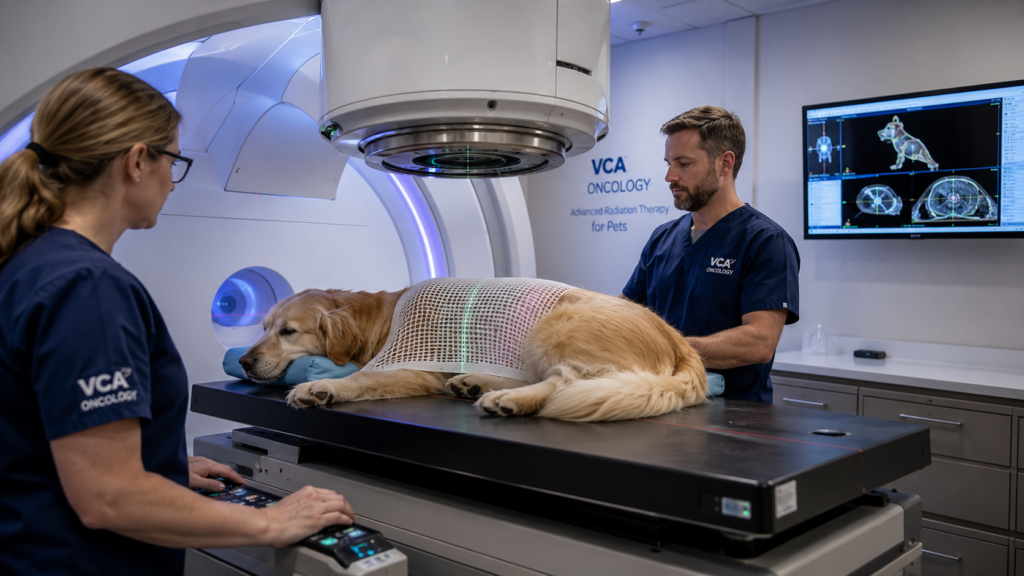
Radiation is both the most powerful tool available for certain cancers — and the most logistically complicated. Only major veterinary specialty hospitals and university veterinary schools have radiation equipment. Many dog owners in rural areas or smaller cities travel 2–4 hours each way for each session.
Radiation cost breakdown:
| Radiation Type | Sessions | Cost Range |
|---|---|---|
| Palliative radiation (comfort-focused) | 3–6 sessions | $1,000 – $3,500 |
| Definitive / curative radiation | 15–20 sessions | $4,500 – $10,000+ |
| Stereotactic radiosurgery (SRS) | 1–3 sessions | $1,800 – $10,500 |
Cornell University College of Veterinary Medicine places radiation therapy in the range of approximately $2,500–$7,000.
Each radiation session requires general anesthesia — adding $150–$350 per visit on top of the session fee. A 20-session definitive protocol at a specialty center means 20 separate anesthesia events, which adds $3,000–$7,000 in anesthesia costs alone to the radiation bill.
Read Related Article… Emergency Vet Costs in the USA (2026): What You’ll Really Pay by State
Palliative vs. curative radiation — a real financial decision:
Curative-intent radiation aims to eliminate or significantly reduce the tumor. It requires more sessions over several weeks and often includes CT-based treatment planning ($800–$1,500 as a separate charge).
Palliative radiation uses fewer, larger doses to reduce tumor size, relieve pain, and improve quality of life without aiming for cure. It costs significantly less, causes fewer side effects, and is often the right choice when cure isn’t a realistic goal or when the dog is older with a shorter expected prognosis.
This is a conversation worth having directly with your oncologist: “Given my dog’s cancer type and stage, what is the realistic difference in outcome between palliative and curative radiation — and is the cost difference justified?” Getting an honest answer to that question shapes the financial decision significantly.
University hospitals as a cost alternative:
Radiation is only available at specialty veterinary hospitals and university clinics, so you may need to factor in travel and lodging if there isn’t a facility nearby. University veterinary schools — including UC Davis, Cornell, Colorado State, Texas A&M, and the University of Wisconsin — offer radiation services at rates typically 20–40% lower than private specialty centers. Wait times may be longer, but the quality of care is equivalent and often superior due to oncology faculty involvement. In some cases, university veterinary hospitals may offer lower treatment costs than private specialty centers, although pricing varies by institution and case complexity.
What It Costs by Cancer Type — Real Totals Per Diagnosis
This is the section most cost articles skip — not per-treatment ranges, but realistic total costs for the most common dog cancers from diagnosis through completion.
Lymphoma
The most common dog cancer. Usually treated with chemotherapy alone (the CHOP or Madison-Wisconsin protocol). No surgery typically required.
| Phase | Cost |
|---|---|
| Diagnosis + staging | $500 – $1,200 |
| Chemotherapy (25-week protocol) | $5,000 – $9,000 |
| Monitoring and follow-up (year 1) | $800 – $1,500 |
| Estimated total | $6,000 – $12,000 |
In many cases of canine lymphoma, remission rates are around 80–90%, with an average remission lasting 9–10 months. Many dogs relapse and require a second protocol, which adds $3,000–$7,000.
Mast Cell Tumor
The most common skin cancer in dogs. Treatment depends heavily on grade — low-grade tumors may need surgery only; high-grade tumors often require surgery plus chemotherapy.
| Scenario | Cost Range |
|---|---|
| Low-grade: surgery only | $800 – $3,000 |
| High-grade: surgery + chemo | $4,000 – $10,000 |
| With radiation (incomplete margins) | $8,000 – $15,000 |
Osteosarcoma (Bone Cancer)
Standard of care is limb amputation followed by chemotherapy. Without treatment, median survival is 1–2 months. With amputation plus chemotherapy, median survival extends to approximately 10–12 months.
| Phase | Cost |
|---|---|
| Diagnosis + staging (X-rays, CT, biopsy) | $800 – $2,500 |
| Amputation surgery | $2,000 – $5,000 |
| Chemotherapy (carboplatin or doxorubicin protocol) | $3,000 – $7,000 |
| Post-treatment monitoring | $600 – $1,500 |
| Estimated total | $6,000 – $15,000 |
Hemangiosarcoma (Spleen or Heart)
Aggressive cancer of blood vessel cells. Often discovered only when the spleen ruptures — meaning the first presentation is frequently an emergency. Surgery (splenectomy) is followed by chemotherapy.
| Phase | Cost |
|---|---|
| Emergency splenectomy (often unplanned) | $2,000 – $5,000 |
| Emergency hospitalization | $1,000 – $3,000 |
| Post-surgical chemotherapy | $3,000 – $6,000 |
| Estimated total | $5,000 – $14,000 |
Hemangiosarcoma is particularly common in Golden Retrievers and German Shepherds. Median survival with surgery plus chemotherapy is approximately 6–8 months.
What Makes Dog Cancer Costs Higher or Lower
Two dogs with the same cancer diagnosis can have very different total bills. Here’s what actually controls that difference.
Dog size. Chemotherapy and anesthesia doses are calculated by body weight. A 100-pound Great Dane costs significantly more per chemo session than a 25-pound Cocker Spaniel receiving the same drug protocol — sometimes 2–3x more per dose. For long protocols, this difference compounds substantially.
Cancer location. A skin tumor on the leg is surgically straightforward. A tumor near the spine, inside the abdomen, or at the base of the skull requires specialist surgeons, longer operating time, more complex anesthesia monitoring, and sometimes intraoperative imaging. Location directly determines which tier of surgical cost applies.
Geographic location. Veterinary costs in San Francisco, New York City, Boston, and Seattle run 30–60% above national averages. The same chemotherapy protocol that costs $6,000 in Kansas City may cost $9,000–$10,000 at a Los Angeles specialty center. Rural areas and cities with university veterinary hospitals tend to be at the lower end.
General practice vs. specialty center. A board-certified veterinary oncologist at a specialty hospital charges more per visit than a general practitioner who administers chemotherapy. Specialist care often provides more treatment options and better monitoring — but the cost difference is real and worth understanding upfront.
Treatment goal. Curative-intent treatment — pursuing remission or cure — costs substantially more than palliative care focused on comfort and quality of life. Neither is objectively right; the right choice depends on your dog’s specific cancer, realistic prognosis, and your family’s circumstances.
Whether treatment is planned or emergency. Hemangiosarcoma often presents as a ruptured spleen requiring emergency surgery. That emergency context — after-hours, ICU hospitalization, critical care team — adds $1,500–$3,000 over what the same surgery would cost as a planned procedure.
The 3 Treatment Tiers — Choosing Based on Goals and Budget
This is the framework most oncology articles skip — and the one that actually helps families make decisions.
Dog cancer treatment doesn’t have a single right answer. There are three realistic approaches, each with different cost implications and different outcomes.
Tier 1 — Comfort-Focused Care
Cost range: $500 – $3,000 total
Goal: Quality of life, pain management, extending good time without aggressive intervention.
What’s included:
- Basic diagnostics to understand what you’re dealing with
- Pain management medications (NSAIDs, gabapentin, steroids)
- Palliative oral chemotherapy for appropriate cancers (prednisone, lomustine)
- Palliative radiation (3–6 sessions) if the tumor is causing pain
- Regular recheck appointments for monitoring
Best for: Advanced-stage cancers with poor prognosis, elderly dogs with other health conditions, families working within tight financial constraints, or when the goal is comfort rather than remission.
Tier 2 — Standard Active Treatment
Cost range: $3,000 – $10,000 total
Goal: Remission, extending life with good quality, treating the primary cancer without every available tool.
What’s included:
- Full staging workup
- Surgery or chemotherapy as the primary treatment
- Post-treatment monitoring
- Supportive medications
Best for: Dogs with cancers that respond well to one primary treatment modality, owners pursuing active treatment within a realistic financial range, cancers where surgery or chemo alone has a meaningful impact.
Tier 3 — Aggressive Multi-Modal Treatment
Cost range: $10,000 – $20,000+ total
Goal: Maximum possible remission time, every available treatment tool combined.
What’s included:
- Complete staging workup including CT/MRI
- Surgery + chemotherapy + radiation (combination protocols)
- Specialist surgery when needed
- Full post-treatment monitoring and follow-up
Best for: Dogs with cancers where combination therapy meaningfully extends survival, younger dogs with otherwise good health, families who have insurance coverage or the financial capacity to pursue aggressive care.
None of these tiers is the “right” choice. A dog receiving Tier 1 comfort care can have more quality time than a dog receiving Tier 3 aggressive treatment, depending on the cancer. The tier that’s right for your family depends on your dog’s specific cancer, their overall health, the realistic prognosis your oncologist shares honestly, and your financial situation.
Does Pet Insurance Cover Dog Cancer Treatment?
Yes — comprehensive accident-and-illness pet insurance covers cancer treatment when the cancer is a new diagnosis made after enrollment and past the waiting period. Coverage includes chemotherapy, radiation, surgery, diagnostics, specialist fees, and medications.
The critical conditions:
- The cancer must not be pre-existing (no documented symptoms before enrollment)
- The diagnosis must occur after the illness waiting period (typically 14 days)
- You need an accident-and-illness plan — accident-only plans do not cover cancer
What 80% reimbursement actually returns on cancer treatment:
| Total Treatment Cost | After $250 Deductible | At 80% Reimbursement | You Pay |
|---|---|---|---|
| $5,000 | $4,750 | $3,800 back | $1,200 |
| $10,000 | $9,750 | $7,800 back | $2,200 |
| $15,000 | $14,750 | $11,800 back | $3,200 |
| $20,000 | $19,750 | $15,800 back | $4,200 |
The annual limit warning:
Cancer treatment often spans more than one policy year. If your plan has a $5,000 or $10,000 annual limit, that cap can be exhausted mid-treatment on aggressive protocols. For cancer specifically, an unlimited or $15,000+ annual limit plan is worth the higher premium — especially for high-risk breeds like Golden Retrievers, Bernese Mountain Dogs, and Rottweilers.
If your dog is already diagnosed:
A new policy won’t cover the current cancer. But it will cover everything else your dog might need going forward — making it worth enrolling even mid-treatment if your dog has a reasonable prognosis. Read the full coverage details in our companion article: Does Pet Insurance Cover Cancer Treatment?
Financial Help for Dog Cancer in the USA
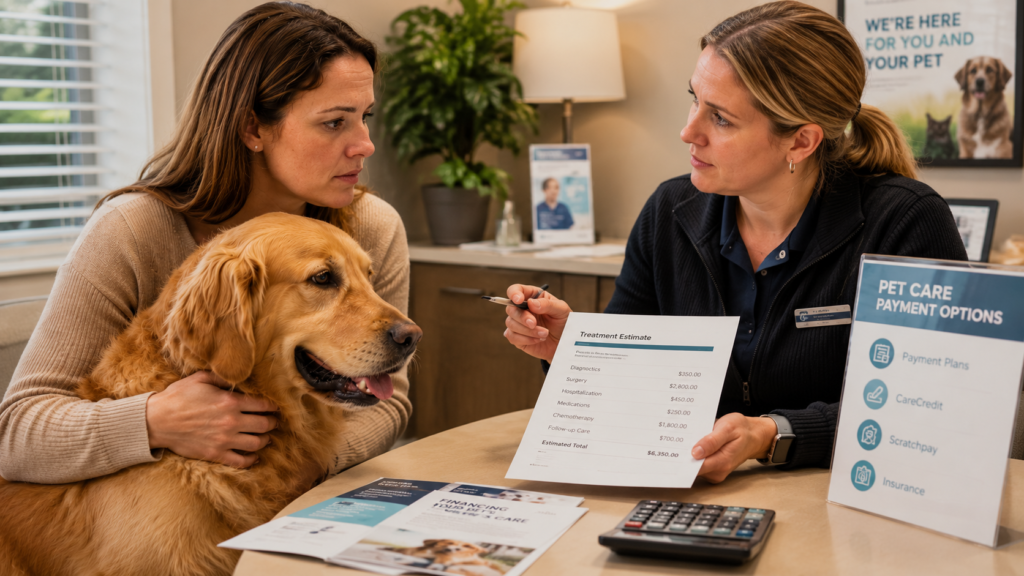
If insurance isn’t in place and the cost is beyond reach, these are the options that actually exist — with realistic eligibility criteria.
| Option | Best For |
|---|---|
| CareCredit | Immediate financing |
| Scratchpay | Monthly payments |
| Live Like Roo | Cancer grants |
| University Hospitals | Lower treatment costs |
Read Related Article … Best Vet Payment Plans in the USA (2026): CareCredit vs Scratchpay
Financing Options
CareCredit
A healthcare credit card accepted at most veterinary specialty hospitals and oncology centers. Offers 0% promotional financing for 6–24 months on balances paid in full before the period ends. Apply online or at the clinic — approval takes minutes. Deferred interest applies if you don’t pay the full balance by the end of the promotional period — read the terms carefully.
Scratchpay
Veterinary-specific installment financing with no deferred interest. Offers fixed payment plans from $200 to $25,000+. Apply at the clinic or online. Often easier to qualify for than traditional credit cards. Good alternative if CareCredit isn’t available or doesn’t cover the full amount needed.
Nonprofit Grant Programs
Live Like Roo (wearethecure.org)
Grants ranging from $500–$1,500 for dogs with a confirmed cancer diagnosis. Application requires medical records and financial documentation. One of the more accessible programs for general US residents.
The Magic Bullet Fund (themagicbulletfund.org)
Specifically for dogs with cancer whose treatment may extend life by a year or more. Allows owners to post their dog’s story and raise funds through a community platform.
Riedel & Cody Fund
Grants for families with combined household income under $50,000 and a cancer diagnosis from a board-certified veterinary oncologist. Pays directly to the oncology clinic.
Read Related Article… 15 Organizations That Help Pay Vet Bills When You Can’t Afford Care (2026)
RedRover Relief provides funding to pet owners to help care for animals in life-threatening situations for households with income under $60,000. The average grant is approximately $250 — meaningful for medication costs but not for full treatment funding.
The Pet Fund (thepetfund.com)
Provides financial assistance up to $500 for non-emergency veterinary care including cancer treatment. Has a waitlist; better for ongoing treatment costs than one-time emergency funding.
Dog and Cat Cancer Fund (dccfund.org)
Works directly with veterinarians to help families who cannot afford cancer treatment. Pays the vet directly.
Read Related Article… Can’t Afford an Emergency Vet Bill? 15 Real Ways Dog Owners Find Help (2026)
Paws 4 A Cure (paws4acure.org)
Maximum one-time grant of $500. Applications are competitive and funding is limited — apply early, as grants are often exhausted.
University Veterinary Hospitals
This is the most underused cost-reduction option. University veterinary schools provide oncology services — including chemotherapy, radiation, and surgery — at rates 20–40% below private specialty centers. Faculty oncologists are board-certified specialists, and case complexity is often an advantage because challenging cases are teaching opportunities.
Major US university veterinary hospitals with oncology programs:
- UC Davis Veterinary Medical Teaching Hospital (Davis, CA)
- Cornell University Hospital for Animals (Ithaca, NY)
- Colorado State University Veterinary Teaching Hospital (Fort Collins, CO)
- Texas A&M Veterinary Medical Teaching Hospital (College Station, TX)
- University of Wisconsin School of Veterinary Medicine (Madison, WI)
- University of Minnesota Veterinary Medical Center (St. Paul, MN)
Clinical Trials
Some veterinary schools and specialty research hospitals offer free or reduced-cost treatment through clinical cancer trials. Dogs enrolled in trials receive standard-of-care treatment at no or reduced cost in exchange for contributing to research. The Veterinary Cancer Society (vetcancersociety.org) maintains a directory of active trials.
What To Do in the First 72 Hours After a Diagnosis
The first three days after a cancer diagnosis are emotionally overwhelming — and they’re also when the most important financial decisions get made under pressure. Having a clear sequence helps.
Within 24 hours:
- Call your pet insurance provider and ask specifically about your plan’s cancer coverage and annual limit status. Get the determination in writing if possible.
- If you don’t have insurance, apply for CareCredit online before your next vet appointment — approval takes minutes and having it in place eliminates the “I need to figure out payment” stress at the oncology consultation.
- Ask your regular vet for a written referral to a board-certified veterinary oncologist if one hasn’t been given.
Before your oncology consultation (usually within 48–72 hours):
- Write down every question you want answered about costs — not just treatment options. Oncologists are medical specialists; cost conversations are often better initiated by the owner.
- Research the nearest university veterinary hospital and check wait times for new oncology patients. A one-week delay may be worth $2,000–$4,000 in savings on a long treatment protocol.
- Ask your oncologist’s office for an itemized estimate before the first appointment if possible — some will provide this.
Read Related Article.. Emergency Vet Visit Cost at Night in the USA (2026)
At the first oncology consultation:
- Tell your oncologist your financial range directly. Most oncologists are experienced at designing treatment plans within financial constraints and will not judge you for naming a budget.
- Ask for the realistic prognosis with different treatment tiers — not just what’s medically possible, but what outcomes are actually achievable.
- Ask: “What happens if we pursue Tier 1 comfort care instead of aggressive treatment? What is the quality of life difference realistically?”
- Get the full estimated cost in writing, including what’s billed separately from the main procedure.
Action Checklist
- [ ] Confirm your pet insurance plan type (accident-only vs. accident & illness) and annual coverage limit
- [ ] Contact your insurer within 24 hours of diagnosis to ask about cancer coverage status
- [ ] Apply for CareCredit now if not already in place — before the oncology appointment
- [ ] Request a written oncology referral from your regular vet if not already given
- [ ] Research the nearest university veterinary hospital with an oncology program
- [ ] Prepare a direct financial range to share with your oncologist at the first consultation
- [ ] Ask for an itemized cost estimate before or during the oncology consultation
- [ ] Ask your oncologist about generic drug alternatives for any oral chemotherapy medications
- [ ] If uninsured, apply to Live Like Roo and Riedel & Cody Fund as early as possible — waitlists exist
- [ ] Ask your oncologist about active clinical trials for your dog’s cancer type
- [ ] Request a second opinion from a university hospital oncologist if the treatment plan is complex or costs are very high
External Authority Sources
- Cornell University College of Veterinary Medicine — Cancer Management FAQ
- Veterinary Cancer Society
- National Canine Cancer Foundation / Live Like Roo
- CareCredit Dog Chemotherapy Cost Guide
- AVMA — Cancer in Pets
- Paws 4 A Cure
- RedRover Relief

What You Should Do Next
If you’re reading this because your dog was just diagnosed — the most important thing is to get a consultation with a board-certified veterinary oncologist before making any treatment decisions. General practitioners are not always current on the full range of treatment options or realistic cost structures for specific cancers. An oncologist gives you the most accurate picture of what’s possible and what it will realistically cost.
If you’re reading this while your dog is healthy — the $400–$900 annual premium for comprehensive pet insurance looks very different from where you’re sitting now than it did before you saw these numbers. For high-risk breeds especially, that premium is the most cost-effective financial decision available.
The financial piece of a cancer diagnosis is genuinely manageable with the right information and the right preparation. The owners who navigate it with the least additional stress are the ones who had answers to these questions before they needed them.
Frequently Asked Questions
How much does dog cancer treatment cost on average in the USA?
Dog cancer treatment typically costs $5,000–$12,000 for moderate cases and $10,000–$20,000+ for advanced treatment involving surgery, chemotherapy, and radiation. Initial diagnosis and staging alone may cost $700–$3,000 before treatment begins.
What is the cheapest dog cancer treatment option?
Comfort-focused palliative care is usually the most affordable option, costing around $500–$3,000. It focuses on pain relief and quality of life rather than curing the cancer. Some low-grade tumors may only require surgery.
Does chemotherapy hurt dogs?
Most dogs tolerate chemotherapy well because veterinary oncologists use lower doses than those used in human medicine. The goal is to maintain a good quality of life, so severe side effects are much less common.
How long does dog cancer treatment take?
Treatment length depends on the cancer type. Surgery may require only a few weeks of recovery, while chemotherapy often lasts 4–6 months. Radiation therapy usually takes 3–5 weeks, although some cancers need ongoing monitoring afterward.
Does pet insurance cover dog cancer treatment?
Yes, most accident-and-illness pet insurance plans cover cancer treatment if the condition isn’t pre-existing and the waiting period has passed. Coverage may include diagnostics, surgery, chemotherapy, radiation, and prescription medications
Are there cheaper alternatives to specialty hospital cancer treatment?
Yes. University veterinary hospitals often provide oncology services at lower prices than private specialty centers. Some owners also reduce costs by using generic medications or choosing palliative treatment when appropriate.
What financial help is available for dog cancer treatment?
Many owners use CareCredit or Scratchpay for financing. Nonprofit organizations like Live Like Roo, The Pet Fund, and RedRover Relief may also provide financial assistance for eligible families.
Does dog cancer treatment extend life?
It depends on the cancer type and stage. Many dogs experience significantly longer survival with appropriate treatment, while others benefit mainly from improved comfort and quality of life. Your veterinarian or veterinary oncologist can explain the expected outcome for your dog’s diagnosis.
Is dog cancer treatment worth the cost?
The answer depends on your dog’s prognosis, expected quality of life, and your financial situation. Discussing treatment goals and realistic outcomes with a veterinary oncologist can help you make the best decision for your family.
Can I treat my dog’s cancer if I can’t afford the full cost?
Yes, many veterinary oncologists can recommend lower-cost treatment plans, payment options, or palliative care. Financing services and nonprofit assistance programs may also help reduce the financial burden.
Which dog breeds have the highest risk of cancer?
Breeds such as Golden Retrievers, Boxers, Bernese Mountain Dogs, Rottweilers, and German Shepherds have a higher risk of developing certain types of cancer. Early detection and regular veterinary checkups can improve treatment options.
Disclaimer:
This article is for informational and educational purposes only. Cost data reflects 2026 national averages from NAPHIA, Insurify, and MetLife Pet Insurance and will vary based on your dog’s age, breed, location, and the specific plan you choose. PetInsurePrime does not sell pet insurance and receives no compensation from any insurance provider. Always compare multiple quotes and read your policy documents carefully before enrolling.
PetInsurePrime | Independent • Research-Based | Helping US dog owners understand real vet costs and coverage options — without the sales pressure.