
Updated: September 2026| Reading Time: 17minutes
Your dog is anemic, bleeding, or in shock, and the vet just said the word “transfusion.” Whatever brought you here — trauma, a toxin, an underlying illness — you need a number, and you need to know if that number is the whole story or just the beginning of one.
Quick Answer : Dog Blood Transfusion Cost
A dog blood transfusion typically costs $500 to $3,000 for the transfusion episode itself, including blood typing, crossmatching, and the blood product. But the transfusion is often not your entire bill — when hospitalization, diagnostics, and treatment of the underlying cause are added, the total emergency bill can reach $3,000 to $5,000 or more, especially at specialty or referral hospitals.
Quick Cost Summary
| Component | Typical Cost | Notes |
|---|---|---|
| Emergency exam | $100–$300 | Initial assessment and stabilization |
| Bloodwork | $150–$400 | Confirms anemia/blood loss severity |
| Blood typing | $50–$150 | Identifies compatible blood type |
| Crossmatching | $75–$200 | Reduces risk of transfusion reaction |
| Blood product (per unit) | $150–$500+ | Varies by type (whole blood, packed RBCs, plasma) and dog size |
| Administration + monitoring | $200–$600 | Transfusion takes 1–4 hours, requires close observation |
| Hospitalization (if needed) | $500–$1,500/day | Common for 1–3+ days depending on the underlying cause |
| Transfusion episode alone | $500–$3,000 | Exam through monitoring, single transfusion |
| Total bill with hospitalization/workup | $3,000–$5,000+ | Common when an underlying condition also needs treatment |
Table of Contents
- What Does the Cost of a Dog Blood Transfusion Include?
- Dog Blood Transfusion Cost Breakdown
- Why Your Total Emergency Vet Bill Can Be Much Higher
- Whole Blood vs. Packed Red Blood Cells vs. Plasma: How Type Affects Cost
- How Long Does a Dog Blood Transfusion Take?
- How Many Transfusions Might a Dog Need?
- What Are the Risks of a Blood Transfusion in Dogs?
- Realistic Bill Scenarios: Lower, Typical, and Complex Cases
- Why Might a Dog Need a Transfusion?
- How Long Does a Dog Stay in the Hospital After a Blood Transfusion?
- Does Pet Insurance Cover Dog Blood Transfusions?
- What If You Can’t Afford Your Dog’s Blood Transfusion?
- Questions to Ask Your Veterinarian Before Approving Treatment
- FAQ
What Does the Cost of a Dog Blood Transfusion Include?
The price you’re quoted for “a transfusion” usually bundles several distinct steps, not just the blood itself.
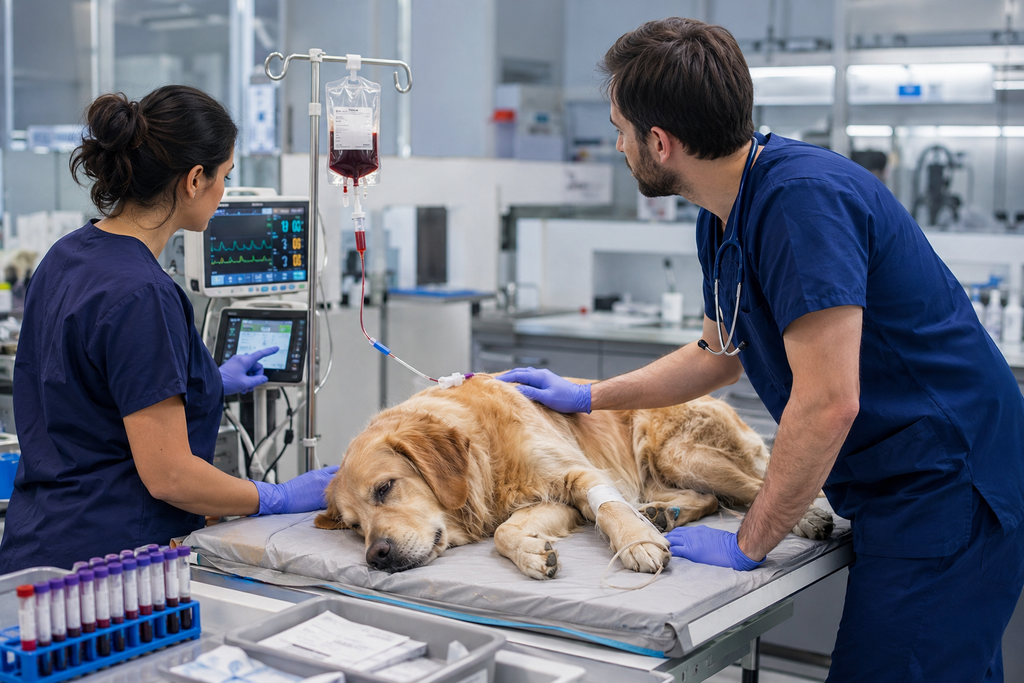
Blood typing confirms which blood type your dog has, since giving mismatched blood risks a dangerous reaction. Blood typing helps identify compatible blood. Crossmatching checks for donor-recipient incompatibilities and becomes especially important when a dog has previously received a transfusion. Your veterinarian decides which compatibility testing is appropriate based on the dog’s history and clinical situation. The blood product itself — whole blood, packed red blood cells, or plasma — is priced by volume, which scales with your dog’s size. Administration covers the equipment and staff time for the transfusion, which typically takes 1 to 4 hours. Monitoring continues throughout and after, watching specifically for transfusion reactions like fever, vomiting, or breathing changes.
Read Related Article… Dog Blood Test Cost in the USA (2026): Real Prices, What Each Panel Tests, and How to Pay Less
Dog Blood Transfusion Cost Breakdown
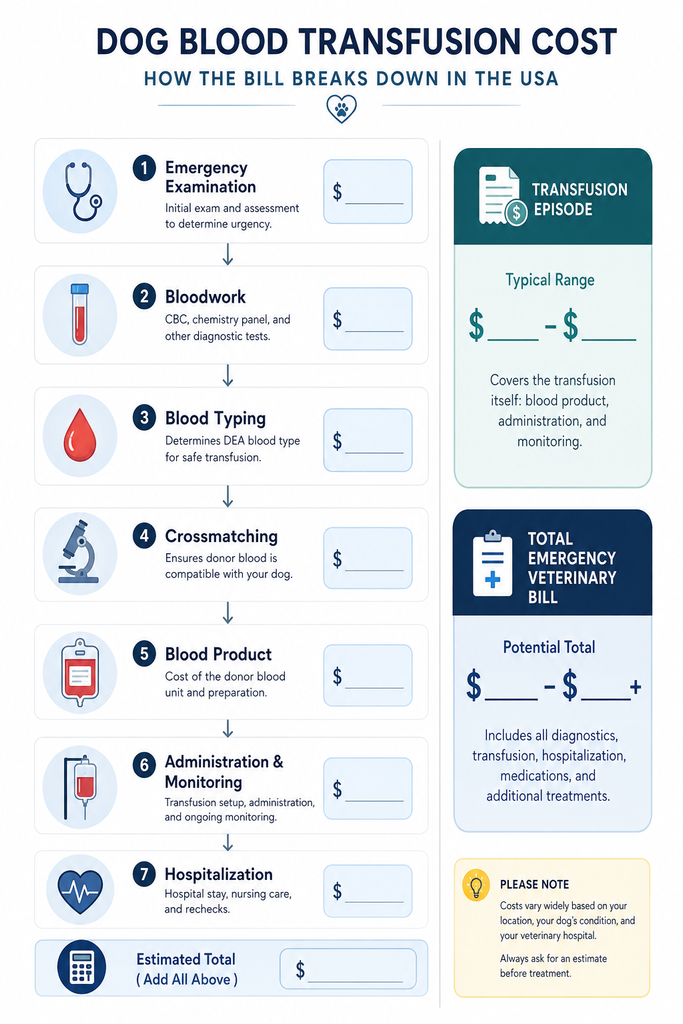
| Cost Component | Why It’s Charged |
|---|---|
| Emergency examination | Assesses severity and confirms a transfusion is needed |
| Bloodwork | Measures red blood cell count and confirms the degree of anemia or blood loss |
| Blood typing | Matches your dog to a compatible blood type |
| Crossmatching | Further reduces risk of a transfusion reaction |
| Blood product | The actual whole blood, packed red cells, or plasma administered |
| Administration | Staff time and equipment for the 1–4 hour procedure |
| Monitoring | Watching for adverse reactions during and after |
| Hospitalization | Stabilization and recovery, if your dog needs to stay |
| Imaging | Identifying the source of bleeding or underlying cause, if needed |
| Surgery | If an injury or bleeding source requires surgical repair |
Why Your Total Emergency Vet Bill Can Be Much Higher
This is the most important thing to understand before you see a final number: the transfusion is rarely the entire bill.
A transfusion treats a symptom — dangerously low blood — not the cause. If your dog needs blood because of trauma, the underlying injury may need surgery. If it’s due to a toxin like rat poison, ongoing antidote treatment and monitoring continue after the transfusion itself. If it’s immune-mediated hemolytic anemia (IMHA), your dog may need days of hospitalization, medication, and possibly repeat transfusions while the underlying disease is brought under control. Specialty and referral hospitals — where more complex transfusion cases are often treated — also carry higher facility overhead than a general emergency clinic, which shows up across every line item, not just the transfusion.
Read Related Article… Emergency Vet Costs in the USA (2026): What You’ll Really Pay by State
Read Related Article… Dog Surgery Cost in the USA: Real Prices for 2026
A practical example: a dog with acute blood loss from a single traumatic injury might need one transfusion, overnight monitoring, and go home the next day — a bill in the $1,500–$2,500 range. A dog with IMHA might need multiple transfusions over several days of hospitalization while immunosuppressive treatment takes effect — a bill that can reach $4,000–$6,000 or more.
Read Related Article… Dog Poisoning Treatment Cost: How Much Will You Pay at the Vet?
Read Reated Article… Emergency Vet Visit Cost at Night in the USA (2026): Real ER Prices & What Can Wait Until Morning
Whole Blood vs. Packed Red Blood Cells vs. Plasma: How Type Affects Cost
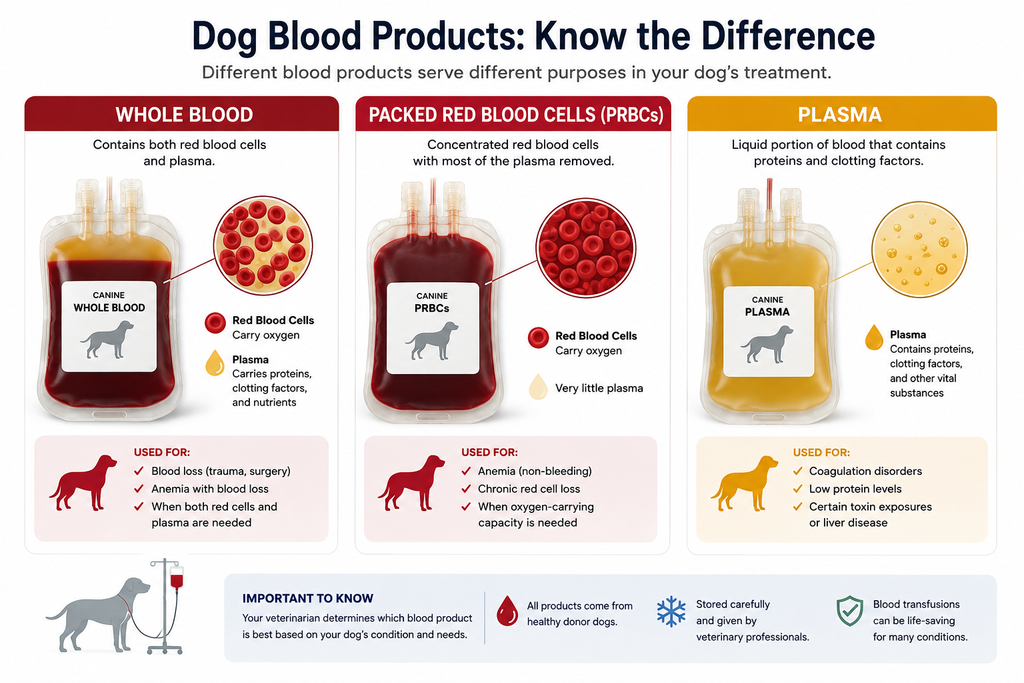
| Blood Product | What It Provides | Typically Used For | Relative Cost |
|---|---|---|---|
| Whole blood | Red cells, plasma, and platelets together | Acute, severe blood loss (trauma) | Highest |
| Packed red blood cells (PRBCs) | Concentrated red cells only | Anemia without major plasma/clotting loss | Middle |
| Plasma | Clotting factors and proteins, no red cells | Clotting disorders, rodenticide poisoning | Varies, often lower per unit but may need larger/repeat doses |
Your vet chooses the product based on what your dog specifically needs, not cost — a dog with a clotting problem from rat poison generally needs plasma, while a dog with severe blood loss from trauma typically needs whole blood or packed red cells. Larger dogs need a larger volume, which scales the blood product cost accordingly.
How Long Does a Dog Blood Transfusion Take?
A dog blood transfusion typically takes about 1 to 4 hours, although the exact time depends on your dog’s condition and how quickly the veterinary team needs to restore blood volume or red blood cells. Dogs that are critically unstable may need blood administered more rapidly, while more stable patients may receive the transfusion more slowly.
The transfusion itself is only part of the time your dog may spend at the veterinary hospital. Before starting, the veterinary team may perform blood testing, determine the appropriate blood product, place an IV catheter, and establish a baseline for monitoring. During the transfusion, your dog’s heart rate, breathing, temperature, blood pressure, and other vital signs are closely monitored for signs of a reaction.
After the transfusion, your veterinarian may recheck your dog’s packed cell volume (PCV) or other blood values to determine whether the transfusion provided the expected improvement. Continued monitoring may also be needed because some transfusion reactions can occur during or after the procedure.
This means a 1–4 hour transfusion does not necessarily mean a 1–4 hour hospital visit. A dog with severe blood loss, immune-mediated hemolytic anemia (IMHA), poisoning, internal bleeding, or another serious condition may need additional diagnostics, treatment, and hospitalization after receiving blood.
If your veterinarian recommends a transfusion, ask whether the estimate covers only the transfusion or also includes the testing, monitoring, hospitalization, and treatment your dog may need afterward.
How Many Transfusions Might a Dog Need?
Some dogs need just one transfusion; others — particularly those with ongoing conditions like immune-mediated hemolytic anemia or active internal bleeding — may need several over the course of treatment, and each additional transfusion adds its own cost.
Your vet typically can’t guarantee upfront how many transfusions will be needed, since it depends on how your dog’s blood counts respond and whether the underlying cause is brought under control. This is one of the biggest reasons final bills can end up meaningfully higher than an initial estimate.
What Are the Risks of a Blood Transfusion in Dogs?
Blood transfusions are generally considered safe and can be lifesaving for dogs with severe anemia or blood loss, but transfusion reactions can still occur. The most common reactions may cause a temporary fever, vomiting, diarrhea, hives, increased heart rate, or faster breathing.
More serious reactions are uncommon but can include a sudden drop in blood pressure, difficulty breathing, weakness, or shock. In some cases, the dog’s immune system can destroy the transfused red blood cells, a process called hemolysis. This can cause signs such as jaundice and may require additional treatment.
There are also non-immune risks. Giving too much blood volume can contribute to fluid overload and respiratory problems, while contaminated blood products can rarely cause infection.
The risk of a serious reaction can be reduced through appropriate blood typing, compatibility testing when indicated, careful handling of blood products, and close monitoring during and after the transfusion. Merck Veterinary Manual recommends blood typing for DEA 1 in dogs and notes that major crossmatching is recommended in dogs more than four days after a previous transfusion.
If your dog is receiving a transfusion, the veterinary team will monitor vital signs and watch for signs of a reaction so treatment can be adjusted quickly if a problem develops.
Realistic Bill Scenarios: Lower, Typical, and Complex Cases
Rather than one flat number, here’s what the total bill can realistically look like depending on complexity:
Lower-complexity case: A dog with acute, isolated blood loss (for example, a minor trauma) needs one transfusion, basic bloodwork, and a few hours of monitoring before going home the same day. Total: roughly $800–$1,800.
Typical emergency case: A dog arrives at the ER with moderate-to-severe anemia, needs emergency exam, bloodwork, typing/crossmatching, one transfusion, and overnight hospitalization for monitoring. Total: roughly $1,800–$3,500.
Complex case: A dog with an underlying condition like IMHA or internal bleeding from a mass needs multiple blood products, several days of ICU-level monitoring, imaging to find the source, and possibly surgery or ongoing medication. Total: roughly $4,000–$8,000+.
Why Might a Dog Need a Transfusion?
A dog may need a blood transfusion when it has lost too much blood, is severely anemic, or is destroying blood cells faster than the body can replace them. In emergencies, transfusion can help restore oxygen-carrying capacity while veterinarians treat the underlying problem.
Common reasons include:
- Severe blood loss: Trauma, internal bleeding, surgery, or a ruptured bleeding tumor can cause rapid blood loss.
- Immune-mediated hemolytic anemia (IMHA): The immune system attacks and destroys the dog’s own red blood cells.
- Toxin exposure: Certain poisons, including some rodenticides, can cause serious bleeding or damage blood components.
- Clotting disorders: Conditions that interfere with normal clotting may require whole blood, plasma, or other blood products.
- Severe anemia: Chronic disease, parasites, cancer, or bone marrow problems can sometimes cause anemia severe enough to require supportive transfusion.
The reason for the transfusion matters financially, too. A dog needing one transfusion after an isolated injury may have a very different bill from a dog with IMHA or ongoing internal bleeding that requires repeated transfusions, diagnostics, medications, and hospitalization.
If your veterinarian recommends a transfusion, ask what caused the anemia, which blood product your dog needs, whether additional transfusions may be necessary, and what treatment is required after the transfusion.
Read Related Article… Dog Cancer Treatment Cost in the USA (2026): Surgery, Chemo & Total Costs
How Long Does a Dog Stay in the Hospital After a Blood Transfusion?
A dog may stay in the hospital for several hours after a blood transfusion, overnight, or for several days depending on why the transfusion was needed and how well the dog responds to treatment. There is no standard hospital stay for every dog.
Dogs that receive a transfusion for a temporary problem and become stable may be monitored for a period after the transfusion and potentially go home the same day or after an overnight stay. Dogs with ongoing blood loss, immune-mediated hemolytic anemia (IMHA), poisoning, severe anemia, infection, or another serious underlying condition may need longer hospitalization while the underlying problem is treated.
Veterinary teams continue monitoring after the transfusion because some reactions can occur during or after administration. Blood values such as packed cell volume (PCV) may also be reassessed to determine whether the transfusion produced the expected improvement.
The length of hospitalization can also have a major effect on your final bill. A dog that needs only a transfusion and short-term monitoring may have a much lower total cost than a dog requiring multiple transfusions, intensive monitoring, diagnostic testing, medication, or several days of hospitalization.
If your veterinarian recommends keeping your dog overnight or longer, ask what specifically requires continued hospitalization, how often bloodwork will be repeated, whether another transfusion may be needed, and what the estimated daily hospitalization cost is. This can give you a clearer picture of the likely total cost before additional charges accumulate.
Does Pet Insurance Cover Dog Blood Transfusions?
Many accident-and-illness pet insurance plans cover medically necessary blood transfusions when they’re related to a covered accident or illness — but coverage depends entirely on your specific policy’s terms, and it would be misleading to say pet insurance simply “covers” transfusions across the board.

Key factors that determine your actual reimbursement: your deductible must typically be met first, your reimbursement percentage (commonly 70–90%) applies to the remaining eligible costs, and your annual limit caps what the policy pays out in a given year. Pre-existing conditions are the biggest wildcard — if the underlying cause of the transfusion (a chronic illness, a previously diagnosed clotting disorder) was present or symptomatic before your policy started, that portion of the claim may be excluded even though the transfusion itself is a new event. Your waiting period also matters — a transfusion needed shortly after enrolling may fall outside the coverage window depending on your insurer’s specific terms.
What If You Can’t Afford Your Dog’s Blood Transfusion?

If the estimate is more than you can cover right now, say so directly to the vet team immediately — transfusion situations are often time-sensitive, so speed in this conversation matters.
Ask for a written, itemized estimate so you understand what’s included. Ask what the immediate, life-saving treatment actually requires right now, versus what could reasonably be discussed after your dog is stabilized. Ask whether multiple transfusions are anticipated, so you can plan for the realistic total rather than just the first one. Ask about CareCredit or Scratchpay, both of which can often approve within minutes and pay the clinic directly. Ask whether a referral or transfer to a different facility is medically appropriate for your dog’s specific case. If you’re insured, contact your provider immediately to understand what may be reimbursed. For the complete breakdown of financing options, grant programs, and questions to ask before agreeing to treatment, see our full guide on what to do if you can’t afford emergency vet surgery.
Read Related Article… Cannot Afford Emergency Vet Surgery USA? 8 Ways to Get Help Now
Read Related Article… Vet Payment Plans: Can You Make Monthly Payments to a Vet? (2026)
A note on how to use this information: these are financial questions to ask alongside your vet’s medical guidance, not alternatives to it — your veterinarian determines what treatment is medically appropriate for your dog.
Questions to Ask Your Veterinarian Before Approving Treatment
- Is this quote for the transfusion alone, or does it include treating the underlying cause?
- Do you expect my dog to need just one transfusion, or possibly more?
- What blood product is being used, and why?
- What’s the plan if my dog needs hospitalization after the transfusion?
- Do you accept CareCredit or Scratchpay?
- If I’m insured, is there anything I should document now for my claim?
Frequently Asked Question
How much does a dog blood transfusion cost?
A dog blood transfusion typically costs about $500–$3,000 in the U.S. The total veterinary bill can be substantially higher when emergency care, diagnostics, hospitalization, repeat transfusions, or treatment of the underlying condition are included.
Is the transfusion cost the same as my total vet bill?
Usually not. The transfusion is only one part of treatment. Your total bill may also include the emergency exam, blood tests, compatibility testing, hospitalization, imaging, surgery, medications, and treatment of the underlying cause.
How long does a dog blood transfusion take?
The transfusion itself commonly takes about 1–4 hours, depending on the blood product, amount needed, and your dog’s condition. The total hospital visit may take longer because your dog may need testing and monitoring before, during, and after the transfusion.
How many blood transfusions might my dog need?
Some dogs need only one transfusion, while others may need multiple transfusions if they have ongoing blood loss, immune-mediated hemolytic anemia (IMHA), severe anemia, or another condition that continues to affect their blood levels.
What are the risks of a blood transfusion in dogs?
Most dogs tolerate transfusions well, but reactions can occur. Possible signs include fever, vomiting, diarrhea, hives, changes in heart or breathing rate, and, more seriously, breathing difficulty or low blood pressure. Your veterinary team monitors your dog for these reactions during and after the transfusion.
Does pet insurance cover dog blood transfusions?
It may. Many accident-and-illness policies can cover medically necessary transfusions when the underlying condition is eligible for coverage. Your deductible, reimbursement rate, waiting period, policy exclusions, and whether the condition is pre-existing can affect what you actually receive. Check your policy or contact your insurer for confirmation.
What’s the difference between whole blood and packed red blood cells?
Whole blood contains red blood cells along with plasma and other blood components, while packed red blood cells primarily provide concentrated red blood cells. Plasma is used when clotting factors or proteins are needed. Your veterinarian chooses the appropriate product based on your dog’s medical condition, not simply its price.
What if I can’t afford my dog’s blood transfusion?
Tell the veterinary team immediately. Ask for an itemized estimate, what treatment is medically urgent, whether additional transfusions may be needed, and whether the hospital offers financing or payment options. You can also ask whether an appropriate referral or transfer is available. For more options, see our guide on what to do if you can’t afford emergency vet surgery.
Is a blood transfusion an emergency for dogs?
It can be. Dogs with severe blood loss or anemia may need urgent stabilization and transfusion. Signs such as collapse, extreme weakness, pale gums, difficulty breathing, heavy bleeding, or vomiting blood warrant immediate veterinary attention.
External Authority Sources
- Merck Veterinary Manual — Blood Transfusions in Dogs and Cats
- PetMD — Dog Blood Transfusions
- AVMA (American Veterinary Medical Association)
- Greyhound Health Initiative — Blood Products Price List (used only as supporting context for blood product cost, clearly framed as wholesale pricing, not owner-billed price)
Disclaimer: This article is for informational and educational purposes only. Cost data reflects 2026 figures from multiple veterinary industry sources and will vary based on your dog’s size, condition, location, and the treating hospital. PetInsurePrime does not sell pet insurance and receives no compensation from any insurance provider.
PetInsurePrime | Independent • Research-Based | Helping US dog owners understand real vet costs and coverage options — without the sales pressure.