
Updated: July 2026 | Reading Time: 20 Minutes
Hearing “your dog has cancer” is one of the hardest things a dog owner faces. The medical decisions are overwhelming enough. Then comes the financial reality — and for most families, it arrives fast. A full cancer treatment protocol can run $10,000 to $20,000 or more depending on the type, stage, and approach.
The question most owners ask in that moment — or, if they’re lucky, before that moment — is whether pet insurance will cover it.
The honest answer is: yes, usually — but with conditions that matter enormously. Here’s what those conditions actually are, how costs break down by treatment type, and what your options look like if your dog is already diagnosed.
Quick Answer Does Pet Insurance Cover Cancer Treatment
Yes — comprehensive accident-and-illness pet insurance plans cover cancer treatment, including chemotherapy, radiation therapy, surgery, diagnostic testing, and related medications. Coverage applies only when the cancer is diagnosed after enrollment and after the waiting period ends. If your dog had any cancer symptoms before your policy started, that cancer will be treated as a pre-existing condition and excluded from coverage. Accident-only plans do not cover cancer at all.
➡ Related Guide: Pet Insurance Waiting Period: How Long Before Coverage Starts? (2026 Guide)
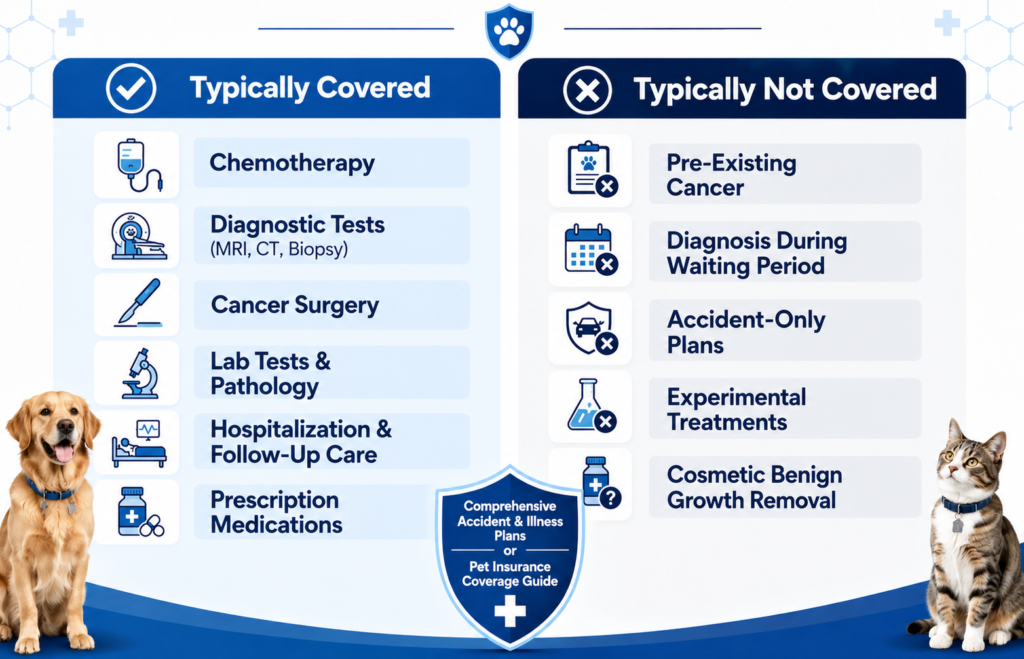
At a Glance: Cancer Coverage Summary
| Treatment / Situation | Covered? |
|---|---|
| Chemotherapy (new diagnosis after enrollment) | ✅ Yes |
| Radiation therapy (new diagnosis after enrollment) | ✅ Yes |
| Tumor removal surgery | ✅ Yes |
| Cancer diagnostics (biopsy, bloodwork, imaging) | ✅ Yes |
| Oncologist consultation fees | ✅ Yes |
| Prescription medications for cancer treatment | ✅ Yes |
| Hospitalization during cancer treatment | ✅ Yes |
| Palliative and pain management care | ✅ Yes (most plans) |
| Cancer diagnosed before enrollment | ❌ No — pre-existing condition |
| Cancer symptoms noted before enrollment | ❌ No — pre-existing condition |
| Cancer diagnosed during waiting period | ❌ No |
| Experimental / unproven immunotherapy | ⚠️ Often excluded |
| Accident-only plan, any cancer type | ❌ No |
| Cosmetic removal of benign growths | ❌ No |
Table of Contents
- Does Pet Insurance Cover Chemotherapy?
- Does Pet Insurance Cover Radiation Therapy?
- Does Pet Insurance Cover Cancer Surgery?
- What Does a Full Dog Cancer Treatment Cost?
- The Annual Limit Problem — A Gap Most Owners Don’t Notice Until It’s Too Late
- What Pet Insurance Won’t Cover for Cancer
- My Dog Was Just Diagnosed — Does Insurance Still Apply?
- Which Dog Breeds Need Cancer Coverage Most
- Should You Buy Pet Insurance Now If Your Dog Is Healthy?
- What To Do If You Can’t Afford Cancer Treatment
- Action Checklist
- FAQ
Does Pet Insurance Cover Chemotherapy?
Most comprehensive accident-and-illness plans when the cancer diagnosis happens after enrollment and past the waiting period.
Chemotherapy for dogs is administered as oral medications, injections, or IV infusions — usually at a veterinary oncologist’s office, sometimes at a specialty hospital. The cost per chemotherapy dose ranges from $150 to $600, according to the Veterinary Cancer Society. Because most protocols require multiple sessions over several months, the full cost adds up quickly.
➡ Related Guide: Pet Insurance for Dogs in the USA: How It Works (2026)
What’s typically covered under a chemo claim:
- Each chemotherapy session and drug cost
- Pre-session bloodwork (required before every round to check organ function)
- Anti-nausea medications like Cerenia, administered at each visit
- Oncologist visit fees for each treatment appointment
- Any hospitalization required during a session
- Post-treatment follow-up imaging and lab work
A full chemotherapy protocol over 4–6 months runs $3,000–$10,000 in total, and monitoring blood work before each session adds $75–$200 per visit on top of that.
One thing dog owners often don’t expect: chemotherapy in pets is generally not as harsh as in humans, and dogs typically don’t lose their hair. Most dogs tolerate treatment reasonably well, which affects how owners weigh the decision to pursue aggressive treatment.
A realistic reimbursement example:
Full chemotherapy protocol for lymphoma: $7,500 over 5 months.
- Annual deductible: $250 (met in the first session)
- Reimbursement rate: 80%
- Insurer pays: $5,800
- Your out-of-pocket over 5 months: $1,700
Without insurance, the full $7,500 comes out of pocket — typically billed per session at each visit, which is easier to manage than a single lump sum, but still significant over time.
Does Pet Insurance Cover Radiation Therapy?
Most comprehensive plans with the same conditions as chemotherapy. Coverage includes the radiation sessions themselves, the required anesthesia for each session, and the oncologist fees.
➡Related Guide: Does Pet Insurance Cover MRI for Dogs? Coverage, Costs & What to Expect (2026)
Radiation is typically used when a tumor can’t be fully removed surgically, when surgery would be too high-risk, or as a follow-up after surgery to target remaining cancer cells. It’s particularly common for nasal tumors, brain tumors, and certain bone cancers.
According to Cornell University College of Veterinary Medicine, radiation therapy ranges from approximately $2,500–$7,000. More advanced stereotactic radiosurgery — a precision technique using fewer high-dose sessions — can cost $1,800–$10,500 depending on the treatment site and facility.
What drives radiation costs higher than chemo:
- Each session requires general anesthesia — adding $150–$350 per visit
- A standard curative protocol requires 15–20 sessions
- Radiation facilities are significantly less common than chemo-capable clinics — many dog owners travel hours to access one, adding transportation costs
- Specialized equipment (linear accelerators, CyberKnife systems) means only major veterinary specialty centers and university hospitals offer it
Palliative radiation is a lower-cost alternative when cure isn’t the goal. Palliative radiation for pain control and quality-of-life management runs $1,000–$1,800, compared to $4,500–$6,000 or more for a curative protocol. Most comprehensive plans cover palliative radiation as well — it’s still medically necessary treatment for a covered condition.
Does Pet Insurance Cover Cancer Surgery?
Surgery is often the first-line treatment for solid tumors, and it’s sometimes curative on its own when the cancer is localized and caught early. For many cancers, surgery is combined with chemo or radiation to address any remaining cancer cells.
Covered surgical costs typically include:
- Surgeon and specialist fees
- Anesthesia
- Pre-surgical diagnostics (bloodwork, imaging)
- Hospitalization and post-op monitoring
- Post-surgical medications
- Pathology/biopsy of removed tissue (to confirm type and margins)
Surgical tumor removal ranges from $500–$5,000 depending on the location and complexity of the tumor. A small, accessible skin tumor at a general practice vet sits at the lower end. A splenectomy for hemangiosarcoma or an amputation for osteosarcoma reaches $2,500–$5,000 or more at a specialty center.
Related Article: Does Pet Insurance Cover Surgery? What Dog Owners Need to Know
For osteosarcoma (bone cancer), the standard treatment combines limb amputation with chemotherapy. The surgery alone runs $2,000–$4,000; combined with a full chemo protocol, the total treatment can reach $8,000–$12,000. With 80% reimbursement on an unlimited annual plan, most of that comes back.
What Does a Full Dog Cancer Treatment Cost?
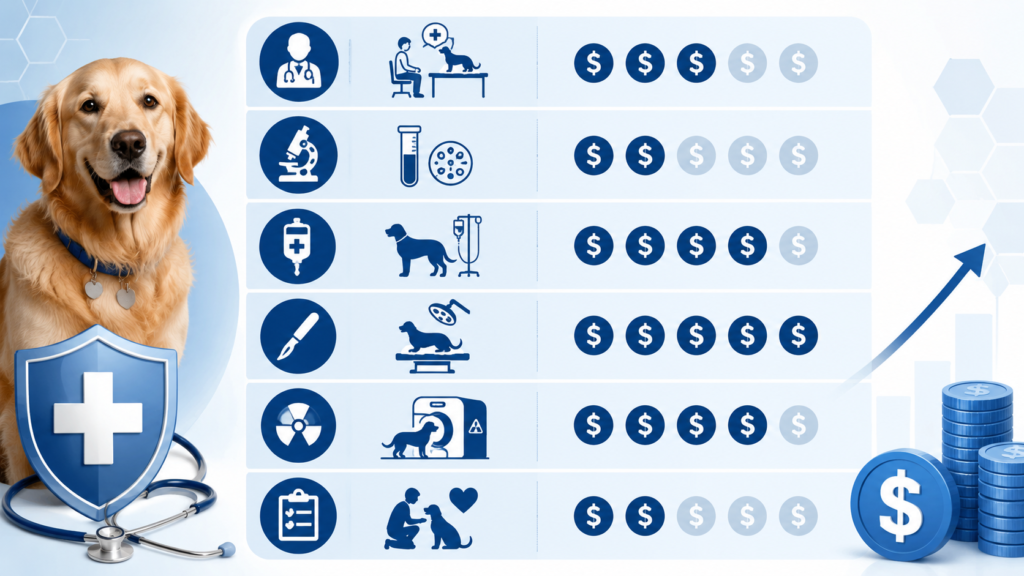
This is where the real financial picture becomes clear — not the per-session cost, but the total cost of a complete treatment journey from diagnosis through follow-up care.
Related Article : Dog MRI Cost in the USA (2026): Average Cost, Insurance Coverage & Financing
2026 cost ranges by treatment type:
| Treatment | Cost Range |
|---|---|
| Initial oncologist consultation | $150 – $250 |
| Biopsy / pathology | $300 – $800 |
| CT scan or MRI (staging) | $1,500 – $4,500 |
| Tumor removal surgery | $500 – $5,000 |
| Chemotherapy (full protocol, 4–6 months) | $3,000 – $10,000 |
| Radiation — palliative (6–10 sessions) | $1,000 – $3,500 |
| Radiation — curative (15–20 sessions) | $4,500 – $10,000+ |
| Stereotactic radiosurgery (SRS/CyberKnife) | $1,800 – $10,500 |
| Post-treatment monitoring (first year) | $600 – $2,000 |
| Ongoing medications | $30 – $200/month |
Related Article : Dog Surgery Cost in the USA: Real Prices for 2026
Real total cost by cancer type:
| Cancer Type | Estimated Total Treatment Cost |
|---|---|
| Lymphoma (chemo protocol) | $5,000 – $12,000 |
| Mast cell tumor (surgery + follow-up) | $1,500 – $8,000 |
| Osteosarcoma (amputation + chemo) | $8,000 – $15,000 |
| Hemangiosarcoma (surgery + chemo) | $6,000 – $12,000 |
| Nasal tumor (radiation) | $7,000 – $15,000 |
| Brain tumor (surgery or SRS) | $8,000 – $20,000+ |
According to CareCredit’s 2024 data, cancer therapy averages $5,351 for dogs. That figure represents a national average across all cancer types and treatment approaches — aggressive multi-modal protocols cost significantly more.
The Annual Limit Problem — A Gap Most Owners Don’t Notice Until It’s Too Late

This is the detail that most cancer coverage articles skip entirely — and it’s one that matters more for cancer than almost any other condition.
Cancer is not a single event. It’s a treatment journey that spans months, sometimes years. A dog diagnosed with lymphoma might receive 5 months of chemotherapy, achieve remission, relapse 8 months later, and need another round. The total treatment cost can exceed $15,000 over two policy years.
If your plan has a $5,000 or $10,000 annual reimbursement limit, you may hit that cap mid-treatment.
What this looks like in practice:
Your dog is diagnosed with nasal cancer requiring radiation. Full protocol: $9,000. Your plan has a $10,000 annual limit. Coverage resets January 1.
- If treatment happens all in one policy year: you’re under the limit. Reimbursement: $8,750 (after $250 deductible at 80%).
- If treatment spans two policy years — $5,000 in Year 1, $4,000 in Year 2 — and you started Year 1 with $3,000 already claimed from other conditions: you hit your limit mid-radiation. The remaining sessions come out of pocket.
Annual limit options and what they mean for cancer:
| Annual Limit | Cancer Risk |
|---|---|
| $5,000 | High — many cancer protocols exceed this in a single year |
| $10,000 | Moderate — adequate for most cases, tight for aggressive protocols |
| $15,000 – $20,000 | Low — covers most cancer treatment scenarios comfortably |
| Unlimited | None — full coverage regardless of treatment cost or duration |
For dogs with elevated breed-related cancer risk — Golden Retrievers, Bernese Mountain Dogs, Boxers, Rottweilers — an unlimited or $15,000+ annual limit plan is worth the higher premium specifically because their cancers tend to be aggressive, expensive, and sometimes recurring.
What Pet Insurance Won’t Cover for Cancer
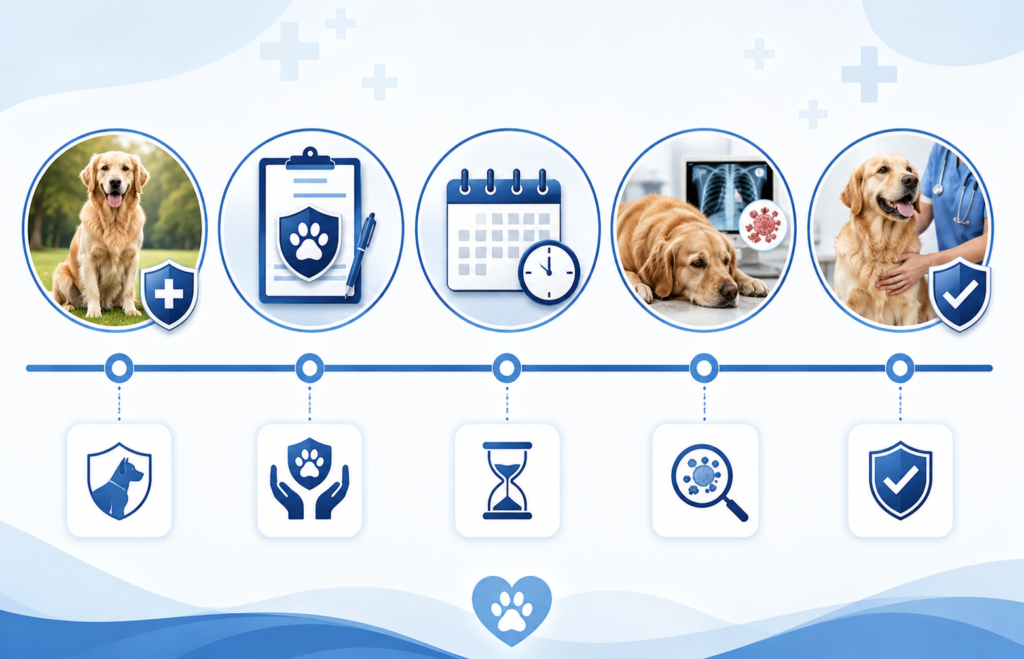
Understanding exclusions before a diagnosis protects you from unexpected out-of-pocket costs during treatment.
Pre-existing conditions — the most common denial reason. If your dog showed any symptoms of cancer — an unexplained lump, weight loss, lethargy — before your policy started, the cancer will be classified as pre-existing. Insurers review your dog’s full veterinary history during the claims process. Even a single vet note mentioning “monitoring a mass” before enrollment can result in a denied claim.
Cancer diagnosed during the waiting period. Most policies have a 14-day illness waiting period. A cancer diagnosis made during that window is treated as pre-existing and excluded. Any condition that begins during the waiting period stays excluded even after coverage becomes active.
Experimental and unproven treatments. Standard cancer treatments — surgery, chemotherapy, radiation — are covered. Newer immunotherapy approaches and experimental protocols are often excluded. Most pet insurance policies only reimburse for established treatments, such as surgery, chemotherapy, or radiation. If your oncologist recommends an emerging immunotherapy, confirm with your insurer whether it qualifies before proceeding.
Breed-specific hereditary cancer exclusions. Some policies — not all — exclude conditions that are considered hereditary or congenital for specific breeds. A Golden Retriever developing hemangiosarcoma, for example, could theoretically be denied on a policy with aggressive hereditary exclusions. Insurers like ASPCA Pet Health Insurance and Embrace explicitly cover hereditary conditions; others may not. Some policies require an optional add-on to cover hereditary or congenital conditions, and without this extra coverage, some inherited cancers such as lymphoma and hemangiosarcoma might not be reimbursed.
Cosmetic or non-medically-necessary procedures. Removing a benign fatty lump (lipoma) for cosmetic reasons isn’t covered. If your vet recommends removal specifically because pathology confirmed malignancy or because the mass is causing functional problems, it qualifies as medically necessary.
Accident-only plans. Cancer is an illness. Accident-only policies don’t cover it — not the diagnosis, not the treatment, not a single chemotherapy session.
| Exclusion | What It Means |
|---|---|
| Pre-existing condition | Any cancer symptom before enrollment = no coverage |
| Waiting period diagnosis | Cancer confirmed in first 14 days = excluded |
| Experimental treatment | Unproven immunotherapy, novel protocols often not covered |
| Hereditary exclusion clause | Breed-linked cancers may require add-on or specific insurer |
| Accident-only plan | Zero cancer coverage regardless of situation |
| Benign mass removal | Not covered if medically unnecessary |
My Dog Was Just Diagnosed — Does Insurance Still Apply?
This is one of the most painful situations dog owners face, and it deserves a direct answer.
If your policy was already active when the diagnosis was made — yes, you’re likely covered. The key question is whether any symptoms were documented before your policy started. If your dog had a clean bill of health at enrollment, developed a lump after your waiting period ended, and cancer was confirmed at that point — the full treatment protocol is eligible for reimbursement.
Related Article : Why Was My Pet Insurance Claim Denied? 5 Common Reasons (And How to Fix Them)
If your dog just received a diagnosis and you don’t have insurance — or your policy wasn’t active yet: Buying insurance now won’t cover the current cancer. Any active cancer diagnosis is a pre-existing condition on a new policy from day one. A new insurer will exclude all cancer-related claims indefinitely.
However — buying insurance still makes sense for everything else. A dog undergoing cancer treatment is a dog with ongoing vet care, potential complications, possible infections, and other health risks that could generate significant future bills. A new policy wouldn’t cover the cancer, but it would cover a broken bone, a separate illness, an emergency surgery unrelated to the cancer, and any future conditions that develop independently.
What to do if your dog is already diagnosed and uninsured:
- Request an itemized treatment plan from your oncologist with total projected costs
- Apply for CareCredit before your first oncology appointment — many specialty hospitals accept it
- Ask the oncology clinic directly about payment plans or hardship arrangements
- Contact the National Canine Cancer Foundation and the Animal Cancer Foundation — both offer financial assistance resources for families who qualify
- Ask whether any chemotherapy drugs in your dog’s protocol are available as human generic medications at significantly lower cost — some are
Which Dog Breeds Need Cancer Coverage Most
Cancer doesn’t discriminate by breed — but the statistics are not evenly distributed. Certain breeds face dramatically higher lifetime cancer risk, and for those owners, cancer coverage isn’t a hypothetical — it’s almost inevitable.
High-risk breed cancer chart:
| Breed | Primary Cancer Risk | Typical Treatment Approach |
|---|---|---|
| Golden Retriever | Hemangiosarcoma, lymphoma, mast cell tumor | Surgery + chemo; often aggressive and recurring |
| Bernese Mountain Dog | Histiocytic sarcoma | Limited treatment options; palliative often considered |
| Rottweiler | Osteosarcoma, lymphoma | Amputation + chemo for bone cancer |
| Boxer | Mast cell tumor, lymphoma, brain tumor | Surgery, chemo, or radiation depending on type |
| German Shepherd | Hemangiosarcoma, osteosarcoma | Surgery + chemo |
| Great Dane / Irish Wolfhound | Osteosarcoma | Amputation + chemo; large size increases drug costs |
| Scottish Terrier | Bladder cancer (TCC) | Medication-based management; surgery sometimes |
If you own one of these breeds, two things matter most when comparing policies: the annual coverage limit (choose unlimited or $15,000+ given the potential treatment cost) and how the policy handles hereditary conditions. Some insurers ask high-risk breed owners to submit a wellness exam before orthopedic or hereditary condition coverage activates — check whether this applies to cancer coverage as well.
Should You Buy Pet Insurance Now If Your Dog Is Healthy?
If your dog has no current health issues and no cancer diagnosis — yes, now is precisely the right time.
The economics of cancer coverage are straightforward. A single lymphoma protocol costs $5,000–$12,000. A comprehensive pet insurance plan costs $400–$900 per year. The first year of a cancer diagnosis typically generates $5,000–$15,000 in reimbursements — returning 6–20 years of premiums in a single treatment cycle.
What enrollment timing actually controls:
| Enrollment Timing | Coverage Status |
|---|---|
| Before any symptoms | ✅ Full coverage after waiting period |
| After a lump is found but pre-diagnosis | ❌ Likely pre-existing — insurer will review records |
| After cancer diagnosis confirmed | ❌ Pre-existing on any new policy |
| After treatment ends, cancer in remission | ❌ That cancer still pre-existing on new policy |
The window that matters is before your dog shows any symptoms — not before a formal diagnosis. An insurer reviewing your dog’s records will look for any prior vet note mentioning a lump, abnormal bloodwork, unexplained weight loss, or any documentation that hints at the condition later diagnosed as cancer. That note — even a single line from a routine checkup — is often sufficient to classify the cancer as pre-existing.
Enroll young. Enroll healthy. And choose a plan with a high or unlimited annual limit if your breed carries elevated cancer risk.
What To Do If You Can’t Afford Cancer Treatment
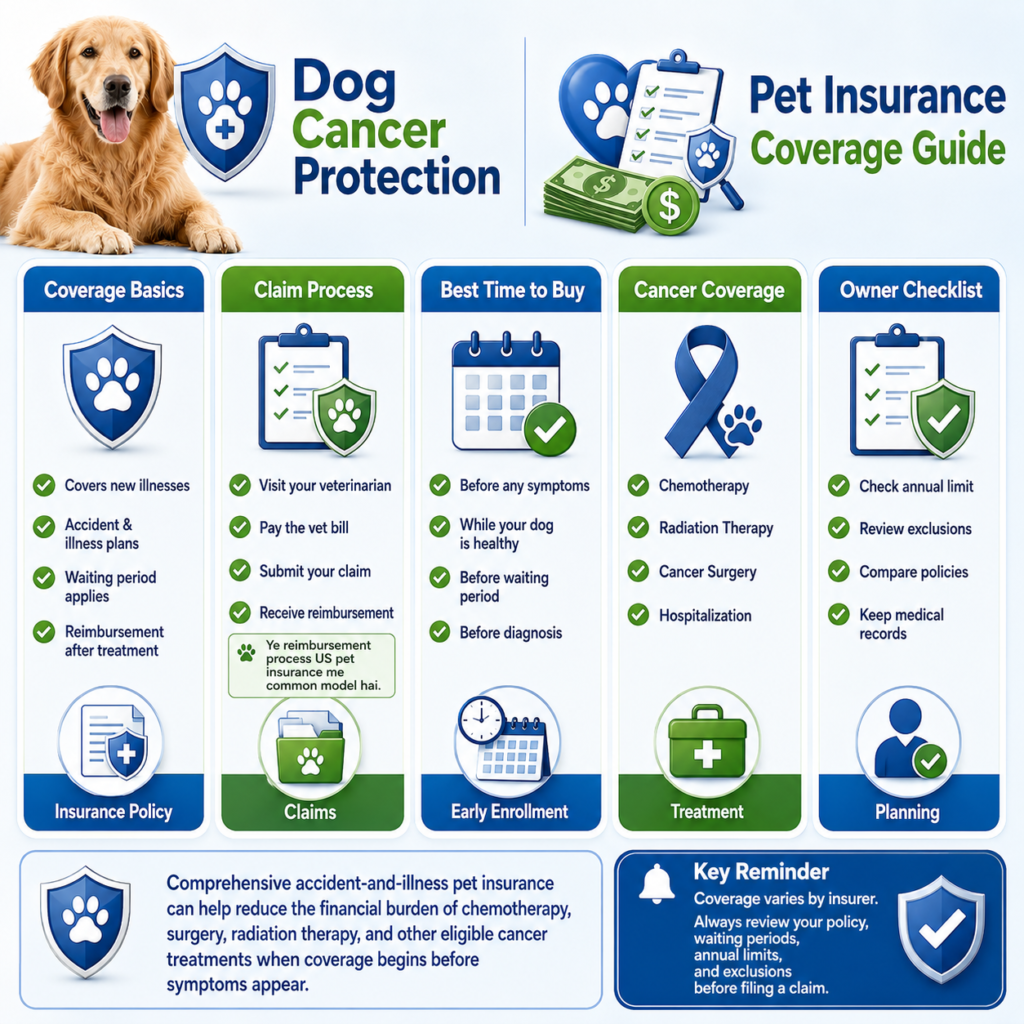
This is a real situation for a significant number of dog owners, and there are more options than most people realize at the worst moment.
Related Article : Can’t Pay a Vet Bill in the USA? Here’s What Actually Happens (2026)
Financing options:
CareCredit — A healthcare credit card accepted at most veterinary specialty hospitals and oncology clinics. Offers 0% promotional periods typically ranging from 6 to 24 months for balances paid in full. Apply online or at the clinic before your first oncology appointment. Approval takes minutes.
Scratchpay — A veterinary financing option with straightforward installment plans and no deferred interest. Works well for owners who can’t qualify for CareCredit or prefer a fixed payment structure.
Clinic payment plans — Many veterinary oncology centers offer in-house payment arrangements for established patients, particularly for long-term treatment protocols. Ask directly at your first consultation.
Nonprofit financial assistance:
- National Canine Cancer Foundation — provides grants to qualifying dog owners facing cancer treatment costs
- Animal Cancer Foundation — educational resources and financial assistance referrals
- RedRover Relief — urgent care financial grants for pet owners in financial hardship
- The Pet Fund — assists with non-basic, non-emergency veterinary care including cancer treatment
Cost-reduction strategies:
- University veterinary hospitals — offer oncology services at reduced rates compared to private specialty centers. UC Davis, Cornell, Colorado State, Texas A&M, and others have active oncology programs.
- Generic chemotherapy drugs — some protocols use drugs also prescribed in human medicine that are available as lower-cost generics. Ask your oncologist specifically whether any drugs in your dog’s protocol have a generic equivalent.
- Palliative vs. curative care — this is a deeply personal decision, but palliative care focused on comfort and quality of life costs significantly less than aggressive curative protocols. An honest conversation with your oncologist about realistic outcomes can help you make the decision that’s right for your dog and your situation.
Action Checklist
- Confirm your current policy type — accident-only or accident & illness (comprehensive)
- Check your annual coverage limit — is it adequate for a potential $10,000+ cancer treatment?
- Review your policy’s hereditary condition language — especially if you own a high-risk breed
- If currently uninsured, enroll now while your dog is healthy and symptom-free
- If your dog has a new lump or unexplained symptoms, see your vet before assuming it’s benign
- If already diagnosed and insured, contact your insurer about your plan’s cancer coverage details and annual limit status
- If already diagnosed and uninsured, contact the National Canine Cancer Foundation and your nearest university veterinary hospital for cost reduction options
External Authority Sources
- AVMA — Cancer in Pets
- Cornell University College of Veterinary Medicine — Cancer Management FAQ
- National Canine Cancer Foundation
- Animal Cancer Foundation
- CareCredit — Dog Chemotherapy Cost Guide
- Veterinary Cancer Society
Frequently Asked Questions
Does pet insurance cover chemotherapy for dogs?
Yes. Most comprehensive accident-and-illness plans cover chemotherapy if the cancer is diagnosed after enrollment and the waiting period has ended. Coverage typically includes chemotherapy sessions, bloodwork, medications, and oncologist visits. Treatment usually costs $3,000–$10,000.
Does pet insurance cover radiation therapy?
Yes. Radiation therapy is generally covered under comprehensive plans when the cancer isn’t pre-existing. Coverage often includes radiation sessions, anesthesia, specialist consultations, and follow-up care. Costs commonly range from $4,500 to $10,000 or more.
What if my dog was diagnosed before I got insurance?
Any cancer diagnosis that predates your policy — or that shows documented symptoms in vet records before enrollment — is a pre-existing condition and won’t be covered by a new policy. Insurance purchased after a diagnosis still protects against unrelated future conditions, but the current cancer is excluded permanently on that policy.
Does pet insurance cover cancer for senior dogs?
Most comprehensive plans cover cancer treatment for dogs of any age, provided the cancer is new and not pre-existing. Some insurers impose age limits on enrollment — meaning a senior dog may not qualify to start a new policy after a certain age. Pets Best has no upper age limit; AKC only offers accident-only coverage to dogs older than 9. Check enrollment age limits before assuming a senior dog can still be covered.
Is dog cancer covered by accident-only pet insurance?
No. Cancer is classified as an illness, not an accident. Accident-only policies cover injuries from external physical events and do not cover any cancer-related diagnosis, treatment, or medication.
Does pet insurance cover palliative care for cancer?
Yes — most comprehensive plans cover palliative and pain management care for cancer as medically necessary treatment for a covered condition. This includes pain medications, palliative radiation, comfort-focused chemotherapy, and related follow-up visits.
What annual coverage limit do I need for dog cancer treatment?
For breeds with elevated cancer risk, a $15,000 or unlimited annual limit is strongly advisable. A standard lymphoma protocol costs $5,000–$10,000; a nasal tumor radiation protocol runs $7,000–$15,000. A $5,000 annual limit is often exhausted mid-treatment on aggressive cancers.
Does pet insurance cover immunotherapy for dogs?
Standard immunotherapy approaches may be covered; experimental or unproven protocols typically are not. The canine melanoma vaccine is an established treatment covered by most comprehensive plans. Newer investigational immunotherapies may be excluded as experimental treatment. Confirm with your insurer before pursuing any emerging protocol.
How long does it take to get reimbursed for cancer treatment claims?
Most insurers process claims within 5–15 business days of receiving complete documentation. For ongoing cancer treatment with multiple sessions, many insurers allow you to submit each invoice as it occurs rather than waiting until the end of treatment.
Can I switch pet insurance to get better cancer coverage?
You can switch insurers, but your dog’s current health status follows them. Any conditions that exist or show symptoms at the time of switching will be classified as pre-existing on the new policy. A dog currently in cancer treatment cannot switch to a new insurer and receive coverage for that cancer. Switching only makes sense for owners of currently healthy dogs.
What You Should Do Next
If your dog is healthy right now — this is the moment that determines everything. Cancer treatment is one of the highest-cost situations pet insurance covers, and it’s also one of the most common reasons owners wish they had enrolled earlier. The window between “currently healthy” and “showing first symptoms” closes without warning.
If your dog has just been diagnosed — call your insurer today if you have coverage and ask specifically whether the diagnosis qualifies under your current policy. Get the determination in writing before treatment begins. If you’re uninsured, contact a veterinary oncology center about a payment plan and apply for CareCredit before your first appointment.
The financial piece of a cancer diagnosis is genuinely manageable with the right preparation. The owners who navigate it with the least additional stress are the ones who had the coverage in place before they ever needed to use it.
Disclaimer:
This article is for informational and educational purposes only. Cost data reflects 2026 national averages from NAPHIA, Insurify, and MetLife Pet Insurance and will vary based on your dog’s age, breed, location, and the specific plan you choose. PetInsurePrime does not sell pet insurance and receives no compensation from any insurance provider. Always compare multiple quotes and read your policy documents carefully before enrolling.
PetInsurePrime | Independent • Research-Based | Helping US dog owners understand real vet costs and coverage options — without the sales pressure.