
Updated: July 2026 | Reading Time: 26minutes
Your vet just said your dog might need an endoscopy. Maybe it’s because they swallowed something and it’s still in the stomach. Maybe it’s weeks of vomiting that bloodwork and X-rays can’t explain. Maybe there’s a suspicious mass that needs sampling without opening your dog up.
Whatever brought you here — you need one number before you can think clearly about anything else: what is this going to cost?
The honest answer is $800–$3,500 for most cases. But that range hides the specific variables that determine where your dog’s bill actually lands. Here’s the complete breakdown.
Read Related Article… Emergency Vet Exam Cost in the USA (2026)
Quick Answer Dog Endoscopy Cost in the USA
In the United States in 2025–2026, a typical dog endoscopy costs $800 to $3,500, with most straightforward gastrointestinal cases landing around $1,200 to $2,200. That range covers the procedure only — anesthesia ($300–$600), pre-anesthetic bloodwork ($100–$200), and biopsy pathology fees ($150–$400) are billed separately at most clinics. Emergency foreign body retrieval at a specialty hospital at night costs significantly more than a scheduled diagnostic scope at your regular vet.
Read Relaetd Article… Emergency Vet Costs in the USA (2026): What You’ll Really Pay by State
At a Glance: 2026 Dog Endoscopy Cost Summary
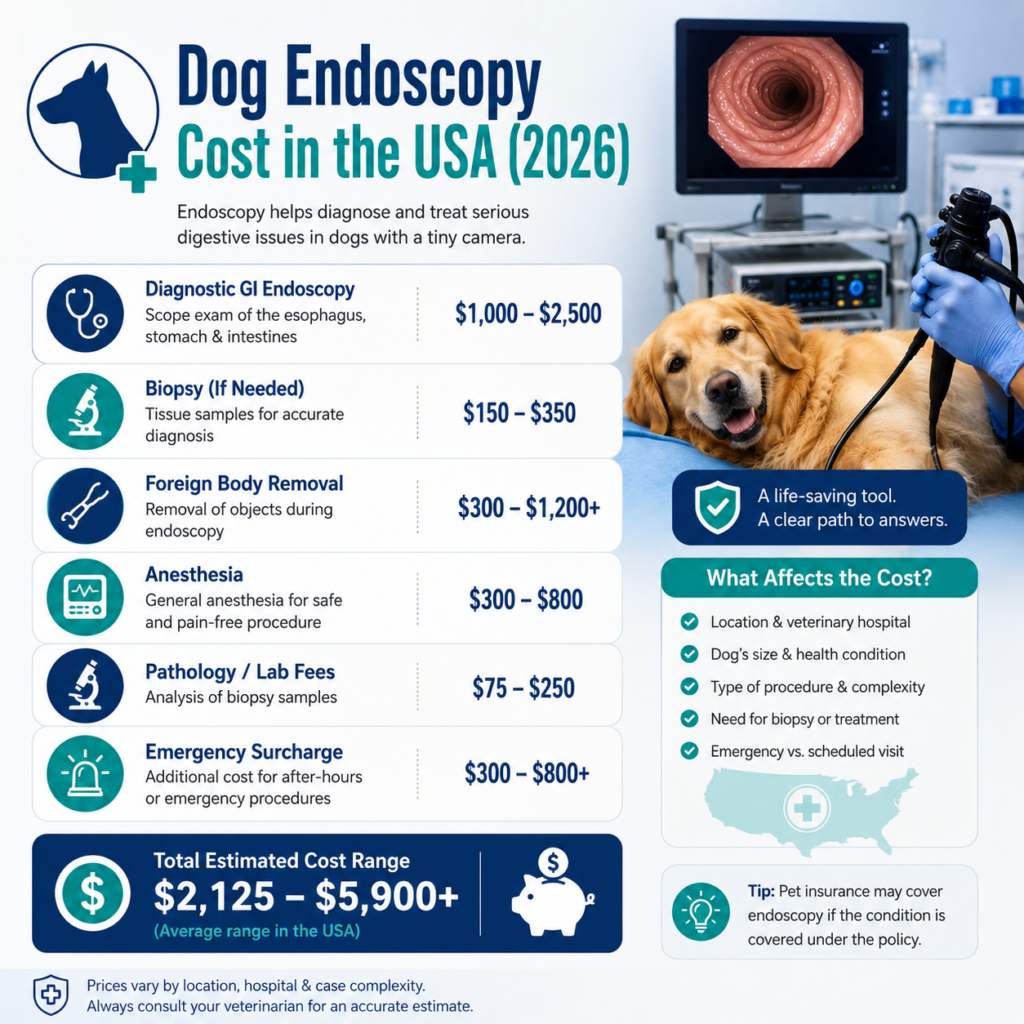
| Procedure Type | Cost Range | Anesthesia Included? |
|---|---|---|
| Upper GI scope (gastroscopy) — diagnostic only | $800 – $1,800 | ⚠️ Sometimes |
| Upper GI scope + biopsy samples | $1,000 – $2,500 | ⚠️ Sometimes |
| Lower GI scope (colonoscopy) — diagnostic only | $800 – $1,800 | ⚠️ Sometimes |
| Upper + lower GI (both ends) | $1,500 – $3,000 | ⚠️ Sometimes |
| Foreign body removal (stomach/esophagus) | $1,500 – $3,500+ | ⚠️ Sometimes |
| Flexible nasal scope (rhinoscopy) | $800 – $1,500 | ❌ Rarely |
| Rigid nasal endoscopy + removal | $1,000 – $2,000 | ❌ Rarely |
| Airway scope (bronchoscopy/tracheoscopy) | $1,000 – $2,500 | ⚠️ Sometimes |
| Bladder scope (cystoscopy) | $800 – $2,000 | ⚠️ Sometimes |
| Anesthesia (add to any procedure) | $300 – $600 | — |
| Pre-anesthetic bloodwork | $100 – $200 | — |
| GI biopsy pathology fee | $150 – $400 | — |
| Emergency / after-hours premium | +$200 – $600 | — |
Table of Contents
- Why Dog Endoscopy Costs Vary So Much — The Real Reason
- Every Type of Dog Endoscopy and What Each Costs
- The Hidden Charges That Don’t Appear in the Initial Quote
- Dog Endoscopy Cost by Facility Type and State
- Foreign Body Removal by Endoscopy: Is It Cheaper Than Surgery?
- When Endoscopy Isn’t the Right Choice — And Surgery Is Needed Instead
- Success Rates: What the Research Actually Shows
- Does Pet Insurance Cover Dog Endoscopy?
- What Happens If You Can’t Afford Endoscopy
- Recovery: What to Expect After Dog Endoscopy
- Is Dog Endoscopy Dangerous? Risks Explained Honestly
- Questions to Ask Your Vet Before Agreeing to Endoscopy
- Action Checklist
- FAQ
Why Dog Endoscopy Costs Vary So Much — The Real Reason
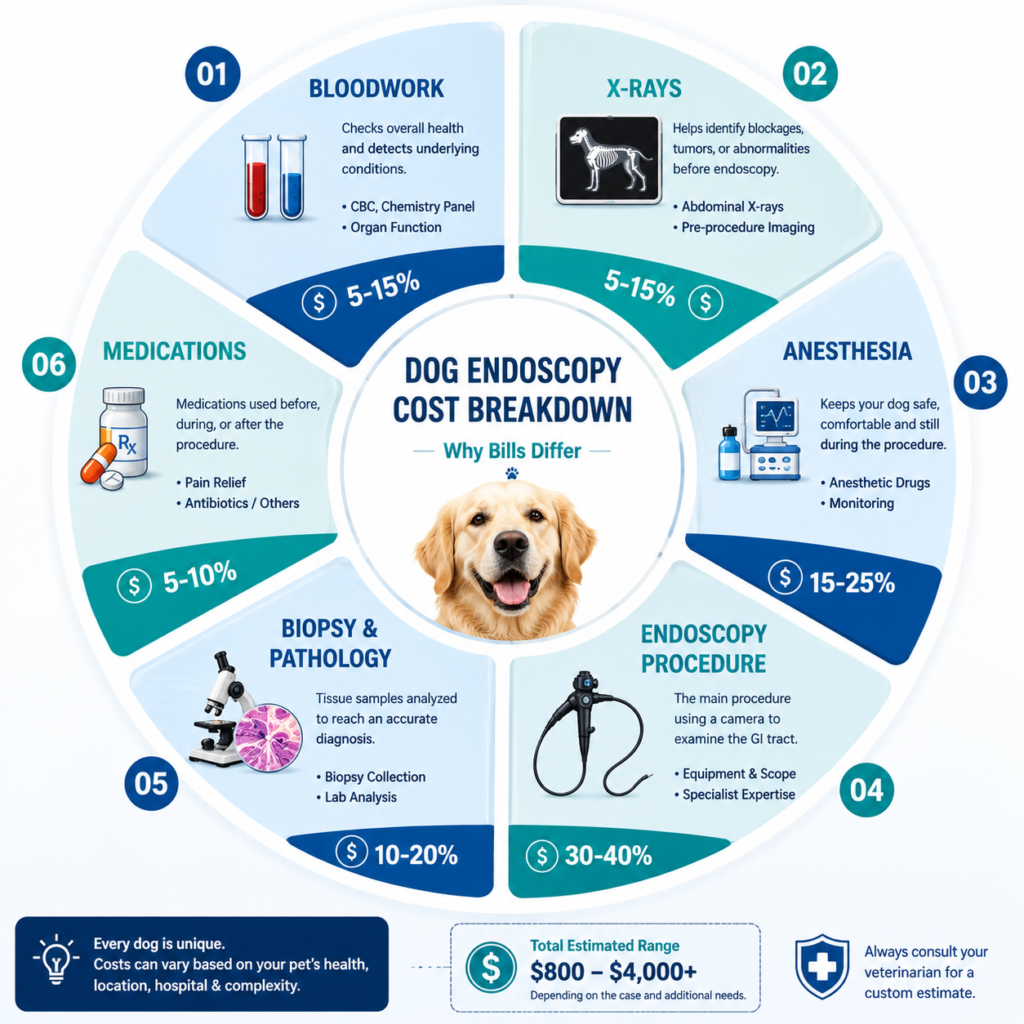
One reason the bill varies so much is that endoscopy is not one single line item. The estimate may include the exam, blood work, imaging, anesthesia, IV catheter and fluids, the procedure itself, biopsy submission, pathology review, medications, and recheck visits.
Most quoted “endoscopy prices” you find online refer to the scope procedure alone — the time the camera is inside your dog. That number doesn’t reflect what actually appears on your invoice. The real cost is the sum of every component billed around the scope.
The six components that build a real endoscopy bill:
1. Pre-procedure diagnostics — bloodwork and imaging to confirm endoscopy is appropriate and safe. Blood panels ($100–$200), X-rays ($150–$400), and sometimes ultrasound ($300–$600) are ordered before the scope is even scheduled.
Read Related Article… Dog Blood Test Cost in the USA (2026): Real Prices, What Each Panel Tests, and How to Pay Less
Read Related Article… Dog X-Ray Cost in the USA (2026): Average Prices, Sedation Costs & What You’ll Actually Pay
2. Anesthesia — every dog endoscopy requires general anesthesia. The anesthesia fee covers the drugs, IV catheter placement, IV fluids, and the technician monitoring your dog’s heart rate, blood pressure, and oxygen saturation throughout the procedure.
3. The scope procedure — the actual cost of the specialist’s time and equipment. This varies by which area is being scoped, how long the procedure takes, and whether it’s diagnostic only or includes intervention (biopsy or foreign body removal).
4. Biopsy pathology — when tissue samples are collected during endoscopy, they go to a veterinary pathologist for analysis. This fee ($150–$400) is billed separately by the pathology lab, not the clinic.
5. Post-procedure medications — anti-nausea drugs, pain management, and any medications prescribed based on findings.
6. Emergency or after-hours premium — if the endoscopy is performed urgently at a 24-hour facility, add $200–$600 to any of the above figures.
Read Related Article… Dog Ultrasound Cost in the USA (2026): Real Prices, Hidden Charges & What Happens After
A scheduled scope to collect stomach or intestinal biopsies for chronic vomiting usually costs less than an urgent procedure to remove a lodged object. If your pet needs emergency triage, oxygen support, hospitalization, or same-day surgery because the object cannot be removed safely with the scope, the total cost range rises quickly.
Every Type of Dog Endoscopy and What Each Costs
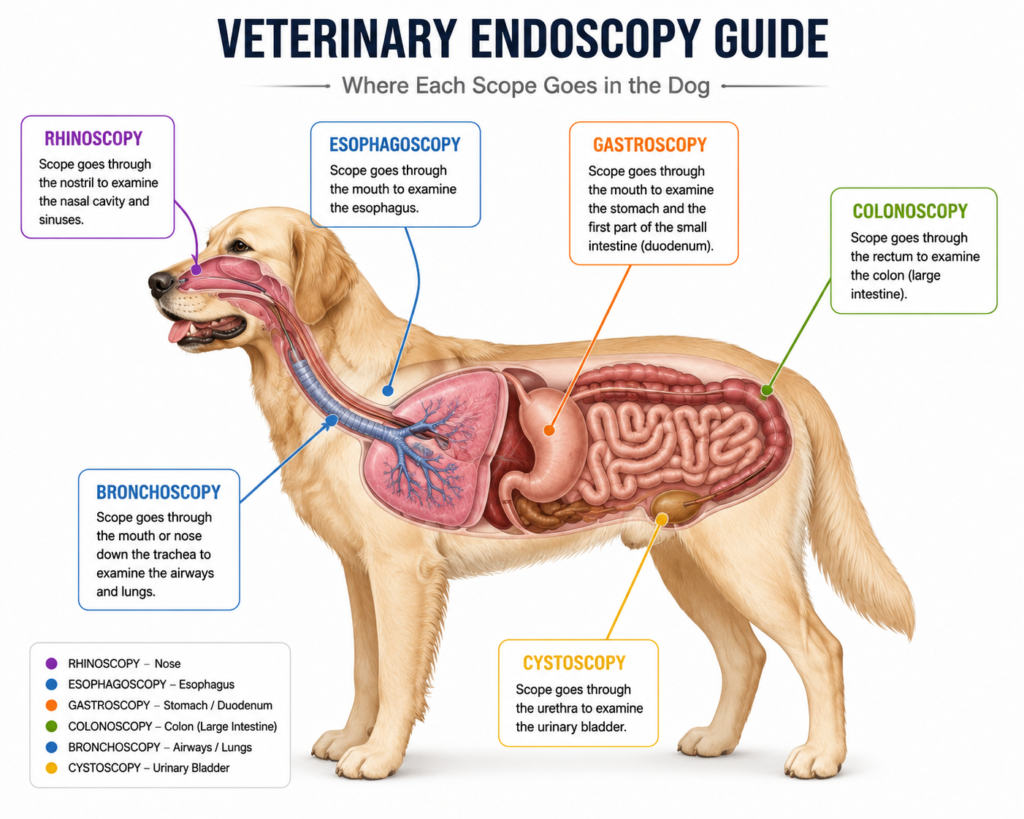
GI endoscopy for dogs includes gastroscopy (upper GI) and colonoscopy (lower GI). Other types include esophagoscopy for swallowing issues, bronchoscopy and rhinoscopy for airway and nasal evaluations, and cystoscopy for bladder and urinary tract exams.
Read Related Article… Dog Biopsy Cost in the USA (2026): Real Prices by Type, Hidden Lab Fees & What the Results Mean
Upper GI Endoscopy (Gastroscopy)
A flexible camera is passed through the mouth, down the esophagus, into the stomach, and as far as the upper small intestine (duodenum). Used for chronic vomiting, suspected foreign bodies in the stomach or esophagus, GI bleeding, and inflammatory bowel disease evaluation.
Flexible GI endoscopy for foreign body removal or biopsy typically costs $3,000+ at specialty facilities. Anesthesia and pre-anesthetic diagnostics are not included and typically cost an additional $500.
At general practice clinics with their own endoscopy equipment: $800–$1,800 for the procedure. At specialty internal medicine referral hospitals: $1,500–$3,000+ before additional fees.
Lower GI Endoscopy (Colonoscopy)
A flexible scope is passed through the rectum to visualize the colon and rectum. Used for chronic large-bowel diarrhea, blood in stool, suspected colonic masses, and inflammatory bowel disease of the lower GI tract.
Cost: $800–$1,800 for procedure. Lower-end cases are usually limited diagnostic procedures done in stable pets with minimal add-ons. Requires extensive bowel preparation — your dog will need a 24–48 hour fasting and bowel prep protocol before the scope.
Both Ends (Upper + Lower GI Scope)
When both upper and lower GI disease is suspected, both scopes may be performed in the same anesthesia event. This approach is more cost-effective than two separate procedures — one anesthesia event instead of two.
Cost: $1,500–$3,000 for both procedures combined. Significantly cheaper than two separate appointments with two separate anesthesia events at $600+ each.
Esophagoscopy
Focused examination of the esophagus for swallowing difficulties, regurgitation, esophageal foreign bodies, strictures, and masses. Less common than full gastroscopy but more targeted when the clinical signs point specifically to the esophagus.
Cost: $800–$1,500. Often performed as part of a broader upper GI scope rather than standalone.
Rhinoscopy (Nasal Endoscopy)
A small rigid or flexible scope is passed into the nasal passages to investigate chronic nasal discharge, sneezing, nosebleeds, and suspected nasal masses or foreign bodies.
Rigid nasal endoscopy for intranasal foreign body extraction or biopsy typically costs $1,000+ at specialty facilities, with anesthesia and pre-anesthetic diagnostics adding another $500.
Cost: $800–$2,000 depending on whether it’s diagnostic only or involves foreign body removal or biopsy.
Bronchoscopy (Airway Endoscopy)
A flexible scope is passed down the trachea to visualize the airways and collect samples (bronchoalveolar lavage) from the lungs. Used for chronic cough, suspected airway collapse, infectious pneumonia workup, and inhaled foreign body removal.
Cost: $1,000–$2,500. Requires respiratory-appropriate anesthesia monitoring and is typically performed by a specialist.
Cystoscopy (Bladder Endoscopy)
A small scope is passed through the urethra into the bladder. Used for recurrent urinary tract infections, blood in urine, bladder stones, bladder masses, and urethral assessment.
Cost: $800–$2,000. More commonly performed in female dogs due to anatomical accessibility; male dogs require more specialized equipment.
| Endoscopy Type | Body Area | Cost Range | When Recommended |
|---|---|---|---|
| Gastroscopy (upper GI) | Esophagus, stomach, duodenum | $800 – $3,000 | Chronic vomiting, foreign body, GI bleeding |
| Colonoscopy (lower GI) | Colon and rectum | $800 – $1,800 | Chronic diarrhea, blood in stool, colonic mass |
| Both GI ends | Full GI tract | $1,500 – $3,000 | IBD, comprehensive GI workup |
| Esophagoscopy | Esophagus only | $800 – $1,500 | Regurgitation, swallowing issues, stricture |
| Rhinoscopy | Nasal passages | $800 – $2,000 | Chronic nasal discharge, nasal foreign body |
| Bronchoscopy | Airways and lungs | $1,000 – $2,500 | Chronic cough, airway disease, lavage |
| Cystoscopy | Bladder and urethra | $800 – $2,000 | Recurrent UTIs, bladder stones, hematuria |
The Hidden Charges That Don’t Appear in the Initial Quote
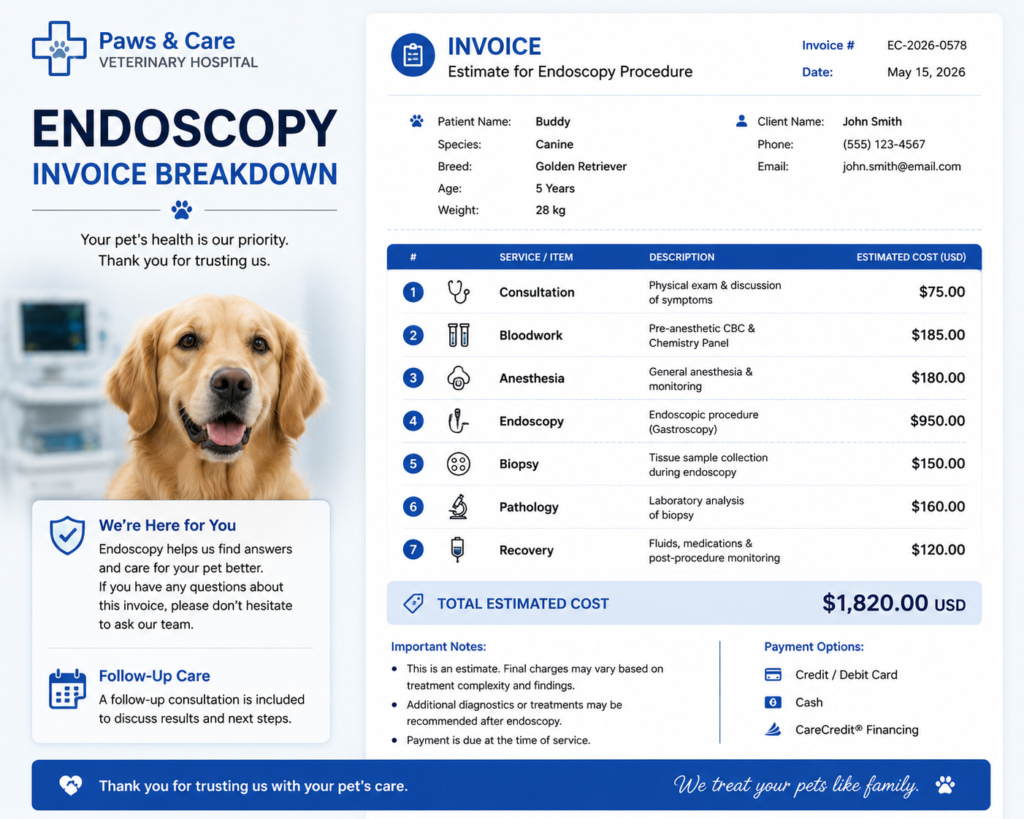
The estimate may include the exam, blood work, imaging, anesthesia, IV catheter and fluids, the procedure itself, biopsy submission, pathology review, medications, and recheck visits — or these may be separated into multiple invoices.
Here’s every line item that commonly appears on a real endoscopy invoice, with whether it’s typically included in initial quotes:
| Line Item | Cost Range | Included in Quote? |
|---|---|---|
| Specialist consultation / exam | $150 – $300 | ⚠️ Sometimes |
| Pre-anesthetic bloodwork (CBC + Chem) | $100 – $200 | ❌ Often separate |
| Chest X-rays (pre-procedure) | $150 – $350 | ❌ Often separate |
| Abdominal X-rays (pre-procedure) | $150 – $350 | ❌ Often separate |
| IV catheter placement | $40 – $75 | ⚠️ Sometimes |
| Anesthesia drugs | $150 – $300 | ❌ Often separate |
| Anesthesia monitoring (per hour) | $100 – $200 | ❌ Often separate |
| IV fluid therapy | $50 – $150 | ❌ Often separate |
| Endoscopy procedure fee | $800 – $2,500 | ✅ Usually |
| GI biopsy collection (per site) | $50 – $100 | ⚠️ Sometimes |
| Histopathology (pathology lab) | $150 – $400 | ❌ Usually separate |
| Cytology for BAL (bronchoscopy) | $100 – $200 | ❌ Usually separate |
| Foreign body retrieval fee | $200 – $500 extra | ⚠️ Sometimes |
| Recovery monitoring | $50 – $150 | ⚠️ Sometimes |
| Post-procedure medications | $50 – $150 | ❌ Often separate |
| Overnight hospitalization (if needed) | $300 – $800 | ❌ Always separate |
| Emergency/after-hours surcharge | $200 – $600 | ❌ Charged at billing |
Real all-in invoice examples:
Scenario A — Scheduled upper GI biopsy at internal medicine specialist: Consultation ($200) + bloodwork ($150) + X-rays ($250) + anesthesia package ($450) + endoscopy procedure ($1,200) + biopsy collection ($150) + histopathology ($300) + medications ($75) = $2,775 total
Read Related Article… Does Pet Insurance Cover MRI for Dogs? Coverage, Costs & What to Expect (2026)
Scenario B — Emergency foreign body removal at 24-hour specialty hospital: ER exam + triage ($250) + after-hours surcharge ($300) + bloodwork ($180) + X-rays ($300) + anesthesia package ($500) + endoscopy + retrieval ($2,200) + recovery monitoring ($150) + overnight hospitalization ($500) = $4,380 total
Read Related Article… Dog CT Scan Cost in the USA (2026): Real Numbers, Hidden Charges, and How to Lower the Bill
Scenario C — Scheduled diagnostic colonoscopy at internal medicine specialist: Consultation ($200) + bloodwork ($150) + anesthesia package ($400) + colonoscopy procedure ($1,100) + biopsy collection ($100) + histopathology ($280) + medications ($60) = $2,290 total
Scenario D — Both upper and lower GI scopes, same anesthesia event: Consultation ($200) + bloodwork ($150) + X-rays ($250) + anesthesia package ($500) + combined scope procedure ($1,800) + biopsies multiple sites ($200) + histopathology ($350) + medications ($80) = $3,530 total
Dog Endoscopy Cost by Facility Type and State
Where you take your dog matters enormously. The same procedure at a general practice with in-house endoscopy equipment costs 30–50% less than at a full specialty referral hospital.
Read Related Article… Emergency Vet vs Regular Vet Cost: Why Emergency Care Costs So Much More (2026)
Cost by facility type:
| Facility Type | Procedure Cost Range | All-In Range |
|---|---|---|
| General vet with in-house scope | $800 – $1,500 | $1,200 – $2,200 |
| Urgent care / after-hours clinic | $1,000 – $2,000 | $1,600 – $3,200 |
| Internal medicine specialist | $1,200 – $2,500 | $2,000 – $3,500 |
| University teaching hospital | $800 – $1,800 | $1,400 – $2,800 |
| 24-hour emergency specialty hospital | $1,500 – $3,000+ | $2,500 – $5,000+ |
Cost by state — estimated all-in ranges:
| State / Region | Estimated All-In Cost |
|---|---|
| California (LA, SF, San Diego) | $2,500 – $5,000+ |
| New York / New Jersey | $2,200 – $4,500 |
| Texas (Austin, Dallas, Houston) | $1,800 – $3,500 |
| Florida (Miami, Orlando, Tampa) | $1,800 – $3,200 |
| Illinois (Chicago area) | $2,000 – $3,800 |
| Ohio, Indiana, Iowa (Midwest) | $1,400 – $2,800 |
| Georgia, Tennessee, North Carolina | $1,300 – $2,600 |
| Alabama, Mississippi, Arkansas | $1,100 – $2,200 |
The university teaching hospital advantage: University vet schools — UC Davis, Cornell, Colorado State, Texas A&M, University of Wisconsin — offer internal medicine specialist endoscopy at costs typically 20–35% below private specialty hospitals. Consider asking your regular vet whether a referral to a teaching hospital is appropriate for your dog’s case — the wait may be slightly longer for non-emergency procedures, but the cost savings are real.
Foreign Body Removal by Endoscopy: Is It Cheaper Than Surgery?
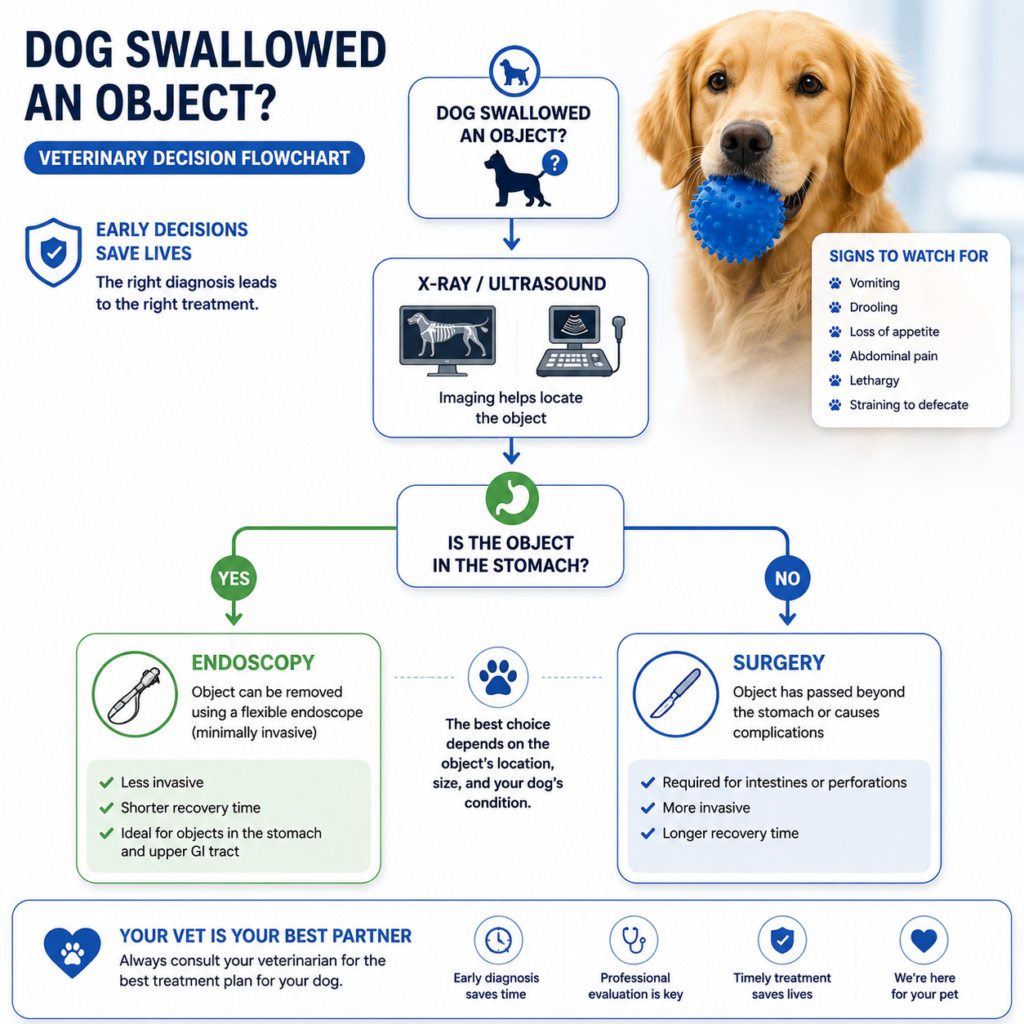
This is the question most owners ask — and the answer is yes, endoscopy is significantly cheaper than surgery when it works.
Endoscopic procedures commonly cost between $800 and $2,800, while open surgery (laparotomy) ranges from $2,000 to $10,000.
Direct cost comparison:
| Approach | All-In Cost Range | Recovery Time | Hospitalization |
|---|---|---|---|
| Endoscopic retrieval (stomach/esophagus) | $1,500 – $3,500 | 12–48 hours | Usually same-day |
| Exploratory surgery (laparotomy) | $3,000 – $10,000 | 2–4 weeks | 1–3 nights minimum |
| Endoscopy attempted, then surgery needed | $4,500 – $12,000+ | 2–4 weeks | Multiple nights |
The critical caveat — when endoscopy fails:
Endoscopy is only possible when the foreign object is accessible by scope — meaning it’s in the esophagus, stomach, or colon. A less invasive endoscopy procedure costs $1,500 to $2,500 but may not treat all blockage types. Once an object has passed into the small intestine, endoscopy cannot reach it — surgery is the only option.
Read Related Article… Dog Surgery Cost in the USA: Real Prices for 2026
This creates a scenario most owners don’t budget for: endoscopy is attempted, the object can’t be retrieved (wrong location, wrong shape, too large), and then surgery is performed immediately after. At that point, you’ve paid for both procedures — total costs can reach $5,000–$12,000.
Ask your vet before endoscopy is scheduled: “Based on the X-ray location and type of object, what is the realistic probability that endoscopy will succeed? If it fails, will surgery follow the same day?” Knowing the answer shapes both the consent decision and the financial preparation.
When endoscopy for foreign body removal makes most sense:
- Object is confirmed by imaging to be in the stomach or esophagus
- The object is soft, round, or smooth (higher retrieval success rate)
- Object has been there fewer than 24 hours (less mucosal swelling)
- Dog is stable and not showing signs of perforation or peritonitis
Read Related Article… How Much Does Dog Stomach Surgery Cost? Real Emergency Prices (2026)
When surgery is the safer first choice:
- Object is confirmed in the small intestine (unreachable by scope)
- Object is sharp, pointed, or likely to tear tissue during retrieval
- X-rays show multiple objects
- Dog shows signs of intestinal perforation (fever, severe abdominal pain)
- Significant time has passed and tissue damage is likely
When Endoscopy Is Not the Right Choice — And Surgery Is Needed Instead
Sometimes anatomy, prior surgery, or equipment access limits endoscopy. Alternatives include diagnostic laparoscopy for abdominal exploration, exploratory surgery when perforation is suspected, and CT-guided procedures at referral centers.
Situations where surgery is required instead of endoscopy:
| Situation | Why Endoscopy Doesn’t Work |
|---|---|
| Foreign body in small intestine | Scope cannot reach beyond stomach |
| Suspected intestinal perforation | Risk of contaminating body cavity |
| Large, sharp, or irregularly shaped object | Cannot safely retrieve without laceration |
| Bowel obstruction causing tissue death | Requires intestinal resection |
| Deep abdominal organ biopsy needed | Endoscope only reaches mucosal surface |
| Mass in location not accessible by scope | Anatomically unreachable |
| Equipment failure or size mismatch | Scope too large for small breed |
Endoscopy involves the use of a small camera that allows vets to see what’s happening in the body without doing surgery. However, if the abdomen, chest, or joints are being checked, a small cut must be made to allow the vet to put the scope inside — and if the problem cannot be addressed through the scope channel, open surgery is needed.
The honest conversation to have before endoscopy: Ask your vet: “What percentage of dogs with this specific situation in this location have their foreign body successfully removed by endoscopy?” The answer is dramatically different for a ball in the stomach (high success) versus a corn cob in the small intestine (endoscopy not applicable).
Success Rates: What the Research Actually Shows
This is where existing online articles consistently fail dog owners — vague statements about endoscopy being “effective” without actual numbers. Here’s what the peer-reviewed research says.
Foreign body retrieval — esophageal and gastric:
A retrospective study of 92 dogs and cats undergoing endoscopic removal of esophageal and gastric foreign bodies found an overall success rate of 88%. The mean time for extraction was 59.74 minutes, ranging from 10 to 120 minutes.
Success rates varied by location: esophageal foreign bodies showed a 68–88% success rate, while gastric foreign bodies showed a 78–94% success rate. Factors reducing success included the size of the animal, the location of the foreign body within the stomach body (versus the fundus), and operator experience.
What these numbers mean practically:
On a gastric foreign body — 8–22% of dogs will need to go to surgery even after a best-faith endoscopy attempt. At an emergency specialty hospital, this scenario means paying for both endoscopy ($1,500–$3,000) and surgery ($3,000–$6,000) in a single visit.
Recovery comparison — endoscopy vs. surgery:
A multicenter retrospective study of 72 dogs found that endoscopy was associated with significantly shorter hospitalization time. 42% of endoscopy patients went home in ≤1 day. Dogs requiring surgery stayed 2–3 days in 67% of cases.
Diagnostic endoscopy success rates: For GI biopsy and IBD diagnosis, endoscopic biopsy of the GI mucosa provides a definitive diagnosis in approximately 75–85% of chronic inflammatory GI disease cases. The remaining 15–25% require surgical full-thickness biopsy because the disease is in the deeper intestinal wall layers that mucosal endoscopic biopsies don’t reach.
Does Pet Insurance Cover Dog Endoscopy?
Yes — most comprehensive accident-and-illness pet insurance plans cover endoscopy as a medically necessary diagnostic or treatment procedure.
Coverage by plan type:
| Plan Type | Endoscopy Coverage |
|---|---|
| Accident & Illness (comprehensive) | ✅ Both diagnostic and foreign body removal |
| Accident-only | ✅ Foreign body removal; usually not for illness-related scopes |
| Wellness add-on | ❌ Not typically covered |
| Routine care plan | ❌ Not covered |
Read Related Article… Does Pet Insurance Cover Emergency Vet Visits? What Most Dog Owners Don’t Know (2026)
What’s included in a covered endoscopy claim:
- Specialist consultation fee
- Pre-procedure bloodwork and imaging (as part of the diagnostic workup)
- Anesthesia and monitoring
- The endoscopy procedure
- Biopsy collection and histopathology fees
- Post-procedure medications
- If endoscopy leads to surgery — the surgery is also covered under the same claim
Reimbursement math — two real scenarios:
Scenario 1 — Scheduled GI biopsy, deductible met: Total bill: $2,775. At 80% reimbursement: $2,220 back. Your out-of-pocket: $555.
Scenario 2 — Emergency foreign body, endoscopy then surgery: Total bill: $7,500. Annual deductible: $250 (already met). At 80% reimbursement: $6,000 back. Your out-of-pocket: $1,500.
Pre-existing condition warning: If your dog has a history of chronic GI symptoms documented before your policy enrollment, a diagnostic endoscopy for those symptoms will be denied as related to a pre-existing condition. The pre-existing exclusion applies to the condition being investigated — not the procedure itself.
Pre-authorization: For endoscopies expected to cost $1,500+, calling your insurer before scheduling to request pre-authorization takes 10 minutes and provides confirmation of coverage before you spend. Some insurers — particularly Trupanion — offer direct payment to enrolled specialty hospitals, meaning you pay only your deductible at checkout.
What Happens If You Can’t Afford Endoscopy
It is reasonable to ask your vet whether a less expensive option could provide enough information for the decision at hand, or whether the case can be managed another way while you arrange payment.
Immediate options at the clinic:
CareCredit — accepted at most veterinary specialty hospitals and emergency clinics. Offers 0% promotional financing for 6–24 months. Apply online before the appointment or at the clinic desk in minutes. For a $3,000 endoscopy bill, 18 months of interest-free payments runs approximately $167/month.
Scratchpay — veterinary-specific fixed installment financing with no deferred interest risk. Apply online or at many specialty clinics. Particularly useful for owners who can’t qualify for CareCredit or prefer predictable fixed payments.
Ask about a payment deposit + plan — some independent specialty hospitals accept a significant deposit (30–50%) with a payment arrangement for the balance. More common at practices with established patient relationships than at emergency or first-visit specialty centers.
Lower-cost alternatives to consider:
When endoscopy is recommended for chronic GI symptoms but isn’t an emergency — ask your vet directly:
“Could we try an empirical treatment trial first and pursue endoscopy if it doesn’t work?”
For suspected inflammatory bowel disease, a 4–6 week trial of hypoallergenic diet, probiotics, and anti-inflammatory medication sometimes resolves symptoms without endoscopy — effectively saving $1,500–$3,000 if treatment succeeds.
This isn’t right for every situation — foreign bodies, masses, and severe acute symptoms cannot wait. But for mild-to-moderate chronic GI symptoms in an otherwise stable dog, it’s a legitimate question your vet can answer honestly.
Nonprofit financial assistance:
- RedRover Relief (redrover.org) — grants up to ~$250 for life-threatening conditions, income under $60,000
- The Pet Fund (thepetfund.com) — up to $500 for non-emergency specialist care
- Brown Dog Foundation (browndogfoundation.org) — treatable conditions where finances are the barrier
Recovery: What to Expect After Dog Endoscopy
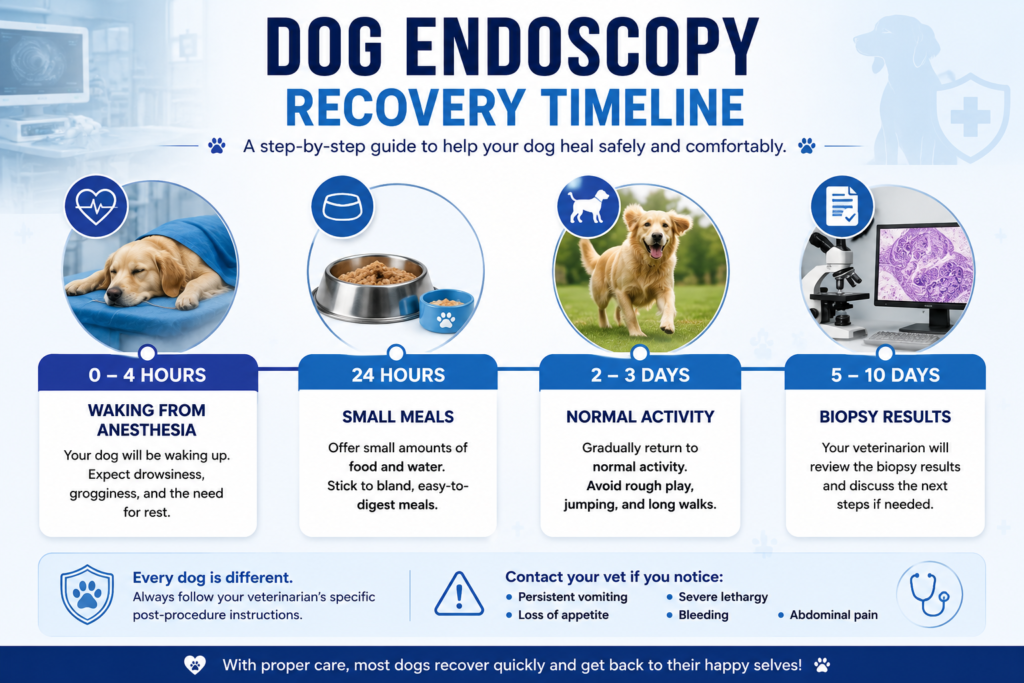
Endoscopy is commonly used to diagnose problems or remove foreign objects, often leading to faster recovery times compared to traditional surgery.
Your dog is anesthetized during the procedure. Discomfort is usually mild after endoscopy, and complication rates are generally low and compare favorably to open surgery because there are no large incisions.
Day-by-day recovery after diagnostic GI endoscopy:
| Timeframe | What to Expect |
|---|---|
| First 2–4 hours post-procedure | Groggy from anesthesia, mild nausea, may retch |
| Hours 4–12 | Alert but tired; small amount of water offered |
| 12–24 hours | Small bland meals begin (boiled chicken + rice) |
| Day 2–3 | Most dogs return to normal eating and activity |
| Day 5–10 | Biopsy results return from pathology lab |
| Day 7–14 | Recheck appointment if symptoms were GI-related |
Recovery after foreign body endoscopy:
Recovery from endoscopic retrieval of a foreign body is generally uneventful. Once the effects of anesthesia and discomfort caused by the procedure have subsided, your dog should resume normal activity quickly.
Recovering from open surgery is more complex and may take several weeks, with rest, prescription medication for pain and infection prevention, and a two-week follow-up to remove sutures.
Signs that require a call to your vet after endoscopy:
- Vomiting persisting more than 24 hours after the procedure
- Refusal to eat for more than 24 hours
- Blood in vomit or stool
- Significant lethargy beyond 24 hours
- Swollen or painful abdomen
- Difficulty breathing (bronchoscopy patients)
Is Dog Endoscopy Dangerous? Risks Explained Honestly
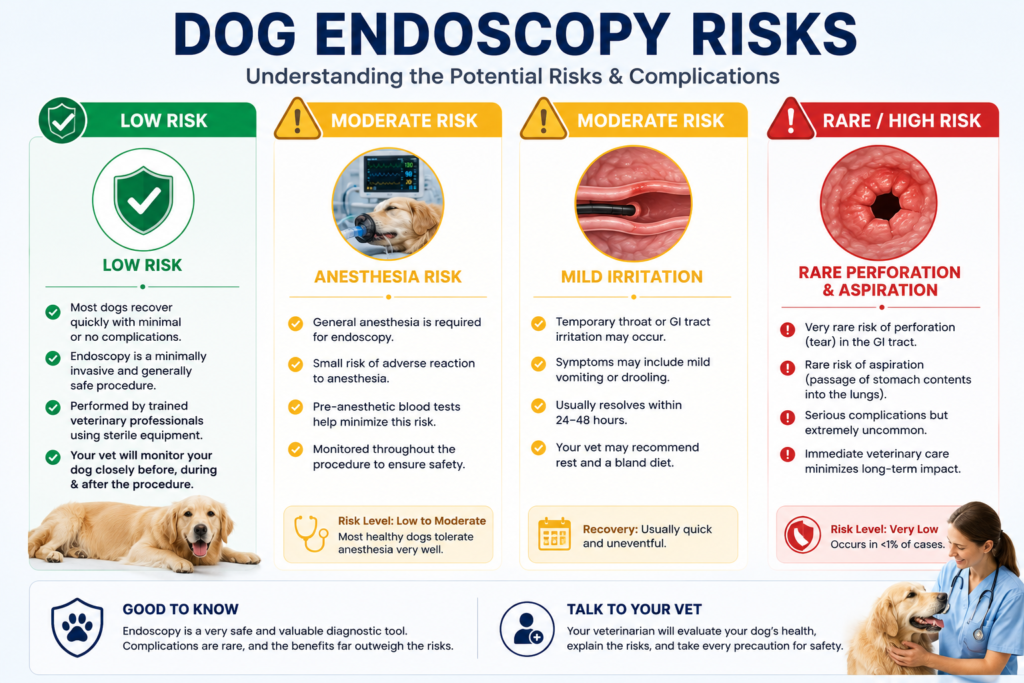
Endoscopy is one of the lower-risk veterinary procedures — but it’s not risk-free, primarily because of the required anesthesia.
Complication rates are generally low and compare favorably to open surgery because there are no large incisions.
Procedure-specific risks:
| Risk | Frequency | Details |
|---|---|---|
| Anesthesia complications | Low (1–3%) | Higher in senior dogs or those with organ disease |
| Mucosal tear or perforation | Very low (<1%) | More common during foreign body retrieval |
| Incomplete biopsy sampling | Low (5–10%) | May require surgical biopsy to supplement |
| Failed retrieval requiring surgery | 8–22% | Depends on object type and location |
| Mild esophageal irritation | Low | Usually resolves within 48 hours |
| Aspiration pneumonia | Very low | Can occur if vomiting occurs under anesthesia |
To reduce risk, modern teams use the smallest appropriate scope for the dog’s size, perform pre-anesthetic exams and tailored drug plans including for senior dogs, and monitor vitals with ECG, capnography, and blood pressure throughout.
Higher-risk patients: Senior dogs, dogs with pre-existing heart or kidney disease, and brachycephalic breeds (French Bulldogs, Bulldogs, Pugs) have elevated anesthesia risk. These dogs require more intensive pre-anesthetic workup and specialized anesthesia protocols — which adds both safety and cost to the procedure.
Questions to Ask Your Vet Before Agreeing to Endoscopy
Most owners leave the recommendation appointment without asking the questions that most affect the financial and medical outcome. Here are the ones that matter most:
About cost:
- “Can you give me a written all-in estimate including anesthesia, bloodwork, imaging, biopsies, and pathology?”
- “Will the pathology fee be on the same invoice or billed separately by the lab?”
- “If endoscopy fails and surgery is needed, what would the combined total likely be?”
- “Is there a lower-cost facility — like a university veterinary hospital — where this could be performed?”
About the procedure:
- “Based on the imaging, what is the realistic probability that endoscopy will successfully solve this?”
- “If you find something unexpected during the scope, what will you do — and will there be additional charges?”
- “How many endoscopies of this type does this facility perform per month?”
About alternatives:
- “Could we try an empirical treatment approach first for a few weeks and scope only if it fails?”
- “Is there a scenario where surgery would be more appropriate than endoscopy for my dog’s specific situation?”
About the scope of the procedure:
- “Will you take biopsies even if the GI tract looks normal? If IBD is suspected, normal-looking tissue still needs sampling.”
- “If biopsies are taken, when will pathology results come back and what will the follow-up plan be?”
About recovery and next steps:
- “When can my dog eat after the procedure?”
- “What symptoms after the procedure should prompt me to call you?”
- “What is the plan if biopsy results come back inconclusive?”
Action Checklist
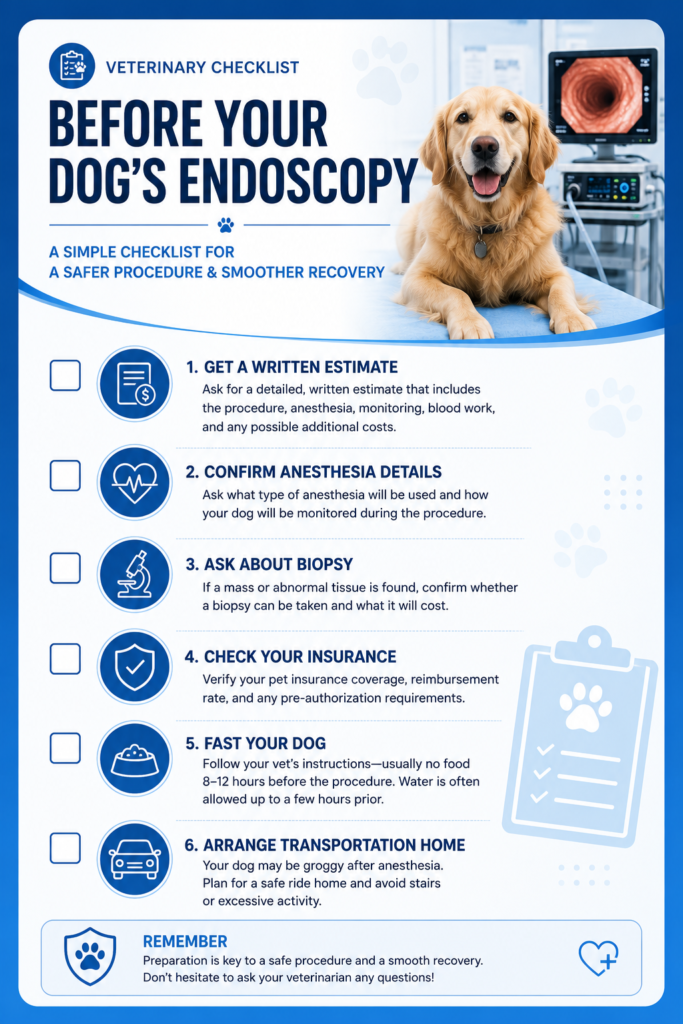
Before the endoscopy appointment:
- [ ] Request a written all-in estimate covering procedure + anesthesia + pre-procedure bloodwork + imaging + biopsy + pathology
- [ ] Ask whether pathology will be on the clinic invoice or billed separately
- [ ] Ask whether the object’s location makes endoscopy realistic — or whether surgery is the more appropriate first step
- [ ] Ask what the plan is if endoscopy fails mid-procedure
- [ ] Contact your pet insurer for pre-authorization if the estimate exceeds $1,500
- [ ] Check your deductible status — how much have you already met this policy year?
- [ ] Apply for CareCredit before the appointment — not at the desk under pressure
- [ ] Fast your dog as instructed — ask exactly how many hours and whether water is allowed
At the appointment:
- [ ] Confirm the all-in estimate at check-in
- [ ] Authorize the vet to take biopsies during the scope if clinically appropriate — don’t skip this step to save $150
- [ ] Ask for a post-procedure call with verbal findings before the written report arrives
After the procedure:
- [ ] Follow the fasting/feeding protocol exactly — small bland meals for the first 24 hours
- [ ] Keep both the clinic invoice and the lab pathology invoice for insurance submission
- [ ] Watch for the warning signs that require a vet callback
- [ ] Schedule your results follow-up appointment before leaving the clinic
Frequently Asked Question
How much does a dog endoscopy cost in the USA?
Most dog endoscopy procedures in the United States cost $800–$3,500, while straightforward gastrointestinal (GI) cases typically total $1,200–$2,200. Emergency foreign body removal at a specialty hospital can increase the final bill to $4,000–$5,000+ once anesthesia, imaging, medications, and post-procedure care are included.
Does dog endoscopy include anesthesia in the price?
Not always. Some veterinary hospitals include anesthesia in their estimate, while others bill it separately. General anesthesia usually adds $300–$600, so always ask for an all-inclusive written estimate before the procedure.
Is endoscopy cheaper than surgery for dogs?
Yes. Endoscopy is usually much less expensive and less invasive than open surgery. However, if the foreign object cannot be removed endoscopically, surgery may still be required, increasing the total cost.
What is the success rate of dog endoscopy for foreign body removal?
Research reports an overall success rate of about 88% for removing stomach or esophageal foreign bodies by endoscopy. Success is generally higher when the object is still in the stomach and lower once it has moved into the intestines.
Does pet insurance cover dog endoscopy?
Yes. Most accident-and-illness pet insurance plans cover medically necessary endoscopy, including anesthesia, biopsies, pathology, and follow-up treatment after your deductible and reimbursement percentage are applied. Check your policy and request pre-authorization for expensive procedures.
How long does a dog endoscopy take?
The procedure itself usually takes 20–60 minutes, while the complete hospital visit—including preparation, anesthesia, recovery, and discharge—typically lasts 2–4 hours.
How long does recovery take after dog endoscopy?
Most dogs recover quickly and return home the same day. Mild grogginess from anesthesia generally resolves within 12–24 hours, while normal eating and activity usually return within 24–48 hours. If biopsies are taken, results typically arrive in 5–10 business days.
When is surgery needed instead of endoscopy?
Surgery is usually recommended when:
- The foreign body has moved into the small intestine
- A perforation or bowel obstruction is suspected
- The object is too large or sharp to remove safely
- An endoscopy attempt is unsuccessful
In these situations, surgery provides the safest treatment option.
Does a dog need general anesthesia for endoscopy?
Yes. Dogs require general anesthesia so the veterinarian can safely perform the procedure without movement or discomfort. Unlike many human endoscopies performed under light sedation, veterinary endoscopy almost always requires general anesthesia.
What if my dog’s endoscopy is normal?
A normal-looking gastrointestinal tract does not rule out conditions such as inflammatory bowel disease (IBD). Many GI diseases can only be confirmed through biopsy samples, which is why veterinarians often recommend collecting biopsies even if the tissue appears normal during the procedure.
Can a regular veterinarian perform a dog endoscopy?
Usually not. Most endoscopy procedures are performed by board-certified internal medicine specialists, emergency hospitals, or university veterinary teaching hospitals because the equipment is expensive and requires specialized training.
What You Should Do Next
If your vet just recommended endoscopy for a suspected foreign body — the time to act is now, not tomorrow. Foreign bodies that don’t move from the stomach can cause mucosal damage and become harder to retrieve endoscopically over time. Call your insurer for pre-authorization, apply for CareCredit before the appointment, and ask your vet to confirm the object’s location by imaging before scheduling.
If the recommendation is for diagnostic GI endoscopy for chronic symptoms — you have time to prepare properly. Get an all-in written estimate, call two facilities including the nearest university veterinary hospital for pricing comparison, and contact your insurer about coverage before you commit.
And if your dog is healthy right now — the possibility of a swallowed foreign object is one of the most common emergency vet scenarios, particularly for young, large-breed, and curious dogs. A comprehensive pet insurance plan covers the full cost of a $4,000 emergency endoscopy or follow-up surgery for approximately the cost of one restaurant meal per week. Enroll while your dog is healthy, before any swallowed object, chronic symptom, or GI diagnosis closes the pre-existing condition window.
NOTE : PetInsurePrime reviewed pricing from referral hospitals, university veterinary hospitals, emergency clinics, and published veterinary resources to build these national estimates.
External Authority Sources
- PetMD — Veterinary Endoscopy
- SpectrumCare — Endoscopy Cost for Pets
- PMC / NCBI — Endoscopic Retrieval of Foreign Bodies (peer-reviewed)
- PMC / NCBI — Endoscopic and Surgical Removal of GI Foreign Bodies (72 cases)
- CareCredit Veterinary Financing
- AVMA
Disclaimer: This guide was independently researched by PetInsurePrime using publicly available veterinary pricing, peer-reviewed studies, and trusted educational resources. It is not a substitute for professional veterinary advice.
PetInsurePrime | Independent • Research-Based | Helping US dog owners understand real vet costs and coverage options — without the sales pressure.