Your vet just recommended an ultrasound. Maybe your dog has been vomiting for days and the bloodwork came back inconclusive. Maybe there’s a lump the vet can feel but can’t identify without imaging. Maybe it was a murmur picked up on a routine exam and now there’s a question about the heart.
Whatever the reason — you’re looking at a bill before you’ve even had a chance to process why the ultrasound is needed. Here’s what a dog ultrasound actually costs in 2026, what those costs cover, what ultrasound can and cannot tell your vet, and how to decide whether the expense is warranted in your situation.
Quick Answer Dog Ultrasound Cost in the USA
The national average cost for a dog ultrasound is $483, ranging from $383 to $880. That average covers a standard abdominal ultrasound at a general practice or specialty clinic. Emergency FAST ultrasounds run lower ($100–$250), full abdominal specialist scans run higher ($500–$900), and cardiac echocardiograms performed by a veterinary cardiologist reach $400–$800+. The exam fee ($50–$150), any sedation needed ($50–$200), and potential ultrasound-guided biopsy ($100–$300) are billed separately on top of the imaging fee.
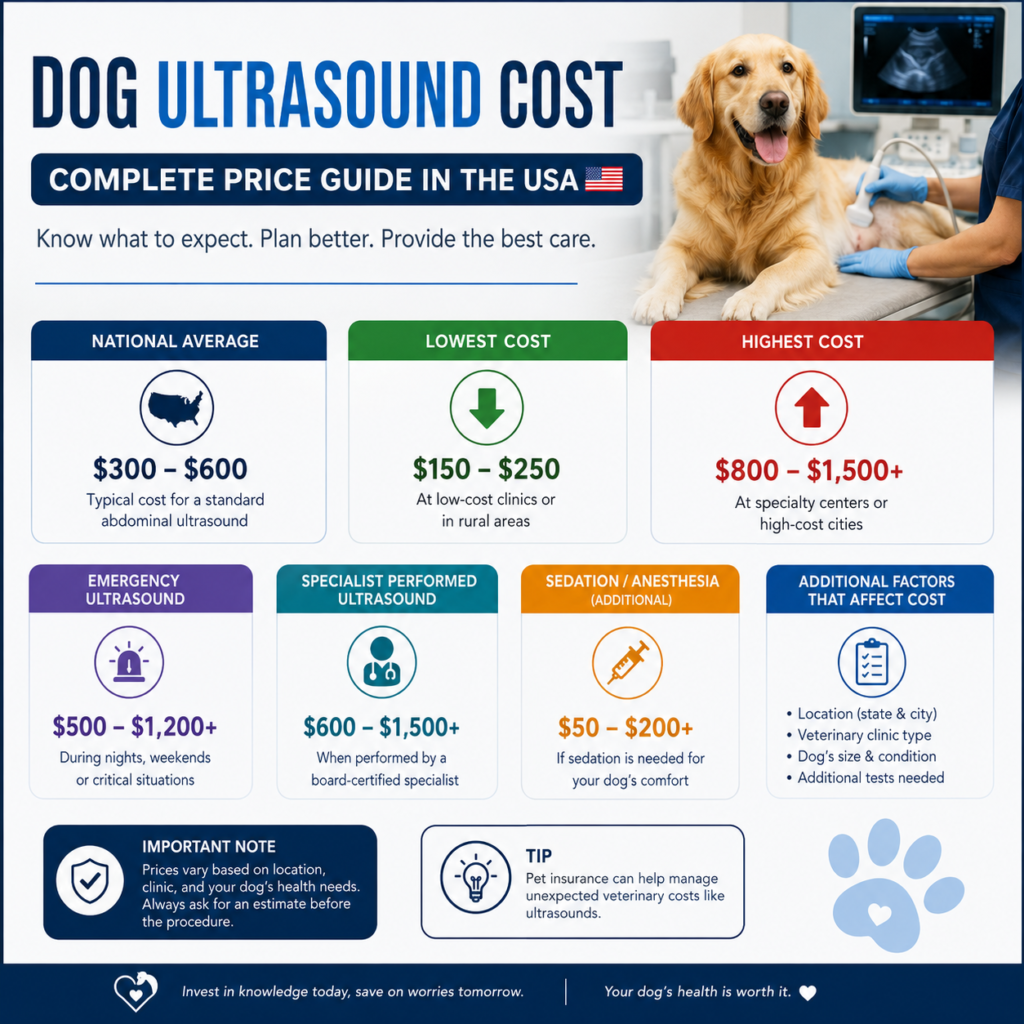
National Dog Ultrasound Cost Snapshot (2026)
| Cost Factor | Average Price |
|---|---|
| National Average | $483 |
| Lowest Cost | $100 |
| Highest Cost | $1,000+ |
| Standard Abdominal Ultrasound | $300–$500 |
| Specialist Ultrasound | $500–$900 |
| Emergency FAST Ultrasound | $100–$250 |
| Cardiac Echocardiogram | $400–$1,000+ |
| Sedation (if needed) | $50–$200 |
| Ultrasound-Guided FNA | $100–$350 |
At a Glance: 2026 Dog Ultrasound Cost Summary
| Ultrasound Type | Cost Range | Sedation Needed? |
|---|---|---|
| FAST / focused emergency ultrasound | $100 – $250 | ❌ Rarely |
| Single-organ / targeted scan | $200 – $400 | ❌ Rarely |
| Abdominal ultrasound (GP-performed) | $250 – $500 | ❌ Rarely |
| Abdominal ultrasound (specialist) | $400 – $900 | ❌ Sometimes |
| Pregnancy / reproductive ultrasound | $300 – $500 | ❌ Rarely |
| Musculoskeletal ultrasound | $350 – $500 | ❌ Rarely |
| Cardiac echocardiogram (GP) | $300 – $500 | ❌ Rarely |
| Cardiac echocardiogram (cardiologist) | $500 – $1,000+ | ❌ Rarely |
| Doppler ultrasound (blood flow study) | $400 – $800 | ❌ Sometimes |
| Ultrasound-guided FNA / biopsy | Add $100 – $350 | ⚠️ Sometimes |
Dog Ultrasound Cost by State
| State | Average Cost |
|---|---|
| California | $550–$900 |
| Texas | $350–$650 |
| Florida | $350–$650 |
| New York | $500–$900 |
| Illinois | $350–$700 |
Urban specialty hospitals generally charge more than rural veterinary clinics.
Table of Contents
- Types of Dog Ultrasounds — and What Each One Costs
- The Hidden Charges That Don’t Appear in the Quoted Price
- GP-Performed vs. Specialist Ultrasound — The Cost and Quality Difference
- What Can a Dog Ultrasound Detect? (And What It Cannot)
- Is Dog Ultrasound Better Than X-Ray? When to Use Which
- Does Pet Insurance Cover Dog Ultrasounds?
- What Happens After a Dog Ultrasound — And What the Next Steps Cost
- Is a Dog Ultrasound Worth It?
- How To Reduce Dog Ultrasound Cost
- Action Checklist
- FAQ
Types of Dog Ultrasounds — and What Each One Costs
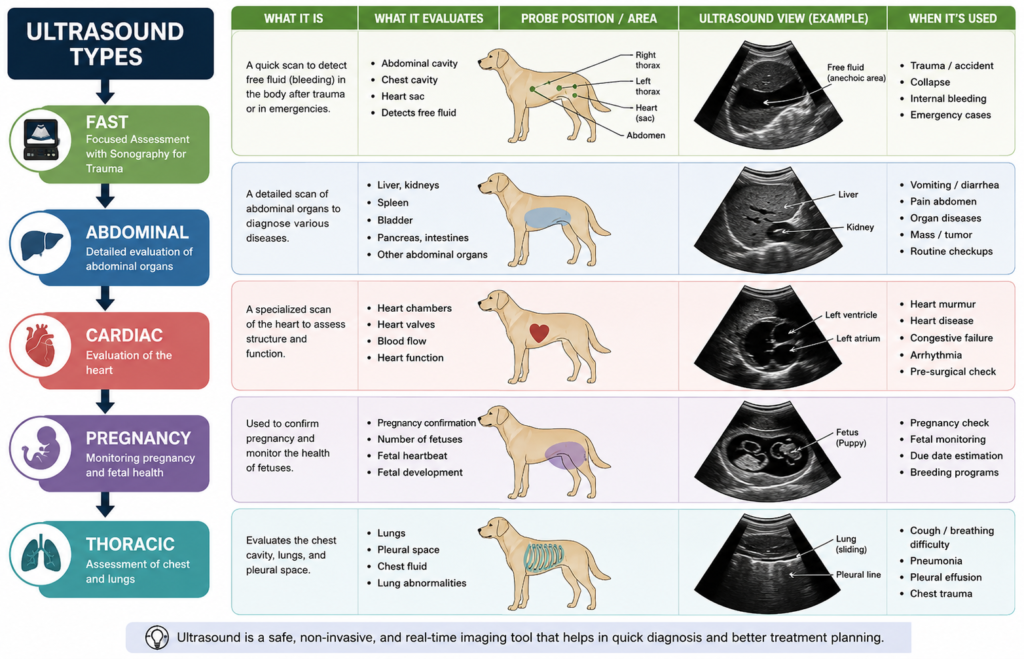
Not all ultrasounds are the same procedure. The type of scan your vet recommends determines both the cost and what the scan is actually capable of showing.
FAST Ultrasound (Focused Assessment with Sonography for Trauma)
These quick ultrasounds check for free fluid in the abdomen or chest, ruptured organs, or major internal bleeding. If your pet is hit by a car, collapses suddenly, or has severe breathing difficulty, ultrasound often guides immediate decisions.
FAST ultrasounds are emergency diagnostic tools — not detailed organ studies. They answer one specific question fast: is there blood or fluid where there shouldn’t be? The scan takes 5–10 minutes and requires no preparation or sedation.
Focused/FAST ultrasound costs $100–$250 — a quick scan, often done in emergencies. At a 24-hour emergency hospital with an after-hours surcharge, the total for a FAST scan may reach $200–$400 including facility fees.
Read Related Article… Emergency Vet Exam Cost in the USA (2026)
Abdominal Ultrasound
The most commonly recommended dog ultrasound. A full abdominal scan evaluates the liver, kidneys, spleen, stomach, intestines, bladder, adrenal glands, and lymph nodes — essentially everything in the abdominal cavity.
A general abdominal ultrasound costs $300 to $500. At a full-service specialty hospital where a board-certified radiologist or internal medicine specialist performs the scan, the cost runs $500–$900.
Most dogs tolerate abdominal ultrasound without sedation. Ultrasound is performed on a dog by shaving the hair and applying alcohol or gel to the skin to create a liquid interface. The ultrasound head is then gently moved back and forth across the skin. Your dog will usually have a small shaved area where the ultrasound probe is placed. This is normal and helps produce clear images. — on their belly or chest after the appointment.
Pregnancy / Reproductive Ultrasound
The most common reason for a dog ultrasound is to determine pregnancy. A dog pregnancy ultrasound costs $300 to $500 and focuses on the dog’s reproductive organs and fetal development.
Cardiac Echocardiogram
An echocardiogram is a specialized ultrasound of the heart — not just a scan, but a real-time moving assessment of heart chambers, valve function, wall thickness, and blood flow. It’s the standard diagnostic tool for heart disease, murmur evaluation, and cardiac treatment monitoring.
A dog cardiac ultrasound, also known as an echocardiogram, costs $400 to $600. When performed by a board-certified veterinary cardiologist — the appropriate specialist for complex cardiac conditions — the cost reaches $500–$1,000+. Between $450 and $850 in the US is typical. Price includes cardiac ultrasound and interpretation by a veterinary cardiologist.
Doppler function — which measures blood flow velocity and direction — is an essential component of a complete echocardiogram and adds to the complexity and time of the study. A basic cardiac ultrasound without Doppler assessment misses critical information for heart disease staging.
Musculoskeletal Ultrasound
Canine musculoskeletal ultrasounds cost $350 to $500. This valuable diagnostic tool allows veterinarians to closely examine a dog’s tendons, ligaments, and muscles for signs of injury or disease. Musculoskeletal ultrasound can also guide regenerative medicine treatments like platelet-rich plasma (PRP) injections.
Less common than abdominal or cardiac ultrasound, musculoskeletal imaging is most used in performance and working dogs with soft tissue injuries — particularly shoulder and elbow tendon injuries that don’t show on X-ray.
Thoracic (Chest) Ultrasound
Used to evaluate the space around the lungs, detect fluid accumulation (pleural effusion), and identify chest wall masses. In emergency situations, the ultrasound examination will typically concentrate on the abdomen and chest areas to promptly identify whether your dog or cat is suffering from a serious internal hemorrhage or pneumothorax.
Cost: $250–$500 for a focused chest study. Often combined with abdominal imaging in emergency trauma cases.
Read Related Artcile… Dog MRI Cost in the USA (2026): Average Cost, Insurance Coverage & Financing
The Hidden Charges That Don’t Appear in the Quoted Price
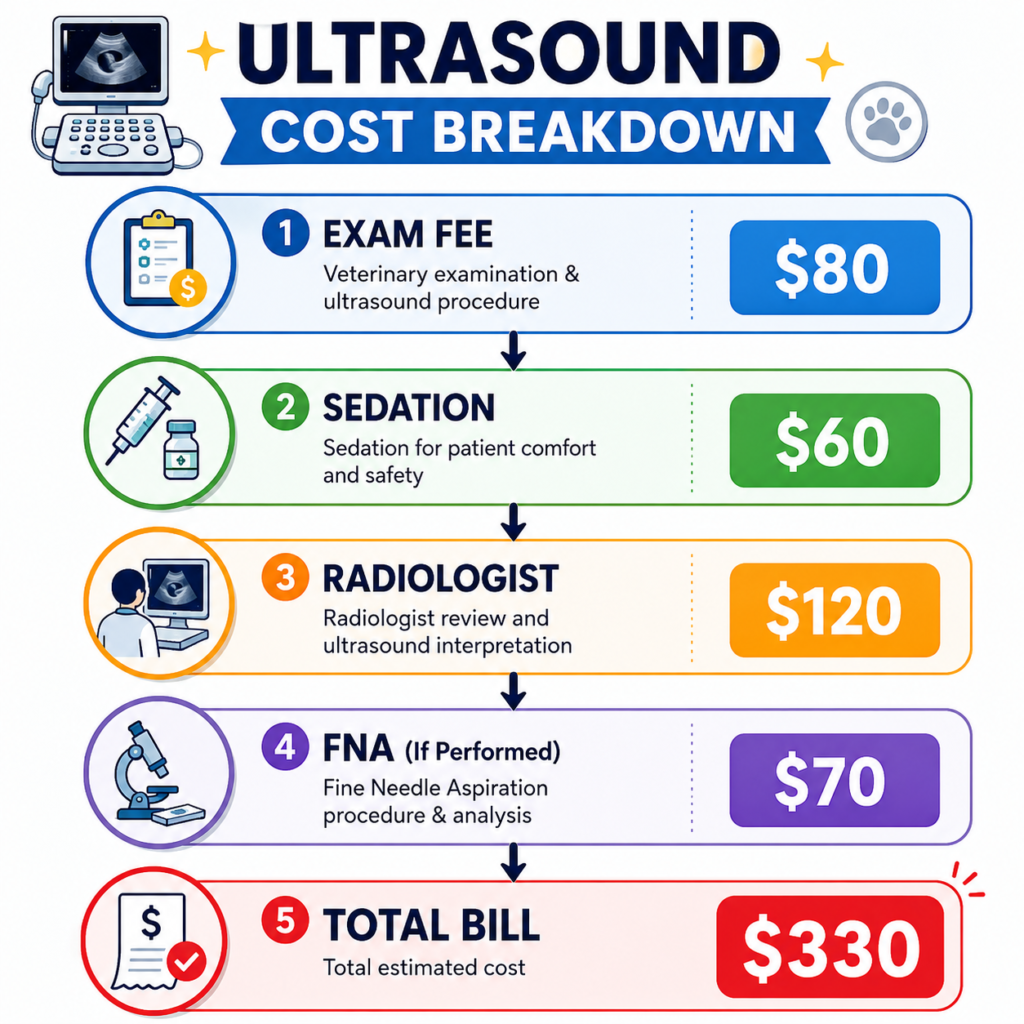
The ultrasound fee your vet quotes is usually just the imaging. Several additional charges appear on the final invoice that owners consistently don’t expect.
Exam fee: Most clinics charge an exam fee before any imaging. Exam fee ($50–$100) is charged separately from the ultrasound. At a specialty clinic, the initial consultation may run $150–$300.
Sedation: Sedation ($50–$200) is only charged if needed and is a separate charge. Most abdominal and pregnancy ultrasounds don’t require sedation. However, dogs that are anxious, painful, or unable to stay relaxed may need mild injectable sedation to complete the scan successfully.
Radiologist interpretation fee: Radiologist interpretation ($25–$75) is sometimes included, sometimes not. General practices that send images to an external teleradiologist add this fee separately. Specialty hospitals with on-site radiologists typically bundle it into the imaging price.
Ultrasound-guided fine needle aspirate (FNA): This is the most commonly overlooked add-on cost — and one of the most clinically significant. When an ultrasound identifies a mass or abnormal tissue, the vet often recommends sampling it in the same appointment using ultrasound guidance to precisely place the needle. Fine needle aspirate ($100–$300) may be added if the ultrasound finds a mass and the vet samples it during the scan.
An abdominal ultrasound quoted at $450 can become a $700 visit if a mass is found and sampled during the same appointment.
Read Related Article… Dog Cancer Treatment Cost in the USA (2026): Surgery, Chemo & Total Costs
The hair shaving: Not a cost, but a surprise. Before the scan, the technician shaves a patch of fur on the area being imaged. Ideally, dogs should not eat before an abdominal ultrasound. Food in the GI tract can block the view and make it more difficult for your vet to see your dog’s organs. Your vet’s team will typically tell you to withhold food for 8–12 hours before a scheduled abdominal scan. If nobody mentioned this before your appointment — ask when scheduling.
Read Related Article… Emergency Vet Costs in the USA (2026): What You’ll Really Pay by State
Full realistic cost of a dog ultrasound visit:
| Scenario | Line Items | Realistic Total |
|---|---|---|
| Abdominal scan, no findings, GP clinic | Exam + ultrasound | $350 – $650 |
| Abdominal scan, mass found, FNA performed | Exam + ultrasound + FNA | $500 – $950 |
| Specialist abdominal scan | Consult + specialist ultrasound + report | $700 – $1,200 |
| Emergency FAST scan | ER exam + surcharge + FAST | $300 – $600 |
| Cardiac echocardiogram (cardiologist) | Consult + echo + Doppler + report | $700 – $1,300 |
GP-Performed vs. Specialist Ultrasound — The Cost and Quality Difference
Because ultrasound quality depends enormously on the skill and experience of the person operating the probe.
Generally, the gold standard is to have an ultrasound done by a board-certified radiologist or internal medicine specialist, but there are general practice doctors who can perform basic versions of the imaging if they have the equipment and have had extra training. There is also a difference between a formal ultrasound study that provides detailed measurements of all components with complete descriptions and the ultrasound method being used as a quick screening tool.
The practical difference:
A GP performing an abdominal ultrasound as a screening tool can identify obvious masses, free fluid, and gross organ abnormalities. A board-certified radiologist or internal medicine specialist performing the same study produces a formal written report with complete organ measurements, tissue characterization, differential diagnoses, and clinical interpretation — significantly more useful for complex cases and surgical planning.
A GP-performed ultrasound costs 30–50% less than a specialist.
When a GP ultrasound is appropriate:
- Pregnancy confirmation and puppy count
- Quick screening for obvious masses or free fluid
- Follow-up monitoring of a previously characterized finding
- Bladder or kidney stone detection
- Ruling out gross abdominal abnormality when bloodwork is normal
When a specialist ultrasound is worth the premium:
- Unexplained weight loss, chronic vomiting, or diarrhea not responding to treatment
- Suspected cancer or mass characterization
- Complex cardiac conditions requiring Doppler measurements
- Pre-surgical planning for abdominal organ disease
- Cases where the GP scan was inconclusive or flagged something unclear
Asking your vet directly: “Would a GP-performed ultrasound be adequate for what we’re looking for, or does this situation warrant a specialist?” is a completely appropriate question. Most vets will give you an honest answer.
What Can a Dog Ultrasound Detect? (And What It Cannot)
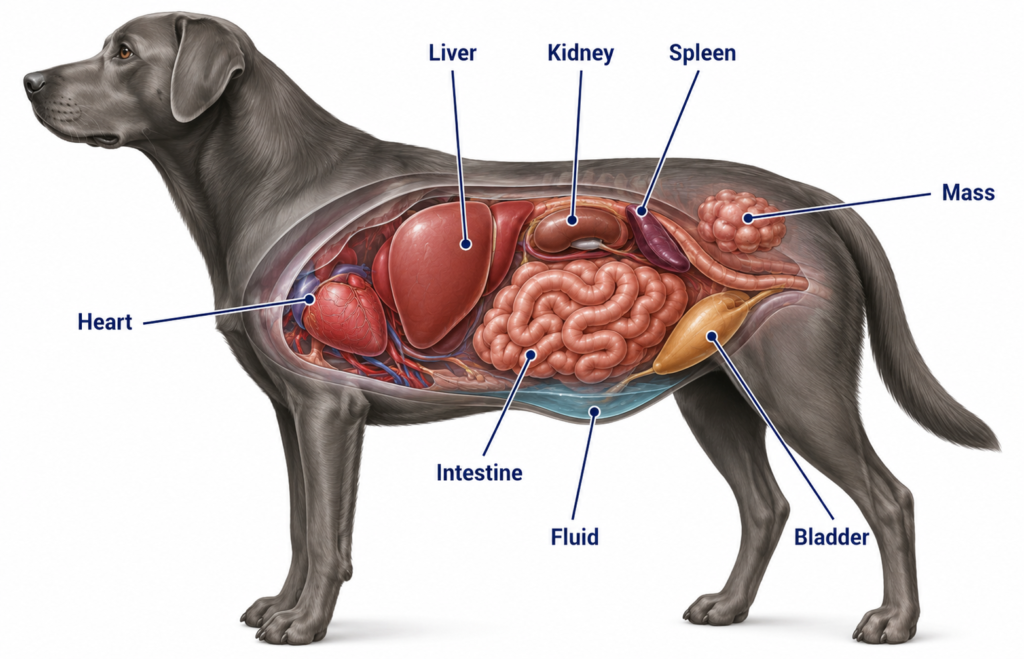
Condition
Ultrasound Helpful?
Cancer Mass
✅ Yes
Internal Bleeding
✅ Yes
Pregnancy
✅ Yes
Kidney Disease
✅ Yes
Heart Disease
✅ Yes
Broken Bone
❌ No
Brain Disease
❌ No
Spinal Injury
❌ No
Understanding what ultrasound can and cannot show your vet is important — both for managing expectations and for understanding when additional diagnostics are needed.
What ultrasound reliably detects:
Traumatic injury: an ultrasound may be used to look for free fluid in the abdomen, which could suggest issues such as internal bleeding or a ruptured bladder. Cancer: ultrasound can be used to identify masses within the abdomen, enlarged lymph nodes, and other changes that may suggest the pet has cancer. Chronic vomiting and/or diarrhea: the gastrointestinal tract may be scanned to look for causes. Urinary tract issues: the bladder and kidneys can be scanned for stones or masses. Pregnancy: the uterus can be scanned to diagnose pregnancy and monitor fetal development. Heart disease: an echocardiogram is the standard test for diagnosing and monitoring heart disease.
What ultrasound cannot definitively determine:
Ultrasound alone is not able to identify a specific cancer type and give you a definitive diagnosis — carcinoma, adenocarcinoma, benign vs malignant, sarcoma, etc. There are also situations in which inflammatory processes and cancerous processes can look similar in certain tissues.
Read Related Article… Dog CT Scan Cost in the USA (2026): Real Numbers, Hidden Charges, and How to Lower the Bill
An ultrasound that shows a mass on the spleen tells the vet a mass exists. It does not confirm whether that mass is hemangiosarcoma, a benign nodular hyperplasia, or another tumor type. Tissue sampling — either fine needle aspirate or biopsy — is required to determine what the mass actually is.
Is Dog Ultrasound Better Than X-Ray? When To Use Which
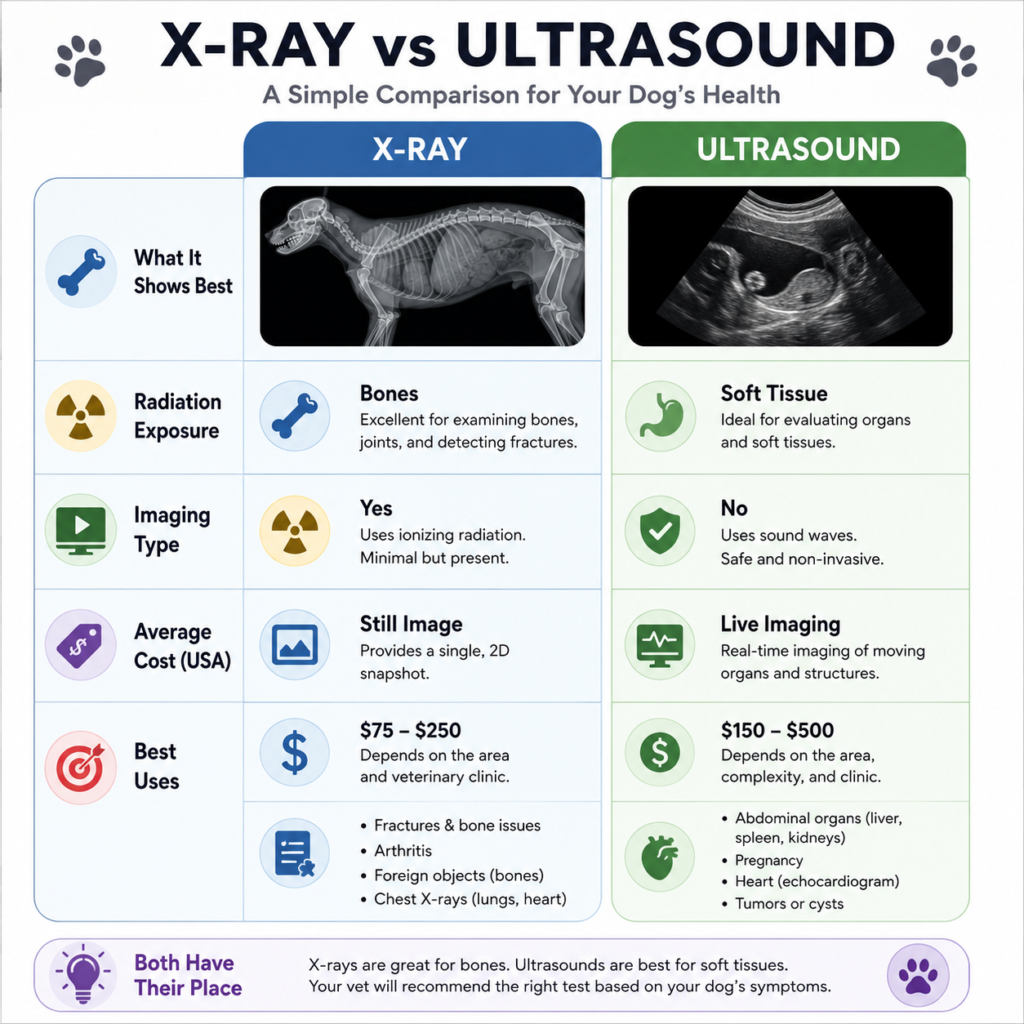
| Feature | X-Ray | Ultrasound |
|---|---|---|
| Best for | Bones, lung patterns, foreign bodies | Soft tissue, organs, fluid, blood flow |
| Real-time imaging | ❌ Static snapshot | ✅ Live, moving image |
| Sedation required | ❌ Rarely | ❌ Rarely |
| Radiation | ⚠️ Small amount | ❌ None (sound waves) |
| Cost | $100 – $450 | $200 – $900+ |
| Sees through gas/bone | ✅ Yes | ❌ No |
| Detects free fluid | ⚠️ Inconsistently | ✅ Highly reliable |
| Heart function | ❌ No (only size) | ✅ Real-time movement and blood flow |
| Cancer detection | ⚠️ Indirect | ✅ Identifies masses and organ changes |
When vets usually recommend ultrasound after an X-ray
Persistent vomiting
Bloodwork is inconclusive
Mass detected on X-ray
Suspected internal bleeding
Organ abnormalities
Heart murmur
Read Related Article… Dog X-Ray Cost in the USA (2026): Average Prices, Sedation Costs & What You’ll Actually Pay
When X-ray is the right first step:
- Fractures and bone injuries
- Foreign body ingestion (metal, dense objects)
- Lung patterns — pneumonia, masses
- Heart size and shape (general)
- Bladder stone presence (most mineral stones visible)
- Pregnancy litter count (after skeletal ossification around day 45)
When ultrasound is the right next step:
- When X-rays show something but don’t explain it
- When X-rays are normal but symptoms persist
- Organ texture, internal structure, and blood flow assessment
- Heart valve function and cardiac disease staging
- Internal bleeding detection after trauma
- Guided sampling of masses found on X-ray or physical exam
X-ray and ultrasound are complementary tools, not competing ones. A chest X-ray showing an enlarged heart prompts an echocardiogram to assess cardiac function. An abdominal X-ray showing a mass prompts ultrasound to characterize it.
Does Pet Insurance Cover Dog Ultrasounds?
Yes — most comprehensive accident-and-illness pet insurance plans cover ultrasounds as diagnostic imaging when the scan is medically necessary for a covered condition.
Coverage by plan type:
| Plan Type | Ultrasound Coverage |
|---|---|
| Accident & Illness (comprehensive) | ✅ Covers ultrasounds for injuries and illnesses |
| Accident-only | ✅ Covers trauma-related ultrasounds (FAST, etc.) |
| Wellness / preventive add-on | ⚠️ May cover pregnancy screening only |
| Routine care plan | ❌ Does not cover diagnostic ultrasounds |
Diagnostic ultrasounds are well-covered by pet insurance — 70–90% reimbursement after deductible. Emergency ultrasounds, illness workups, and pre-surgical imaging are all covered under accident and illness plans.
Average reimbursement
70%
80%
90%
Example Bill
$1000
Owner Pays
$300
$200
$100
What’s included in a covered ultrasound claim:
- The ultrasound imaging fee
- Specialist consultation fee (if referred)
- Sedation if required for the scan
- Radiologist interpretation fee
- Ultrasound-guided FNA if performed during the same visit (usually covered as part of the same diagnostic workup)
What pet insurance typically won’t cover:
- Ultrasounds for pre-existing conditions
- Routine pregnancy confirmation (varies by plan)
- Ultrasounds performed during the waiting period
- Cardiac ultrasounds for diagnosed heart conditions may be considered part of an ongoing pre-existing condition management protocol — check your policy if your dog has a prior cardiac diagnosis
Reimbursement math on a real ultrasound visit:
Abdominal ultrasound at a specialist clinic — mass found, FNA performed:
- Specialist consult: $200
- Ultrasound: $650
- Ultrasound-guided FNA: $200
- Total: $1,050
- Annual deductible: $250 (already met this year)
- At 80% reimbursement: $840 back
- Your out-of-pocket: $210
What Happens After a Dog Ultrasound — And What the Next Steps Cost
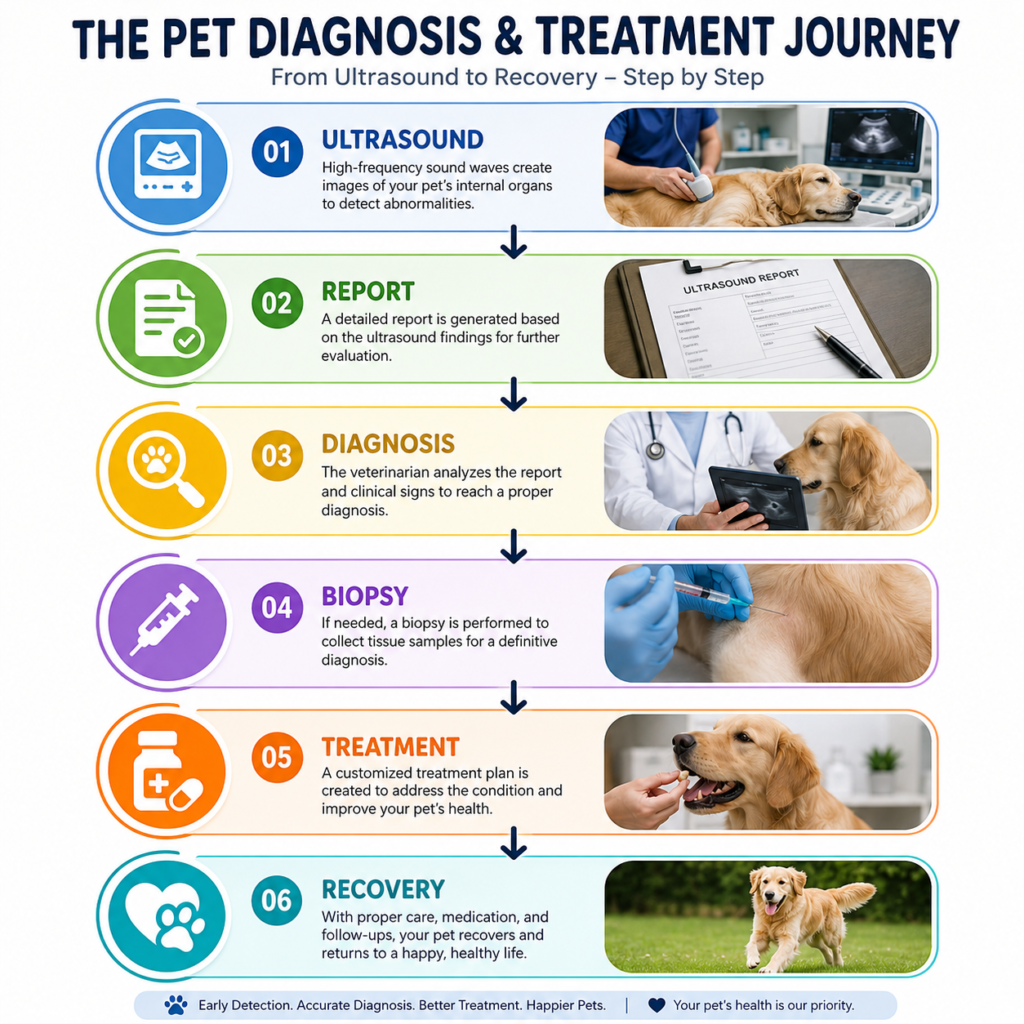
It’s often the financially significant part. The ultrasound itself is usually the starting point, not the destination.
If the ultrasound is normal: Good news — but the diagnostic journey may continue if symptoms persist. A normal abdominal ultrasound with ongoing vomiting typically prompts additional bloodwork, dietary trials, or GI endoscopy ($800–$2,000). Follow-up recheck ultrasound may be recommended in 4–6 weeks to confirm findings are stable.
If a mass is found:
Mass or tumor found: biopsy ($200–$500) or surgery consultation. The mass type determines next steps:
| Finding | Typical Next Step | Estimated Cost |
|---|---|---|
| Splenic mass | Surgical consultation + splenectomy | $1,500 – $4,000 |
| Liver mass | FNA or biopsy for type confirmation | $200 – $800 |
| Adrenal mass | Additional bloodwork (ACTH stim test) | $200 – $400 |
| Enlarged lymph nodes | FNA or excisional biopsy | $150 – $800 |
| Bladder mass | Cystoscopy or surgical consult | $800 – $2,500 |
| Intestinal wall thickening | Endoscopy or surgical biopsy | $800 – $2,000 |
If organ abnormalities are found:
Organ abnormality: specialized blood work ($100–$300). Kidney disease, liver disease, and Cushing’s disease each have specific follow-up panels that confirm diagnosis and stage severity.
If heart disease is found:
An echocardiogram diagnosing mitral valve disease or dilated cardiomyopathy typically leads to ongoing cardiology management: Heart condition: ongoing cardiology visits ($200–$400 every 6–12 months).Cardiac medications (enalapril, pimobendan, furosemide) add $50–$200 per month in ongoing costs.
If pregnancy is confirmed:
Pregnancy: recheck ultrasound in 2–3 weeks ($100–$200). Late-pregnancy X-rays to count fetuses and check pelvic canal size are often added at $150–$300.
Is a Dog Ultrasound Worth It?
When ultrasound is clearly worth the cost:
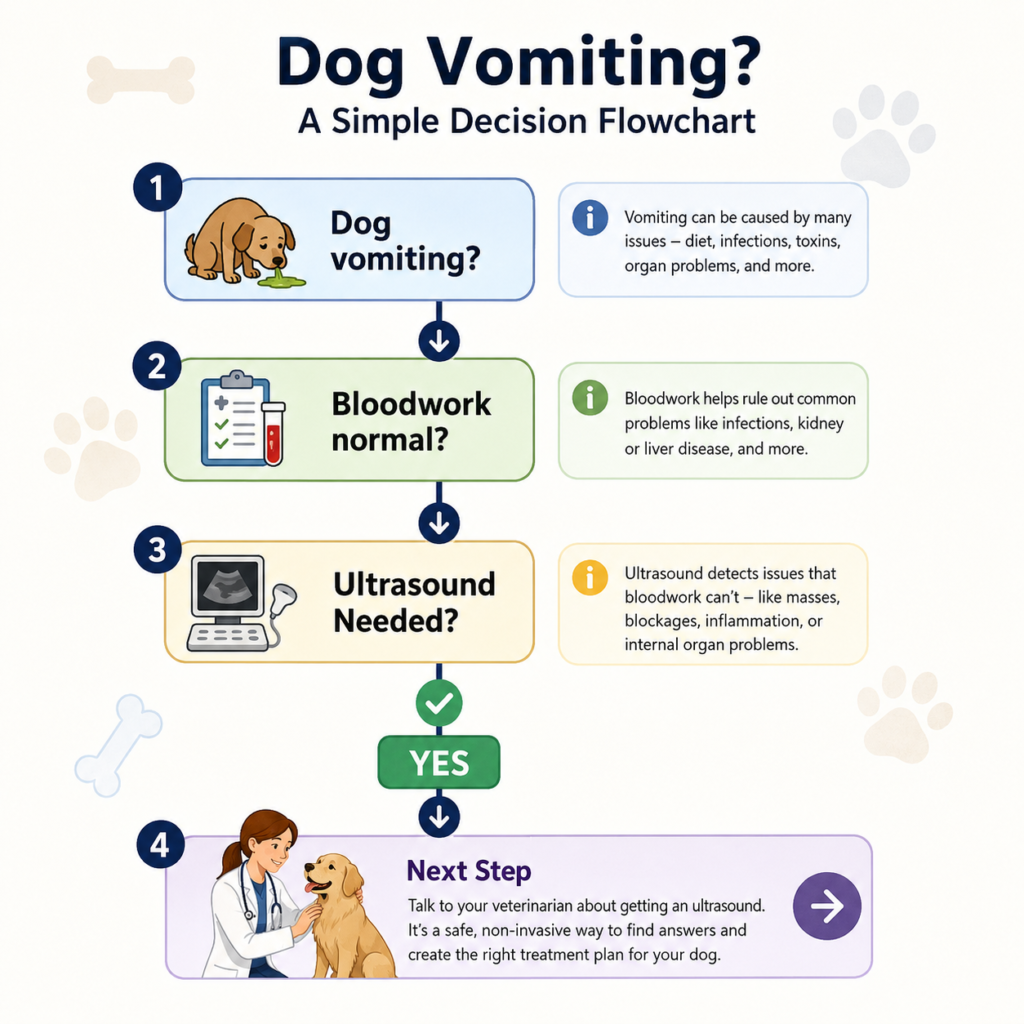
- Your dog has had persistent vomiting or diarrhea for more than 2–3 weeks with no diagnosis from bloodwork or X-ray
- Your vet felt a mass on physical exam and needs to characterize it before making a treatment recommendation
- Your dog has a new heart murmur and you need to know whether it requires treatment
- Your dog collapsed or had significant trauma and internal bleeding needs to be ruled out immediately
- Your dog has symptoms of Cushing’s disease (adrenal evaluation)
- Ongoing monitoring of a previously characterized condition (kidney disease, known cardiac disease)
In all of these situations, an ultrasound provides information that directly changes the treatment decision. Without it, either no decision is made or the wrong one is.
When ultrasound may not be the immediate priority:
- Your dog had a single vomiting episode and is otherwise normal — this typically resolves without imaging
- The clinical signs are very mild and recent bloodwork was completely normal
- A senior dog with declining quality of life where a cancer diagnosis would not change the chosen management approach
- When the financial cost of the ultrasound would prevent treatment of whatever is found
An ultrasound that identifies a $6,000 surgery for a family that cannot cover $1,000 in diagnostics and surgery is a difficult situation. In those cases, an honest conversation with your vet about what the ultrasound is likely to show and what the follow-up treatment would cost before authorizing the scan is the right approach.
Should You Get a Dog Ultrasound?
| Situation | Recommendation |
|---|---|
| Persistent unexplained symptoms > 2 weeks | ✅ Yes — imaging is warranted |
| Palpable mass on exam | ✅ Yes — characterization needed |
| New heart murmur | ✅ Yes — echocardiogram is standard of care |
| Trauma / collapse / suspected internal bleeding | ✅ Yes — FAST immediately |
| Single mild episode, otherwise normal dog | ⚠️ Wait — may resolve without imaging |
| Monitoring a known chronic condition | ✅ Yes — follow-up is medically important |
| Advanced illness, owner considering palliative care only | ⚠️ Discuss goals before spending on imaging |
How To Reduce Dog Ultrasound Cost
1. Ask whether a GP-performed ultrasound is diagnostically adequate for your situation. A general practice ultrasound costs 30–50% less than a specialist study. For pregnancy confirmation, bladder stone detection, and simple abdominal screening, GP-performed scans are often fully adequate. Reserve specialist referrals for cases where comprehensive organ characterization or cardiac Doppler is genuinely needed.
2. Ask whether ultrasound-guided FNA can be done in the same appointment. If your vet expects to find something that may need sampling, doing the FNA during the same scan saves a second procedure appointment and a second sedation/facility charge. The add-on cost in the same appointment ($100–$300) is significantly less than a separate procedure.
3. Fast your dog before the appointment. Ideally, dogs should not eat before an abdominal ultrasound. Food in the GI tract can block the view and make it more difficult for your vet to see your dog’s organs. Gas and food in the stomach and intestines can block ultrasound views and necessitate rescheduling or repositioning — which wastes appointment time and may require additional imaging. An 8–12 hour fast before abdominal ultrasound is standard. Ask when scheduling.
4. Contact your pet insurer about pre-authorization for specialist scans. For any ultrasound likely to cost over $500 — especially cardiac echocardiograms at cardiology specialty centers — a quick pre-authorization call takes 10 minutes and confirms coverage before you spend. This is more relevant for ultrasound than for emergency FAST scans where timing matters.
5. Ask about university veterinary hospital pricing. Teaching hospitals offer ultrasound services performed by residents under faculty supervision — with full board-certified oversight of the study. Costs typically run 20–40% below private specialty centers for the same quality of imaging. For a planned, non-emergency ultrasound, the wait is usually worth the savings.
6. Apply for CareCredit before specialist consultations. Specialist ultrasound appointments routinely generate $700–$1,300 invoices once consultation, imaging, FNA, and interpretation fees are included. Having CareCredit already in place before the appointment removes the payment pressure at checkout. Apply online before the appointment.
Action Checklist
Before the ultrasound appointment:
- [ ] Fast your dog for 8–12 hours if an abdominal scan is scheduled — ask the clinic to confirm
- [ ] Ask: “Is a GP-performed ultrasound adequate here, or do we need a specialist?”
- [ ] Ask: “If you find something during the scan, can you sample it in the same appointment?”
- [ ] Ask: “What is the all-in cost including exam, imaging, any sedation, and interpretation?”
- [ ] Contact your pet insurer about pre-authorization if the estimated cost exceeds $500
- [ ] Check your deductible status — how much of your annual deductible have you already met?
- [ ] Apply for CareCredit before specialist appointments if a large bill is expected
At the appointment:
- [ ] Confirm the quoted all-in cost at check-in
- [ ] Ask the radiologist or vet to explain findings verbally before you leave — not just through a written report later
- [ ] Ask: “What is the most likely next step based on what you found, and what will that cost?”
After the appointment:
- [ ] Request the written ultrasound report for your records and insurance claim
- [ ] Request an itemized invoice — not just a total
- [ ] Submit your insurance claim promptly with all documentation
FAQ
How much does a dog ultrasound cost? The national average cost for a dog ultrasound is $483, ranging from $383 to $880.Emergency FAST ultrasounds run $100–$250. Full specialist abdominal scans run $500–$900. Cardiac echocardiograms at a veterinary cardiologist run $500–$1,000+. Total visit costs including exam, FNA, and interpretation frequently run $600–$1,200 at specialty centers.
Does a dog need sedation for an ultrasound? Most dogs tolerate ultrasounds without sedation. Unlike X-rays, which sometimes require precise positioning that anxious dogs resist, ultrasound is performed with the dog lying relaxed while the probe moves across a shaved area. Sedation is occasionally needed for dogs in significant pain or with severe anxiety, adding $50–$200 to the total.
Why would a dog need an ultrasound? Common reasons include traumatic injury (to check for internal bleeding), cancer detection (identifying masses and enlarged lymph nodes), chronic vomiting or diarrhea (GI tract evaluation), urinary tract issues (bladder and kidney stones or masses), pregnancy monitoring, and heart disease (echocardiogram for murmurs and cardiac function.
Can an ultrasound find cancer in a dog? Ultrasound can identify masses, enlarged lymph nodes, and abnormal organ texture consistent with cancer. However, ultrasound alone is not able to identify a specific cancer type and give you a definitive diagnosis. There are also situations in which inflammatory processes and cancerous processes can look similar in certain tissues. A fine needle aspirate or biopsy is required to confirm cancer type and whether a mass is malignant or benign.
How long does a dog ultrasound take? A focused FAST ultrasound takes 5–10 minutes. A complete abdominal ultrasound takes 30–60 minutes including preparation, imaging, and recovery. A full cardiac echocardiogram with Doppler assessment typically takes 45–90 minutes. Preparation includes hair shaving and positioning, both of which add time beyond the imaging itself.
Is ultrasound better than X-ray for dogs? Neither is universally better — they answer different questions. X-rays are superior for bone assessment, lung patterns, and foreign body detection. Ultrasound is superior for soft tissue organ detail, blood flow evaluation, free fluid detection, and real-time cardiac function. Most complex diagnostic workups use both in sequence, because together they provide more information than either alone.
Does pet insurance pay for dog ultrasounds? Yes — most comprehensive accident-and-illness plans cover diagnostic ultrasounds at 70–90% reimbursement after your deductible, when the underlying condition is not pre-existing and the policy is past its waiting period. Emergency ultrasounds, illness workups, and pre-surgical imaging are all covered under accident and illness plans.
What is a FAST ultrasound for dogs? FAST (Focused Assessment with Sonography for Trauma) ultrasounds check for free fluid in the abdomen or chest, ruptured organs, or major internal bleeding. If your pet is hit by a car, collapses suddenly, or has severe breathing difficulty, ultrasound often guides immediate decisions. It costs $100–$250 and takes 5–10 minutes — significantly less than a full abdominal study.
What happens after a dog ultrasound? It depends on the findings. A normal scan may require no follow-up or a recheck in 4–6 weeks. A mass or tumor found typically leads to biopsy ($200–$500) or a surgery consultation. Organ abnormalities typically prompt specialized bloodwork ($100–$300). Heart conditions lead to ongoing cardiology visits ($200–$400 every 6–12 months). Ask your vet before leaving: “What is the most likely next step and cost based on what you found?”
Is a dog ultrasound worth the cost? When it changes the treatment decision — yes, consistently. For persistent unexplained symptoms, palpable masses, cardiac murmurs, and trauma, ultrasound provides information that directly determines the next medical step. For mild, short-duration symptoms with otherwise normal diagnostics, a brief watchful waiting period may be medically appropriate before committing to imaging.
What You Should Do Next
If your vet just recommended an ultrasound — ask one question before you leave: “If the scan finds something, what would the most likely next step be, and what would that cost?” That single question converts a vague “we’ll see what the scan shows” into a realistic financial arc you can actually plan for.
If the cost is a concern — ask whether a GP-performed scan is adequate for your situation before accepting a specialist referral, and apply for CareCredit before the appointment rather than scrambling at the desk.
And if your dog is healthy right now — a comprehensive pet insurance plan at $40–$70/month covers ultrasounds, the follow-up bloodwork, and whatever treatment the scan leads to. The $483 average ultrasound cost plus biopsy plus treatment is exactly the kind of bill that returns six to ten times the annual premium in a single diagnostic workup.
External Authority Sources
- CareCredit Dog Ultrasound Cost Guide
- PetMD — Dog Ultrasounds
- VCA Animal Hospitals — Ultrasound Examination in Dogs
- DogCancer.com — Ultrasound Examination in Dogs
- VetReceipt Real Invoice Data
Disclaimer: This article is for informational and educational purposes only. Cost data reflects 2026 national averages from NAPHIA, Insurify, and MetLife Pet Insurance and will vary based on your dog’s age, breed, location, and the specific plan you choose. PetInsurePrime does not sell pet insurance and receives no compensation from any insurance provider. Always compare multiple quotes and read your policy documents carefully before enrolling.
PetInsurePrime | Independent • Research-Based | Helping US dog owners understand real vet costs and coverage options — without the sales pressure.
Pingback: Dog Echocardiogram Cost in the USA (2026): Prices Guide
Pingback: Dog Fine Needle Aspiration Cost: 2026 USA Price Guide
Pingback: Dog Pancreatitis Treatment Cost: What You'll Pay in the USA