
Updated: August 2026| Reading Time: 13minutes
Your vet listened to your dog’s chest a little longer than usual, then said, “I’m hearing a murmur — let’s do a workup.” You nodded, said okay, and walked out with a follow-up appointment and no real idea what you just agreed to, financially. Is this a $150 problem or an $1,800 problem? Nobody told you, and now you’re staring at your bank account trying to plan for a number you don’t actually have yet.
Quick Answer : Dog Heart Murmur Workup Cost
A full dog heart murmur workup in the US typically costs $150 to $1,800+, depending on how many diagnostic steps your vet recommends. A basic in-house evaluation (exam plus grading) runs $50–$150. A moderate workup adding bloodwork and an ECG lands around $300–$700. A complete cardiology workup including a specialist echocardiogram typically totals $800–$1,800. Most dogs don’t need every test — the right combination depends on your dog’s symptoms, age, and breed risk.
Quick Cost Summary
| Workup Stage | What’s Included | Typical Cost |
|---|---|---|
| Stage 1: Initial evaluation | Physical exam, stethoscope grading, history review | $50–$150 |
| Stage 2: Screening bloodwork | NT-proBNP test, general bloodwork | $150–$450 |
| Stage 3: Electrical/imaging screen | ECG (EKG), chest X-rays | $225–$650 |
| Stage 4: Definitive imaging | Echocardiogram with cardiologist interpretation | $500–$1,200 |
| Full complete workup (all stages) | Exam + bloodwork + ECG + X-rays + echo | $925–$2,450 |
| Realistic average total | Most dogs get 2–3 stages, not all 4 | $600–$1,200 |
Table of Contents
- How Much Does a Full Heart Murmur Workup Cost?
- What’s Actually Included in a Cardiac Workup?
- Cost by Diagnostic Stage
- Do You Need Every Test, or Just Some?
- Real-World Workup Cost Scenarios
- How Insurance Handles a Multi-Test Workup
- Should You Do the Full Workup Now or Stage It Over Time?
- How to Keep the Workup Cost Reasonable
- Action Checklist Before Your Follow-Up Visit
- FAQ
How Much Does a Full Heart Murmur Workup Cost?
A complete diagnostic workup for a dog heart murmur costs $150 on the low end and can exceed $1,800 if your vet orders every available test, including a specialist echocardiogram.
Read Related Article… Dog Echocardiogram Cost in the USA (2026): What You’ll Pay & What’s Included
The wide range exists because “workup” isn’t a single line item — it’s a sequence of tests your vet layers on based on what each previous result shows. A young, healthy dog with a soft, incidental murmur might only need a $50–$150 recheck exam in a few months. An older dog with a loud murmur, coughing, or fatigue might need the full sequence: bloodwork, an ECG, chest X-rays, and a cardiologist echo — easily crossing $1,000.
Most dogs land somewhere in the middle. A realistic average for a dog that needs real investigation, but isn’t in crisis, is $600 to $1,200 across two or three diagnostic stages.
A real-world example: a 7-year-old Cocker Spaniel gets a grade III murmur flagged during a routine annual exam. The vet recommends bloodwork ($180) and chest X-rays ($220) as a first pass. Both come back slightly abnormal, so the vet refers the dog to a cardiologist for a full echo ($650). Total workup cost: $1,050, spread across two visits roughly three weeks apart.
What’s Actually Included in a Cardiac Workup?

A murmur workup is built from up to four diagnostic layers, and your vet typically doesn’t order all four at once — they add tests based on what the previous ones reveal.
Physical exam and murmur grading comes first, always. Your vet grades the murmur on a scale of I to VI based on how loud and where it’s heard, which gives an initial sense of severity, though grade alone doesn’t confirm the cause.
NT-proBNP blood testing is often the next step, especially for breeds prone to dilated cardiomyopathy that don’t always produce a loud murmur. This test measures a hormone released when heart muscle is under strain — an elevated result signals that further imaging is worth the cost, while a normal result sometimes lets you avoid it.
An ECG (electrocardiogram) checks the heart’s electrical rhythm, catching arrhythmias that a murmur alone won’t reveal. It’s a different measurement than an echo — rhythm versus structure — and vets frequently order both because they answer different questions.
Chest X-rays show whether the heart’s silhouette is enlarged and whether fluid has started accumulating in or around the lungs, which matters most in dogs already showing coughing or breathing changes.
Read Related Article… Dog X-Ray Cost in the USA (2026): Average Prices, Sedation Costs & What You’ll Actually Pay
The echocardiogram is the definitive structural test — the only one that directly visualizes the valves, chambers, and blood flow to confirm exactly what’s wrong.
A useful example: a Doberman Pinscher — a breed prone to dilated cardiomyopathy, which frequently doesn’t cause an audible murmur — might skip straight to proBNP and ECG screening even without a murmur being detected, because the disease pattern in that breed makes those two tests more useful as first-line screening than waiting for a murmur to appear.
Cost by Diagnostic Stage
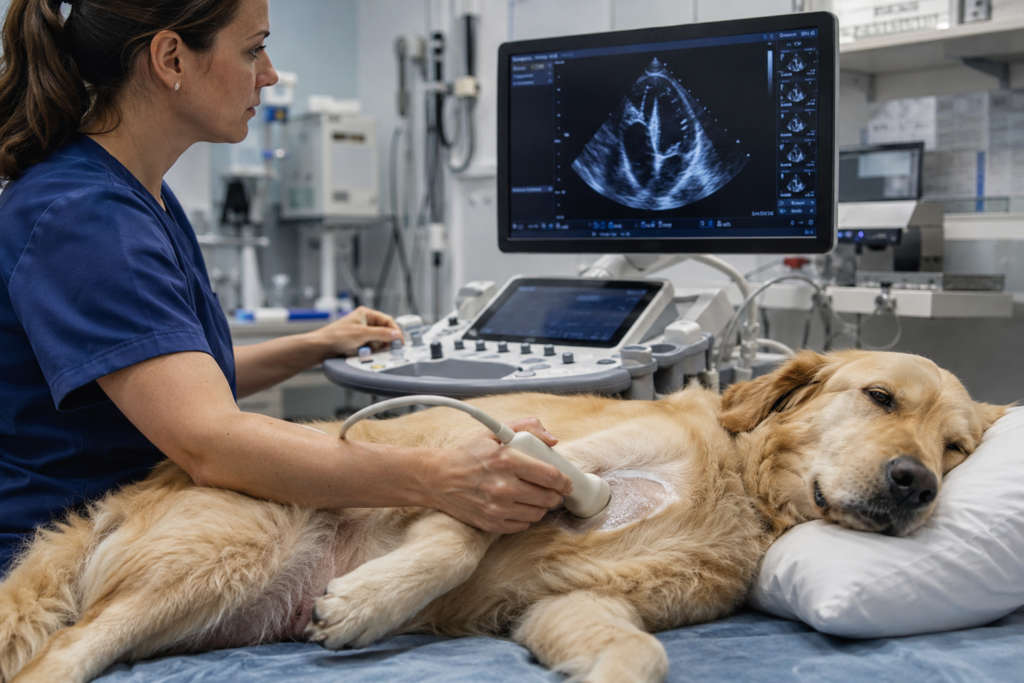
Breaking the workup into stages makes it much easier to budget, because you can approve one step at a time instead of committing to an unknown total upfront.
| Stage | Test | Cost Range | What It Tells the Vet |
|---|---|---|---|
| 1 | Exam + auscultation | $50–$150 | Murmur grade, initial suspicion level |
| 2 | NT-proBNP blood test | $150–$450 | Whether heart muscle is under measurable strain |
| 2 | General bloodwork | $80–$200 | Organ function, anemia, other contributing factors |
| 3 | ECG (EKG) | $75–$300 | Rhythm abnormalities, arrhythmias |
| 3 | Chest X-rays (2–3 views) | $150–$350 | Heart size, fluid in or around the lungs |
| 4 | Echocardiogram | $500–$1,200 | Structural diagnosis — valve, chamber, blood flow detail |
Sedation, if needed for a fearful or painful dog, typically adds $50–$250 to whichever stage requires it — most commonly imaging. Emergency or after-hours workups carry a $50–$250 surcharge across every stage, since the exam fee, bloodwork, and imaging all inherit the facility’s emergency pricing.
Read Related Article… Vet Payment Plans: Can You Make Monthly Payments to a Vet? (2026)
A practical example: a Labrador Retriever presenting with a new cough gets bloodwork and chest X-rays in the same visit — a combined $400 — rather than paying two separate exam fees on two separate days. Bundling same-day tests when clinically appropriate is one of the simplest ways to control workup costs.
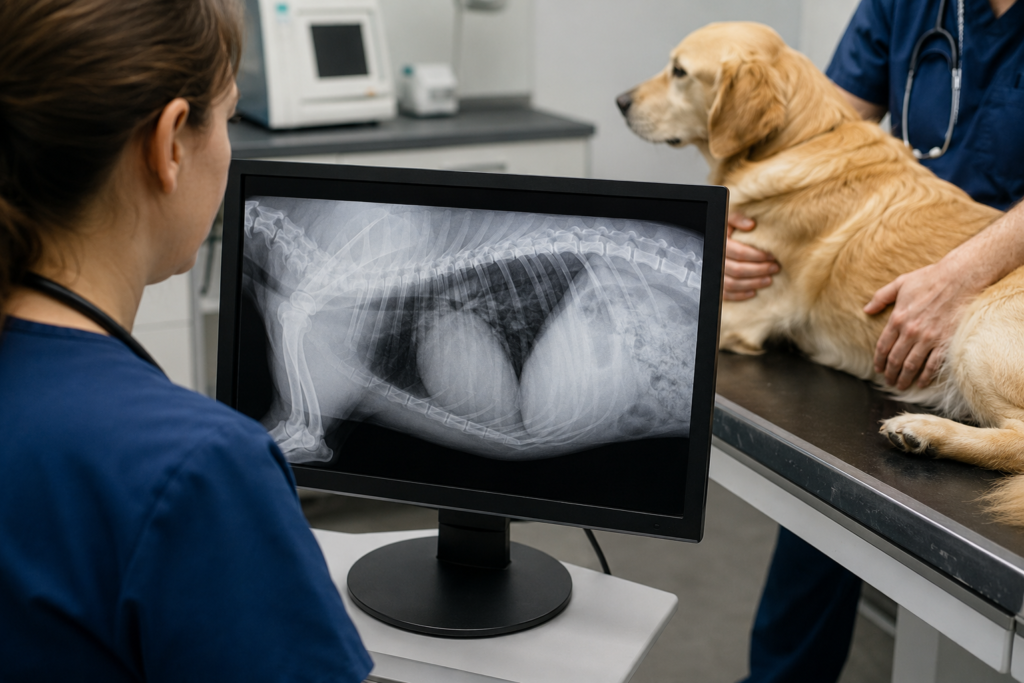
Bottom Line: Ask your vet which stage they’re proposing and why, then request the cost for that stage alone rather than assuming you need to commit to the full sequence in one conversation.
Do You Need Every Test, or Just Some?
Most dogs do not need every stage of the workup — the right combination depends on the murmur’s grade, your dog’s symptoms, and their breed’s typical disease pattern.
A young dog with a soft, grade I–II murmur and zero symptoms often only needs Stage 1 (the exam) followed by a recheck in three to six months, since many mild murmurs in puppies resolve on their own. A middle-aged or senior dog with a louder murmur, or any dog showing coughing, tiring easily, or breathing changes, usually warrants moving into Stage 2 or 3 fairly quickly, since those symptoms suggest the heart may already be compensating for a real problem.
The echo (Stage 4) becomes necessary when earlier results are ambiguous, when symptoms are present regardless of murmur grade, or when your vet needs a structural diagnosis to guide treatment decisions — for example, determining whether a dog with degenerative mitral valve disease has progressed to a stage where medication should start.
Read Related Article… Dog Surgery Cost in the USA: Real Prices for 2026
Real-World Workup Cost Scenarios
Seeing how the stages play out for different dogs makes the abstract cost ranges much easier to plan around.
Scenario 1 — Minimal workup: A 1-year-old mixed-breed puppy has a soft grade I murmur found during a wellness visit, no symptoms. The vet recommends monitoring with a recheck exam in four months. Total cost: $50–$100.
Scenario 2 — Moderate workup: A 6-year-old Beagle has a grade III murmur and slightly reduced energy. The vet orders proBNP bloodwork and an ECG. Both come back mildly abnormal, so a recheck is scheduled in two months rather than an immediate echo. Total cost: $325–$650.
Scenario 3 — Full workup: An 11-year-old Cavalier King Charles Spaniel has a grade IV murmur, occasional nighttime coughing, and reduced exercise tolerance. The vet orders bloodwork, chest X-rays, and refers to a cardiologist for an echo the same month. Total cost: $1,050–$1,700.
Scenario 4 — Emergency workup: A senior Boxer arrives at an emergency hospital breathing rapidly. The team runs bloodwork, X-rays, and an emergency echo the same visit, all under emergency pricing. Total cost: $1,400–$2,600, reflecting the after-hours surcharge layered across every test.
Read Related Article… Emergency Vet Exam Cost in the USA (2026)
How Insurance Handles a Multi-Test Workup
Pet insurance generally reimburses each diagnostic test in a workup separately, as long as illness coverage applies and the murmur wasn’t detected before your policy’s waiting period ended.
Read Related Artilce… Pet Insurance for Dogs in the USA: How It Works (2026)
This matters more for a multi-stage workup than a single test, because your deductible applies once per policy period, not once per test. Practically, that means if your $250 deductible was already met earlier in the year from an unrelated vet visit, every test in the murmur workup — bloodwork, ECG, X-rays, echo — is eligible for reimbursement at your plan’s percentage from the first dollar. If the deductible hasn’t been met yet, the early, cheaper tests in Stage 1–2 may go entirely toward satisfying it before Stage 4 sees any reimbursement at all.
A useful example: a dog with a $500 annual deductible and 80% reimbursement gets a $1,200 full workup. The first $500 goes toward the deductible with no reimbursement. The remaining $700 is reimbursed at 80%, returning $560 — meaning the owner’s actual out-of-pocket cost drops from $1,200 to about $640.
Should You Do the Full Workup Now or Stage It Over Time?
Should you… commit to the full four-stage workup immediately, or move through it one step at a time?
When it makes sense to do the full workup at once: your dog is symptomatic — coughing, fainting, tiring quickly, or breathing abnormally. In these cases, waiting between stages delays a treatment plan your dog may already need, and the diagnostic picture usually comes together faster when tests are run together.
When it makes sense to stage it: your dog is asymptomatic with a newly detected murmur, and cost is a genuine concern. Starting with the exam and bloodwork, then deciding on imaging based on those results, is a clinically reasonable approach for many low-grade, incidental murmurs.
Risks of staging it too cautiously: if your dog’s symptoms are already present but subtle, delaying imaging can mean starting treatment later than ideal, which matters most for progressive conditions like degenerative mitral valve disease.
Alternatives: ask whether your vet can bundle Stage 2 and Stage 3 tests into the same visit rather than requiring separate appointments — this saves you a second exam fee without skipping any diagnostic value.
Next step: ask directly, “If we skip the echo for now, what symptom would bring us back sooner?” This gives you a concrete trigger point instead of an open-ended wait-and-see.
How to Keep the Workup Cost Reasonable
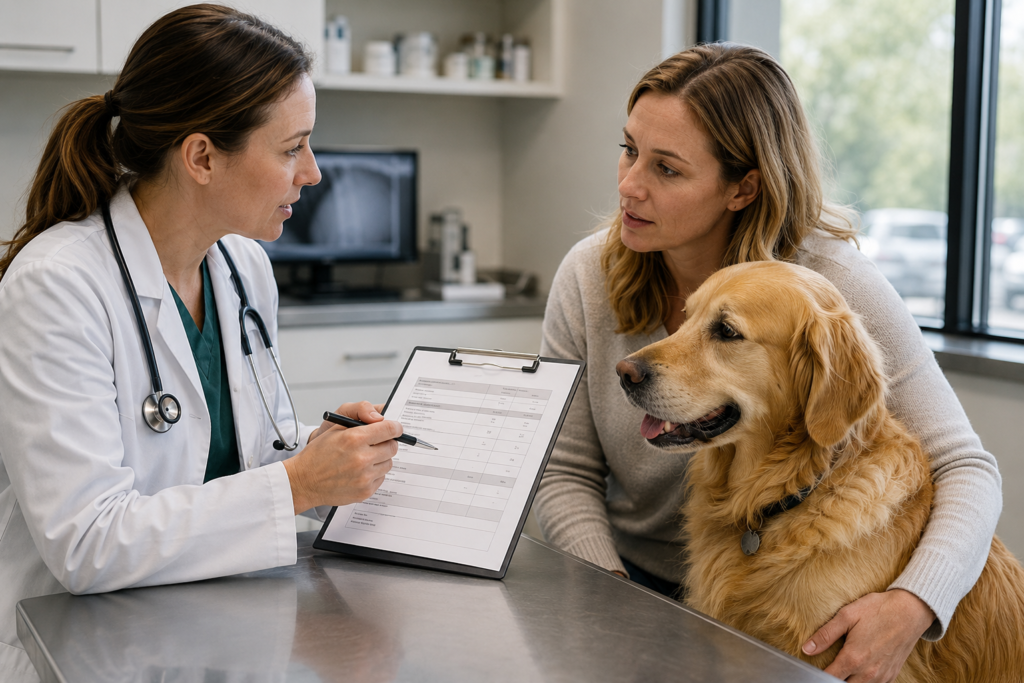
You can meaningfully reduce the total cost of a heart murmur workup by bundling visits, asking targeted questions, and choosing where each stage happens strategically.
Ask your vet which tests can be run on the same day to avoid paying a second exam fee. Request that bloodwork and X-ray results be reviewed together with the ECG before deciding on an echo, rather than defaulting straight to the most expensive test. If a cardiologist referral becomes necessary, ask whether a university veterinary teaching hospital or mobile cardiology service serves your area — both often run 20–40% below private specialty pricing for the echo stage specifically. Ask your regular vet whether proBNP and general bloodwork can be drawn in the same blood draw rather than as two separate charges. If your dog is stable, ask whether a shorter recheck interval (monitoring first) is medically reasonable before committing to the full imaging workup.
Action Checklist Before Your Follow-Up Visit
- Ask your vet to name the specific stage they’re recommending, not just “a workup”
- Get a written estimate broken down by test, not a single lump sum
- Ask which result would trigger moving to the next stage
- Confirm whether bloodwork and imaging can be done the same day
- Check your pet insurance deductible status before the visit
- Ask if a university hospital or mobile cardiologist serves your area for the echo stage
- Bring a symptom log — coughing, energy level, appetite — even minor changes matter
Read Related Article… Can You Pay Vet Bills in Installments? Every Option Available in the USA (2026)
Frequently Asked Questions
How much does it cost to diagnose a heart murmur in a dog? A basic evaluation costs $50–$150, while a full workup including bloodwork, ECG, X-rays, and an echocardiogram can total $800–$1,800 depending on how many stages your dog needs.
Do all dogs with a heart murmur need an echocardiogram? No. Many mild, incidental murmurs — especially in young dogs — are monitored with periodic rechecks rather than immediate imaging. The echo becomes necessary when symptoms appear or earlier tests are ambiguous.
What is a proBNP test and why does it cost extra? NT-proBNP is a blood test that measures a hormone released when heart muscle is under strain. It typically costs $150–$450 and helps vets decide whether more expensive imaging is worth pursuing.
Does pet insurance cover a full heart murmur workup? Usually yes, if the murmur was first detected after your policy’s waiting period, and each test is billed and submitted individually. Your deductible applies once per policy period across all tests, not per test.
Can I skip straight to the echocardiogram instead of doing the full staged workup? Yes, if your dog is symptomatic or your vet believes imaging is clearly warranted. For asymptomatic, low-grade murmurs, starting with cheaper screening tests is often clinically reasonable and more budget-friendly.
External Authority Sources
- AVMA (American Veterinary Medical Association)
- Cummings School of Veterinary Medicine (Tufts) — heart disease diagnosis and BNP testing
- ACVIM (cardiology certification body)
- Merck Veterinary Manual — cardiovascular disorders
- NAPHIA
- MetLife Pet / Trupanion claims data
Disclaimer: This article is for informational and educational purposes only. A heart-murmur evaluation can involve several different diagnostic tests. Your veterinarian chooses among them based on the dog’s history, physical findings, symptoms, breed risk, and what they need to determine and will vary based on your dog’s age, breed, location, and the specific plan you choose. PetInsurePrime does not sell pet insurance and receives no compensation from any insurance provider. Always compare multiple quotes and read your policy documents carefully before enrolling.
PetInsurePrime | Independent • Research-Based | Helping US dog owners understand real vet costs and coverage options — without the sales pressure.