
Updated: August 2026| Reading Time: 28minutes
Your oncologist just said radiation therapy. Maybe it’s for a nasal tumor. Maybe surgery couldn’t get clean margins on that mast cell tumor. Maybe your dog has a brain tumor and radiation is the most effective non-surgical option available.
Read Realetd Article… Dog MRI Cost in the USA (2026): Average Cost, Insurance Coverage & Financing
Whatever the diagnosis — the next question is always the same: what is this going to cost, and can we afford it?
Radiation therapy is the most expensive individual cancer treatment in veterinary medicine. The range is wide. The facility availability is limited. And the hidden costs — daily anesthesia, CT planning scans, travel to a specialized center — routinely add $1,500–$4,000 on top of the quoted treatment price.
Here’s the complete picture.
Read Related Article… Dog Cancer Treatment Cost in the USA (2026): Surgery, Chemo & Total Costs
Read Related Article… Dog CT Scan Cost in the USA (2026): Real Numbers, Hidden Charges, and How to Lower the Bill
Quick Answer : Dog Radiation Therapy Cost in the USA
Radiation therapy costs range from $3,000 to more than $13,000. This large range is due to variation in the treatment plans for different types of cancer, as well as geographic location. Palliative radiation (comfort-focused, 4–6 sessions) costs $875 to $4,000. Curative fractionated radiation (15–19 daily sessions) costs $4,500 to $8,500. Stereotactic radiosurgery (SRS/SRT, 1–5 sessions) costs $1,800 to $10,500. Daily anesthesia, CT planning, and travel to a radiation center are billed separately at most facilities.
Read Related Article… Dog Chemotherapy Cost in the USA (2026): Real Numbers by Cancer Type, Protocol & Situation
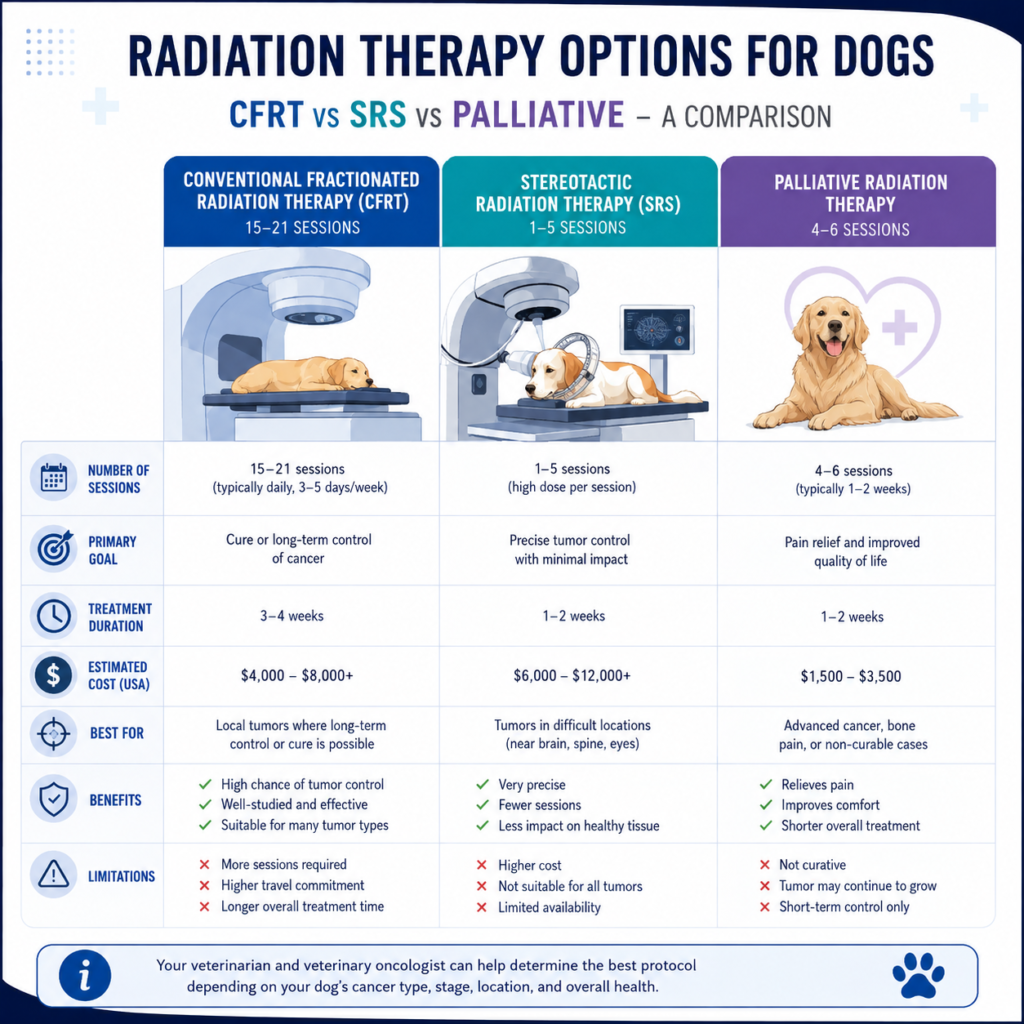
At a Glance: 2026 Dog Radiation Therapy Cost Summary
| Protocol Type | Sessions | Cost Range | Anesthesia Included? |
|---|---|---|---|
| Palliative radiation (comfort care) | 4 – 6 | $875 – $4,000 | ⚠️ Sometimes |
| Conventional fractionated (CFRT) — curative | 15 – 21 daily | $4,500 – $8,500 | ⚠️ Sometimes |
| Intensity-modulated (IMRT) — curative | 18 – 20 daily | $6,700 – $8,500+ | ⚠️ Sometimes |
| Stereotactic radiosurgery (SRS) | 1 – 5 | $2,000 – $10,500 | ⚠️ Sometimes |
| CT simulation / treatment planning scan | 1 (before treatment) | $800 – $2,500 | ❌ Separate |
| Anesthesia per session (all protocols) | Every session | $150 – $350/session | ❌ Almost always separate |
| Radiation oncologist consultation | 1 | $200 – $500 | ❌ Separate |
| Pre-treatment staging (bloodwork + imaging) | Before treatment | $500 – $2,000 | ❌ Separate |
| Post-treatment monitoring (year 1) | Ongoing | $800 – $2,500 | ❌ Separate |
| All-in: palliative protocol | $2,000 – $6,500 | ||
| All-in: curative CFRT protocol | $7,000 – $15,000+ | ||
| All-in: SRS protocol | $4,000 – $14,000 |
Table of Contents
- The Three Types of Dog Radiation Therapy — and What Each Costs
- The Hidden Costs That Don’t Appear in the Initial Quote
- How Dog Size and Cancer Location Affect Radiation Cost
- Radiation Therapy by Cancer Type — What Each Diagnosis Typically Needs
- The Facility Scarcity Problem: Why Your Dog May Need to Travel
- Palliative vs. Curative Radiation: The Honest Cost and Outcome Comparison
- Radiation Alone vs. Radiation + Surgery + Chemo: Combined Treatment Costs
- Side Effects and What They Cost When They Occur
- Does Pet Insurance Cover Dog Radiation Therapy?
- How to Reduce Dog Radiation Therapy Cost
- Questions to Ask Before Starting Radiation
- Action Checklist
- FAQ
The Three Types of Dog Radiation Therapy — and What Each Costs
Radiation therapy is not a single procedure. The type your oncologist recommends depends on the cancer type, tumor location, and treatment goal. Each type involves different equipment, different session counts, and different total costs.
Conventional Fractionated Radiation Therapy (CFRT)
CFRT delivers the full radiation dose divided into many small fractions — typically 15 to 21 sessions, administered Monday through Friday over 3–4 weeks. Each session delivers a lower dose, which allows surrounding healthy tissue more time to recover between treatments. Curative (definitive) radiation requires 15 to 19 daily treatments and costs $4,500 to $6,000. A more advanced form called intensity-modulated radiation therapy (IMRT), which shapes the radiation beam more precisely to spare healthy tissue, runs $6,700 to $8,500 for a course of 18 to 20 treatments.
CFRT is the most widely available radiation protocol because it uses standard linear accelerators found at more radiation centers. It’s the protocol most likely to be available at the nearest facility to you.
The daily anesthesia reality: Every single CFRT session requires general anesthesia or heavy sedation to keep your dog perfectly still. Your dog needs to be sedated for each session, which adds to the per-visit cost. At $150–$350 per anesthesia event, a 19-session CFRT protocol adds $2,850–$6,650 in anesthesia costs on top of the quoted radiation price.
This is the single most commonly underquoted component of CFRT cost.
Stereotactic Radiation Therapy (SRS/SRT)
Stereotactic radiation therapy involves administering much higher doses over fewer days — 3 to 5 treatments that are usually completed within less than two weeks.
SRS/SRT uses advanced imaging guidance (CT or MRI-based targeting) to deliver large, precise doses with millimeter accuracy. Because each session delivers far more radiation, fewer sessions are needed — but the equipment and planning are significantly more sophisticated.
More advanced definitive-intent protocols, such as stereotactic radiation therapy (SRT) designed to target tumors with greater precision, can cost $8,000 to $10,000 or more.
The advantages of SRS over CFRT:
- 3–5 sessions instead of 15–21 — dramatically less anesthesia time
- Fewer clinic visits — significant reduction in travel burden
- Side effects from fewer anesthesia events
- Faster treatment completion
The disadvantages:
- Higher per-session cost
- Available at fewer facilities than CFRT
- Not appropriate for all tumor types or locations
- Less forgiving if targeting is imprecise
SRS vs. CFRT total cost comparison:
| Protocol | Sessions | Per-Session Cost | Anesthesia (total) | All-In Range |
|---|---|---|---|---|
| CFRT (19 sessions) | 19 | $300 – $450 | $2,850 – $6,650 | $8,350 – $15,150 |
| SRT (3 sessions) | 3 | $2,500 – $3,500 | $450 – $1,050 | $5,950 – $13,550 |
SRS appears more expensive per session but often costs less total because of the dramatically reduced anesthesia burden. For dogs who can tolerate anesthesia easily and whose tumor is well-suited to SRS, the fewer-session approach is frequently both cheaper and less disruptive.
Palliative Radiation Therapy
Palliative-intent protocols designed to relieve symptoms may cost from $1,000 to $3,000.
Palliative radiation uses fewer, larger doses — typically 4 to 6 sessions — with the goal of shrinking the tumor enough to reduce pain, improve breathing, reduce bleeding, or restore function. It does not aim to eliminate cancer or achieve long-term remission.
Palliative radiation, which aims to shrink a tumor and relieve pain rather than cure the cancer, involves one to six treatments and costs $875 to $4,000. This is often chosen for older dogs or cases where a cure isn’t realistic but comfort matters.
Palliative radiation is appropriate when:
- The cancer is in an advanced stage where cure is not realistic
- The dog’s age or overall health makes intensive treatment inappropriate
- The owner’s goal is maximizing quality comfortable time rather than remission
- The primary problem is pain from bone invasion (osteosarcoma, for example) rather than tumor growth
All-in cost for palliative radiation including anesthesia, pre-treatment staging, and monitoring: $2,000–$6,500.
| Protocol | Goal | Sessions | All-In Cost | Best For |
|---|---|---|---|---|
| Palliative | Comfort, pain relief | 4 – 6 | $2,000 – $6,500 | Advanced cancer, older dogs, non-curative intent |
| CFRT | Cure or long-term control | 15 – 21 daily | $7,000 – $15,000+ | Brain, nasal, oral tumors where surgery can’t reach |
| IMRT | Precision cure | 18 – 20 daily | $9,000 – $16,000+ | Complex tumor locations near critical structures |
| SRS/SRT | Precision cure, fewer sessions | 1 – 5 | $4,000 – $14,000 | Accessible, discrete tumors; limited travel capacity |
The Hidden Costs That Don’t Appear in the Initial Quote
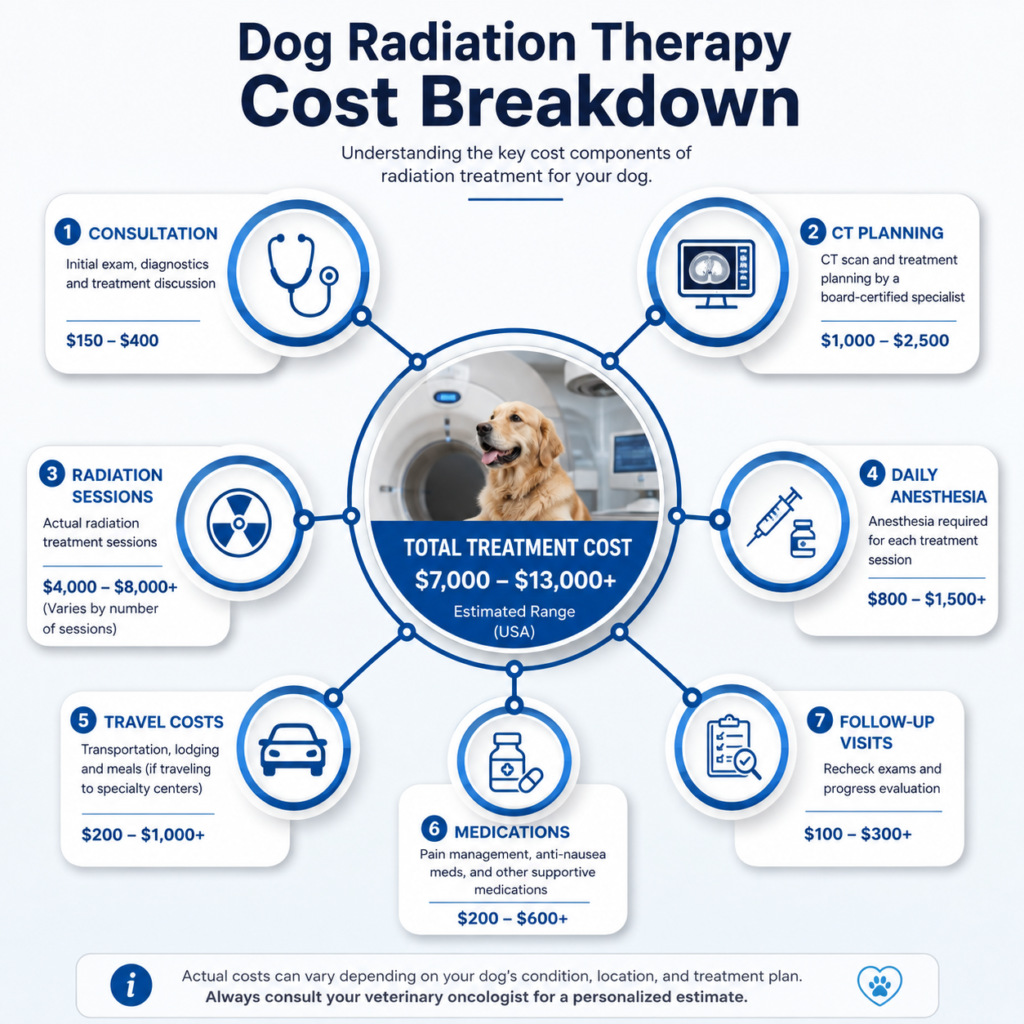
The radiation therapy quote from your oncologist is usually the protocol cost alone. These are the charges that build the real total.
CT Simulation / Treatment Planning Scan: Before radiation begins, a specialized CT scan is performed specifically to map the tumor’s exact location, shape, and relationship to surrounding structures. This “simulation CT” creates the treatment plan that guides every subsequent radiation session.
Cost: $800–$2,500. This is almost always a separate charge not included in the radiation protocol quote. It’s mandatory for CFRT, IMRT, and SRS.
Anesthesia at Every Session: As discussed above — every session requires sedation or general anesthesia. This is the most consistently underquoted cost in radiation therapy.
- CFRT (19 sessions): $2,850–$6,650 in total anesthesia
- SRS (3 sessions): $450–$1,050 in total anesthesia
- Palliative (5 sessions): $750–$1,750 in total anesthesia
Radiation Oncologist Consultation: The initial consultation with a board-certified radiation oncologist — before any treatment planning begins — runs $200–$500. This is charged before the treatment plan is created and regardless of whether you proceed with radiation.
Pre-Treatment Staging Diagnostics: Most radiation oncologists require comprehensive staging before starting treatment: bloodwork ($150–$300), chest X-rays ($150–$350), abdominal ultrasound ($300–$600), and sometimes a separate diagnostic MRI or CT ($800–$2,500). Total pre-treatment staging: $500–$2,000+.
Read Related Article… Dog Biopsy Cost in the USA (2026): Real Prices by Type, Hidden Lab Fees & What the Results Mean
Mucositis and Acute Side Effect Management: For nasal, oral, and head/neck tumors especially, acute radiation reactions (mucositis, skin inflammation) are expected and may require prescription medications. Cost: $50–$200 per month during treatment.
Hospitalization if Side Effects Require It: With Stereotactic Radiotherapy (SRS/SRT), side effects tend to be much less common (around 25% chance) compared to Conventionally Fractionated Radiation Therapy (CFRT), which has a higher chance (around 50%). When side effects are significant — severe mucositis, loss of appetite, wound healing problems — a 1–3 night hospitalization at $300–$900/night may be required during the protocol.
Travel and Lodging: More on this in the facility scarcity section below — but for owners traveling 2–4 hours each way for daily radiation, the gas, tolls, or lodging costs across a 3–4 week daily protocol can reach $1,000–$3,000.
Full realistic all-in cost of CFRT (19 sessions):
| Component | Cost |
|---|---|
| Radiation oncologist consultation | $300 |
| Pre-treatment staging (bloodwork, imaging) | $1,200 |
| CT simulation / treatment planning | $1,500 |
| CFRT protocol (19 sessions) | $5,500 |
| Anesthesia (19 sessions × $250) | $4,750 |
| Acute side effect medications (4 weeks) | $300 |
| Post-treatment monitoring (year 1, 4 rechecks) | $1,200 |
| All-in total (moderate complexity case) | $14,750 |
How Dog Size and Cancer Location Affect Radiation Cost
Dog Size: Unlike chemotherapy, radiation dose is not calculated by body weight. The radiation dose is determined by the tumor size and location — not the dog. This means a 10-pound Chihuahua with a nasal tumor and an 80-pound Labrador with the same nasal tumor receive similar radiation doses and similar protocol costs.
However, dog size does affect anesthesia costs, which are weight-based. Over a 19-session protocol, the anesthesia cost difference between a small and large dog can reach $1,500–$2,000.
Cancer Location: This is the primary cost driver within radiation therapy. Tumors near the brain, spine, nasal passages, or other critical structures require more precise planning and more complex treatment delivery.
| Tumor Location | Complexity | Planning Requirement | Cost Implication |
|---|---|---|---|
| Nasal cavity / sinuses | High | CT + MRI simulation | +$500–$1,500 |
| Brain | Very high | MRI simulation required | +$1,000–$2,000 |
| Oral / jaw | High | Detailed CT planning | +$500–$1,000 |
| Spine / vertebrae | Very high | MRI + CT fusion | +$1,000–$2,500 |
| Peripheral skin mass | Low | Standard CT planning | Baseline cost |
| Extremity tumor | Low-moderate | Standard CT | Near baseline |
| Abdominal mass | Moderate | CT planning + breathing coordination | +$500–$1,000 |
The tumor’s location matters too. Tumors near the brain, nose, spine, or other sensitive structures often need more detailed imaging and planning than a superficial skin-area target.
Radiation Therapy by Cancer Type — What Each Diagnosis Typically Needs
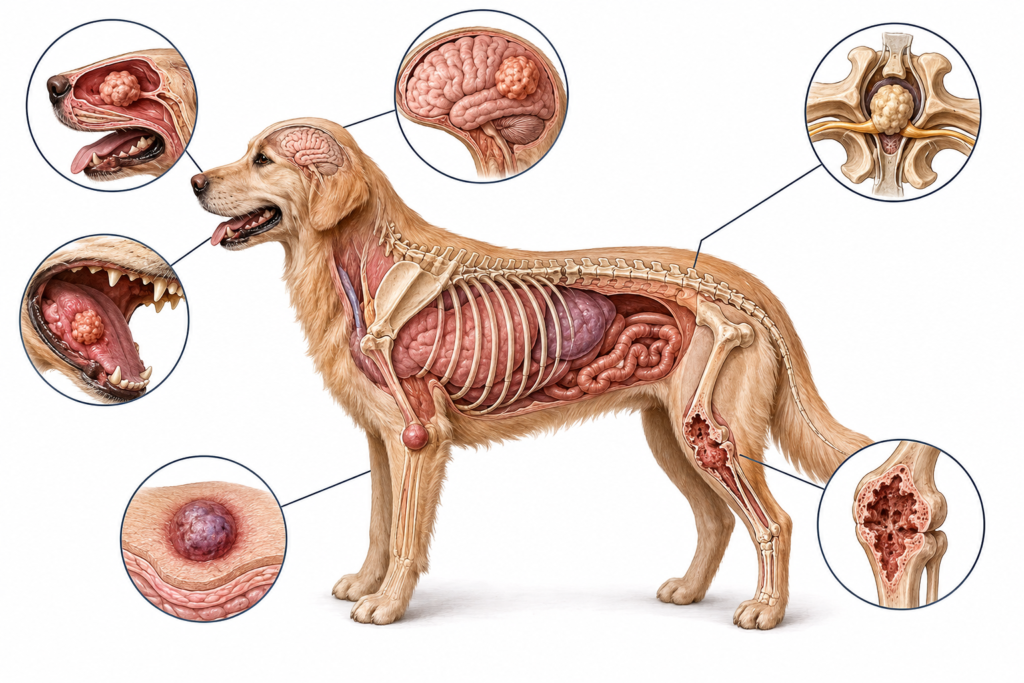
Different cancers respond differently to radiation, and the protocol recommended varies significantly by diagnosis. Here’s what each common cancer type typically involves.
Nasal Tumors (Adenocarcinoma, Sarcoma)
Radiotherapy is often the first choice for treating dog nasal tumors. Surgery is rarely curative for nasal tumors because of proximity to the brain and critical structures. Radiation is the primary treatment — either CFRT or SRS.
- Protocol: CFRT (19 sessions) or SRS (3–5 sessions)
- All-in cost: $8,000 – $15,000+
- Median survival with radiation: 12–18 months (vs. 3–6 months without treatment)
- Outcome note: This is one of the strongest use cases for radiation — the survival benefit is meaningful and the quality of life during treatment is typically good
Brain Tumors (Meningioma, Glioma)
Radiation is the standard of care for inoperable brain tumors or as adjuvant therapy after surgical debulking.
- Protocol: SRS (1–5 sessions) or CFRT (15–19 sessions)
- All-in cost: $8,000 – $16,000+
- Median survival with radiation: 12–24 months for meningioma (significantly better than medical management alone)
- MRI is required for treatment planning — adds $1,800–$3,000 to the pre-treatment cost
Mast Cell Tumor (Incomplete Surgical Margins)
When surgery removes a mast cell tumor but margins are incomplete or narrow, radiation is recommended to address remaining cancer cells in the surgical field.
- Protocol: CFRT (16–19 sessions) or SRS
- All-in cost: $6,000 – $13,000
- Local control rate with radiation after surgery: 85–95% at 1 year for grade 2 MCT
- Radiation is most effective when started 2–4 weeks after surgery (wound healing)
Oral Tumors (Malignant Melanoma, SCC, Fibrosarcoma)
Radiation may be used as primary treatment or combined with surgery for oral tumors. Oral cavity radiation carries a higher risk of acute mucositis side effects.
- Protocol: CFRT or SRS depending on tumor type
- All-in cost: $7,000 – $14,000+
- Outcome varies significantly by tumor type — malignant melanoma has shorter remission despite radiation; fibrosarcoma and acanthomatous ameloblastoma respond well
Osteosarcoma (Palliative Bone Pain Relief)
Radiation for osteosarcoma is almost always palliative — focused on reducing bone pain rather than curing the cancer. The bone tumor causes severe pain that is often inadequately managed by oral pain medications alone.
- Protocol: Palliative (3–6 sessions)
- All-in cost: $2,000 – $6,000
- Pain relief achieved in 70–90% of dogs; duration typically 2–5 months
- Often used to improve quality of life in dogs whose owners decline amputation
Thymoma
Radiation is increasingly used for thoracic thymomas either alone or after surgical debulking.
- Protocol: CFRT or SRS
- All-in cost: $7,000 – $13,000+
| Cancer Type | Best Radiation Protocol | Sessions | All-In Cost | Survival Benefit |
|---|---|---|---|---|
| Nasal tumor | CFRT or SRS | 3–19 | $8,000 – $15,000 | 12–18 months |
| Brain tumor | SRS or CFRT | 3–19 | $8,000 – $16,000 | 12–24 months |
| Mast cell (incomplete margins) | CFRT or SRS | 3–19 | $6,000 – $13,000 | 85–95% local control at 1 yr |
| Oral tumor (fibrosarcoma) | CFRT | 16–19 | $7,000 – $13,000 | Variable by type |
| Osteosarcoma | Palliative only | 3–6 | $2,000 – $6,000 | Pain relief, not survival |
| Thymoma | CFRT or SRS | 3–19 | $7,000 – $13,000 | Moderate benefit |
The Facility Scarcity Problem: Why Your Dog May Need to Travel

This is the aspect of dog radiation therapy that most cost guides completely ignore — and it has major financial implications for the majority of US dog owners.
Veterinary radiation therapy requires a linear accelerator, CyberKnife, TomoTherapy, or similar specialized equipment. These machines cost $2–$10 million each. Across the entire United States, approximately 40–50 veterinary facilities offer radiation therapy. Many states have only one or two centers.
What this means practically:
The nearest radiation facility may be 2–4 hours from your home. For a CFRT protocol requiring daily Monday–Friday treatment for 3–4 consecutive weeks, this creates a logistical and financial problem that goes far beyond the quoted treatment cost.
Options for managing travel:
Option 1 — Daily commute: Drive 2–4 hours each way, every weekday, for 4 weeks. Gas, tolls, and vehicle wear add $800–$2,000. The time cost — 4–8 hours per day — is significant for working owners.
Option 2 — Boarding near the facility: Many radiation oncology centers partner with local pet boarding facilities or can recommend dog-friendly lodging. Pet-friendly hotel plus dog boarding: $80–$200/night × 19 nights = $1,520–$3,800.
Option 3 — SRS/SRT to reduce visit count: If your dog’s tumor is appropriate for SRS, choosing 3–5 sessions instead of 19 dramatically reduces the travel burden. The higher per-session cost of SRS can be offset by eliminating 14–16 travel days.
Option 4 — University teaching hospital: Cornell lists about $2,500 to $7,000 for many cases — university hospitals offer radiation at 20–35% below private specialty center pricing. For owners who can arrange longer stays near a university campus, this combines cost savings with reduced daily commute.
Finding facilities near you: The Veterinary Radiation Therapy Oncology Group (VRTOG) maintains a directory of US veterinary radiation centers at vrtog.org. The Veterinary Cancer Society (vetcancersociety.org) also maintains referral resources.
Read Related Article… 15 Organizations That Help Pay Vet Bills When You Can’t Afford Care (2026)
Palliative vs. Curative Radiation: The Honest Cost and Outcome Comparison
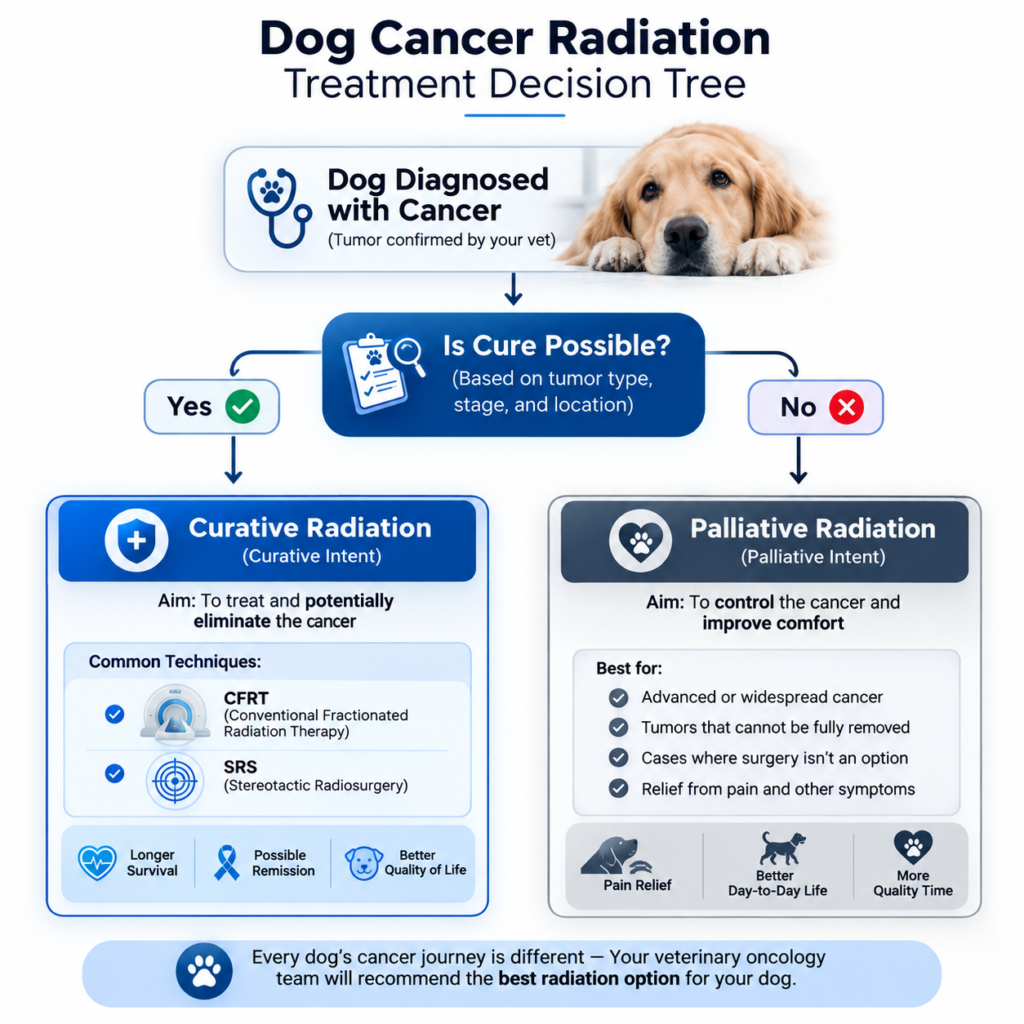
This is the decision most owners face — and it deserves a direct comparison rather than a generic explanation.
In some cases, the overarching goal is to cure the cancer. In other cases, it may be to improve your dog’s quality of life for as long as possible, which is termed palliative treatment. This depends on the type, stage, aggressiveness, and location of your pet’s cancer, as well as their overall health.
Palliative radiation:
- Sessions: 4–6 over 2–3 weeks
- Total all-in cost: $2,000–$6,500
- Goal: Pain relief, tumor shrinkage for symptom control, quality-of-life improvement
- Expected benefit duration: 2–6 months of improved comfort
- Side effects: Usually mild — less radiation per area means less tissue reaction
- Best for: Osteosarcoma bone pain, elderly dogs where intensive treatment isn’t appropriate, cases where cure is not realistic
Curative (definitive) radiation:
- Sessions: 15–21 daily (CFRT) or 3–5 (SRS)
- Total all-in cost: $7,000–$16,000+
- Goal: Long-term tumor control or cure
- Expected benefit: 12–24 months for nasal and brain tumors, variable by cancer type
- Side effects: More significant — acute mucositis, skin reaction, late effects possible
- Best for: Nasal tumors, brain tumors, mast cell after surgery, oral tumors
When palliative is the right financial and medical choice:
For a 12-year-old dog with osteosarcoma where the owner has declined amputation, spending $12,000 on curative CFRT that won’t address the cancer’s primary mechanism of spread makes less sense than $3,500 on palliative radiation that provides 3–5 months of dramatically reduced bone pain.
For a 6-year-old dog with a nasal tumor, the $12,000 investment in curative CFRT buys 12–18 months of good quality life versus 3–6 months without treatment — a meaningful outcome differential that justifies the cost for many families.
The honest conversation to have with your oncologist: “What is the realistic outcome difference between palliative and curative radiation for my dog’s specific cancer? What would quality of life look like during each approach?”
Radiation Alone vs. Radiation + Surgery + Chemo: Combined Treatment Costs
Many cancer cases use radiation as part of a multi-modal treatment approach rather than as a standalone treatment. Combined protocols produce better outcomes for many cancers — and combine costs accordingly.
Common combination approaches:
| Approach | Components | Total Cost Range |
|---|---|---|
| Radiation alone | Protocol only | $7,000 – $16,000 |
| Surgery + radiation (for incomplete margins) | Surgery ($1,500–$5,000) + CFRT | $9,000 – $21,000 |
| Radiation + chemotherapy (brain tumor) | CFRT + chemo protocol | $12,000 – $22,000 |
| Surgery + chemo + radiation (mast cell) | All three modalities | $12,000 – $25,000+ |
For nasal tumors, radiation alone is often the primary treatment because surgery is too high-risk near the brain. For mast cell tumors with incomplete margins, surgery + radiation is the most common approach. For brain tumors, radiation + corticosteroids is standard; chemotherapy is sometimes added.
Consider: For complex cases or pet parents who want every available option — CT-based planning, referral surgery, hospitalization, definitive radiation, stereotactic radiation therapy, combination treatment plans, and repeated rechecks. Costs rise quickly when multiple specialties are involved or when treatment extends over months.
Side Effects and What They Cost When They Occur
Pets generally do not experience systemic radiation sickness symptoms like humans do (e.g., general lethargy, generalized diarrhea, or vomiting).
Side effects are localized to the radiation field — the area being treated — rather than systemic. With Stereotactic Radiotherapy (SRS/SRT), side effects tend to be much less common (around 25% chance) compared to Conventionally Fractionated Radiation Therapy (CFRT), which has a higher chance (around 50%).
Common acute side effects and their management costs:
| Side Effect | Occurs In | Treatment | Cost |
|---|---|---|---|
| Skin reddening / radiation dermatitis | 40–60% CFRT patients | Topical creams, moisture barrier | $30 – $80 |
| Mucositis (oral/nasal treatments) | 50–70% nasal/oral CFRT | Pain medication, soft food, antibiotics | $100 – $300/month |
| Eye irritation / conjunctivitis | Head/nasal cases | Ophthalmic drops | $30 – $60 |
| Hair loss in treated area | Nearly all cases | Cosmetic only | $0 |
| Mild lethargy (anesthesia-related) | Most patients | Rest | $0 |
| Appetite reduction (nasal/oral) | 30–50% | Appetite stimulants, syringe feeding | $50 – $150/month |
Late radiation effects (occur months to years after treatment): Late effects are less common but more serious. They occur in 5–15% of CFRT patients and may include:
- Radiation-induced cataracts (if eye is in the field): surgery $2,000–$4,500 per eye
- Late skin/wound healing issues: wound care, possible surgery $500–$3,000
- Neurological late effects (rare with modern planning): management costs vary
While palliative protocols generally have minimal early side effects, they carry a greater risk for late radiation effects if durable control unexpectedly occurs — meaning if the cancer responds much better than expected and the dog lives long enough to develop late effects, the palliative protocol’s larger fraction size may cause more tissue damage than a curative protocol would have.
Hospitalization for side effects: In approximately 5–10% of CFRT cases, side effects are significant enough to require 1–3 nights of hospitalization for fluid support, pain management, or nutritional support. Cost: $400–$1,200 per hospitalization event.
Does Pet Insurance Cover Dog Radiation Therapy?
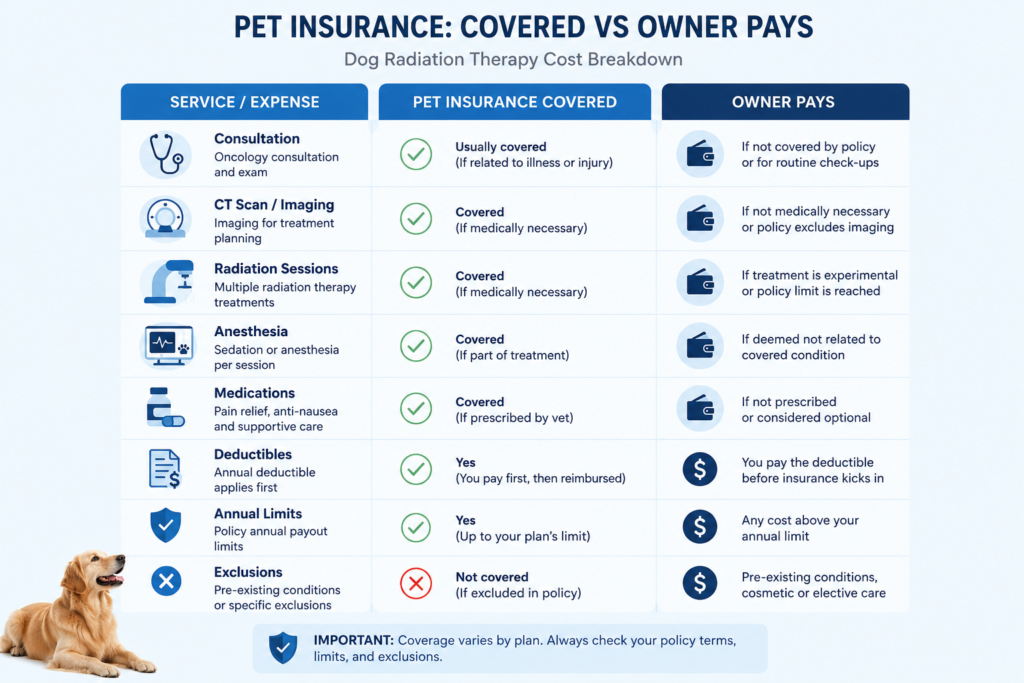
Yes — most comprehensive accident-and-illness plans cover radiation therapy when the cancer is newly diagnosed after enrollment and past the waiting period.
Read Related Article… Does Pet Insurance Cover Cancer Treatment? What Most Pet Owners Don’t Know (2026)
Many comprehensive pet insurance plans cover radiation therapy. They may reimburse from 50% to 90% of treatment costs, as long as the cancer isn’t classified as a pre-existing condition.
What’s typically covered under a radiation therapy claim:
- Radiation oncologist consultation
- CT simulation / treatment planning scan
- All radiation sessions (CFRT, SRS, or palliative)
- Anesthesia at each session
- Pre-treatment staging diagnostics (bloodwork, imaging)
- Acute side effect medications during treatment
- Post-treatment monitoring imaging and exams
What requires attention:
Annual limit: This is the most critical policy detail for radiation therapy. A curative CFRT protocol all-in runs $10,000–$15,000. If your plan has a $5,000 annual limit, you hit the ceiling mid-protocol.
For radiation therapy specifically — where the full protocol spans 3–4 weeks and all costs occur within a single policy year — plan annual limits matter more than almost any other coverage detail.
| Annual Limit | Adequate for Radiation? |
|---|---|
| $5,000 | ❌ Inadequate for curative protocols |
| $10,000 | ⚠️ Adequate for most palliative; tight for CFRT |
| $15,000 | ✅ Adequate for most curative protocols |
| Unlimited | ✅ Full coverage regardless of protocol |
Reimbursement math on a real radiation case:
Nasal tumor, curative CFRT protocol, all-in cost: $14,750 Annual deductible: $250 (met on first visit) At 80% reimbursement, unlimited annual limit: $11,800 back Your out-of-pocket: $2,950
Same scenario with a $5,000 annual limit: At 80% reimbursement, capped at $5,000: $5,000 back Your out-of-pocket: $9,750
The annual limit difference returns $6,800 more on a single radiation protocol. For high-cost treatments like radiation, the limit selection at enrollment is more financially consequential than the monthly premium difference.
Pre-authorization: For any radiation protocol expected to exceed $5,000, contact your insurer before scheduling to request pre-authorization. This confirms coverage before you spend and identifies any potential issues with the claim.
How to Reduce Dog Radiation Therapy Cost
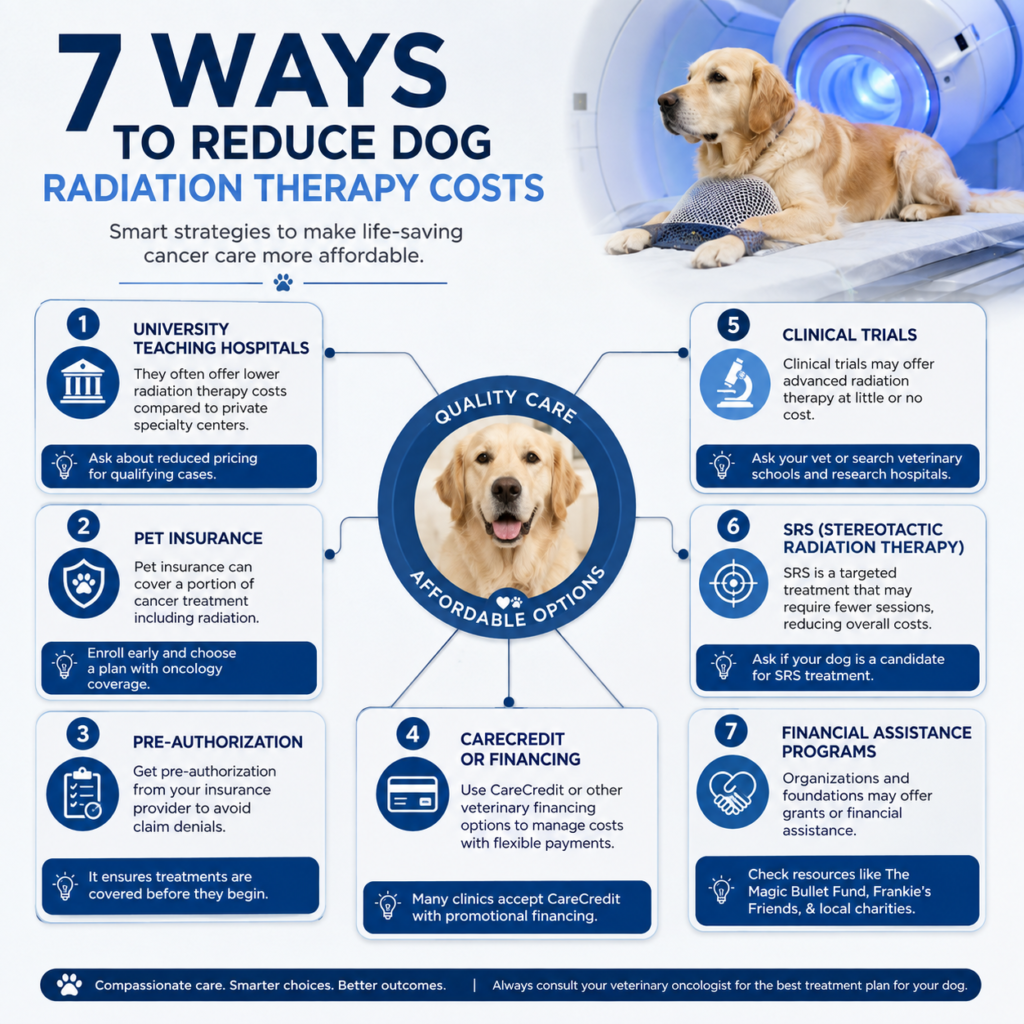
1. Consider SRS/SRT if your dog’s tumor qualifies. For tumors that are discrete, accessible to stereotactic targeting, and not requiring 3–4 weeks of daily sessions, SRS dramatically reduces the travel burden and anesthesia events. The per-session cost is higher, but the total anesthesia cost (3 events vs 19 events) and travel cost often make SRS cheaper total despite the higher quoted price. Ask your radiation oncologist directly: “Is my dog’s tumor appropriate for SRS versus CFRT?”
2. Get pricing from university teaching hospitals. Cornell lists about $2,500 to $7,000 for many cases — significantly below the $5,000–$8,500 charged by private specialty radiation centers for the same protocols. UC Davis, Colorado State, North Carolina State, Texas A&M, and University of Wisconsin all operate radiation oncology services at teaching hospital pricing. The wait time may be slightly longer for non-emergency cases, but the savings over a full protocol range from $1,500–$3,000.
Read Related Article… Can’t Afford an Emergency Vet Bill? 15 Real Ways Dog Owners Find Help (2026)
3. Contact your insurer for pre-authorization before scheduling. Pre-authorization confirms coverage before any money is spent. For a $14,000+ protocol, spending 15 minutes on the phone before scheduling could prevent a $10,000+ coverage surprise.
4. Ask whether recent imaging can be used for planning. Ask which diagnostics are essential now, which are optional, and whether any recent blood work, biopsy results, or imaging from your regular vet can be used instead of repeated testing. If your dog needs consultation at a referral center, send records ahead of time. If your dog had a diagnostic CT scan 2–3 weeks ago at another facility, ask whether that scan can be used for radiation planning — eliminating a $1,500–$2,500 repeat CT.
5. For osteosarcoma pain: palliative radiation is the right choice. If your dog has osteosarcoma and you’re not pursuing amputation, don’t let the existence of curative CFRT options influence the decision toward a more expensive protocol that won’t change the cancer’s outcome. Palliative radiation at $2,000–$4,000 provides genuine bone pain relief. Curative radiation for osteosarcoma is not standard of care because it doesn’t address metastatic spread.
6. Apply for Live Like Roo grants and clinical trials. Live Like Roo (wearethecure.org) provides grants of $500–$1,500 for dogs with confirmed cancer diagnoses. University radiation oncology departments sometimes offer reduced-cost enrollment in radiation clinical trials. The Veterinary Cancer Society (vetcancersociety.org) maintains a directory.
7. Use CareCredit applied before the first appointment. A 24-month CareCredit promotional period aligned with a 4-week radiation protocol means the full treatment is completed before the balance is due. On a $14,000 all-in cost: 24 monthly payments of approximately $583 at 0% promotional rate versus starting 26.99% interest at month 25. Apply online before the first consultation.
Read Related Article… Vet Payment Plans: Can You Make Monthly Payments to a Vet? (2026)
Read Related Article… Best Vet Payment Plans in the USA (2026): CareCredit vs Scratchpay
Questions to Ask Before Starting Radiation
About the protocol:
- “Is my dog’s tumor better suited to CFRT or SRS? What is the cost difference when anesthesia and travel are included?”
- “Is the goal of this protocol curative or palliative? What is the realistic outcome difference?”
- “How many sessions will be required and what are the expected anesthesia events?”
About cost:
- “Can I get a written all-in estimate including consultation, CT planning, anesthesia, the protocol, and post-treatment monitoring?”
- “Is anesthesia included in the quoted protocol price or billed separately?”
- “Can the recent imaging from my regular vet or oncologist be used for radiation planning?”
- “Does this facility have a relationship with nearby boarding options for owners who can’t commute daily?”
About alternatives:
- “What is the outcome difference between radiation alone and radiation combined with surgery or chemotherapy?”
- “For my dog’s specific cancer, what would palliative radiation achieve versus curative intent?”
- “Are there any clinical trials currently enrolling dogs with this cancer type?”
About insurance:
- “Do you need to submit a pre-authorization request to my insurer, or do I contact them directly?”
- “Does this facility provide itemized invoices suitable for insurance claim submission?”
Action Checklist
Before the radiation oncology consultation:
- [ ] Contact your pet insurer to confirm radiation therapy coverage and your annual limit
- [ ] Request pre-authorization for the anticipated protocol cost
- [ ] Gather all recent imaging (CT, MRI, X-rays, ultrasound) and biopsy results — send ahead to the radiation center
- [ ] Research whether the nearest university teaching hospital offers radiation and compare pricing
- [ ] Apply for CareCredit before the consultation — not at the desk afterward
- [ ] Look up the Veterinary Radiation Therapy Oncology Group (vrtog.org) for facility locations
At the consultation:
- [ ] Request a written all-in estimate: consultation + CT planning + anesthesia (all sessions) + protocol + monitoring
- [ ] Ask specifically whether SRS is appropriate for your dog’s tumor type and location
- [ ] Confirm whether anesthesia is included in the quoted price or billed separately
- [ ] Ask about lodging resources near the facility for CFRT patients
- [ ] Ask about clinical trial enrollment
During treatment:
- [ ] Budget $100–$400/month for supportive medications during the protocol
- [ ] Watch for and report significant side effects promptly — early intervention prevents hospitalization
- [ ] Submit insurance claims for each week’s treatment rather than waiting until protocol completion
After treatment:
- [ ] Schedule recheck imaging in 6–8 weeks — the first post-radiation CT or MRI determines treatment response
- [ ] Budget $800–$2,500 for year-1 monitoring (imaging + oncology visits every 3–4 months)
- [ ] Discuss late effects awareness with your oncologist — what to watch for in the months following treatment
FAQ
How much does dog radiation therapy cost in the USA? <cite index=”17-1″>Radiation therapy costs range from $3,000 to more than $13,000. This large range is due to variation in the treatment plans for different types of cancer, as well as geographic location.</cite> All-in costs including daily anesthesia, CT planning, and monitoring typically run $7,000–$15,000+ for curative protocols and $2,000–$6,500 for palliative protocols.
What is the difference between palliative and curative radiation for dogs? <cite index=”21-1″>Palliative radiation, which aims to shrink a tumor and relieve pain rather than cure the cancer, involves one to six treatments and costs $875 to $4,000. Curative (definitive) radiation requires 15 to 19 daily treatments and costs $4,500 to $8,500.</cite> Palliative is the right choice when comfort is the goal; curative aims for long-term tumor control or remission.
How many sessions does dog radiation therapy require? <cite index=”14-1″>Palliative-intent protocols most commonly range from 4 to 6 treatments. Stereotactic radiation therapy involves 3 to 5 treatments usually completed within less than two weeks.</cite> Conventional fractionated radiation therapy (CFRT) requires 15–21 daily sessions over 3–4 weeks.
Does dog radiation therapy include anesthesia in the price? Usually not. <cite index=”21-1″>Your dog needs to be sedated for each session, which adds to the per-visit cost.</cite> At $150–$350 per session, a 19-session CFRT protocol adds $2,850–$6,650 in anesthesia costs on top of the quoted radiation price. Always confirm whether the quoted protocol price includes anesthesia.
Does pet insurance cover dog radiation therapy? <cite index=”14-1″>Many comprehensive pet insurance plans cover radiation therapy. They may reimburse from 50% to 90% of treatment costs, as long as the cancer isn’t classified as a pre-existing condition.</cite> The annual coverage limit is the critical detail — a $5,000 limit is inadequate for curative radiation protocols. Choose unlimited or $15,000+ annual limit plans for breeds with elevated cancer risk.
What cancers respond best to radiation therapy in dogs? Nasal tumors and brain tumors have the strongest evidence base — median survival with radiation is 12–24 months versus 3–6 months without treatment. Mast cell tumors with incomplete surgical margins achieve 85–95% local control at one year with radiation. Osteosarcoma uses palliative radiation for pain relief (not cure).
Is stereotactic radiation therapy (SRS) better than conventional radiation for dogs? <cite index=”14-1″>While SRS can spare surrounding normal tissue, Dr. Morimoto cautions that it may not always be the best option for all cancers or all tumor locations.</cite> SRS offers fewer sessions (3–5 vs 15–21), less anesthesia, and fewer acute side effects — but requires more advanced equipment and costs more per session. <cite index=”13-1″>With SRS, side effects are much less common (around 25% chance) compared to CFRT (around 50%).</cite> SRS is not superior for all tumor types; the choice is clinical, not just financial.
How far do most dog owners need to travel for radiation therapy? Veterinary radiation therapy is available at approximately 40–50 centers across the entire United States. Many owners travel 2–4 hours each way. For daily CFRT protocols across 4 weeks, this travel cost adds $1,500–$3,800 in gas, tolls, or lodging — costs never included in quoted protocol prices.
What You Should Do Next
If your oncologist just recommended radiation — ask for a written all-in estimate that includes consultation, CT planning, every anesthesia event, the protocol fee, and post-treatment monitoring. That number is what you actually need to plan around.
Then call your insurer. Confirm your annual limit is adequate for the quoted all-in cost. Get pre-authorization in writing before any money is spent.
If travel is a concern — ask specifically whether SRS is appropriate for your dog’s tumor. Three sessions in under two weeks is a fundamentally different logistical commitment than 19 consecutive weekday appointments.
And if your dog is healthy right now — nasal tumors, brain tumors, and mast cell tumors are among the most common cancers treated with radiation. All three are treatable when caught early and covered by insurance enrolled before diagnosis. A comprehensive plan with an unlimited or $15,000+ annual limit at $50–$80/month costs $600–$960/year. One curative radiation protocol costs $14,000+. The math requires no interpretation.
External Authority Sources
- AKC — Radiation Therapy for Dogs
- PetMD — Radiation Therapy for Dogs
- OncoDaily — Radiotherapy in Pets
- SpectrumCare — Dog Radiation Therapy Cost
- Veterinary Cancer Society
- ScienceInsights — Dog Cancer Treatment Cost
Disclaimer: This article is for informational and educational purposes only. Cost data reflects 2026 national averages from NAPHIA, Insurify, and MetLife Pet Insurance and will vary based on your dog’s age, breed, location, and the specific plan you choose. PetInsurePrime does not sell pet insurance and receives no compensation from any insurance provider. Always compare multiple quotes and read your policy documents carefully before enrolling.
PetInsurePrime | Independent • Research-Based | Helping US dog owners understand real vet costs and coverage options — without the sales pressure.