
Updated: July 2026 | Reading Time: 26minutes
Your dog has been diagnosed with cancer. The oncologist has recommended chemotherapy. And right now, before you can process anything else, you need to know one number: what is this actually going to cost?
Read Related Article… Dog Surgery Cost in the USA: Real Prices for 2026
This article gives you that number — not as a vague range but as a real breakdown by cancer type, treatment protocol, dog size, and what happens at each appointment. Including what pet insurance covers, how to reduce the cost, and what to do if the full protocol isn’t financially possible.
Read Related Article… Dog Cancer Treatment Cost in the USA (2026): Surgery, Chemo & Total Costs
Quick Answer : Dog Chemotherapy Cost in the USA
The average cost of chemotherapy for dogs is $150 to $600 per dose, with the total cost of cancer treatment ranging from $3,000 to $10,000+, including the initial diagnosis. A full CHOP protocol for lymphoma — the most common cancer protocol — runs $6,000 to $8,000 over 15 weeks, with each individual treatment costing $500 to $700. That range widens based on your dog’s weight, your geographic location, the cancer type, and whether you’re at a specialty center or university hospital.
Read Related Article… Can’t Pay a Vet Bill in the USA? Here’s What Actually Happens (2026)
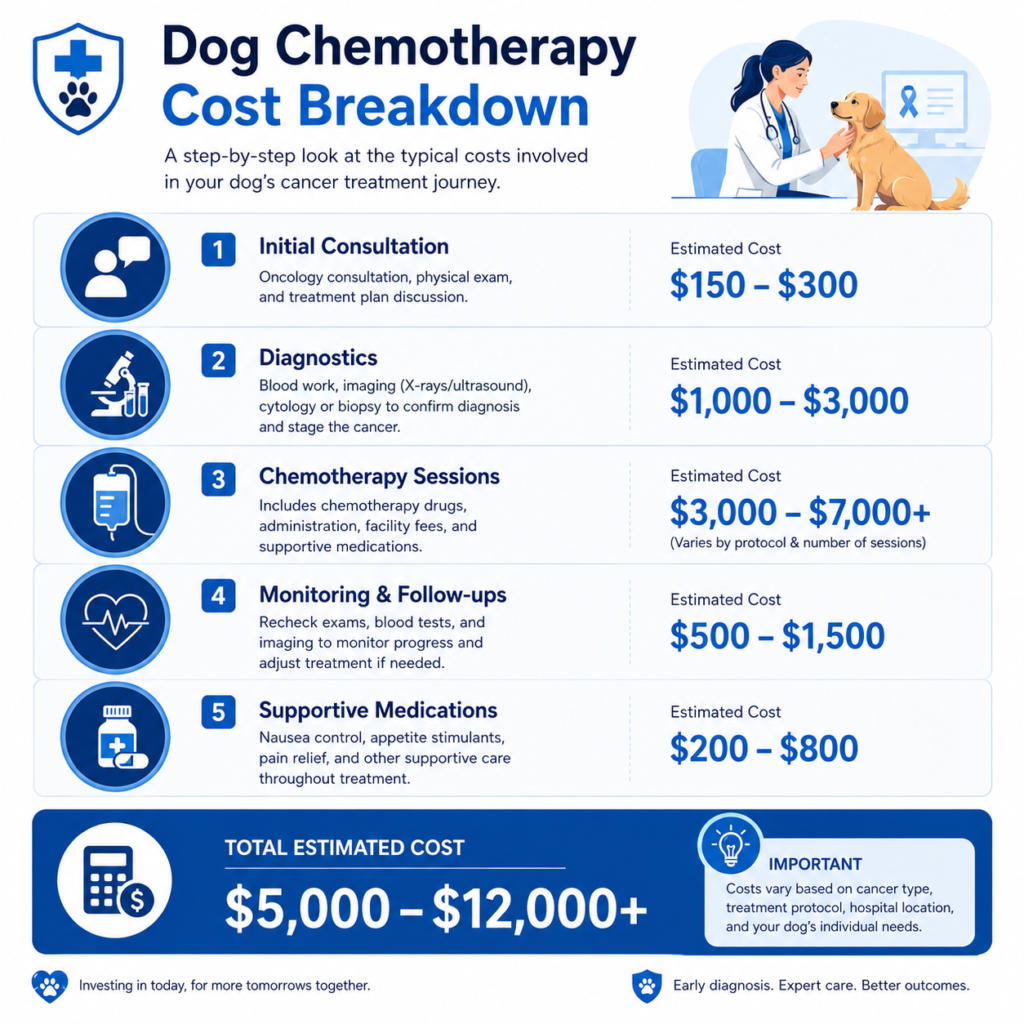
At a Glance: 2026 Dog Chemotherapy Cost Summary
| Cost Component | Range |
|---|---|
| Initial oncologist consultation | $200 – $500 |
| Staging diagnostics (imaging + biopsy) | $500 – $3,000 |
| Single chemotherapy session (drug + admin) | $150 – $700 |
| Per-session blood work (required every visit) | $75 – $200 |
| Per-session anti-nausea medication | $35 – $75 |
| Total per-visit realistic cost | $260 – $975 |
| Full CHOP protocol (lymphoma, 15 weeks) | $3,000 – $10,000 |
| Oral single-agent chemo (chlorambucil, etc.) | $100 – $400/month |
| Rescue protocol (post-relapse) | $2,000 – $7,000+ |
| Post-treatment monitoring (year 1) | $600 – $2,000 |
| Full treatment journey — moderate case | $5,000 – $12,000 |
| Full treatment journey — aggressive case | $10,000 – $20,000+ |
Table of Contents
- What Does One Chemotherapy Session Actually Cost?
- Dog Chemotherapy Cost by Cancer Type and Protocol
- The CHOP Protocol: Week-by-Week Cost Breakdown
- How Dog Size Affects Chemotherapy Cost
- Oral vs. IV Chemotherapy: Cost and Convenience Difference
- The Additional Costs That Add Up Between Sessions
- What Happens When Chemotherapy Works — and When It Doesn’t
- Rescue Protocol Costs: What Happens After Relapse
- Does Pet Insurance Cover Dog Chemotherapy?
- How to Reduce Dog Chemotherapy Cost Without Compromising Care
- Making the Treatment Decision: Quality of Life vs. Full Protocol
- Action Checklist
- FAQ
What Does One Chemotherapy Session Actually Cost?
Most cost guides report the drug fee. What owners actually pay per visit is the drug fee plus everything required to administer it safely. Understanding the full per-visit cost prevents the shock of seeing the first invoice.
Complete per-session cost breakdown:
| Line Item | Cost Range | Required Every Visit? |
|---|---|---|
| Chemotherapy drug (IV or injection) | $150 – $600 | ✅ Yes |
| Drug administration / handling fee | $50 – $150 | ✅ Yes |
| Pre-session CBC (blood count check) | $75 – $150 | ✅ Yes — chemo cannot proceed if WBC is too low |
| IV catheter placement | $40 – $75 | ✅ Yes (for IV drugs) |
| IV fluids (flush) | $30 – $75 | ✅ Yes (for IV drugs) |
| Anti-nausea medication (Cerenia) | $35 – $75 | ✅ Yes |
| Oncologist visit / monitoring fee | $75 – $200 | ✅ Yes |
| Realistic total per IV chemo visit | $455 – $1,325 | — |
Each session includes the chemo drug, administration, monitoring blood work ($75–$200), and anti-nausea medication ($35–$75).
The blood work component is mandatory — not optional. Monitoring blood work is done before each chemo session because chemotherapy suppresses the immune system. If white blood cell counts fall too low, the session is postponed. The CBC tells the oncologist whether the dog is strong enough to proceed that day.
This means every visit to the oncologist — whether or not chemo is administered — generates a blood work charge. Some owners schedule an appointment and the session gets postponed due to low counts, resulting in a visit charge and blood work fee with no drug administered. This can happen 1–3 times across a full protocol.
The real-world first-visit bill:
Most owners aren’t told that the first oncology appointment is more expensive than subsequent sessions because it includes the full staging workup in addition to the first treatment:
- Oncologist consultation: $250–$500
- Complete staging (CT scan, bloodwork, biopsy review): $500–$2,500
- First chemotherapy session: $400–$900
- First appointment total: $1,150 – $3,900
Read Related Article… Dog CT Scan Cost in the USA (2026): Real Numbers, Hidden Charges, and How to Lower the Bill
This is why the first invoice is often the most shocking — it combines diagnostics, consultation, and treatment in a single visit.
Dog Chemotherapy Cost by Cancer Type and Protocol
Different cancers require different drugs, different schedules, and different total session counts. Here’s the realistic cost for the cancers most commonly treated with chemotherapy in dogs.
Lymphoma — CHOP Protocol (Gold Standard)
Lymphoma is the most common canine cancer requiring chemotherapy, and CHOP is the most widely used protocol.
Read Related Article… Does Pet Insurance Cover Cancer Treatment? What Most Pet Owners Don’t Know (2026)
The go-to multi-agent chemotherapy treatment is the CHOP protocol, which uses 4 different drugs: Cyclophosphamide, Doxorubicin Hydrochloride, Vincristine sulfate, and Prednisone.
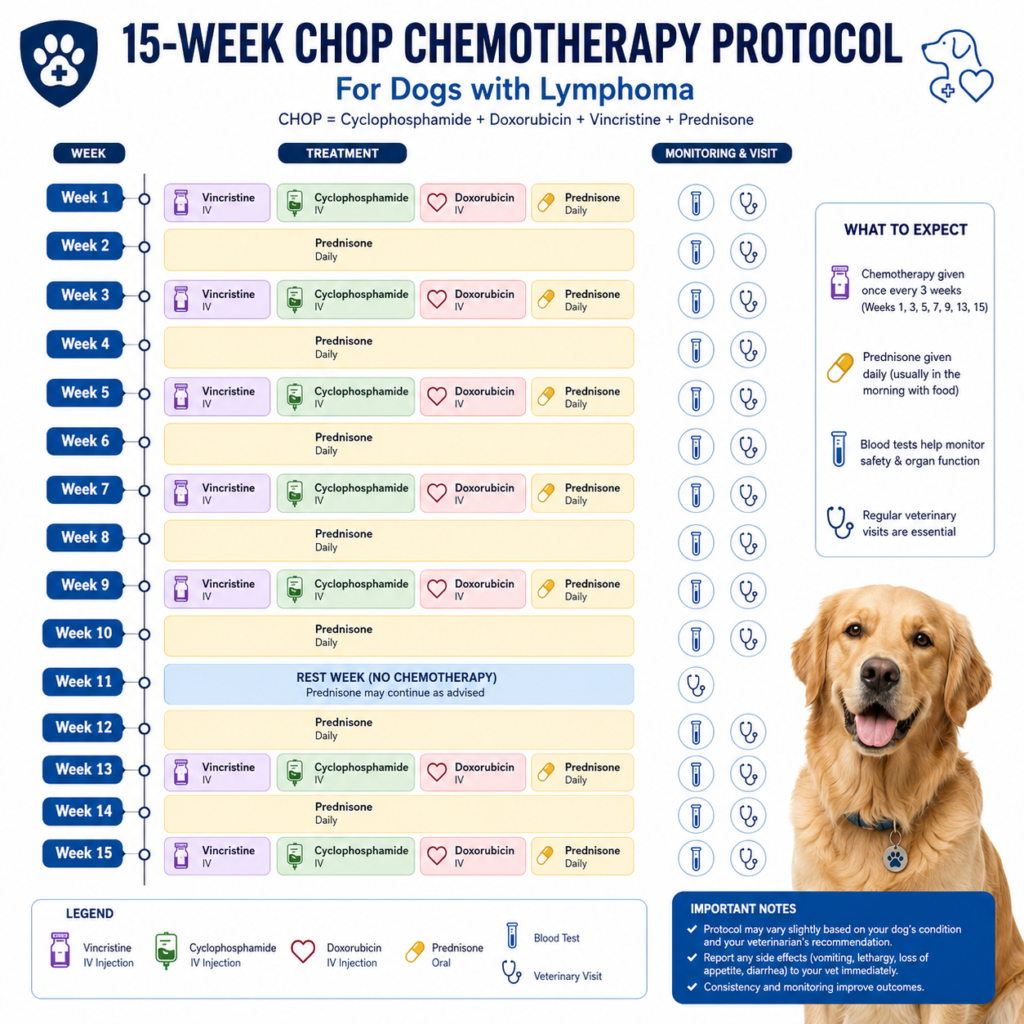
A full course of CHOP runs $6,000 to $8,000 over 15 weeks, with each individual treatment costing $500 to $700.
The 15-week CHOP protocol involves approximately 19 oncology appointments alternating between different drug combinations and monitoring visits. At a specialty center, the total drug + visit cost for the full protocol runs $7,000–$10,000 at major metro pricing, $4,000–$7,000 at Midwest or university hospital pricing.
Remission rate: Most dogs treated with CHOP chemotherapy achieve remission.The CHOP protocol offers a 50–95% remission rate. Median remission duration: 9–12 months. Most dogs relapse and require a rescue protocol.
Lymphoma — Single-Agent Protocols (Budget Alternative)
For owners who cannot manage the full CHOP cost, less intensive single-agent protocols are available:
| Protocol | Drugs Used | Total Cost | Remission Rate |
|---|---|---|---|
| CHOP (gold standard) | 4 drugs combined | $3,000 – $10,000 | 50–95% |
| COP (no doxorubicin) | 3 drugs | $2,000 – $5,000 | 60–70% |
| Single-agent doxorubicin | 1 drug, 5 sessions | $2,000 – $4,000 | 50–70% |
| Oral CCNU (lomustine) | 1 oral drug | $300 – $800/month | 30–50% |
| Prednisone only | Steroid | $20 – $50/month | Palliative only |
Prednisone alone is the lowest-cost option. It temporarily reduces lymph node size and improves quality of life but does not achieve remission. Median survival on prednisone alone: 1–2 months. It is a legitimate choice for owners who cannot afford chemotherapy and want to maximize comfortable time.
Mast Cell Tumor — Post-Surgery Chemotherapy
Mast cell tumors are typically treated with surgery first. Chemotherapy is added when histopathology shows high grade (grade 2 high or grade 3), incomplete surgical margins, or metastatic spread.
| Situation | Drug Protocol | Total Cost |
|---|---|---|
| High-grade MCT, clean margins | Vinblastine + prednisone | $2,000 – $5,000 |
| High-grade MCT, incomplete margins | Vinblastine + cyclophosphamide | $2,500 – $6,000 |
| Metastatic MCT | Palladia (toceranib oral) | $1,200 – $2,400/month |
Palladia (toceranib phosphate) is a targeted oral therapy specifically approved for canine mast cell tumors. It’s a daily oral medication rather than IV infusion — administered at home — but costs $1,200–$2,400 per month ongoing. Some newer targeted drugs cost $600 to $1,000 per treatment session.
Osteosarcoma — Post-Amputation Chemotherapy
The standard of care for osteosarcoma is limb amputation followed by chemotherapy to delay metastatic spread. Without chemo after amputation, median survival is approximately 4 months. With carboplatin chemotherapy, median survival extends to 10–12 months.
| Protocol | Sessions | Drug Cost/Session | Total Protocol Cost |
|---|---|---|---|
| Carboplatin alone | 4–6 sessions | $300 – $500 | $2,000 – $4,500 |
| Doxorubicin alone | 5 sessions | $250 – $450 | $1,500 – $3,500 |
| Carboplatin + doxorubicin alternating | 6 sessions | $350 – $600 | $3,000 – $5,000 |
Carboplatin is one of the more cost-effective chemotherapy drugs in veterinary medicine — and importantly, it’s available as a human generic, which can reduce drug costs by 30–50% if your oncologist agrees to use the human formulation (more on this in the cost reduction section).
Hemangiosarcoma — Post-Splenectomy Chemotherapy
Hemangiosarcoma is aggressive and often presents as an emergency (splenic rupture). Surgery (splenectomy) is typically followed by doxorubicin-based chemotherapy.
| Protocol | Sessions | Total Protocol Cost |
|---|---|---|
| Doxorubicin alone | 5 sessions | $2,000 – $4,500 |
| VAC protocol (vincristine + doxorubicin + cyclophosphamide) | 6 sessions | $3,000 – $6,000 |
Median survival with surgery + chemo: 4–6 months for splenic hemangiosarcoma. The total cost of cancer treatment can range from $3,000 to $10,000+ including the initial diagnosis.
Cancer-by-Cancer Summary Table
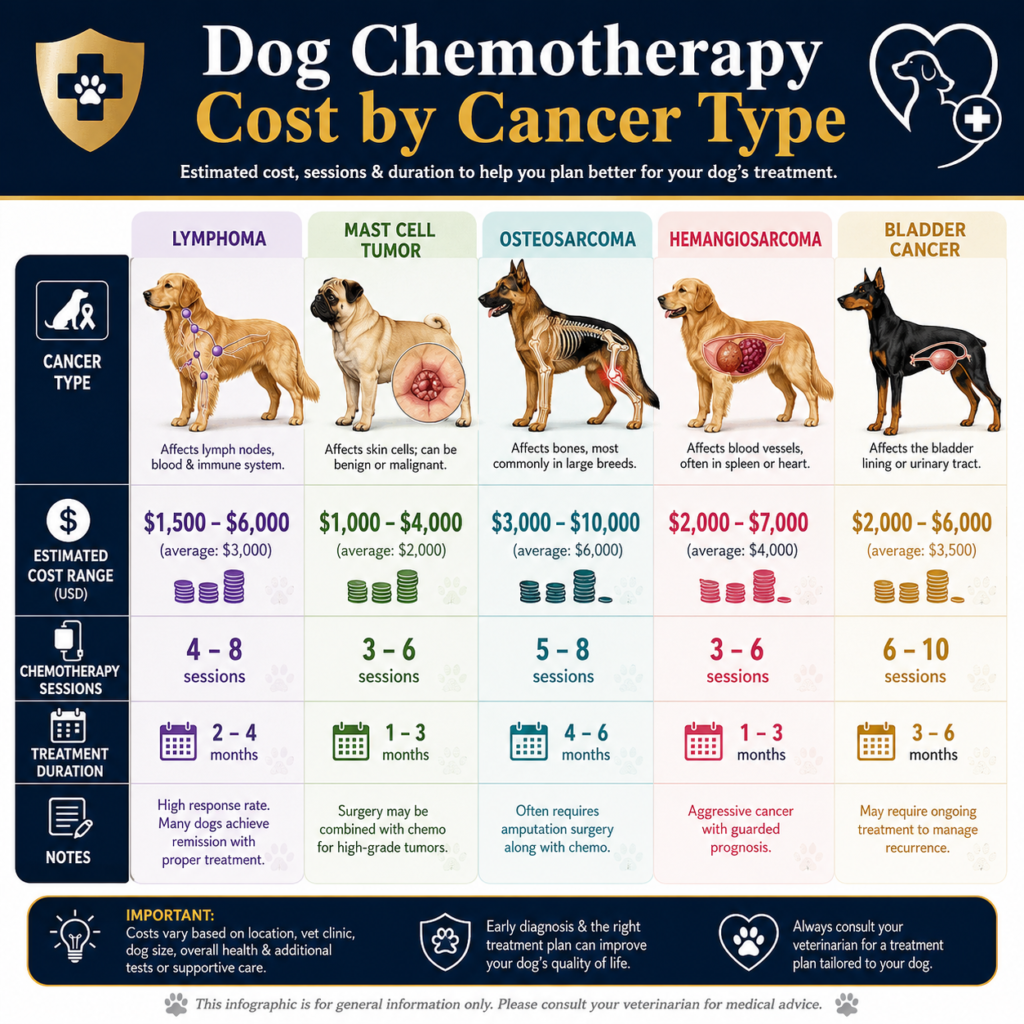
| Cancer Type | Primary Chemo Protocol | Sessions | Total Protocol Cost | Median Survival Benefit |
|---|---|---|---|---|
| Lymphoma | CHOP | ~19 visits / 15 weeks | $4,000 – $10,000 | 12–14 months |
| Lymphoma (budget) | COP or single-agent | 8–12 visits | $2,000 – $5,000 | 6–9 months |
| Mast cell (high grade) | Vinblastine protocol | 6–8 sessions | $2,000 – $5,000 | Significant for grade 3 |
| Osteosarcoma | Carboplatin / Doxorubicin | 4–6 sessions | $2,000 – $5,000 | +6–8 months vs amputation alone |
| Hemangiosarcoma | Doxorubicin-based | 5–6 sessions | $2,500 – $5,500 | +2–4 months |
| TCC (bladder) | Mitoxantrone + piroxicam | Ongoing | $500 – $1,000/month | 6–12 months |
| Nasal tumors | Chemo less effective | — | Radiation preferred | Varies |
The CHOP Protocol: Week-by-Week Cost Breakdown
This is what owners rarely see before committing to treatment — the actual financial schedule of the most common dog cancer protocol.
Standard 19-week CHOP protocol financial map:
| Week | Drug Administered | Drug Cost | Full Visit Cost |
|---|---|---|---|
| 1 | Vincristine (IV) + start prednisone | $150 – $250 | $400 – $650 |
| 2 | Cyclophosphamide (oral) + monitoring | $100 – $200 | $250 – $450 |
| 3 | Vincristine (IV) | $150 – $250 | $350 – $600 |
| 4 | Doxorubicin (IV — most expensive) | $300 – $600 | $550 – $1,050 |
| 5 | Rest week (blood check only) | $0 drug | $100 – $200 |
| 6 | Vincristine (IV) | $150 – $250 | $350 – $600 |
| 7 | Cyclophosphamide (oral) | $100 – $200 | $250 – $450 |
| 8 | Vincristine (IV) | $150 – $250 | $350 – $600 |
| 9 | Doxorubicin (IV) | $300 – $600 | $550 – $1,050 |
| 10 | Rest week | $0 drug | $100 – $200 |
| 11 | Vincristine (IV) | $150 – $250 | $350 – $600 |
| 12 | Cyclophosphamide (oral) | $100 – $200 | $250 – $450 |
| 13 | Vincristine (IV) | $150 – $250 | $350 – $600 |
| 14 | Doxorubicin (IV) | $300 – $600 | $550 – $1,050 |
| 15 | Rest week | $0 drug | $100 – $200 |
| 16 | Vincristine (IV) | $150 – $250 | $350 – $600 |
| 17 | Chlorambucil (oral) | $80 – $180 | $230 – $430 |
| 18 | Vincristine (IV) | $150 – $250 | $350 – $600 |
| 19 | Doxorubicin (IV) | $300 – $600 | $550 – $1,050 |
| Total | $6,300 – $11,730 |
The doxorubicin weeks (weeks 4, 9, 14, 19) are the most expensive single appointments. Budget approximately $550–$1,050 for these sessions versus $250–$600 for vincristine weeks.
This schedule also means cash flow matters as much as total cost. Approximately $600–$1,000 is due every week for the first 4 weeks, then biweekly. Planning the weekly payment cadence — not just the total — is essential financial preparation.
How Dog Size Affects Chemotherapy Cost
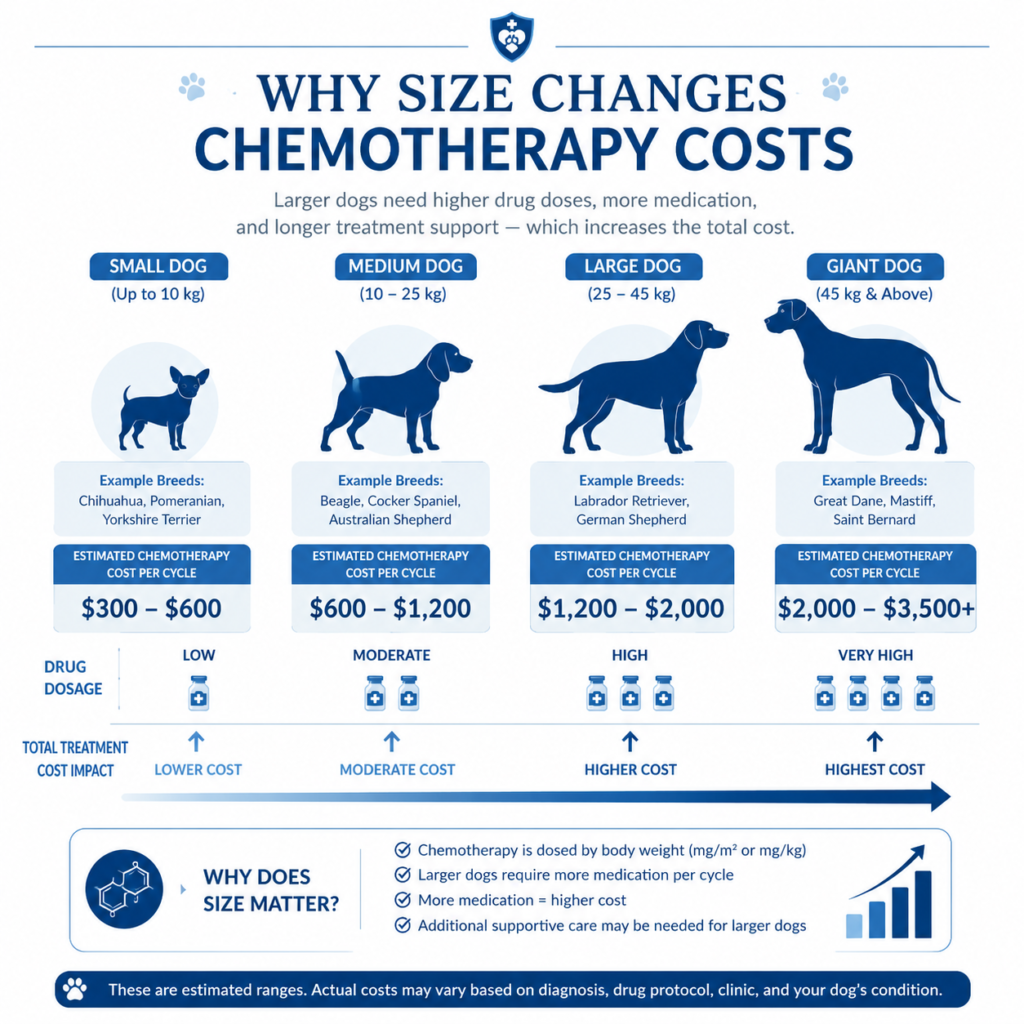
Chemotherapy drug doses are calculated by body weight or body surface area. This is the most consistent and predictable cost variable across all protocols.
The number of chemotherapy treatments depends on the cancer type, size of the mass, and how well your dog responds to treatment. Larger masses or cancer that has spread into multiple areas often require more treatments.
Doxorubicin (most expensive CHOP drug) — dose by dog weight:
| Dog Weight | Typical Dose | Approximate Drug Cost |
|---|---|---|
| 10–20 lbs (small) | 15–30 mg | $150 – $250 |
| 20–40 lbs (medium) | 30–50 mg | $200 – $350 |
| 40–70 lbs (large) | 50–80 mg | $300 – $500 |
| 70–100 lbs (large/giant) | 80–120 mg | $400 – $650 |
| Over 100 lbs | 120+ mg | $500 – $800 |
A 15-pound Cocker Spaniel with lymphoma will pay approximately 40–50% less per doxorubicin session than an 80-pound Labrador Retriever with the same cancer on the same protocol.
Over a full 19-session CHOP protocol with 4 doxorubicin sessions, this size difference compounds to $600–$1,200 in total drug cost variation for the doxorubicin component alone.
Total protocol cost estimate by dog size:
| Dog Size | Full CHOP Protocol Estimate |
|---|---|
| Small (under 25 lbs) | $3,000 – $6,000 |
| Medium (25–55 lbs) | $4,500 – $8,000 |
| Large (55–85 lbs) | $6,000 – $10,000 |
| Giant (over 85 lbs) | $7,000 – $12,000+ |
Oral vs. IV Chemotherapy: Cost and Convenience Difference
Not all chemotherapy is administered via IV infusion at the oncology clinic. Several protocols use oral medications given at home — with significantly different cost and lifestyle implications.
IV chemotherapy (clinic-administered):
- Requires clinic visit every 1–3 weeks
- Administered by oncology staff under controlled conditions
- More expensive per session due to handling, waste disposal, IV equipment
- Includes same-day blood work and monitoring
Oral chemotherapy (home-administered):
- Pills or capsules given by the owner at home
- Requires fewer clinic visits (typically every 3–6 weeks for monitoring)
- Significantly lower drug dispensing cost
- Requires careful handling — some oral chemo drugs require gloves for the owner
- Less precise dosing adjustment than IV protocols
Cost comparison — same protocol, different delivery:
| Drug | IV at Clinic | Oral at Home | Savings |
|---|---|---|---|
| Cyclophosphamide | $100–$200/session | $30–$80/month | Significant |
| Chlorambucil | Not given IV | $80–$180/month | Oral only |
| Prednisone | Not given IV | $15–$40/month | Oral only |
| Lomustine (CCNU) | Not given IV | $150–$300/dose | Oral only |
| Palladia (toceranib) | Not given IV | $1,200–$2,400/month | Oral only |
Oral protocols reduce the clinic visit frequency — which reduces not just the visit fee but also the per-visit blood work cost and the time investment for owners who travel significant distances to oncology centers.
When oral chemo is the primary recommendation:
- Chronic low-grade GI lymphoma (chlorambucil + prednisone)
- Mast cell tumor (palladia / toceranib)
- Bladder cancer / TCC (mitoxantrone + piroxicam)
- Polycythemia vera
- Chronic lymphocytic leukemia (CLL)
The Additional Costs That Add Up Between Sessions
The chemotherapy drug cost is only part of what you’ll spend during treatment. These are the costs that continue between sessions and accumulate throughout the protocol.
Ongoing supportive care costs:
| Item | Cost | Frequency |
|---|---|---|
| Ondansetron / Cerenia (anti-nausea) — home supply | $25 – $60 | Monthly refill |
| Omeprazole (stomach protection) | $15 – $30 | Monthly refill |
| Appetite stimulant (mirtazapine) | $10 – $25 | As needed |
| Pain management (gabapentin, tramadol) | $20 – $50 | Monthly |
| Prescription food (if GI side effects) | $60 – $120 | Monthly |
| Prednisone (often part of CHOP) | $15 – $40 | Monthly |
Monitoring between sessions:
After completing treatment: monitoring exams every 2–3 months for the first year ($100–$250 each). Imaging rechecks every 3–6 months ($200–$500).
A dog that completes CHOP in remission will have:
- Recheck oncology exams: $100–$250 every 6–8 weeks during active treatment
- Lymph node aspirates at recheck (to confirm ongoing remission): $50–$150
- Chest X-rays or abdominal ultrasound every 3–4 months: $200–$500
Read Related Article… Dog X-Ray Cost in the USA (2026): Average Prices, Sedation Costs & What You’ll Actually Pay
First-year total monitoring cost after CHOP completion: 4–6 recheck exams ($400–$1,500) + 3–4 imaging studies ($600–$2,000) + monthly supportive medications ($60–$200/month × 12 = $720–$2,400)
Total additional cost beyond the chemotherapy protocol itself: $1,720–$5,900 in year 1.
This is why “chemotherapy costs $6,000” significantly underestimates the total financial commitment. The real year-one cost for a dog completing CHOP is $8,000–$16,000 when diagnostics, protocol, post-treatment monitoring, and ongoing medications are included.
What Happens When Chemotherapy Works — and When It Doesn’t
Understanding the realistic outcome landscape — before committing to treatment — is part of making an informed financial decision.
When CHOP works (the majority outcome):
The CHOP protocol offers a 50–95% remission rate. Most dogs enter complete remission (lymph nodes return to normal size, symptoms resolve) within the first 4 weeks of treatment. The dog typically feels well throughout treatment — often better than before diagnosis because the cancer symptoms resolve.
Median complete remission duration: 9–12 months for B-cell lymphoma, 2–5 months for T-cell lymphoma (significantly lower).
During remission, many dogs have an excellent quality of life — eating normally, active, symptom-free. This period is often described by owners as some of the best time they had with their dog after diagnosis.
When chemotherapy doesn’t produce remission: Approximately 10–20% of dogs with lymphoma don’t respond to CHOP. The protocol is completed or paused, and rescue chemotherapy is considered. Financially, this means the full CHOP cost was incurred with limited benefit, and rescue protocol costs begin.
When remission ends — relapse: 95% of dogs relapse following treatment. We detect relapse by noting increased lymph node size.
Relapse is expected. It’s not a treatment failure — CHOP buys time. The question at relapse is whether a rescue protocol can achieve a second remission. Second remissions are typically shorter than first remissions.
Rescue Protocol Costs: What Happens After Relapse
When a dog relapses after completing CHOP, the oncologist typically recommends a rescue protocol — a different drug combination designed to achieve a second remission.
A combination of two drugs used as a rescue treatment for dogs whose cancer has returned after initial chemo runs about $2,000 for the first two sessions, then $600 to $700 per treatment after that.
Common rescue protocols and costs:
| Rescue Protocol | Drugs | Cost Range |
|---|---|---|
| MOPP | Mechlorethamine, vincristine, procarbazine, prednisone | $500–$700/cycle |
| Actinomycin-D | Single agent | $400–$600/session |
| Doxorubicin (if not used in first protocol) | Single agent | $300–$600/session |
| DMAC | Dexamethasone, melphalan, actinomycin-D, cytarabine | $800–$1,200/cycle |
| Rabacfosadine (Tanovea) | Single agent | $800–$1,500/session |
Second remission rates with rescue protocols range from 30–60% depending on the drugs used and the dog’s prior treatment history. Second remissions typically last 2–4 months.
The cumulative cost reality:
A dog that completes CHOP, achieves remission, relapses, and completes a rescue protocol has incurred:
- Initial diagnostics: $500–$2,500
- CHOP protocol: $4,000–$10,000
- Post-remission monitoring: $1,500–$3,000
- Rescue protocol: $2,000–$5,000
- Cumulative total: $8,000–$20,500
This is the realistic full financial arc for an owner who pursues all available treatment options for a dog with lymphoma. Not every family can or should pursue every stage — and that’s a legitimate decision, not a failure.
Does Pet Insurance Cover Dog Chemotherapy?
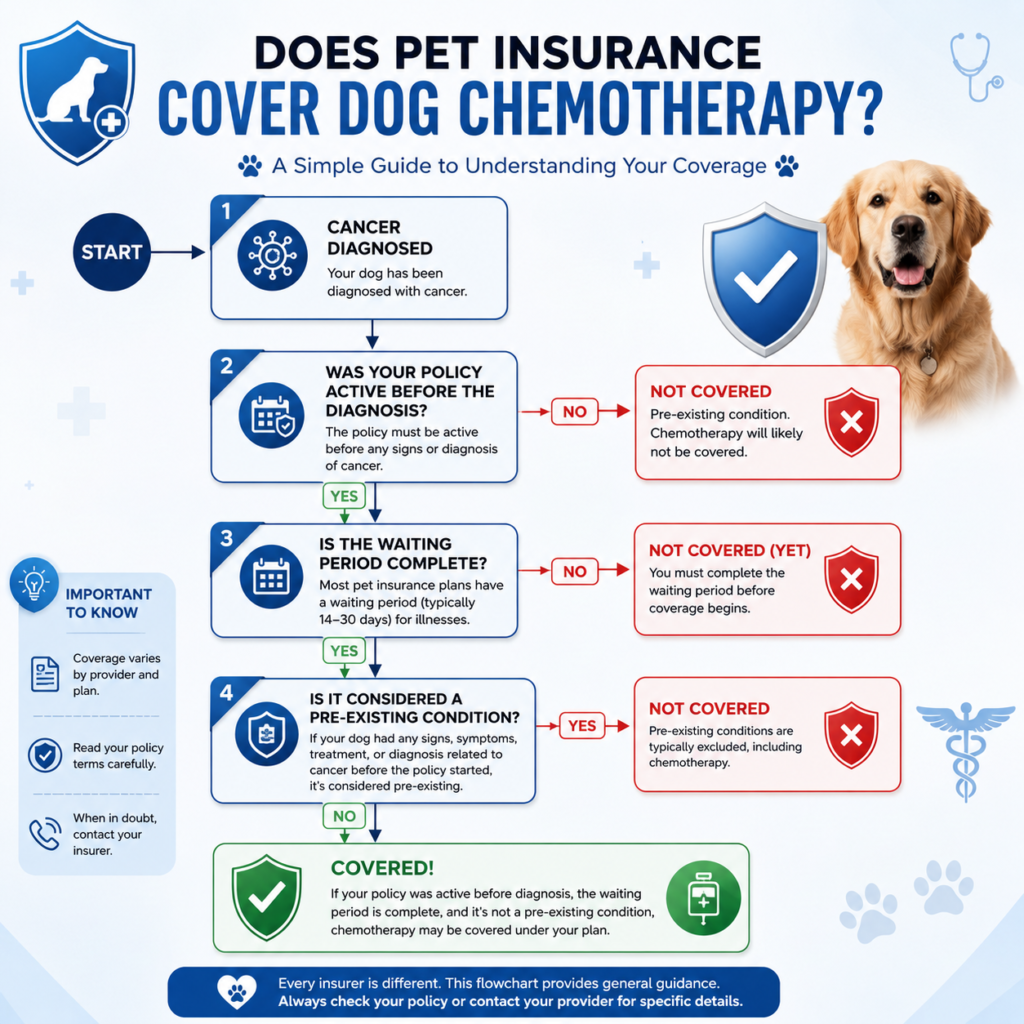
Yes — most comprehensive accident-and-illness plans cover chemotherapy when the cancer is newly diagnosed after enrollment and past the waiting period.
Read Related Article… Does Pet Insurance Cover Cancer Treatment? What Most Pet Owners Don’t Know (2026)
The cost of chemotherapy can average more than $5,000 for dogs. Pet insurance coverage for chemotherapy is one of the highest-value uses of a comprehensive plan.
Read Related Article… Does Pet Insurance Cover Blood Tests? The Complete Answer for Dog Owners (2026)
Coverage conditions:
- The cancer must not be pre-existing (no documented symptoms before enrollment)
- Policy must be active and past the illness waiting period (typically 14 days)
- Requires a comprehensive accident-and-illness plan — accident-only plans do not cover cancer
What’s covered under a standard claim:
- Each chemotherapy drug and administration fee
- Pre-session CBC blood work at every visit
- Anti-nausea medications at each session
- Oncologist consultation and monitoring fees
- Staging imaging (CT, ultrasound, X-ray) for diagnosis
- Biopsy and histopathology costs
Read Related Article… Dog Biopsy Cost in the USA (2026): Real Prices by Type, Hidden Lab Fees & What the Results Mean
Read Related Article… Dog Ultrasound Cost in the USA (2026): Real Prices, Hidden Charges & What Happens After
Reimbursement math on CHOP protocol:
Full CHOP protocol including all sessions + monitoring blood work + oncologist fees: Total cost: $9,000 Annual deductible: $250 (met on the first visit) At 80% reimbursement: $7,000 back Your out-of-pocket: $2,000
Read Related Article… Dog Blood Test Cost in the USA (2026): Real Prices, What Each Panel Tests, and How to Pay Less
Without insurance: $9,000 due across 19 weekly appointments.
The annual limit problem for chemotherapy:
This is the most critical insurance detail for cancer treatment. Cancer treatment is one of the highest-value uses of pet insurance — comprehensive plans cover surgery, chemotherapy, and monitoring.
But if your plan has a $5,000 annual limit and the CHOP protocol costs $8,000 — you absorb $3,000 after the limit is exhausted. The same protocol on a $10,000 or unlimited annual limit plan returns everything above the deductible.
For cancer specifically, choose plans with:
- Unlimited or $15,000+ annual coverage limit
- 80–90% reimbursement rate
- No per-condition sub-limits on cancer treatment
The pre-existing condition reality:
Any cancer showing symptoms before enrollment — a palpable lump noted by your vet, unexplained weight loss documented in records, lymph nodes noted as enlarged — will be classified as pre-existing. This is the most common reason chemotherapy claims are denied.
If your dog is diagnosed with cancer and you don’t have insurance, buying insurance now won’t cover this cancer. Future unrelated conditions would be covered, but chemotherapy for the current diagnosis will not be.
How to Reduce Dog Chemotherapy Cost Without Compromising Care
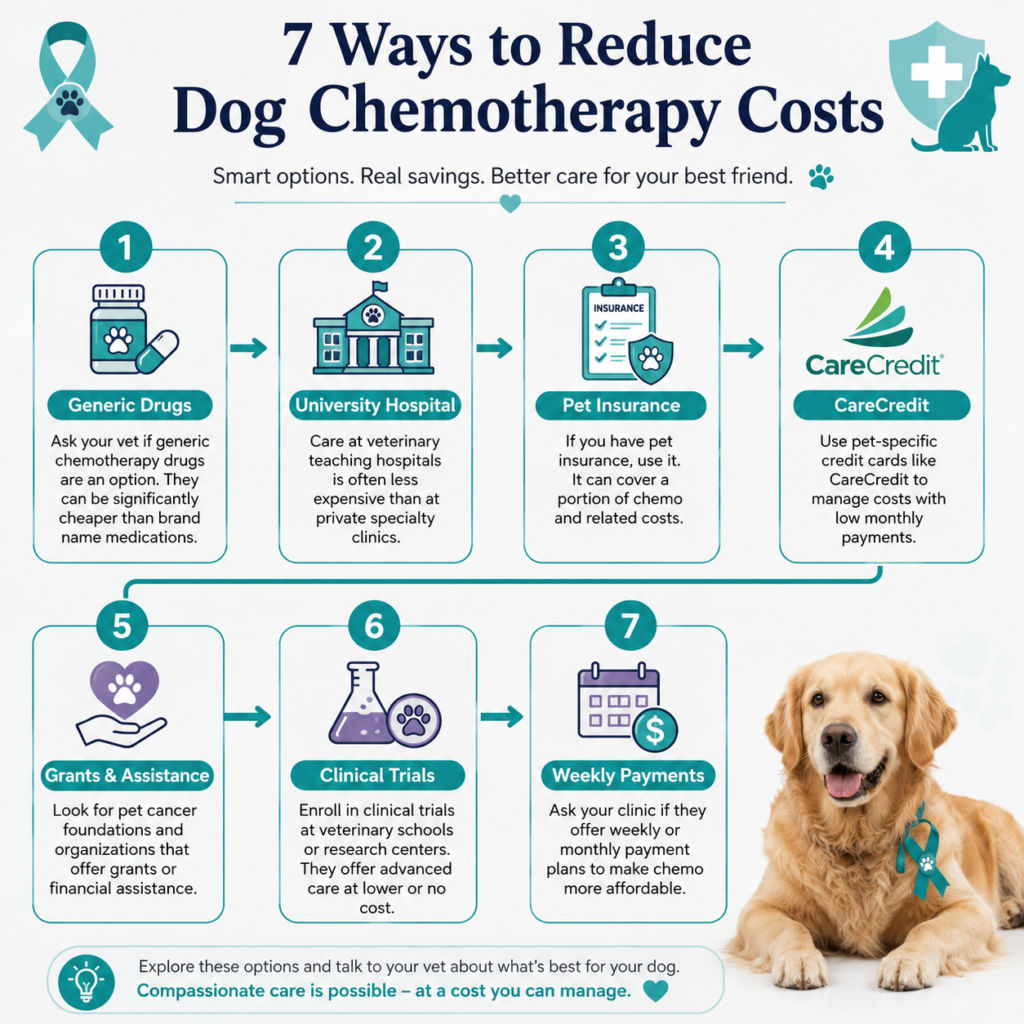
1. Ask about human generic equivalents for chemotherapy drugs.
This is the most consistently overlooked cost reduction in veterinary oncology. Several drugs in the CHOP protocol and other common protocols are identical to human chemotherapy drugs — available as lower-cost generics at human pharmacies.
+Some chemotherapy drugs used in veterinary oncology are identical to those used in human medicine and available as lower-cost generics. Ask your oncologist specifically whether any drugs in your dog’s protocol have a generic equivalent.
- Cyclophosphamide: available as human generic — 30–60% cheaper than veterinary-dispensed
- Chlorambucil: available as generic — significant savings on ongoing oral protocols
- Prednisone: available at any pharmacy for $10–$20/month
- Doxorubicin: available as generic — ask about human generic pricing
Ask your oncologist: “Are any drugs in this protocol available as human generics? Can you write a prescription I can fill at a pharmacy?” Over a 19-session CHOP protocol, generic substitution can save $800–$2,000.
2. Consider a university veterinary teaching hospital.
University vet schools — UC Davis, Cornell, Colorado State, Texas A&M, University of Wisconsin — offer oncology services including chemotherapy at 20–40% lower cost than private specialty centers. The oncologists are board-certified faculty, the care is equivalent, and the cost difference over a full CHOP protocol can reach $1,500–$3,000.
3. Discuss protocol alternatives honestly with your oncologist.
Some pet parents may opt for the more affordable treatment of prednisone, a steroid drug that can help boost the immune system. For families who genuinely cannot afford CHOP, a modified protocol or prednisone-only approach provides meaningful quality time at a fraction of the cost. This is a legitimate medical choice — not a shortcut.
Ask: “What is the most cost-effective protocol that still provides meaningful quality time? And what’s the realistic outcome difference versus the full CHOP protocol?”
4. Request a week-by-week payment schedule in advance.
Ask your oncology clinic whether they can bill weekly or every two weeks as treatment occurs — rather than requiring lump-sum payment. Most oncology centers accept payment at each visit, which naturally spreads the cost across the protocol duration. This is different from a payment plan — it’s simply paying as you go, appointment by appointment.
5. Apply for CareCredit before the first appointment.
For a $6,000–$10,000 protocol billed over 15–19 weekly visits, CareCredit’s 18–24 month promotional period provides enough time to complete the protocol and manage the balance without accruing interest. Apply online before the first appointment.
6. Contact Live Like Roo and the National Canine Cancer Foundation.
Live Like Roo (wearethecure.org) provides grants of $500–$1,500 for dogs with confirmed cancer diagnoses. The National Canine Cancer Foundation (wearethecure.org) connects owners with resources. Apply immediately after diagnosis — don’t wait.
7. Ask about clinical trial enrollment.
Some university oncology departments and specialty research centers offer free or reduced-cost chemotherapy through clinical trials. The Veterinary Cancer Society (vetcancersociety.org) maintains a directory of active trials. Clinical trial dogs receive standard-of-care treatment at no or reduced cost.
Making the Treatment Decision: Quality of Life vs. Full Protocol
This is the conversation most cost guides avoid. Here it’s addressed directly.
Not every family is in a position to pursue a $9,000 CHOP protocol. Not every dog should receive one. And “I can’t afford full CHOP” is not a moral failure — it’s a financial reality for many families, and there are legitimate alternatives.
The treatment decision framework:
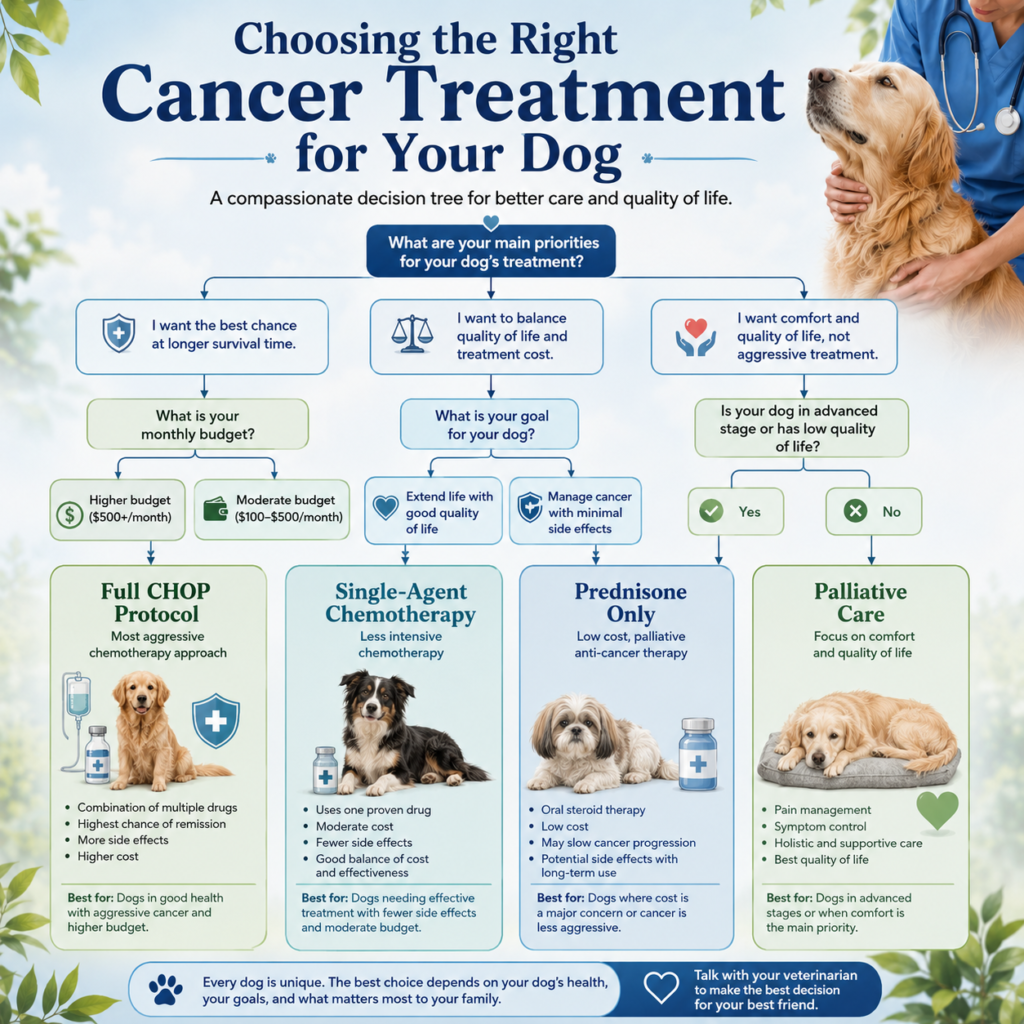
| Approach | Monthly Cost | Median Survival | Quality of Life |
|---|---|---|---|
| Full CHOP protocol | $600–$1,200/month | 12–14 months | Excellent during remission |
| Single-agent chemo (oral) | $150–$400/month | 4–6 months | Good |
| Prednisone only | $20–$50/month | 1–2 months | Good initially, declines |
| Palliative care (pain management) | $100–$300/month | Weeks to 2–3 months | Focus on comfort |
| No treatment | $0 | Days to weeks | Declines rapidly |
Honest questions to ask your oncologist before deciding:
- “What is the realistic median survival for my dog’s cancer type and stage with each option?”
- “What does quality of life typically look like during and after treatment?”
- “If we start with a modified protocol and switch to full CHOP later, does that reduce effectiveness?”
- “What is the most cost-effective option that still provides meaningful time?”
- “Are there clinical trials my dog might qualify for?”
Many oncologists will design a treatment plan within a family’s stated budget when asked directly. Naming your budget — “we can manage $3,000–$4,000 total” — leads to a different and more useful conversation than asking “what’s the best option?”
Action Checklist
Before the first oncology appointment:
- [ ] Apply for CareCredit now — 18–24 month promotional periods align well with CHOP protocol duration
- [ ] Contact your pet insurer to confirm cancer coverage and check your annual limit
- [ ] Research the nearest university veterinary teaching hospital and request a cost comparison
- [ ] Prepare a budget range to share with the oncologist — this leads to a more useful planning conversation
- [ ] Ask for a projected week-by-week cost schedule for the recommended protocol
- [ ] Apply to Live Like Roo and the National Canine Cancer Foundation immediately
At the first oncology appointment:
- [ ] Ask for a weight-adjusted total protocol cost estimate — not a general range
- [ ] Ask: “Are any drugs in this protocol available as human generics?”
- [ ] Ask: “Is there a modified or lower-cost protocol that still provides meaningful quality time?”
- [ ] Ask: “Are there any active clinical trials my dog might qualify for?”
- [ ] Ask: “What is the realistic outcome difference between the protocols you’re recommending and the most affordable option?”
During treatment:
- [ ] Track cumulative costs against your annual insurance limit
- [ ] Submit each visit’s claim promptly — don’t batch them at the end of treatment
- [ ] Ask about oral generic substitutions for any drugs transitioning from IV to oral maintenance
After completing treatment:
- [ ] Budget $300–$500/month for monitoring visits and imaging rechecks in year 1
- [ ] Discuss the rescue protocol option and cost upfront — before relapse, not during it
FAQ
How much does dog chemotherapy cost per session? <cite index=”22-1″>The average cost of chemo for dogs is $150 to $600 per dose.</cite> The realistic all-in cost per visit — including the required pre-session blood work, anti-nausea medication, IV catheter, and oncologist fee — runs $455–$1,325 per appointment. Doxorubicin sessions are the most expensive; vincristine and oral drug visits are lower.
How much does a full dog chemotherapy protocol cost? <cite index=”30-1″>A full course of CHOP for lymphoma runs $6,000 to $8,000 over 15 weeks.</cite> Including diagnostics, monitoring, and post-protocol rechecks, the first-year total typically runs $8,000–$16,000. Osteosarcoma and hemangiosarcoma protocols are shorter and cost $2,000–$5,000 for the chemotherapy component.
How many chemo sessions does a dog need? It depends on the cancer and protocol. The CHOP protocol involves approximately 19 oncology visits over 15 weeks. Osteosarcoma carboplatin protocol uses 4–6 sessions. Oral protocols for low-grade lymphoma or bladder cancer are ongoing monthly. Ask your oncologist for the session count specific to your dog’s cancer type and protocol.
Does chemotherapy make dogs sick? <cite index=”26-1″>Unlike in humans, dogs typically tolerate chemo well with minimal side effects. Most dogs maintain their normal appetite, energy, and happiness throughout treatment.</cite> Mild side effects (nausea, brief lethargy the day after treatment) occur in approximately 20–30% of dogs. Severe complications requiring hospitalization occur in approximately 5% of cases. Anti-nausea medication given at each visit significantly reduces GI side effects.
Does pet insurance cover dog chemotherapy? Yes — comprehensive accident-and-illness plans cover chemotherapy at 70–90% reimbursement when the cancer is newly diagnosed after enrollment and past the waiting period. <cite index=”25-1″>The cost of chemotherapy can average more than $5,000 for dogs</cite>, making it one of the highest-value uses of pet insurance. The annual coverage limit is the most important policy detail for cancer — choose unlimited or $15,000+ to avoid hitting the cap mid-protocol.
What is the cheapest way to treat dog cancer? Prednisone alone costs $20–$50/month and provides temporary quality-of-life improvement. Single-agent oral chemotherapy protocols run $100–$400/month. A full CHOP protocol at a university teaching hospital with generic drug substitutions represents the lowest cost for full curative-intent chemotherapy. Clinical trial enrollment can reduce or eliminate chemotherapy costs for dogs who qualify.
Is dog chemotherapy worth the cost? For lymphoma, most dogs achieve remission and have 9–12 months of high-quality life — time that many owners describe as some of their best time together. For other cancers, the survival benefit varies. The answer depends on your dog’s specific cancer, their overall health, the realistic prognosis your oncologist provides honestly, and your family’s circumstances. There is no universally correct answer — only the answer that’s right for your dog and your situation.
Can I give my dog chemotherapy at home? Several oral chemotherapy medications are administered at home: cyclophosphamide, chlorambucil, prednisone, lomustine, and palladia (toceranib). IV chemotherapy must be administered at a veterinary clinic. Home oral chemotherapy requires careful handling — some drugs require gloves and safe disposal — and regular clinic monitoring to adjust dosing.
What You Should Do Next
If your dog was just diagnosed and you’re making the treatment decision — take your time. You have days, not hours, to decide. Request a written cost estimate for each protocol your oncologist recommends. Ask specifically about university hospital pricing, generic drug options, and what a modified protocol would look like if full CHOP isn’t feasible.
Contact your pet insurer today if you have insurance. Ask about your annual limit, your deductible status, and whether you need pre-authorization for chemotherapy. Get the coverage confirmation in writing before the first session.
And if you’re reading this while your dog is healthy — this is what cancer coverage looks like in practice. A comprehensive plan with an unlimited or $15,000+ annual limit returns $6,000–$8,000 on a standard lymphoma protocol. That’s 10–20 years of premium returned in a single diagnosis cycle. The window for enrolling before a cancer diagnosis closes without warning — often with a single vet visit note mentioning a palpable lump or enlarged lymph node.
External Authority Sources
- CareCredit — Dog Chemotherapy Cost
- Veterinary Cancer Society
- ImpriMed — CHOP Protocol Guide
- Cornell University College of Veterinary Medicine
- NC State Veterinary Hospital — Canine Rescue Lymphoma Protocol
- Live Like Roo / National Canine Cancer Foundation
- VetReceipt — Real Invoice Data
Disclaimer: This article is for informational and educational purposes only. Cost data reflects 2026 national averages from NAPHIA, Insurify, and MetLife Pet Insurance and will vary based on your dog’s age, breed, location, and the specific plan you choose. PetInsurePrime does not sell pet insurance and receives no compensation from any insurance provider. Always compare multiple quotes and read your policy documents carefully before enrolling.
PetInsurePrime | Independent • Research-Based | Helping US dog owners understand real vet costs and coverage options — without the sales pressure.