
Updated: August 2026| Reading Time: 26minutes
Your regular vet found something concerning — a lump, abnormal bloodwork, imaging showing a mass — and they’ve referred you to a veterinary oncologist. Before you call to schedule, you want to know what this appointment is going to cost, what will happen during it, and what the total bill will look like by the time you leave.
Here’s everything you need to know — including real published fees from named oncology centers across the USA.
Quick Answer : Dog Oncology Consultation Cost
A board-certified veterinary oncologist initial consultation costs $200–$500. Follow-up oncology visits run $100–$250. The Veterinary Cancer Society reports that oncologist consultations can cost $125 to $250. Real published fees from named centers: Colorado State University Flint Animal Cancer Center charges $270 for an initial consultation; Animal Cancer and Imaging Center charges $235 for initial and $300 for emergency consultations. The consultation fee is only the beginning — diagnostic staging performed at or immediately after the consultation adds $500–$3,000+ in additional costs.
Read Related Article… Dog Cancer Treatment Cost in the USA (2026): Surgery, Chemo & Total Costs
Read Related Article… Dog Chemotherapy Cost in the USA (2026): Real Numbers by Cancer Type, Protocol & Situation
At a Glance: 2026 Dog Oncology Consultation Cost Summary
| Visit Type | Cost Range |
|---|---|
| Initial oncologist consultation (board-certified) | $200 – $500 |
| Initial consultation at university teaching hospital | $150 – $300 |
| Emergency / same-day oncology consultation | $250 – $600 |
| Follow-up monitoring visit | $100 – $250 |
| Second opinion consultation | $150 – $400 |
| Telemedicine oncology consultation | $75 – $200 |
| Treatment planning session (separate from consult) | $150 – $300 |
| Real named center fees: | |
| CSU Flint Animal Cancer Center (Fort Collins, CO) | $270 |
| Animal Cancer and Imaging Center (USA) | $235 (standard) / $300 (emergency) |
| Typical private specialty center (national range) | $200 – $450 |
Consultation fee covers the appointment only. Diagnostics, imaging, and bloodwork ordered during or after the consultation are billed separately.
Table of Contents
- What Is a Veterinary Oncologist and Why Does Your Dog Need One?
- What Does the Oncology Consultation Fee Actually Cover?
- What Happens During the First Appointment — Step by Step
- The Staging Diagnostic Costs That Follow the Consultation
- Dog Oncology Consultation Cost by Facility Type
- Regional Cost Differences Across the USA
- How to Prepare for the First Oncology Appointment
- Should You Get a Second Opinion? Cost and When It’s Worth It
- Follow-Up Consultations: What They Cost and How Often They Happen
- Telemedicine Oncology Consultations — A Lower-Cost Option
- Does Pet Insurance Cover the Oncology Consultation?
- The Full First-Appointment Financial Picture: A Realistic Total
- Action Checklist
- FAQ
What Is a Veterinary Oncologist and Why Does Your Dog Need One?
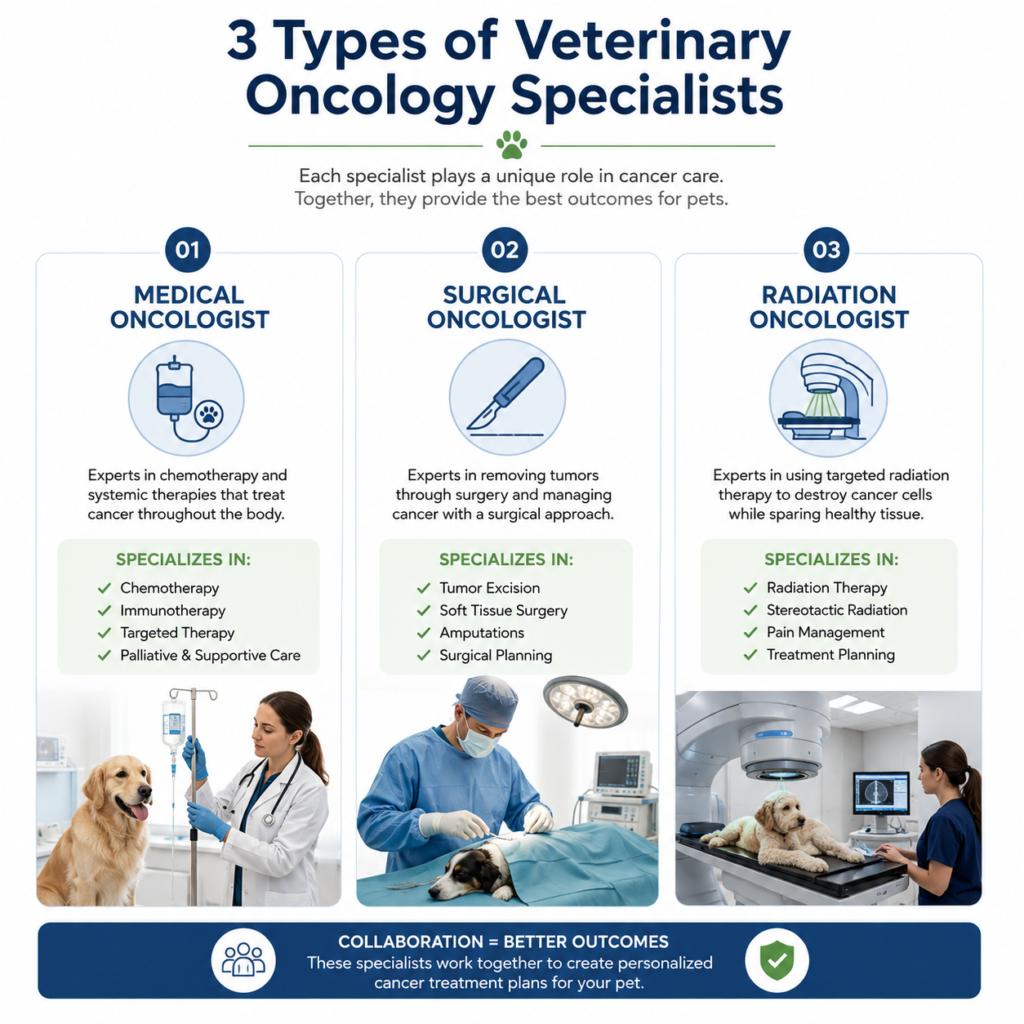
A veterinary oncologist is a specialist veterinarian who has completed a 3-year residency in medical oncology, surgical oncology, or radiation oncology after veterinary school — and passed board-certification exams administered by the American College of Veterinary Internal Medicine (ACVIM) or the American College of Veterinary Surgeons (ACVS).
The oncologist exam is more expensive than a general vet exam ($50–$100) because it includes specialized evaluation, treatment planning, and staging assessment.
Your regular vet refers you to an oncologist when:
- A biopsy or FNA confirms or strongly suggests cancer
- The cancer type requires specialized treatment (lymphoma, mast cell, osteosarcoma)
- Staging (determining how far the cancer has spread) requires specialist-level imaging interpretation
- Chemotherapy, radiation, or complex surgery is being considered
- Your vet wants a specialist opinion on a diagnostically uncertain case
Read Related Article… Dog Chemotherapy Cost in the USA (2026): Real Numbers by Cancer Type, Protocol & Situation
Not all cancer requires an oncologist — some tumors are managed by general vets. Simple skin masses, benign lipomas, and low-grade tumors that are fully excised sometimes need no further specialist involvement. But for any systemic cancer, aggressive solid tumor, or case requiring chemotherapy or radiation, a board-certified oncologist is the appropriate next step.
Medical oncologist vs. surgical oncologist vs. radiation oncologist:
| Specialist Type | Focus | When Referred |
|---|---|---|
| Medical oncologist | Chemotherapy, targeted therapy, immunotherapy | Lymphoma, systemic cancers, post-surgical chemo |
| Surgical oncologist | Tumor removal with oncologic margins | Complex surgical cases, specialist-level resections |
| Radiation oncologist | Radiation therapy planning and delivery | Nasal tumors, brain tumors, incomplete margins |
Your regular vet’s referral letter typically specifies which type of oncologist is appropriate. In some cases, a single consultation involves two specialists — a medical oncologist reviewing chemo options and a surgical oncologist assessing resection feasibility.
What Does the Oncology Consultation Fee Actually Cover?
The consultation fee is the oncologist’s professional charge for seeing and evaluating your dog. Understanding what’s included — and what isn’t — prevents the most common billing confusion.
What the consultation fee covers:
- Complete physical examination by the board-certified oncologist
- Review of all prior records, imaging, and pathology reports your regular vet sent in advance
- Assessment of the cancer’s clinical presentation, lymph node evaluation, and systemic signs
- Discussion of the diagnosis, staging plan, and treatment options
- Written treatment recommendation and formal plan
- Time with the oncologist and their team to answer your questions
- Coordination with your regular vet to share findings
What the consultation fee does NOT cover:
- Any diagnostic tests ordered during or after the consultation (bloodwork, imaging, FNA, biopsy)
- Anesthesia or sedation if needed for examination or diagnostics
- Any treatment administered at the appointment
- Prescription medications dispensed at the consultation
It is our policy to provide you with detailed financial estimates for all procedures and treatments and only proceed with your approval. For protocols that involve multiple visits to our hospital, we provide you with written estimates for your future visits as well.
Most oncology centers will present you with a written estimate — separate from the consultation fee — for any diagnostics or staging they recommend. You have the opportunity to review and approve before anything beyond the consultation is charged.
The consultation as a financial decision point:
This is worth naming clearly: the consultation appointment is where you receive enough information to decide whether and how to proceed. You are not committed to any treatment by scheduling or attending the consultation. The $200–$500 consultation fee buys information — and that information determines whether the next $5,000–$15,000 in treatment is something you want to pursue.
What Happens During the First Appointment — Step by Step
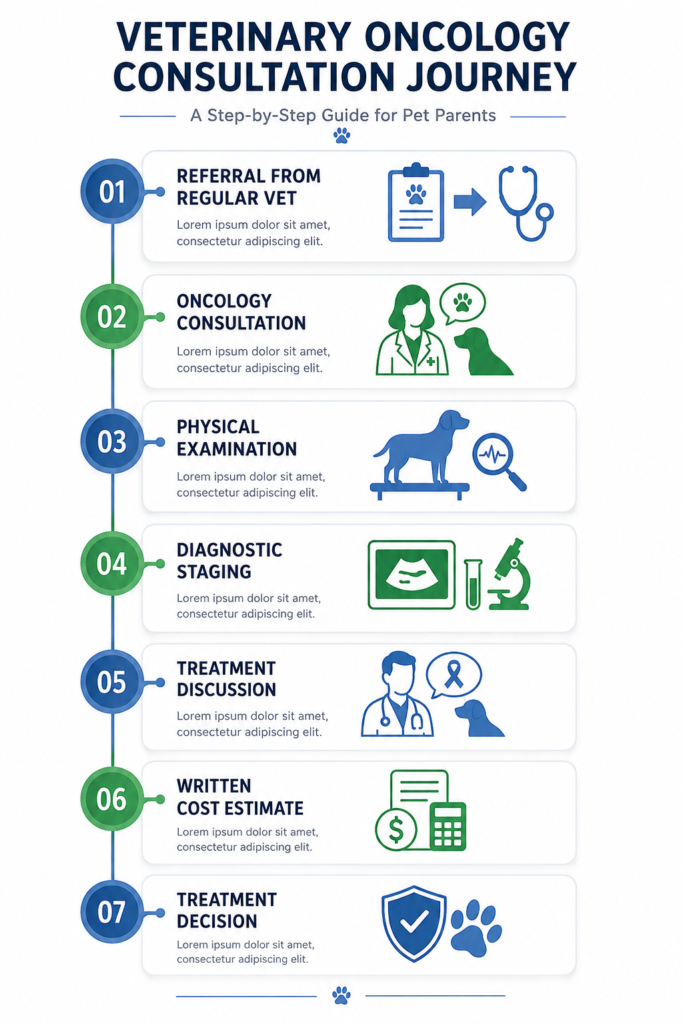
Knowing what to expect makes the appointment significantly less overwhelming and helps you ask better questions in real time.
Read Related ARTICLE… Dog MRI Cost in the USA (2026): Average Cost, Insurance Coverage & Financing
Before the appointment (1–3 days prior): Before your pet’s visit, the cancer center contacts your regular veterinarian to obtain recent records, test results, imaging studies, and other medical history so the team is ready to focus on your pet’s cancer care.
Read Related Article… Dog Ultrasound Cost in the USA (2026): Real Prices, Hidden Charges & What Happens After
Your regular vet sends the oncology center:
- All prior bloodwork results
- Imaging reports and ideally digital copies of the images (X-rays, ultrasound, CT, MRI)
- Biopsy or FNA reports with pathology results
- Vaccination history and medication list
- Any specialist referral notes
At arrival:
- Check-in and completion of intake forms (medical history, current medications, consent for examination)
- Weight and baseline vitals taken by a veterinary technician
- Technician review of symptoms, changes noticed at home, appetite and energy level
The specialist examination (20–40 minutes): The board-certified oncologist performs:
- Full physical examination
- Lymph node mapping — systematically assessing every accessible lymph node group for size and texture
- Tumor palpation and assessment if surface-accessible
- Neurological assessment if relevant to the cancer type
- Abdominal palpation for organ enlargement
The discussion (20–45 minutes): The oncologist sits with you and discusses:
- Their assessment of the cancer type, stage, and likely behavior
- What additional staging they recommend and why
- Treatment options with realistic outcome expectations for each
- Quality of life considerations
- Approximate costs for each pathway
Read Related Aericle… Dog Blood Test Cost in the USA (2026): Real Prices, What Each Panel Tests, and How to Pay Less
Written estimates: Once the oncologist has evaluated your pet and discussed diagnostic and treatment options, the staff provides a complete written treatment plan before proceeding.
Read Related Article… Dog Biopsy Cost in the USA (2026): Real Prices by Type, Hidden Lab Fees & What the Results Mean
This written estimate is what you take home — it itemizes every recommended diagnostic and treatment component with associated costs. You review it, discuss with your family, and decide which components to proceed with.
Read Related Article… Dog CT Scan Cost in the USA (2026): Real Numbers, Hidden Charges, and How to Lower the Bill
Your authorization: Nothing beyond the consultation examination happens without your explicit approval. You can schedule the staging diagnostics for a separate appointment, decline certain tests, or ask for time to consider before committing.
The Staging Diagnostic Costs That Follow the Consultation
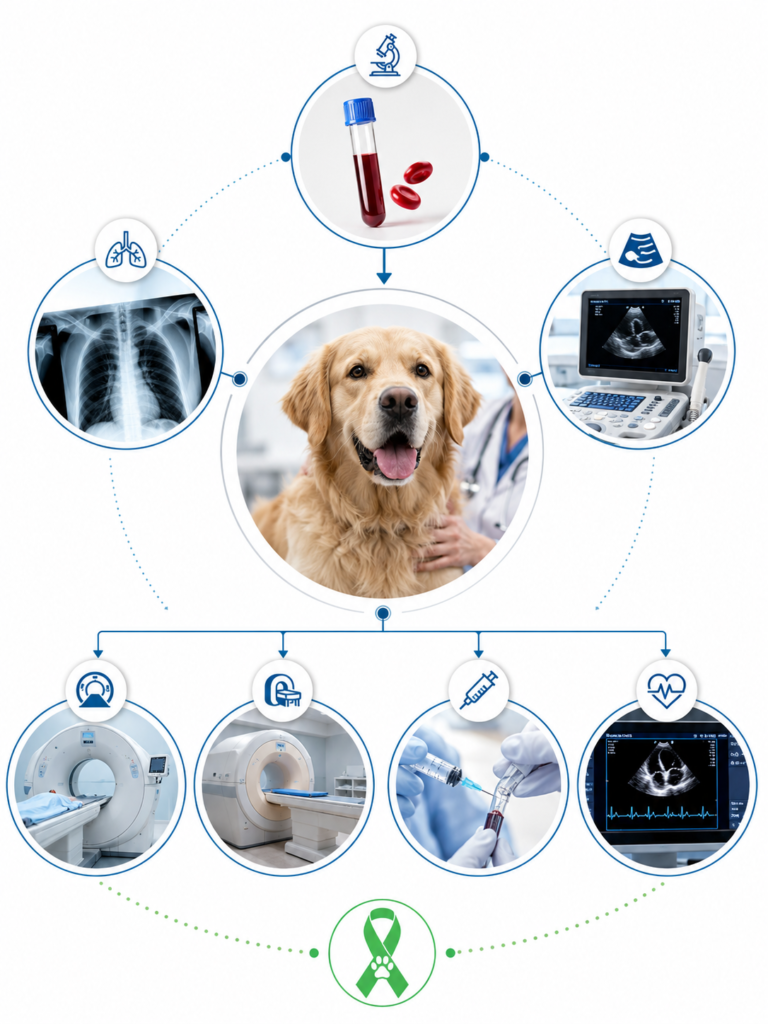
The consultation fee is usually the smallest charge on the oncology center’s first invoice. Staging — the diagnostic process that determines how far the cancer has spread — is what generates the significant costs.
Basic diagnostic tests such as blood work, X-rays, and ultrasounds can add $200 to $1,000 to the early stages of dog cancer evaluation. If a tumor is located in a hard-to-reach area, advanced imaging such as a CT scan or MRI may be required. These procedures typically cost between $1,200 and $3,500.
Standard staging workup by cancer type:
| Cancer Type | Typical Staging Tests | Staging Cost Range |
|---|---|---|
| Lymphoma | CBC + Chemistry, LN aspirate, chest X-rays, abdominal ultrasound | $500 – $1,200 |
| Mast cell tumor | CBC + Chemistry, buffy coat, chest X-rays, regional LN aspirate | $400 – $900 |
| Osteosarcoma | CBC + Chemistry, chest X-rays (3 views), bone scan or CT | $600 – $2,000 |
| Nasal tumor | CT scan (required for radiation planning), chest X-rays | $1,200 – $3,000 |
| Brain tumor | MRI (required for diagnosis), CSF tap if indicated | $2,000 – $4,500 |
| Hemangiosarcoma | CBC + Chemistry, chest X-rays, echocardiogram | $600 – $1,500 |
| Splenic mass | CBC + Chemistry, chest X-rays, echocardiogram | $500 – $1,200 |
What each staging test costs:
| Staging Test | Purpose | Cost Range |
|---|---|---|
| CBC + full chemistry panel | Organ function, blood cell assessment | $150 – $350 |
| Urinalysis | Kidney function, systemic disease markers | $45 – $100 |
| Buffy coat smear | Mast cell tumor systemic spread | $50 – $150 |
| Chest X-rays (3 views) | Lung metastasis check | $200 – $450 |
| Abdominal ultrasound | Organ and lymph node assessment | $300 – $600 |
| Lymph node aspirate (FNA) | Metastatic staging | $75 – $200 per node |
| CT scan (staging) | Precise tumor mapping, pre-treatment planning | $800 – $2,500 |
| MRI | Brain and spinal tumor characterization | $1,500 – $3,500 |
| Echocardiogram | Cardiac assessment for hemangiosarcoma or pre-chemo | $350 – $700 |
| Bone marrow aspirate | Lymphoma bone marrow staging | $300 – $600 |
The total first-day bill:
Most oncology centers perform at least some staging on the day of the initial consultation — particularly if the dog is already anesthetized for a procedure, or if quick results are needed to plan treatment.
A typical first-day all-in bill:
- Consultation fee: $270
- CBC + chemistry: $250
- Chest X-rays: $300
- Abdominal ultrasound: $450
- Lymph node aspirate: $150
- Cytology (pathology): $150
- First-day total: $1,570
For nasal or brain tumor cases requiring CT or MRI:
- Consultation fee: $270
- CT scan + anesthesia: $1,800
- Pre-anesthetic bloodwork: $200
- Chest X-rays: $300
- First-day total: $2,570
Dog Oncology Consultation Cost by Facility Type
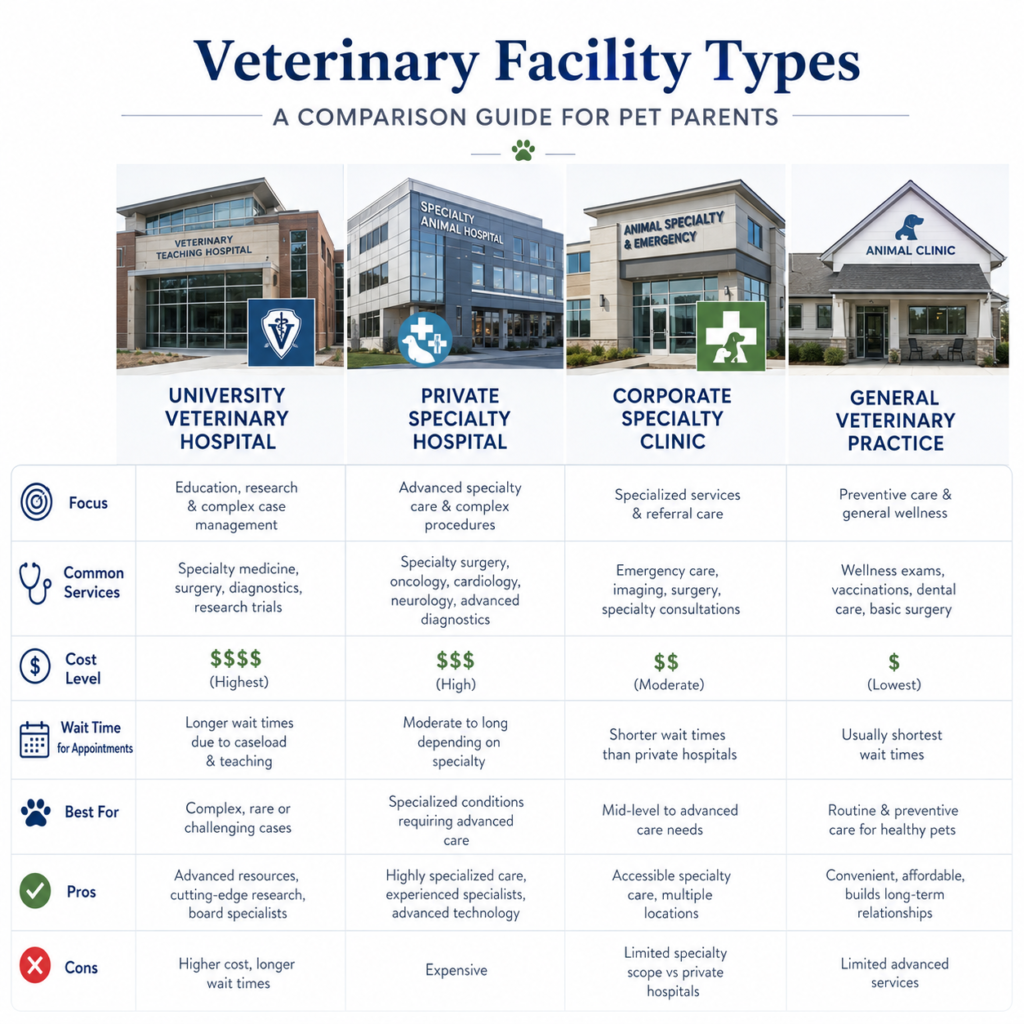
Where you take your dog for the oncology consultation changes the cost meaningfully — and the quality of care varies by facility type as well.
Private specialty/referral hospitals: The most common referral destination. Board-certified oncologists on staff, advanced diagnostic equipment available same-day, treatment available at the same facility.
Consultation fee range: $200–$500 Advantages: Same-day diagnostics, immediate treatment access, specialist team on-site Disadvantages: Highest costs — typically 30–50% above university teaching hospitals
University veterinary teaching hospitals: Veterinary school teaching hospitals often offer cancer treatment at 20–40% less than private specialty hospitals through their resident training programs.
Real published fee: Colorado State University Flint Animal Cancer Center — $270 for initial consultation.
Consultation fee range: $150–$300 Advantages: Faculty oncologists with subspecialty expertise, access to clinical trials, lower costs Disadvantages: May have longer scheduling wait times for non-emergency cases; resident involvement (supervised by faculty)
Major US university oncology centers with published or estimated consultation fees:
| University Center | Location | Initial Consultation |
|---|---|---|
| CSU Flint Animal Cancer Center | Fort Collins, CO | $270 (published) |
| Cornell University Hospital for Animals | Ithaca, NY | $250 – $350 (estimated) |
| UC Davis VMTH Oncology | Davis, CA | $280 – $380 (estimated) |
| University of Wisconsin-Madison | Madison, WI | $200 – $300 (estimated) |
| Texas A&M VMTH | College Station, TX | $200 – $300 (estimated) |
| NC State CVM | Raleigh, NC | $220 – $320 (estimated) |
| University of Minnesota VMC | St. Paul, MN | $200 – $300 (estimated) |
Corporate specialty chains (BluePearl, VCA Specialty, NVA): Standardized pricing across their networks — typically between private specialty and university hospital pricing.
Consultation fee range: $200–$400 Note: Corporate chains may have less flexibility on payment plans and fewer clinical trial options than university hospitals.
General practice veterinarian with oncology interest: Some general practitioners have additional oncology training and manage straightforward cancer cases without specialist referral.
Consultation fee range: $75–$150 (standard GP exam fee) Appropriate for: Low-grade skin tumors, simple post-surgical monitoring, prednisone-only lymphoma management Not appropriate for: Staging workups, chemotherapy administration, radiation planning, complex cancer management
Regional Cost Differences Across the USA
The same board-certified veterinary oncologist consultation costs significantly more in major metro areas than in smaller cities or lower-cost regions.
| Region | Typical Initial Consultation Cost |
|---|---|
| California (LA, SF, San Diego, Bay Area) | $350 – $600 |
| New York / New Jersey metro | $300 – $550 |
| Massachusetts / Connecticut | $280 – $500 |
| Texas (Austin, Dallas, Houston) | $220 – $400 |
| Florida (Miami, Orlando, Tampa) | $220 – $380 |
| Illinois (Chicago metro) | $250 – $420 |
| Midwest (OH, IN, IA, MN) | $180 – $320 |
| Southeast (GA, TN, NC, SC) | $180 – $320 |
| Mountain West (CO, UT, AZ) | $200 – $350 |
| South (AL, MS, AR, LA) | $150 – $280 |
University teaching hospitals in any region typically sit 20–35% below the private specialty hospital range for that area.
Emergency consultation premium: Emergency consultations are $300 at Animal Cancer and Imaging Center versus $235 for standard appointments — a 28% premium for same-day or after-hours specialist access. This differential is consistent across most oncology centers.
For cases that aren’t immediately life-threatening, scheduling a standard appointment rather than requesting emergency access saves $65–$200 on the consultation fee alone.
How to Prepare for the First Oncology Appointment
Preparation makes the consultation more productive — and prevents the need for additional appointments to repeat information or re-run tests your regular vet already completed.
Documents and records to bring or send in advance:
Before your pet’s visit, the cancer center contacts your regular veterinarian to obtain recent records. They might ask you to bring some of these items with you.
- All prior bloodwork results (printed or on a USB drive)
- Digital copies of all prior imaging (X-rays, ultrasound, CT, MRI) — request these from your regular vet as a DICOM file on a disc or USB
- Pathology reports from any prior biopsy or FNA
- Current medication list with doses and frequency
- Vaccination records
- Referral letter from your regular vet
Call the oncology center before the appointment and ask:
- “Has my vet sent the records? Is there anything additional you need before the appointment?”
- “What is the consultation fee and what does it include?”
- “Will there be staging diagnostics recommended at the appointment, and can I get a general estimate of those costs in advance?”
- “Should my dog be fasted before the appointment?”
- “Is there a parking fee or should I budget for that?”
Please NO FOOD after 10 p.m. the night before your pet’s appointment. If your pet is currently on medications, please give as previously directed. Small treats are fine if needed to give medications. Water is allowed. Diabetic patients should not be fasted.
Fasting requirements vary by center and depend on whether anesthesia or sedation is anticipated. Always confirm directly.
Questions to bring written to the appointment:
Most owners forget to ask critical questions when they’re emotionally overwhelmed in the consultation room. Write these down before you go:
- “What is the specific cancer type and grade?”
- “What staging tests are required versus optional?”
- “What are the realistic treatment options and what does each cost, all-in?”
- “What is the realistic survival difference between full treatment and palliative care for this specific cancer?”
- “What is the quality of life like during treatment?”
- “Are there any clinical trials my dog might qualify for?”
- “Can I get a written all-in cost estimate for the full recommended diagnostic and treatment plan today?”
Practical logistics:
- Bring your dog’s regular leash and, if they’re anxious, any calming items they find reassuring
- Bring your own water and a snack — appointments often run 90–120 minutes and waiting is common
- Ask whether you can bring a support person — having a second set of ears for the consultation is genuinely valuable given the information volume
Should You Get a Second Opinion? Cost and When It’s Worth It
A second oncology opinion costs $150–$400 and can be one of the most financially and medically valuable decisions in cancer treatment planning.
When a second opinion is worth the cost:
- The recommended treatment is very expensive ($10,000+) and you want confirmation of the approach
- The cancer type is uncommon or the recommended protocol is one you’re not familiar with
- You’re considering a clinical trial and want to understand whether standard care is equally appropriate
- The prognosis given doesn’t align with information you’ve found from credible sources
- You felt rushed or unheard in the first consultation and want more time with a different specialist
- The first oncologist recommends surgery and you want a medical oncologist’s perspective on whether chemo alone might suffice
When a second opinion may be less necessary:
- The cancer type is common and the recommended protocol is the clear standard of care (e.g., CHOP for lymphoma)
- The first oncologist is at a university teaching hospital with subspecialty expertise in your dog’s cancer
- The diagnosis is clear and the treatment options are well-defined with limited controversy
How to request records for a second opinion:
You can ask for your dog’s complete records and imaging to bring to any second opinion — this is your legal right. Request from your regular vet:
- All bloodwork, pathology reports, and biopsy results
- Digital imaging files (DICOM format)
- Any oncologist consultation notes from the first appointment
The second oncology center can review all prior materials remotely before or during the consultation — reducing the need to repeat diagnostics that were just completed.
Telemedicine second opinions: Several platforms now offer remote veterinary oncology consultations where a board-certified oncologist reviews your dog’s records and provides a written second opinion without an in-person visit. Cost: $75–$200. Available through platforms like Vetster, PetPro Connect, and some university hospitals’ remote consultation services.
Follow-Up Consultations: What They Cost and How Often They Happen
The initial consultation is the most expensive oncology visit. Follow-up appointments are shorter, more focused, and consistently less expensive.
Follow-up oncology visits run $100–$250.
Types of follow-up consultations:
Active treatment monitoring visits: During chemotherapy or other active treatment, your dog returns to the oncology center every 1–3 weeks. These visits include:
- Physical examination and lymph node assessment
- Pre-treatment blood work review
- Adjustment of treatment plan based on response
- Side effect assessment
Cost: $100–$200 per visit (examination fee only — blood work and any additional diagnostics are separate)
Remission monitoring visits: After completing a treatment protocol, dogs in remission return every 6–8 weeks initially, then every 3–4 months as remission is maintained.
Cost: $100–$200 per visit plus any imaging ordered at that visit
Annual or semi-annual reassessment: For dogs in long-term remission, annual comprehensive reassessment including imaging: $200–$400 for the consultation plus imaging costs
Unplanned visits for side effects or concerns: When owners are concerned about side effects or new symptoms between scheduled appointments, an urgent/unscheduled follow-up visit runs $150–$300 depending on urgency and the oncology center’s pricing.
Total follow-up cost across a year on CHOP:
During active 19-session CHOP protocol: approximately $1,900–$3,800 in oncologist monitoring fees across all sessions (not including drug and blood work costs)
Post-CHOP remission monitoring year 1 (6 visits at 6-week intervals): $600–$1,200 in consultation fees plus imaging
Telemedicine Oncology Consultations — A Lower-Cost Option
Remote veterinary oncology consultations — where a board-certified oncologist reviews your dog’s records and provides recommendations without an in-person visit — have become a practical option for specific situations.
When telemedicine oncology consultation makes sense:
- You want a second opinion without the travel cost of another specialist visit
- Your regular vet needs guidance on managing a cancer case without referring the patient
- You want to understand treatment options before deciding whether to pursue in-person specialty care
- Your dog is too ill to travel to an oncology center comfortably
- Geographic distance to the nearest oncology center makes in-person consultation logistically difficult
What telemedicine oncology doesn’t replace: Physical examination — which is essential for lymph node assessment, tumor palpation, and physical staging — cannot be done remotely. A telemedicine opinion provides record review and treatment guidance but cannot replace the hands-on specialist examination for staging purposes.
Cost: Telemedicine oncology consultations typically run $75–$200 — significantly less than in-person specialist fees. Some university oncology departments offer remote consultation services for referring veterinarians or directly to clients.
Platforms offering veterinary oncology telemedicine:
- Vetster — allows booking with board-certified specialists including oncologists
- PetPro Connect — veterinary professional consultation platform
- Some individual university hospitals — University of Wisconsin, UC Davis — offer formal remote consultation programs for complex cases
Does Pet Insurance Cover the Oncology Consultation?
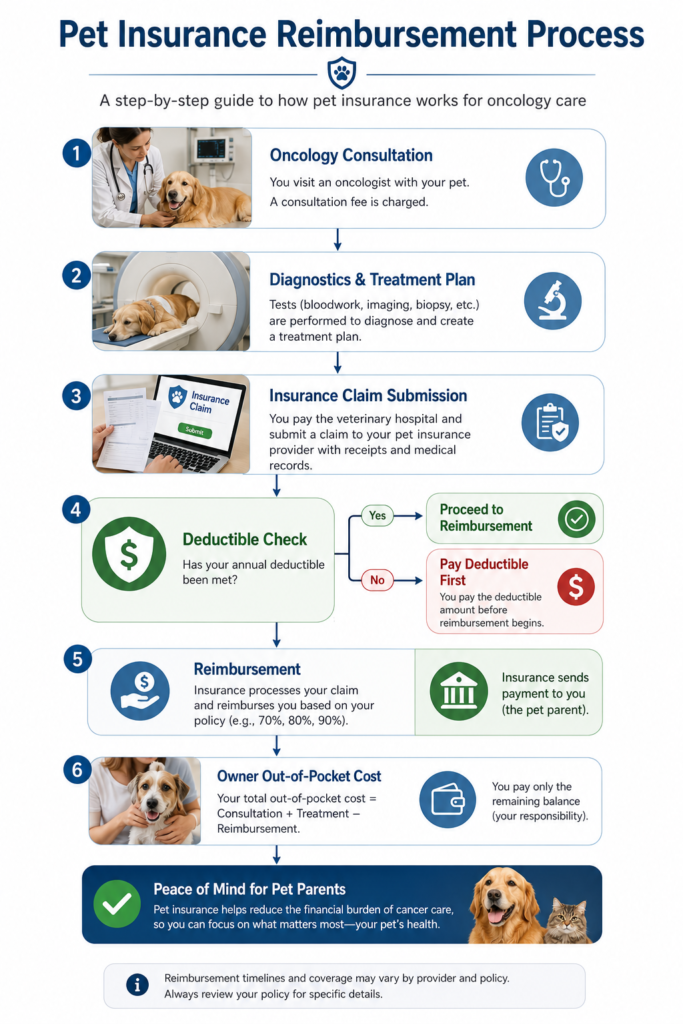
Yes — cancer treatment is one of the most common and largest insurance claims for dogs.
Most comprehensive accident-and-illness plans cover the oncology consultation when the cancer is a new diagnosis made after enrollment and past the waiting period.
What’s typically covered:
- Initial oncology consultation fee
- Follow-up oncology monitoring visits during treatment
- Remission monitoring visits post-treatment
- Emergency consultation fee if the cancer requires urgent specialist assessment
What varies by insurer:
- Exam fee inclusion — MetLife, Embrace, ASPCA, Spot, and Fetch include exam fees in coverage. Healthy Paws and Trupanion exclude exam fees from standard plans.
- Specialist consultation vs. GP exam — most plans cover specialist consultations at the same rate as any other covered veterinary visit. There’s no specialist penalty in most pet insurance coverage.
Reimbursement math on the initial consultation and staging:
Initial consultation ($270) + CBC/chemistry ($250) + chest X-rays ($300) + abdominal ultrasound ($450) + lymph node FNA + cytology ($300) = $1,570 total first visit.
- Annual deductible: $250 (met on this first oncology visit)
- Eligible after deductible: $1,320
- At 80% reimbursement: $1,056 back
- Your out-of-pocket: $514
Without insurance: $1,570 due at checkout.
The pre-existing condition application: If any prior vet record documents a lump being “monitored,” lymph nodes noted as enlarged, or unexplained weight loss before your policy enrollment date — the oncology consultation for that finding will be denied as related to a pre-existing condition. The pre-existing exclusion applies to all diagnostic costs tied to a condition that existed or showed symptoms before enrollment.
Pre-authorization for oncology consultations: For the initial consultation specifically, pre-authorization is less commonly required than for treatment. However, calling your insurer before the appointment to confirm the cancer presentation (based on your referring vet’s notes) is a covered condition takes 5 minutes and provides peace of mind before a potentially large first invoice.
The Full First-Appointment Financial Picture: A Realistic Total
This is what you actually need to budget for before calling to schedule.
Scenario 1 — Lymphoma (most common cancer referral):
Consultation: $270 CBC + chemistry: $250 Chest X-rays (3 views): $300 Abdominal ultrasound: $400 Lymph node FNA (2 nodes): $200 Cytology: $150 First appointment total: $1,570
Insurance reimbursement (80%, deductible $250): $1,056 back → $514 out-of-pocket
Scenario 2 — Nasal tumor (CT required for diagnosis and planning):
Consultation: $300 Pre-anesthetic bloodwork: $200 CT scan + anesthesia (for diagnosis and planning): $1,800 Chest X-rays: $300 Biopsy of nasal mass: $400 Pathology: $250 First appointment total: $3,250
Insurance reimbursement (80%, deductible met): $2,600 back → $650 out-of-pocket
Scenario 3 — Suspicious skin mass, low-complexity workup:
Consultation: $200 FNA of mass: $100 Cytology: $120 CBC + chemistry (if indicated): $200 First appointment total: $620
Insurance reimbursement (80%, deductible NOT yet met): $(620 – $250) × 0.80 = $296 back → $324 out-of-pocket
Scenario 4 — Emergency oncology consultation, mast cell tumor complication:
Emergency consultation: $300 Urgent bloodwork: $250 Urgent ultrasound: $450 Hospitalization (same-day monitoring): $400 Emergency medications: $200 First visit total: $1,600
Insurance reimbursement (80%, deductible $500 already met): $1,280 back → $320 out-of-pocket
Action Checklist
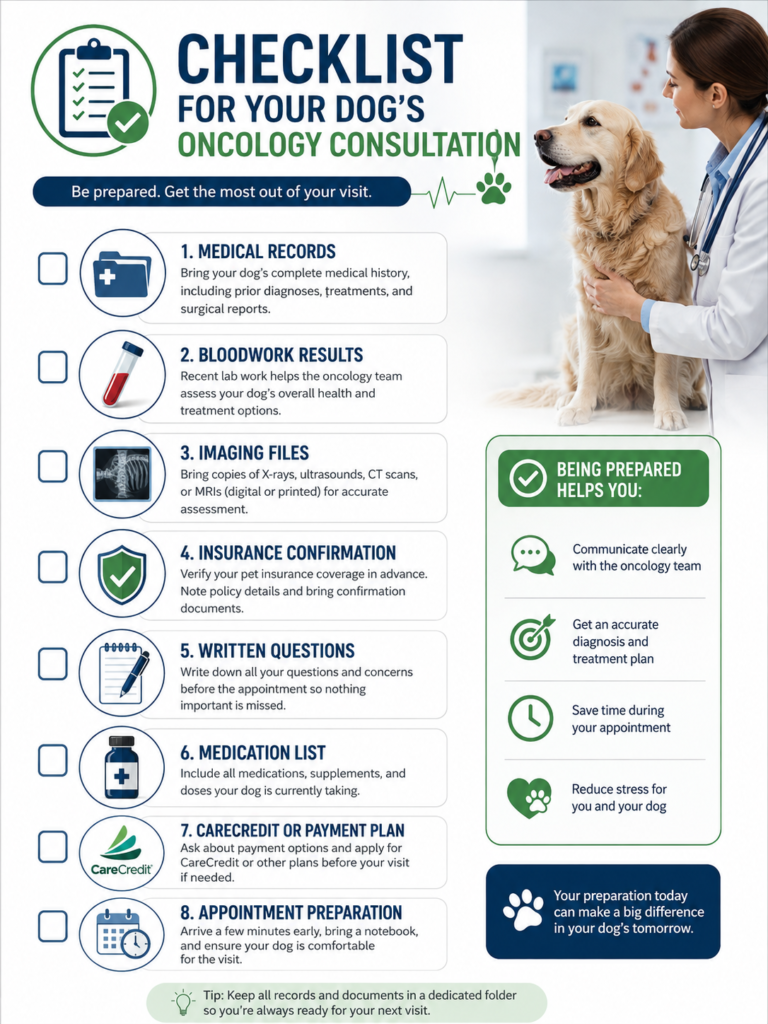
Before scheduling the oncology consultation:
- [ ] Ask your regular vet to send complete records to the oncology center — including digital imaging files on disc or USB
- [ ] Call the oncology center and ask: “What is the initial consultation fee?” and “Can I get a general estimate of staging costs that might be recommended?”
- [ ] Research whether the nearest university teaching hospital’s oncology department has shorter wait times than the private specialty center your vet referred you to
- [ ] Contact your pet insurer to confirm the cancer presentation is covered and ask about pre-authorization
- [ ] Apply for CareCredit before the appointment if a large first-day bill is likely
- [ ] Confirm fasting requirements for your dog’s appointment
For the appointment:
- [ ] Bring written questions — you will not remember everything you wanted to ask in the moment
- [ ] Ask at check-in: “What are all the services being performed today and what will each cost?”
- [ ] Request that no diagnostics beyond the examination happen without a written estimate you review first
- [ ] Ask the oncologist for a written treatment plan and all-in cost estimate before leaving
- [ ] Confirm when results will be available and how you’ll be notified
After the appointment:
- [ ] Submit your insurance claim immediately with the itemized invoice and visit notes
- [ ] Review the written treatment plan at home — important decisions made under stress in the appointment often benefit from re-reading with a clear head
- [ ] If considering a second opinion, request complete records including digital imaging files before leaving
- [ ] Schedule the first treatment session before leaving if you’re ready to proceed — oncology centers often have waiting lists
Frequently Asked Question
How much does a veterinary oncologist consultation cost?
A board-certified veterinary oncologist consultation typically costs $200–$500, while follow-up visits usually range from $100–$250. The Veterinary Cancer Society notes that many initial consultations fall between $125 and $250, although prices vary by hospital and location. University teaching hospitals may charge less than private specialty centers, while emergency appointments usually cost more.
What does the oncology consultation fee include?
The consultation fee usually covers the specialist examination, review of your dog’s medical records, physical assessment, treatment discussion, and a written care plan. It does not include additional diagnostics such as blood tests, X-rays, ultrasound, CT scans, MRI, biopsies, or medications, which are billed separately after you approve the estimate.
What should I bring to a dog’s oncology consultation?
Bring your dog’s medical records, biopsy or pathology reports, imaging files (X-rays, CT, MRI), current medications, and a list of symptoms you’ve noticed. Confirm that your regular veterinarian has already sent these records to the oncology center before the appointment. Also ask whether your dog should be fasted if sedation or anesthesia might be needed.
Does pet insurance cover the veterinary oncologist consultation?
Usually, yes. Most accident-and-illness pet insurance plans cover oncology consultation fees when the cancer is diagnosed after your policy starts and waiting periods have been completed. Coverage for exam fees varies by insurer, and pre-existing conditions are generally excluded.
Is getting a second opinion worth the cost?
Yes—especially if your dog’s treatment could cost several thousand dollars or you’re unsure about the recommended plan. A second oncology consultation typically costs $150–$400 and may help confirm the diagnosis, compare treatment options, or identify clinical trials before you commit to expensive care.
How long does the first oncology consultation take?
Most first oncology appointments take 60–120 minutes. This includes reviewing medical records, performing a physical examination, discussing treatment options, answering your questions, and providing a written estimate. If additional staging tests are performed the same day, expect the visit to take longer.
Do I need a referral to see a veterinary oncologist?
Not always. Many veterinary oncology centers allow pet owners to schedule directly, although a referral from your regular veterinarian is recommended because it ensures your dog’s medical records and test results are available before the appointment.
How soon after diagnosis should I schedule an oncology consultation?
Schedule the appointment as soon as possible, ideally within 1–2 weeks after a suspected or confirmed cancer diagnosis. For aggressive cancers such as lymphoma, hemangiosarcoma, or high-grade mast cell tumors, your veterinarian may recommend seeing an oncologist within a few days.
What is the total cost of the first oncology visit?
The first oncology visit usually costs $700–$3,000+, depending on the diagnostics performed. While the consultation itself may cost $200–$500, additional tests such as bloodwork, X-rays, ultrasound, CT scans, or MRI can significantly increase the total bill. Asking for a written estimate before approving diagnostics helps you avoid unexpected expenses.
What You Should Do Next
If you just received a referral to an oncologist — call today to schedule. Most oncology centers have wait times of 1–2 weeks for non-emergency cases, and some cancer types progress meaningfully during prolonged delays.
Before calling, ask your regular vet to confirm that complete records — including digital imaging files — have been sent to the oncology center. Incomplete records are the most common reason first appointments become less productive or require repeated testing.
Call your pet insurer the same day to confirm coverage and ask about pre-authorization. Apply for CareCredit before the appointment if your expected first-visit bill is $1,500+. Having the card in place before the invoice arrives eliminates the at-desk financial pressure.
And if you’re reading this while your dog is healthy — a $270 oncology consultation becomes a $514 out-of-pocket expense with good insurance versus $1,570 without it. The full cancer treatment journey from first consultation through treatment and monitoring runs $8,000–$20,000+ for many common cancers. The window to enroll before any symptom is documented is the only window that provides complete coverage. It closes without warning.
External Authority Sources
- Colorado State University Flint Animal Cancer Center
- Animal Cancer and Imaging Center
- VetReceipt — Dog Cancer Treatment Cost
- Veterinary Cancer Society
- Lemonade Pet — Chemotherapy for Dogs Cost
- Embrace Pet Insurance — Dog Chemotherapy Cost
- SpectrumCare — Veterinary Oncology Cost Guide
Disclaimer: This article is for informational and educational purposes only. Cost data reflects 2026 national averages from NAPHIA, Insurify, and MetLife Pet Insurance and will vary based on your dog’s age, breed, location, and the specific plan you choose. PetInsurePrime does not sell pet insurance and receives no compensation from any insurance provider. Always compare multiple quotes and read your policy documents carefully before enrolling.
PetInsurePrime | Independent • Research-Based | Helping US dog owners understand real vet costs and coverage options — without the sales pressure.
Pingback: Does Pet Insurance Cover Ultrasounds? 5 Proven Tips