
Yes, many pet insurance plans cover ultrasounds when a veterinarian recommends the test to diagnose a covered accident or illness. However, coverage is not automatic. Your insurer may exclude the expense if it relates to a pre-existing condition, falls within a waiting period, or isn’t covered under your plan type. Your deductible, reimbursement rate, and policy limits also decide how much you ultimately pay. The exact answer depends on your policy wording and the reason your vet ordered the scan. Below: how coverage works by plan type, five mistakes that quietly cost owners money, and a worked example of what you’d actually owe.
Quick Answer : Does Pet Insurance Cover Ultrasounds
Often yes, but not automatically. Most accident-and-illness pet insurance plans cover medically necessary ultrasounds when the scan helps diagnose a new accident or illness that began after your waiting period. Accident-only plans generally cover ultrasounds only for eligible accident-related injuries. Pre-existing conditions, waiting periods, and policy exclusions are the most common reasons a claim gets denied.
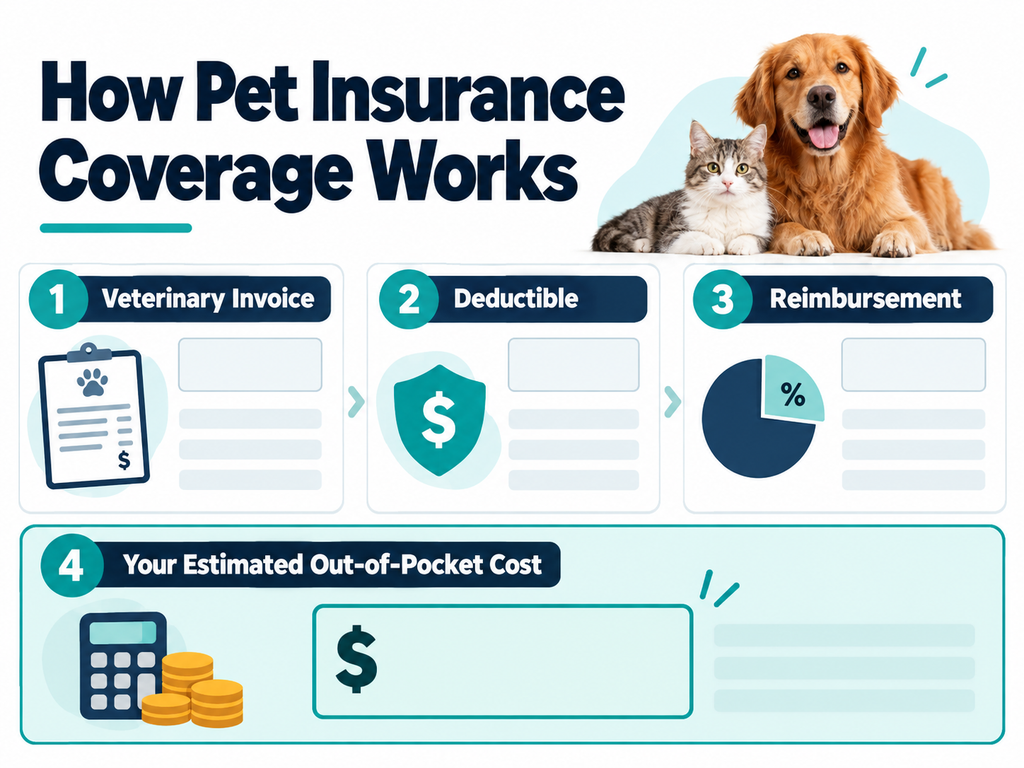
Even when an ultrasound is approved, the insurer rarely pays the full bill. Your deductible comes first, then your reimbursement rate (commonly 70-90%) applies to eligible costs. On a $500 eligible bill with $100 of deductible left and 80% reimbursement, you’d get $320 back and pay about $180 yourself. That’s an illustrative example, not a guaranteed outcome.
The 5 costly mistakes to avoid:
- Assuming every ultrasound is covered
- Ignoring pre-existing conditions
- Overlooking the waiting period
- Forgetting the deductible and reimbursement rate
- Assuming the ultrasound is the only bill
Confirm with your insurer before scheduling the scan if the situation allows, and never delay urgent care just to wait for approval.
Table of Contents
- Quick Answer : Does Pet Insurance Cover Ultrasounds
- Does Pet Insurance Cover Ultrasounds?
- What Types of Pet Insurance Cover Ultrasounds?
- Does Pet Insurance Cover Pregnancy Ultrasounds?
- 5 Costly Mistakes That Can Affect Ultrasound Coverage
- When Is a Pet Ultrasound Usually Covered?
- Does Pet Insurance Cover Ultrasounds for Cancer?
- How Much Will You Pay for a Pet Ultrasound With Insurance?
- Are Vet Exam, Sedation, and Radiologist Fees Covered?
- How to Check Whether Your Insurance Will Pay for an Ultrasound
- Do You Need Pre-Approval for a Pet Ultrasound?
- What Should You Do If Your Ultrasound Claim Is Denied?
- FAQ
Does Pet Insurance Cover Ultrasounds?
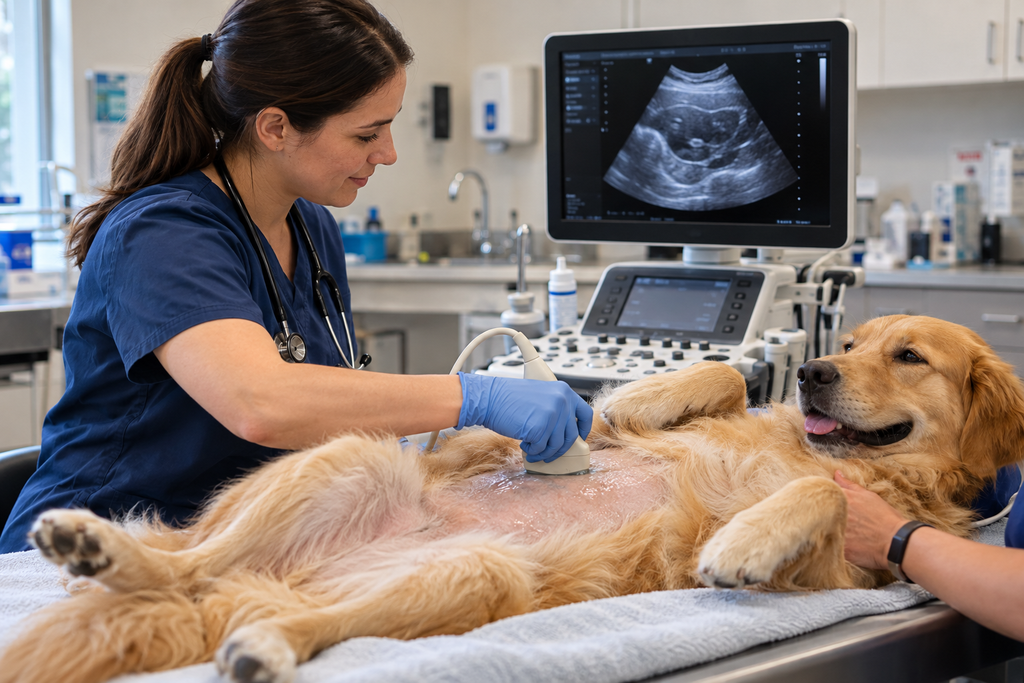
Often, yes, but it depends on the plan and the reason for the scan. Accident-and-illness policies generally reimburse medically necessary diagnostic imaging, including ultrasounds, when the test helps diagnose a new, covered condition. Accident-only plans are narrower. They typically cover an ultrasound only when it’s needed to diagnose an injury from an eligible accident, such as a swallowed object or internal trauma after a fall, not an illness like a suspected tumor or kidney problem.
What matters most isn’t the body part being scanned. It’s whether the underlying condition is eligible. The same abdominal ultrasound can be covered for one dog and excluded for another, depending on when symptoms started and what the policy says.
The same logic applies to other diagnostics like X-rays and bloodwork. No single rule applies to every insurer, so your policy wording has the final say.
Read Releated Article… Dog Echocardiogram Cost in the USA (2026): What You’ll Pay & What’s Included
What Types of Pet Insurance Cover Ultrasounds?
Accident-and-Illness Plans
These plans cover eligible diagnostic tests for new injuries and new illnesses, which makes them the most likely route for an ultrasound claim. Coverage still depends on your waiting period, exclusions, and pre-existing condition rules.
Accident-Only Plans
Coverage generally stops at diagnostics tied to eligible accidents. If your vet orders an ultrasound to investigate symptoms of an illness, an accident-only plan typically won’t reimburse it.
Wellness Plans and Routine Testing
Wellness or preventive add-ons are built for routine care like exams, vaccines, and screenings. Diagnosing a symptom is generally a different category and usually falls under accident-and-illness coverage. Plans differ, so don’t assume either way. Check whether your specific add-on mentions imaging or diagnostic testing.
Does Pet Insurance Cover Pregnancy Ultrasounds?
Usually, no. Most standard pet insurance policies exclude routine pregnancy ultrasounds and other breeding-related expenses, including pregnancy confirmation and prenatal care. However, coverage may be available through specialized breeding coverage or certain pregnancy-related medical benefits, depending on the insurer and policy terms.
If your dog or cat needs an ultrasound to investigate a separate illness or an unexpected medical complication, coverage may be possible if the condition is eligible under your plan. A routine pregnancy scan and an ultrasound needed to diagnose a covered illness are not necessarily treated the same way.
Before scheduling the scan, review your policy’s pregnancy and breeding exclusions and ask your insurer whether the specific ultrasound is eligible for reimbursement. Also check any waiting periods, deductibles, and coverage limits. Never assume that pregnancy-related care is covered simply because you have an accident-and-illness policy.
5 Costly Mistakes That Can Affect Ultrasound Coverage
1. Assuming Every Ultrasound Is Covered
Eligibility turns on the medical reason, your policy type, and the exclusions in your contract. An ultrasound ordered to investigate new vomiting may qualify. One tied to a known chronic issue often doesn’t, and pregnancy and breeding-related scans are commonly excluded as well. Read the diagnostics and exclusions sections before you assume.
2. Ignoring Pre-Existing Conditions
Symptoms documented before enrollment can count against you even if the formal diagnosis comes later. If your vet’s notes mention limping, vomiting, or a heart murmur before your start date, an insurer may treat the later condition as pre-existing. A few insurers offer routes back to coverage for certain conditions after a symptom-free period or a stretch of continuous coverage, so check your policy’s definition and any exceptions.
Read Related Article… Does Pet Insurance Cover Pre-Existing Conditions? The Truth Most Pet Owners Learn Too Late (2026)
3. Overlooking the Waiting Period
Buying insurance after symptoms appear generally won’t make that existing problem eligible. Waiting periods also differ by insurer, plan, and sometimes state, from a few days for accidents to two weeks or more for illnesses. A scan ordered inside that window is often excluded.
4. Forgetting the Deductible and Reimbursement Rate
An approved claim doesn’t mean the insurer pays the whole bill. Your deductible comes first, then the reimbursement percentage applies to eligible costs, up to any annual limit. Reimbursement rates commonly fall between 70% and 90%, and you’re responsible for the rest.
5. Assuming the Ultrasound Is the Only Bill
The invoice may also include an exam, a specialist or radiologist consultation, sedation when needed, bloodwork, X-rays, or other diagnostics. Some of those may be eligible and some may not, depending on your policy. Ask your insurer which line items qualify instead of assuming the whole invoice does.
Read Related Artucle… Pet Insurance Waiting Period: How Long Before Coverage Starts? (2026 Guide)
When Is a Pet Ultrasound Usually Covered?
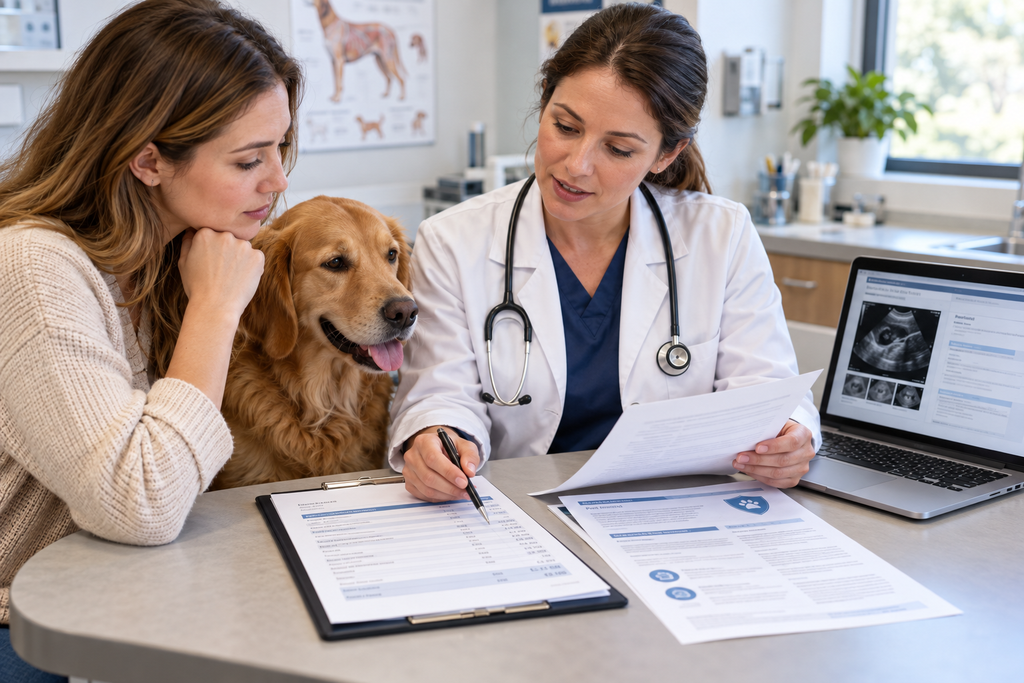
Ultrasounds are commonly used to investigate abdominal symptoms, suspected bladder stones, heart concerns, or internal injuries after trauma. The key isn’t the body part being scanned. It’s whether the test relates to an eligible, covered condition that began after your waiting period ended.
| Scenario | Coverage Outlook |
|---|---|
| New illness, covered by the plan | May be covered |
| Eligible accident-related injury | May be covered |
| Pre-existing condition | Often excluded |
| Symptoms during a waiting period | Often excluded |
| Pregnancy-related scan | Often excluded |
| Routine screening | Depends on plan/add-on |
These are general examples, not guaranteed claim outcomes. Your policy language decides.
Does Pet Insurance Cover Ultrasounds for Cancer?
Pet insurance may cover ultrasounds used to investigate suspected cancer when the condition is eligible under your policy. Accident-and-illness plans commonly cover eligible cancer-related diagnostic testing, but coverage depends on the insurer’s terms, exclusions, and waiting periods.
For example, if your veterinarian discovers a new lump after your pet’s coverage begins and recommends an ultrasound to investigate it, the scan may qualify for reimbursement. However, if your pet showed related symptoms or received veterinary advice before enrollment or during the waiting period, the insurer may classify the condition as pre-existing and deny the claim.
Keep in mind that an ultrasound used to investigate cancer is not the same as coverage for all cancer treatment costs. Biopsies, specialist consultations, surgery, chemotherapy, and follow-up tests may each be subject to policy conditions, deductibles, reimbursement rates, and annual limits.
Before scheduling a non-urgent scan, ask your insurer whether the diagnostic test and related charges are eligible. If your veterinarian suspects cancer and recommends urgent testing, don’t delay necessary care while waiting for a coverage decision.
For more information, review your policy’s cancer coverage and pre-existing condition exclusions. Coverage varies by insurer and plan, so reimbursement is never guaranteed.
Read Related Article… Dog Oncology Consultation Cost in the USA (2026): What You Pay, What Happens, and What Comes Next
How Much Will You Pay for a Pet Ultrasound With Insurance?
Your out-of-pocket share depends on three things: your remaining deductible, your reimbursement percentage, and which charges are eligible. Here’s an illustrative example:
- Eligible ultrasound bill: $500
- Remaining deductible: $100
- Amount after deductible: $400
- Insurer pays 80% of $400: $320
- Your final share: $180 ($100 deductible + $80 coinsurance)
This assumes the full $500 is eligible, no other limits apply, and the insurer uses this reimbursement method. Some insurers calculate the deductible and percentage in a different order, so confirm yours. For typical ultrasound prices and how they vary by location.
Read Related Article… Dog Ultrasound Cost in the USA (2026): Real Prices, Hidden Charges & What Happens After
Are Vet Exam, Sedation, and Radiologist Fees Covered?
Pet insurance may cover more than the ultrasound itself, but reimbursement depends on your policy and the reason for the test.
Veterinary exam fees: Some plans cover examination fees associated with a covered illness or injury, while others require an optional exam-fee add-on. For example, MetLife Pet lists vet visit exam fees among its covered services, subject to policy terms.
Sedation fees: If your veterinarian determines that sedation is medically necessary to perform the ultrasound safely, the expense may qualify as part of eligible diagnostic care. However, confirm whether your policy covers sedation and any related charges.
Radiologist and specialist fees: If a specialist interprets the ultrasound or your pet needs a referral, those professional fees may be eligible when related to a covered condition. Coverage can vary by insurer and plan.
Before the appointment, ask your insurer whether the exam, ultrasound, sedation, specialist consultation, and image interpretation are covered separately. Request an itemized estimate from your veterinary clinic so you can understand your potential out-of-pocket costs before submitting a claim.
How to Check Whether Your Insurance Will Pay for an Ultrasound
- Find the policy’s diagnostic testing or imaging provision.
- Check pre-existing condition exclusions and waiting periods.
- Confirm your remaining deductible and reimbursement rate.
- Ask the insurer whether the specific test and any related charges are eligible.
- Ask what records or itemized invoices are required for the claim.
If treatment is urgent, don’t delay veterinary care just to wait for insurance approval. Ask your insurer and your vet about payment arrangements.
Do You Need Pre-Approval for a Pet Ultrasound?
Pre-approval is not always required for a pet ultrasound, but checking with your insurer beforehand can help you understand whether the test may be covered. Some pet insurance companies offer pre-authorization or pre-certification, which allows you to submit a treatment estimate and relevant medical records for review before the procedure.
Before scheduling a non-urgent ultrasound, ask your insurer whether pre-approval is available, what documents are needed, and whether the proposed test and related charges are eligible for reimbursement. Remember that pre-approval does not necessarily guarantee full payment. Your deductible, reimbursement rate, policy limits, and exclusions may still affect the final amount.
If your insurer does not offer pre-approval, ask whether it can confirm coverage eligibility or explain its claims requirements. Keep an itemized estimate and your veterinarian’s notes for your records.
What Should You Do If Your Ultrasound Claim Is Denied?
If your pet insurance claim for an ultrasound is denied, start by reviewing the insurer’s explanation before assuming the decision is final. A denial may result from a pre-existing condition exclusion, a waiting period, an ineligible expense, missing medical records, or a misunderstanding about your policy’s coverage. The reason matters because your next steps will depend on the specific policy provision used to deny the claim.
First, request a written explanation if you have not received one. Check whether the insurer identified the relevant policy clause and explained why the ultrasound was considered ineligible. Compare that explanation with your policy documents, including the diagnostic testing provisions, pre-existing condition definition, waiting periods, and exclusions.
Next, gather the documents needed to support your claim. These may include the itemized veterinary invoice, your veterinarian’s medical records, the ultrasound report, the original treatment recommendation, and any records showing when symptoms first appeared. If the denial concerns a pre-existing condition, ask your veterinarian to clarify the documented timeline and explain whether the ultrasound investigated a new or unrelated medical problem. Medical records should be accurate and should not be altered to influence the insurer’s decision.
If you believe the insurer misinterpreted your policy or overlooked relevant information, submit a formal appeal using the insurer’s stated procedure. Include your claim number, the denial explanation, the specific policy wording you believe supports coverage, and the supporting veterinary documents. Ask the insurer to review the claim again and provide its decision in writing. Keep copies of all correspondence and note any appeal deadlines specified in your denial letter or policy documents.
If the insurer upholds the denial, ask about its internal complaint process and whether an independent review or assistance from your state’s insurance department is available. In the United States, insurance regulation and complaint procedures vary by state, so consult your state insurance department for guidance. The National Association of Insurance Commissioners also provides consumer information about insurance complaints and appeals.
Remember that an appeal cannot automatically override a valid policy exclusion. If the ultrasound relates to a condition that your plan clearly excludes, reimbursement may remain unavailable. However, if the decision appears inconsistent with your policy or the medical records, a well-documented appeal may help clarify whether the claim was handled correctly. For future appointments, ask your insurer about coverage eligibility and documentation requirements whenever time allows, but do not delay urgent veterinary care while disputing a claim.
Frequently Asked Question
Does Pet Insurance Cover Ultrasounds for Pre-Existing Conditions?
Usually, no. Most pet insurance policies exclude ultrasounds related to pre-existing conditions, including symptoms that appeared before coverage began or during a waiting period. Some policies offer limited exceptions for curable conditions, so check your insurer’s definition and exclusions.
Does Pet Insurance Cover Emergency Ultrasounds?
It may. Emergency status alone does not guarantee coverage. The ultrasound generally must be medically necessary for an eligible accident or illness, and applicable waiting periods, exclusions, deductibles, and policy limits still apply.
Does Pet Insurance Cover Abdominal and Cardiac Ultrasounds?
Many accident-and-illness plans may cover abdominal ultrasounds and echocardiograms when medically necessary to investigate a covered condition. However, coverage depends on the policy, the reason for the test, and whether the underlying condition is excluded.
Do I Have to Pay for My Pet’s Ultrasound Upfront?
Usually, yes. Many pet insurers reimburse you after you pay the veterinary bill and submit a claim. Some offer direct payment arrangements in eligible circumstances. Check with your insurer before the appointment to understand your payment options.
Can I Buy Pet Insurance After My Vet Recommends an Ultrasound?
Yes, you can generally apply for a policy, but the condition prompting the ultrasound will usually be considered pre-existing if symptoms appeared before coverage or during the waiting period. Buying insurance afterward generally will not make that existing condition eligible for reimbursement.
External Authority Sources
- Embrace
- MetLife Pet
- AKC Pet Insurance
- ASPCA Pet Health Insurance
- NAPHIA (industry framing on waiting periods and pre-existing conditions)
- AVMA (medical-necessity framing, kept minimal)
Disclaimer: This article is for informational and educational purposes only. Coverage varies by insurer, plan, state, and the specific wording of your policy, and nothing here guarantees a claim outcome. PetInsurePrime does not sell pet insurance and receives no compensation from any insurance provider. Always read your policy documents carefully and confirm coverage with your insurer before treatment when possible.
PetInsurePrime | Independent • Research-Based | Helping US dog owners understand real vet costs and coverage options — without the sales pressure.