Updated: July 2026 | Reading Time: 27 minutes
Your vet found something. Maybe it was a lump during a routine exam, a mass on the ultrasound, an enlarged lymph node on the CT scan, or abnormal bloodwork pointing at an organ that isn’t functioning right. And now they’re recommending a biopsy.
This is the moment in the diagnostic journey where the question shifts from “what might be wrong” to “what is actually wrong.” A biopsy is the test that answers that question definitively — and it’s also the test that determines whether your dog is facing a $500 skin tag removal or a $12,000 chemotherapy protocol.
Here’s what a dog biopsy costs in 2026, by every type. What pathology adds on top. What the results mean. And what comes next.
Quick Answer Dog Biopsy Cost in the USA
Dog biopsy costs range from $50–$200 for a fine needle aspirate (the least invasive option) to $1,000–$2,500 for surgical biopsies requiring anesthesia. The biopsy procedure fee is only part of the total cost — histopathology (lab analysis of the tissue) adds $80–$400 separately and is the charge most owners don’t anticipate. All-in costs for a complete biopsy workup typically run $300–$800 for simple cases and $1,500–$3,500+ for complex surgical biopsies with specialist involvement.
At a Glance: 2026 Dog Biopsy Cost Summary
| Biopsy Type | Procedure Cost | Pathology Add-On | All-In Range |
|---|---|---|---|
| Fine needle aspirate (FNA) — cytology | $50 – $200 | $80 – $150 | $130 – $350 |
| Punch biopsy (skin/surface) | $200 – $500 | $100 – $250 | $300 – $750 |
| Incisional biopsy (partial removal) | $500 – $1,500 | $150 – $350 | $650 – $1,850 |
| Excisional biopsy (full removal) | $800 – $2,500 | $150 – $400 | $950 – $2,900 |
| Ultrasound-guided core biopsy | $300 – $700 | $150 – $300 | $450 – $1,000 |
| Bone marrow biopsy | $500 – $1,500 | $150 – $350 | $650 – $1,850 |
| Endoscopic GI biopsy | $800 – $2,000 | $200 – $400 | $1,000 – $2,400 |
| Liver / internal organ biopsy | $400 – $1,200 | $150 – $350 | $550 – $1,550 |
| Immunohistochemistry (IHC) add-on | — | $150 – $400 extra | Added after initial report |
| Margin assessment add-on | — | $50 – $100 extra | Charged per tissue section |
Anesthesia ($200–$500), exam/consult fee ($75–$300), and pre-anesthetic bloodwork ($80–$200) billed separately for all surgical procedures.
Table of Contents
- The Diagnostic Journey: Where Biopsy Fits and Why It Comes Last
- Every Dog Biopsy Type Explained — With Real Costs
- The Pathology Fee: The Hidden Charge That Surprises Almost Everyone
- Immunohistochemistry and Margin Assessment — The Add-Ons That Change Everything
- FNA vs Surgical Biopsy: Which One Does Your Dog Actually Need?
- Full All-In Cost Breakdown: What a Complete Biopsy Visit Really Costs
- What Dog Biopsy Results Actually Mean
- What Happens After the Biopsy Results Come Back
- Does Pet Insurance Cover Dog Biopsies?
- How to Reduce Dog Biopsy Cost
- Action Checklist
- FAQ
The Diagnostic Journey: Where Biopsy Fits and Why It Comes Last
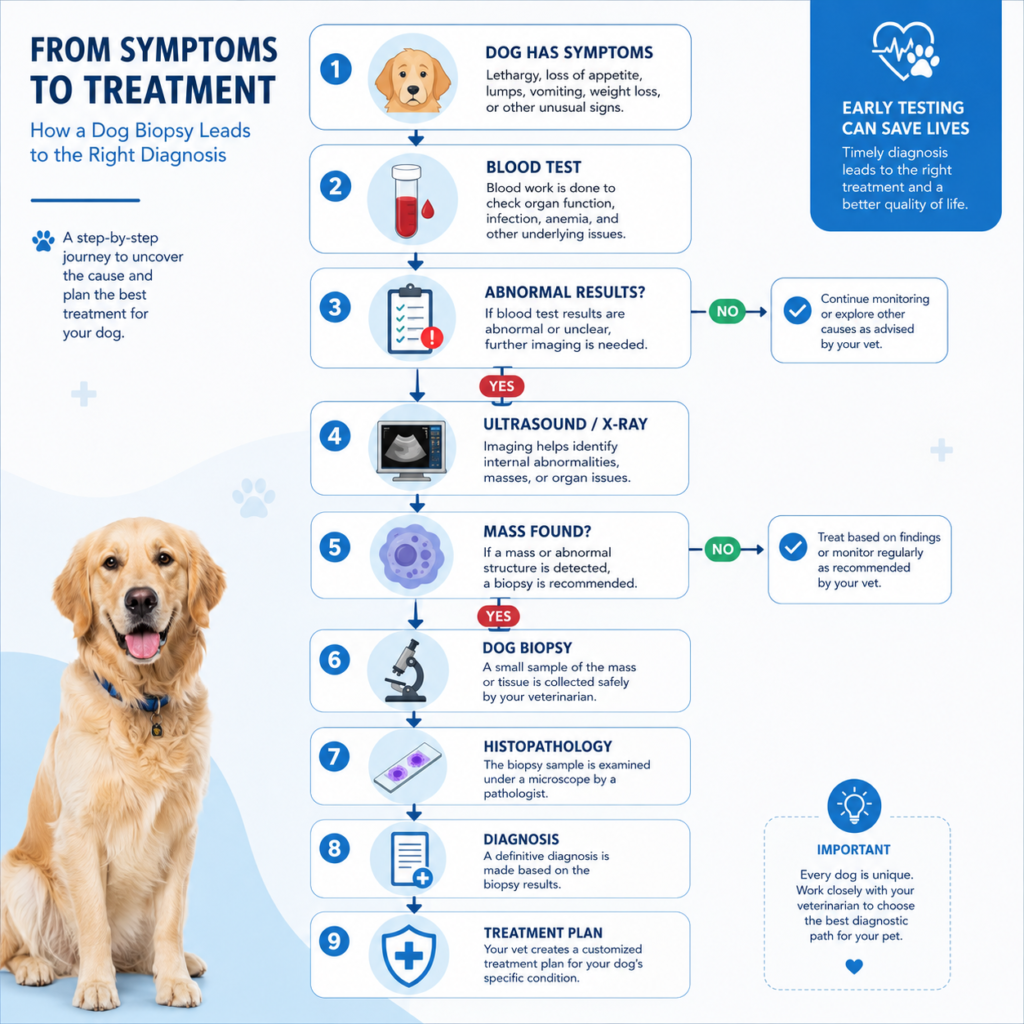
A biopsy is almost never the first test your vet orders. It’s the last one in a diagnostic sequence — the test that converts suspicion into certainty.
Here’s the typical path that leads to a biopsy recommendation:
Stage 1 — Blood work ($100–$300) Routine CBC and chemistry panel flags an abnormality — elevated liver enzymes, low platelet count, abnormal protein levels — that can’t be explained by symptoms alone. This points the vet toward an organ or system but doesn’t identify what’s wrong.
Read Related Article… Dog Blood Test Cost in the USA (2026): Real Prices, What Each Panel Tests, and How to Pay Less
Stage 2 — Imaging ($150–$2,500) X-ray identifies a mass, thickened organ wall, or bone abnormality. Ultrasound characterizes the mass in detail — its location, size, internal structure, and blood supply. CT scan maps it in three dimensions for surgical planning. These tests confirm that something exists and where it is.
Read Related Article… Dog X-Ray Cost in the USA (2026): Average Prices, Sedation Costs & What You’ll Actually Pay
Stage 3 — Biopsy ($130–$3,500) This is the only test that answers what it actually is. Imaging can tell your vet a mass is present, has irregular margins, and appears to involve a specific organ. Only a pathologist examining tissue under a microscope can determine whether those cells are benign, malignant, or inflammatory — and if malignant, what type and grade.
Read Related Article… Dog Ultrasound Cost in the USA (2026): Real Prices, Hidden Charges & What Happens After
This progression matters financially because owners sometimes arrive at the biopsy stage having already spent $500–$1,500 on prior diagnostics. The biopsy cost doesn’t replace earlier testing — it completes the picture those tests started.
Read Related Article… Dog CT Scan Cost in the USA (2026): Real Numbers, Hidden Charges, and How to Lower the Bill
A biopsy enables a definitive diagnosis — benign vs. malignant — and shapes treatment plans including surgery extent, chemotherapy, and screening options. Without it, treatment decisions are based on probability, not certainty.
Read Related Article… Dog MRI Cost in the USA (2026): Average Cost, Insurance Coverage & Financing
Every Dog Biopsy Type Explained — With Real Costs
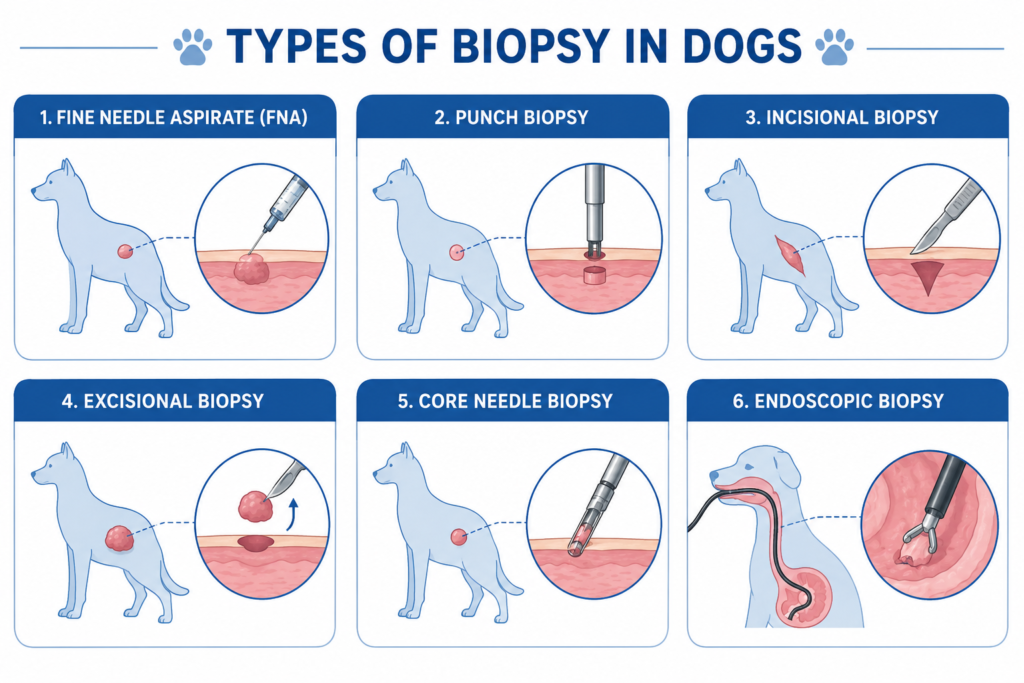
Fine Needle Aspirate (FNA) — Cytology
Fine needle aspiration costs $50 to $200 and uses a thin needle to extract cells or fluid from a mass, lymph node, or organ.
FNA is the least invasive option — no anesthesia required in most cases, no incision, no recovery time. A thin needle is inserted into the mass and cells are drawn out by suction, then smeared onto a glass slide and sent to a pathologist for cytologic evaluation.
FNA is a nondestructive sampling method using a thin needle to aspirate cells, similar to a vaccine injection. It often requires no sedation, though sedation may be used if sampling the spleen or liver.
What FNA is good at:
- Mast cell tumors (often definitively diagnosed by cytology alone)
- Lymphoma (highly cellular tumors that shed cells readily into aspirates)
- Lipomas (fatty tissue appearance is usually diagnostic)
- Cysts and abscess identification (fluid vs. solid mass distinction)
- Enlarged lymph node evaluation
Where FNA falls short: Fast results from FNA may be inconclusive, requiring a full surgical biopsy in some cases. FNA cannot assess tissue architecture — only individual cell appearance — which limits its ability to grade tumors or assess whether margins are clear.
Cost all-in: $130–$350 (FNA + cytology pathology fee + exam).
Punch Biopsy (Skin and Surface Lesions)
A punch biopsy uses a small circular blade (2–8 mm diameter) to remove a cylindrical core of skin tissue. It’s the standard biopsy technique for skin conditions, dermatological lesions, and surface masses that are too complex for FNA but don’t require full surgical removal.
Punch biopsies are most common for skin lesions, masses, or suspicious areas on your dog’s surface.
Sedation is sometimes used for painful or large-area lesions. Local anesthetic is typically applied before the procedure. Multiple punch biopsies from different areas of a lesion can be submitted in a single pathology submission.
Cost: $200–$500 for the procedure + $100–$250 for histopathology = $300–$750 all-in.
Incisional Biopsy (Partial Tissue Removal)
An incisional or wedge biopsy costs $1,000 to $2,500 and is performed when the entire mass is too large to remove safely or when preserving surrounding tissue is important. The veterinarian makes a small incision and removes a representative sample of the abnormal tissue. This biopsy type requires surgical skills and often needs sedation or general anesthesia.
Incisional biopsies are used when the mass is large, in a sensitive location (near nerves or major vessels), or when the vet needs to know exactly what they’re dealing with before committing to a major surgical removal. The tissue sample provides complete histopathology — unlike FNA, which only shows individual cells.
Cost: $500–$1,500 for procedure + $150–$350 for histopathology = $650–$1,850 all-in (before anesthesia, bloodwork, and consultation fees).
Excisional Biopsy (Full Mass Removal)
An excisional biopsy costs $1,000 to $2,500 and involves completely removing the entire mass or lesion along with some surrounding healthy tissue. It serves both diagnostic and treatment purposes, as it can eliminate the problem while providing tissue for analysis. Excisional biopsies are the preferred method for smaller masses that can be safely removed in their entirety.
This is simultaneously a diagnostic and therapeutic procedure. The entire mass is removed with a margin of healthy tissue, sent for pathology to confirm diagnosis and check margins, and the surgery itself treats the condition if the margins come back clean.
In many dogs, the final total includes the exam, fine-needle aspirate or biopsy, pre-anesthetic lab work, anesthesia, monitoring, surgery, pain medication, an e-collar, and pathology.
Cost: $800–$2,500 for procedure + $150–$400 for histopathology = $950–$2,900 all-in (before anesthesia, bloodwork, and specialist fees which can add $500–$1,500 more).
Ultrasound-Guided Core Needle Biopsy
A core needle biopsy uses a larger-gauge needle (Tru-Cut style) than FNA, removing a cylindrical tissue core rather than just cells. Ultrasound guidance allows the vet to precisely place the needle into internal organs or masses without open surgery.
This approach is used for liver masses, kidney lesions, splenic masses, and other internal targets identified on imaging. It provides histopathology-quality tissue — architectural detail and cell relationships — which FNA cannot. Sedation or light anesthesia is required.
Cost: $300–$700 for procedure (including ultrasound guidance) + $150–$300 for histopathology = $450–$1,000 all-in.
Bone Marrow Biopsy
A bone marrow biopsy costs $1,000 to $2,500 and examines the blood-producing tissue inside your dog’s bones. This procedure is recommended when blood tests suggest problems with blood cell production or when certain cancers are suspected. During a bone marrow biopsy, the veterinarian inserts a special needle into the bone, often in the hip area, to extract a small sample of marrow. Due to the invasive nature and discomfort involved, dogs require general anesthesia or heavy sedation for this procedure.
Bone marrow biopsies are most commonly recommended when CBC results show severely abnormal blood cell counts, suspected leukemia, multiple myeloma, or staging of lymphoma to determine whether the cancer has invaded the bone marrow.
Cost: $500–$1,500 for procedure + $150–$350 for pathology = $650–$1,850 all-in.
Endoscopic GI Biopsy
Used for diagnosing chronic gastrointestinal disease — inflammatory bowel disease (IBD), intestinal lymphoma, protein-losing enteropathy, and GI masses. A flexible camera is passed into the stomach and intestines under general anesthesia, and small forceps collect multiple tissue samples from the GI lining at different locations.
The advantage: no surgical incision. The limitation: only the innermost lining layer (mucosa) is sampled — deeper wall disease requires surgical full-thickness biopsy.
Cost: $800–$2,000 for the procedure + $200–$400 for histopathology (multiple sites submitted) = $1,000–$2,400 all-in.
| Biopsy Type | Anesthesia? | Sample Quality | Best For |
|---|---|---|---|
| FNA (cytology) | ❌ Rarely | Individual cells only | Lymphoma, mast cell, lipoma, cysts |
| Punch biopsy | ⚠️ Sometimes | Tissue cores | Skin lesions, dermatological disease |
| Incisional | ✅ Yes | Full tissue architecture | Large masses pre-surgical planning |
| Excisional | ✅ Yes | Full tissue + margins | Small masses — diagnose and treat in one |
| Core needle (ultrasound-guided) | ✅ Sedation | Full tissue architecture | Internal organ masses |
| Bone marrow | ✅ Yes | Marrow architecture | Leukemia, lymphoma staging, blood disorders |
| Endoscopic GI | ✅ Yes | Mucosal layer | IBD, GI lymphoma, intestinal disease |
The Pathology Fee: The Hidden Charge That Surprises Almost Everyone
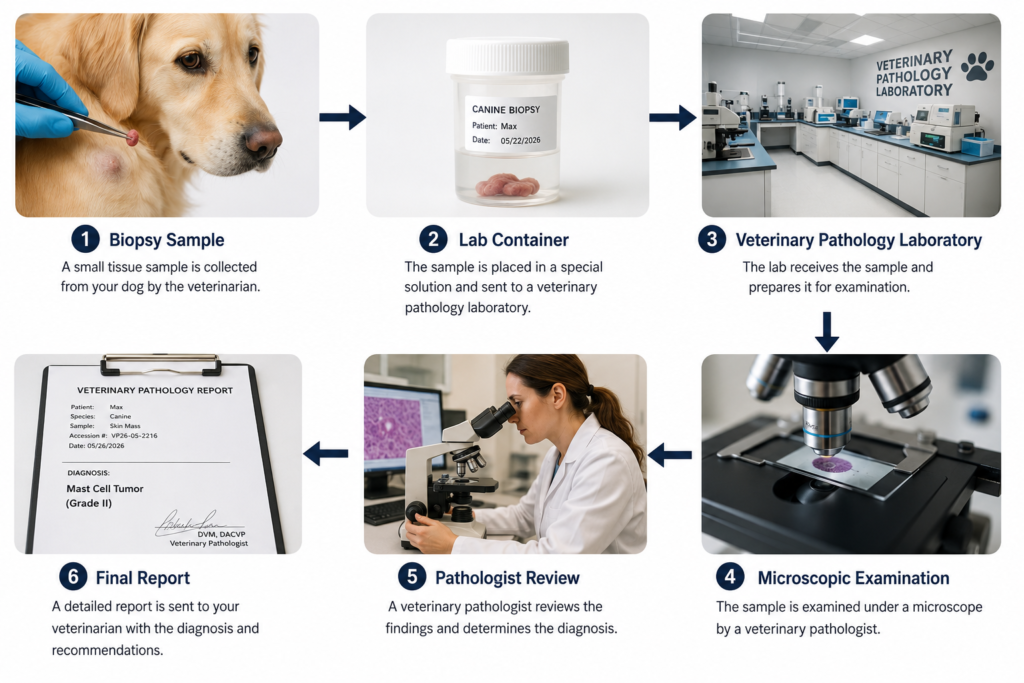
This is the most consistently overlooked cost in dog biopsy pricing — and the one most likely to create a billing surprise.
The pathology fee is the laboratory fee for processing and analyzing the biopsy samples. It adds to the total cost, and some specialized tests or rush processing may incur additional charges. Ask your vet whether the pathology fee is included in the quoted price.
Most vet quotes cover the procedure — the needle stick, the incision, the sutures. The pathology fee — what the external veterinary pathologist charges to actually read the slide and write the report — is almost always a separate charge billed after the fact.
How pathology is billed:
Immunohistochemistry and additional stains will be billed to the client separately if a pathologist recommends them after examining the initial sample. If the client agrees and approves additional testing, the client will need to contact the laboratory and indicate the desire to proceed.
This means you may receive a second invoice from the pathology lab — not from your vet clinic — days after the procedure, for the interpretation of the sample your vet sent out.
University veterinary lab pathology fees (real published rates):
Oregon State University Veterinary Diagnostic Lab charges: sample collection fee $37 + margin assessment ≤5 cm: $48 + margin assessment >5 cm: $95 + immunohistochemistry per antibody: $61. Margin fees are charged on all tissues marked with ink or suture indicating relative position.
University of Connecticut Veterinary Medical Diagnostic Laboratory charges $95 for a simple surgical biopsy (single site) with a 2–4 business day turnaround.
Private reference labs (IDEXX, Antech) typically charge $80–$200 for routine histopathology. University diagnostic labs often run 30–40% less for equivalent analyses.
Turnaround time: Standard histopathology results return in 5–10 business days. Rush processing (48–72 hours) adds $50–$150 to the pathology fee.
Immunohistochemistry and Margin Assessment — The Add-Ons That Change Everything
These two additional pathology services are the most clinically and financially significant charges that can appear on a biopsy bill after the initial procedure.
Margin Assessment
When a mass is surgically removed for an excisional biopsy, the pathologist examines whether cancer cells extend to the edges of the removed tissue — the “surgical margins.” This determines whether the surgeon got everything.
Margin results have three outcomes:
| Margin Result | What It Means | Financial Implication |
|---|---|---|
| Clean / complete margins | No cancer cells at the edge — likely curative | Treatment may be complete |
| Narrow margins | Cancer cells close to but not at the edge | Monitoring recommended; possible re-excision |
| Incomplete / dirty margins | Cancer cells present at the surgical edge | Second surgery or radiation likely needed |
An incomplete margin finding turns a $1,500 excisional biopsy into a conversation about $3,000–$8,000 in follow-up radiation or repeat surgery. Knowing this is possible before the first procedure lets you plan financially for the full treatment arc, not just the biopsy.
Margin fees are charged on all tissues marked with ink or suture indicating relative position. Oregon State charges $48 per margin assessment for tissues ≤5 cm and $95 for tissues >5 cm.
Immunohistochemistry (IHC)
Immunohistochemistry uses specialized immunohistochemical testing to demonstrate the presence of various antigens, etiologic agents, or tissue markers in histologic specimens. If immunohistochemical studies would be helpful in a particular case, the pathologist will include a recommendation on the biopsy report to add on this test.
IHC is ordered when the initial histopathology report identifies a tumor but cannot definitively determine its type or origin using standard staining alone. It’s the difference between “this is a round cell tumor” and “this is specifically T-cell lymphoma versus B-cell lymphoma” — a distinction that changes the chemotherapy protocol used.
Immunohistochemistry costs $61 per antibody at Oregon State. Commercial labs charge $150–$400 for IHC panels depending on how many antibodies are required.
IHC is not always needed — but when the pathologist recommends it, it’s because the initial report cannot provide a definitive diagnosis without it. This is not optional billing — it’s the difference between a definitive cancer type diagnosis and a preliminary one.
FNA vs. Surgical Biopsy: Which One Does Your Dog Actually Need?
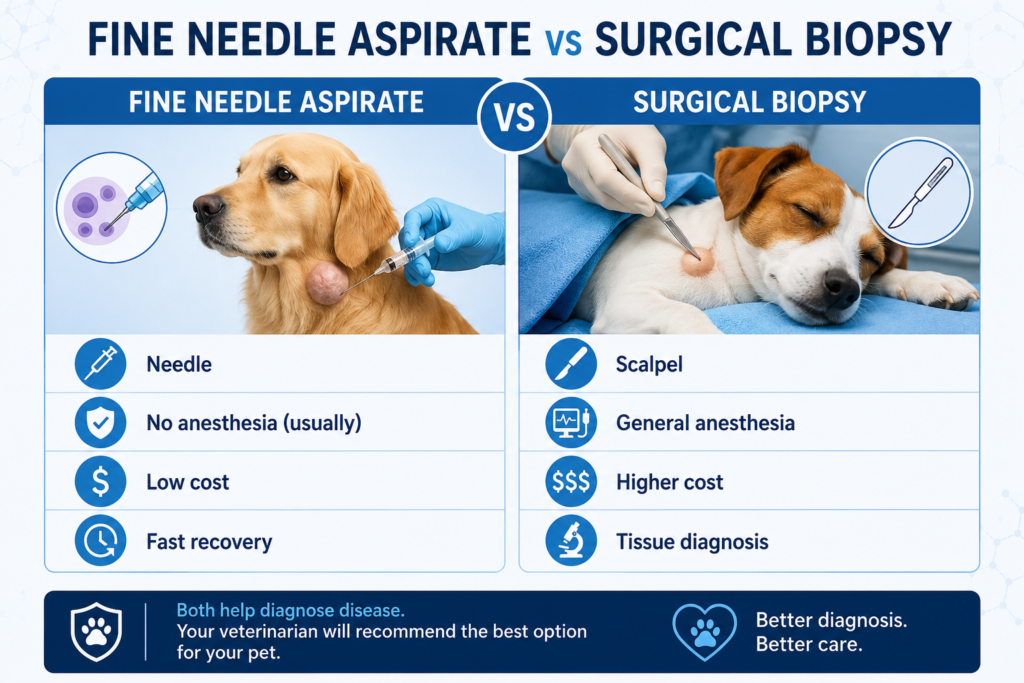
This is the decision most owners face — and it has a $500–$2,000 cost difference attached to it.
The honest answer: it depends on what the mass is made of, where it is, and what your vet is trying to confirm.
Start with FNA when:
- The mass is accessible, superficial, and easy to needle without sedation
- Lymphoma is suspected — FNA is highly diagnostic for lymphoma
- The mass appears to be a lipoma (fatty tissue) — FNA usually confirms this
- A quick preliminary answer is needed before committing to surgery
- The dog has other health conditions that increase anesthesia risk
- A fine-needle aspirate in the exam room is a practical first step before committing to surgery in some dogs.
Go directly to surgical biopsy when:
- The FNA result was inconclusive or non-diagnostic
- The mass needs to come out regardless of what it is (it’s growing, bleeding, or causing problems)
- The location requires precise margin assessment for treatment planning
- The lesion type is known to yield poor cytology results (sarcomas, some carcinomas)
- In other dogs, it makes more sense to remove the whole mass and send it for pathology — especially when the FNA would cost $300 to interpret and a tissue sample would provide a more definitive answer for a similar cost.
The “why do both?” scenario: Sometimes FNA and surgical biopsy are used sequentially. FNA first to confirm the mass is malignant and warrants surgery. Then excisional biopsy to remove it completely and assess margins. The FNA cost ($130–$350) is not wasted — it justifies the more expensive surgical step that follows.
Should You Start With FNA or Go Straight to Biopsy?
| Situation | Recommended First Step |
|---|---|
| Accessible skin lump, unknown type | FNA first — cheap, fast, often diagnostic |
| Suspected lymphoma (multiple lumps) | FNA first — highly diagnostic for lymphoma |
| Fatty lump, soft, moveable | FNA first — likely lipoma, usually confirmable |
| Internal mass found on ultrasound | Ultrasound-guided core biopsy or FNA |
| Mass causing bleeding, ulceration, or pain | Excisional biopsy — remove and diagnose together |
| Prior FNA was non-diagnostic | Surgical biopsy — need tissue architecture |
| Mast cell tumor (any grade suspected) | FNA first — often diagnostic, guides surgery planning |
| GI wall thickening on ultrasound | Endoscopic biopsy — least invasive for GI access |
| Bone lesion on X-ray | CT + surgical or core biopsy — bone requires full tissue |
Full All-In Cost Breakdown: What a Complete Biopsy Visit Really Costs
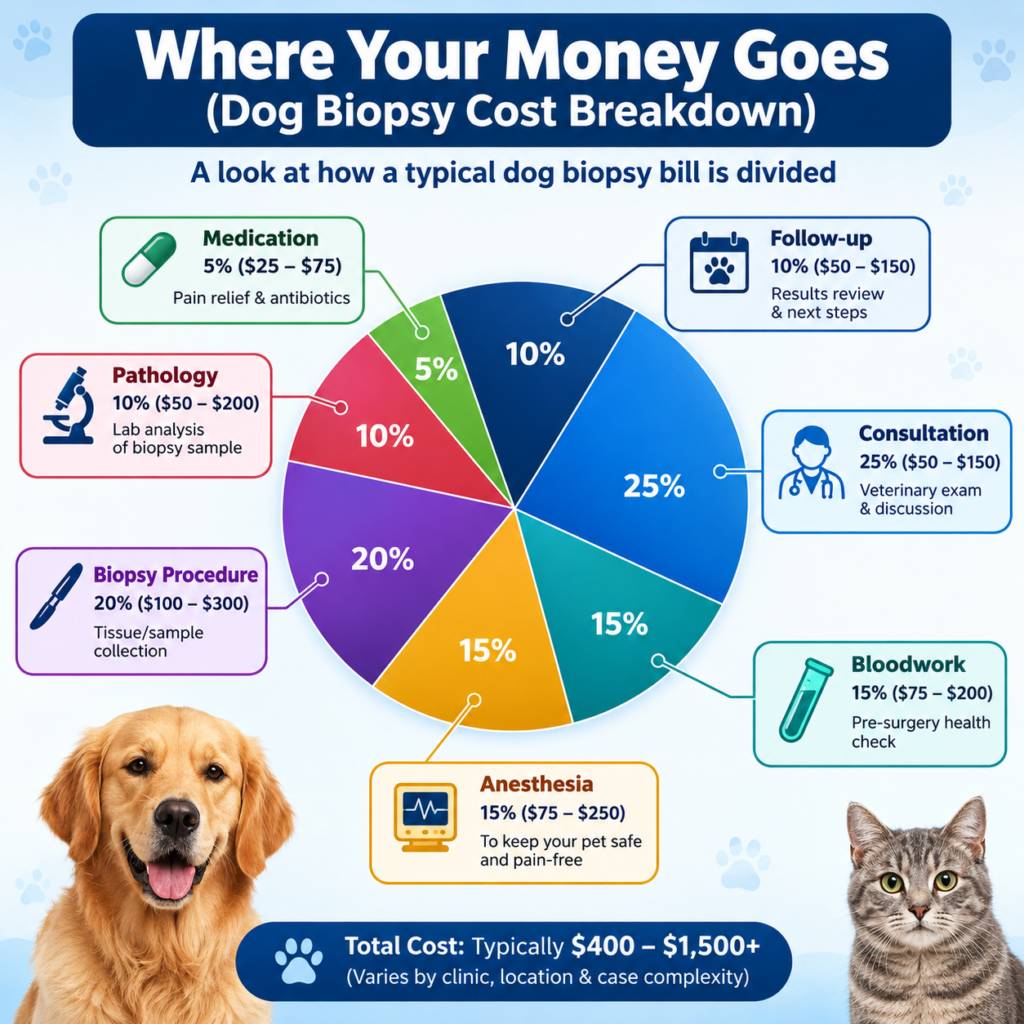
The biopsy fee, pathology fee, anesthesia, pre-anesthetic bloodwork, exam, and post-procedure medications together determine your actual invoice. Here’s what realistic complete visits cost.
Scenario 1: FNA of skin lump at regular vet — no sedation needed
| Line Item | Cost |
|---|---|
| Exam / consultation | $65 |
| Fine needle aspirate | $85 |
| Cytology (pathology) | $120 |
| Total | $270 |
Scenario 2: Punch biopsy of skin lesion — sedation needed
| Line Item | Cost |
|---|---|
| Exam | $75 |
| Pre-sedation bloodwork | $100 |
| Sedation | $120 |
| Punch biopsy (2 sites) | $350 |
| Histopathology (2 sites) | $200 |
| E-collar + medications | $45 |
| Total | $890 |
Scenario 3: Excisional biopsy of medium skin mass — surgical removal
| Line Item | Cost |
|---|---|
| Specialist consultation | $200 |
| Pre-anesthetic bloodwork | $150 |
| Anesthesia + monitoring | $350 |
| Excisional surgery | $950 |
| Histopathology + margin assessment | $350 |
| Pain medications + e-collar | $85 |
| Total | $2,085 |
Scenario 4: Ultrasound-guided core biopsy of splenic mass
Read Related Article… Dog Ultrasound Cost in the USA (2026): Real Prices, Hidden Charges & What Happens After
| Line Item | Cost |
|---|---|
| Specialist consultation | $250 |
| Pre-sedation bloodwork | $150 |
| Sedation | $200 |
| Ultrasound guidance fee | $400 |
| Core needle biopsy | $350 |
| Histopathology | $250 |
| IHC (if ordered by pathologist) | $250 |
| Total (without IHC) | $1,600 |
| Total (with IHC) | $1,850 |
Scenario 5: Endoscopic GI biopsy — multiple sites
| Line Item | Cost |
|---|---|
| Internal medicine specialist consult | $300 |
| Pre-anesthetic bloodwork | $150 |
| General anesthesia | $400 |
| Endoscopy procedure | $1,200 |
| Histopathology (4–6 sites) | $350 |
| Hospitalization (same-day, 4 hours) | $150 |
| Total | $2,550 |
What Dog Biopsy Results Actually Mean
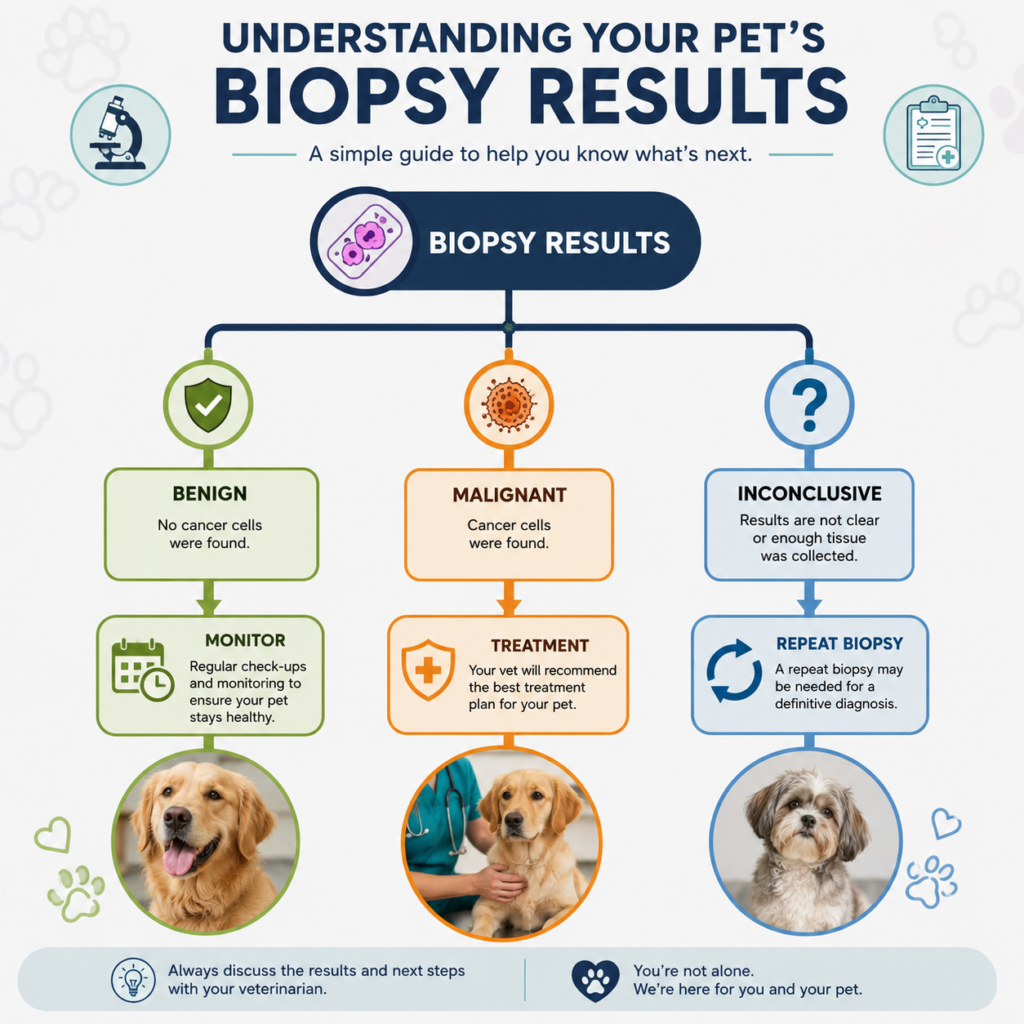
Results come back in 5–10 business days for standard histopathology. Here’s how to understand what the report is telling you.
The three possible outcomes:
Benign: The cells are abnormal in appearance but show no features of malignancy — they’re not invading surrounding tissue, not forming abnormal blood vessels, not spreading. A benign diagnosis typically means monitoring rather than aggressive treatment. Cost implication: minimal follow-up unless the mass grows or causes problems.
Malignant (Cancer): The cells show features of cancer — invasion, abnormal mitotic rate, irregular nuclear appearance. The report will specify the cancer type (carcinoma, sarcoma, melanoma, mast cell, lymphoma, etc.) and, for most solid tumors, a grade (1, 2, or 3) indicating how aggressive the cells appear.
Grade is the detail that matters most financially:
- Grade 1 (low grade): slow-growing, often curable with surgery alone
- Grade 2 (intermediate): variable behavior, may need surgery plus adjuvant therapy
- Grade 3 (high grade): aggressive, typically requires surgery plus chemotherapy and/or radiation
Inconclusive / Non-diagnostic: The sample didn’t contain enough representative cells, or the cells were too disrupted to interpret. This happens more commonly with FNA than surgical biopsy. It means the procedure needs to be repeated or escalated to a more invasive biopsy type. Financially — you’ve paid for a test that didn’t provide an answer, and you’ll pay again for the next attempt.
The margin result: If this was an excisional biopsy, the report will state whether margins are complete, narrow, or incomplete. Results from a biopsy usually come back in 5–10 days and guide further care — including surgery extent, chemotherapy, and screening options.
What Happens After the Biopsy Results Come Back
This is the section that connects the biopsy to the financial arc of what follows.
If the result is benign: Most benign diagnoses require only monitoring — a recheck exam in 3–6 months to confirm the area hasn’t regrown or changed. If a benign mass was removed completely, no further treatment is typically needed. Cost: $75–$150 for a recheck exam.
Read Related Article… Dog Cancer Treatment Cost in the USA (2026): Surgery, Chemo & Total Costs
If the result is malignant with clean margins: The surgery may have been curative. Follow-up imaging (chest X-rays, abdominal ultrasound) is typically recommended every 3–6 months to monitor for spread. Depending on the cancer type and grade, chemotherapy may or may not be recommended even with clean margins. Cost: $150–$600 for monitoring imaging per visit.
If the result is malignant with incomplete margins: This is where the financial path branches significantly.
| Follow-Up Option | Cost Range |
|---|---|
| Re-excision surgery (wider margins) | $1,000 – $4,000 |
| Radiation therapy (definitive) | $4,500 – $10,000 |
| Palliative radiation | $1,000 – $3,500 |
| Chemotherapy protocol | $3,000 – $10,000 |
| Watchful monitoring only | $150 – $600 per recheck |
If the result is a specific cancer type that determines protocol:
- Lymphoma → CHOP chemotherapy protocol ($5,000–$9,000)
- High-grade mast cell tumor → Surgery + chemotherapy ($4,000–$10,000)
- Osteosarcoma → Amputation + chemotherapy ($6,000–$15,000)
- Nasal tumor → Radiation ($7,000–$15,000)
- Low-grade GI lymphoma → Oral chemotherapy ($300–$600/month, ongoing)
The biopsy result doesn’t just answer a clinical question — it determines the entire financial arc of what comes next. Understanding the possible outcomes before the biopsy helps you think through the “what if it’s malignant” scenario before you’re processing the news in real time.
Does Pet Insurance Cover Dog Biopsies?
Yes — most comprehensive accident-and-illness pet insurance plans cover biopsies as diagnostic procedures when they’re ordered to investigate a covered condition.
Coverage by plan type:
| Plan Type | Biopsy Coverage |
|---|---|
| Accident & Illness (comprehensive) | ✅ FNA, punch biopsy, surgical biopsy all covered |
| Accident-only | ✅ Biopsies for injury-related masses only |
| Wellness add-on | ❌ Biopsies are diagnostic, not preventive |
| Routine care plan | ❌ Not covered |
What’s included in a covered biopsy claim:
- The biopsy procedure fee
- Anesthesia and monitoring for surgical biopsies
- Pre-anesthetic bloodwork
- Histopathology / pathology fee (as part of the diagnostic workup)
- IHC add-on if ordered by the pathologist
- Post-procedure medications
Pet insurance often covers 70–90% of biopsy costs after deductible. For a dog biopsy cost including histopathology, expect $300–$800 on average — adding immunohistochemistry can reach $1,000+.
Reimbursement math on a real biopsy visit:
Excisional biopsy at a specialty clinic: consult ($200) + bloodwork ($150) + anesthesia ($350) + surgery ($950) + histopathology + margin assessment ($350) = $2,000 total.
- Annual deductible: $250 (already met from prior imaging visits this year)
- At 80% reimbursement: $1,600 back
- Your out-of-pocket: $400
Without insurance: $2,000 due at checkout.
Pre-existing condition warning: If the mass or condition being biopsied showed symptoms before your policy enrollment, the biopsy claim will be denied as related to a pre-existing condition. This is particularly relevant for dogs with previously documented lumps that were being “monitored” before insurance was purchased — any biopsy of that specific mass will be excluded.
The pathology lab invoice: Some insurance claims require you to submit the pathology lab invoice separately from the clinic invoice, since they may come from different billing entities. Keep both invoices and submit them together with your claim documentation.
How to Reduce Dog Biopsy Cost
1. Start with FNA when clinically appropriate. A fine-needle aspirate in the exam room is a practical first step before committing to surgery in some dogs. At $130–$350 all-in, an FNA that gives a definitive diagnosis saves you $500–$2,000 in unnecessary surgical biopsy costs. Ask your vet directly: “Would an FNA provide enough information to guide next steps, or do we need tissue for this one?”
2. Ask whether the biopsy and pathology fees are separate. The most common billing surprise in veterinary biopsies. Ask at scheduling: “Is the histopathology fee included in the biopsy quote, or will I receive a separate bill from the lab?” Knowing this prevents invoice shock 7–10 days after the procedure.
3. Ask about IHC authorization in advance. If the pathologist recommends IHC after examining the initial sample, you’ll receive a phone call asking whether to proceed — adding $150–$400 to the pathology bill. Deciding your answer in advance (yes/no/call me first) removes a stressful financial decision from an already difficult moment.
4. Request rush processing only when medically necessary. Standard histopathology returns in 5–10 business days. Rush processing (48–72 hours) adds $50–$150. For most biopsy situations, waiting the standard timeframe is clinically appropriate and avoids this charge.
5. Ask about university veterinary diagnostic labs. University vet school diagnostic labs charge 30–40% less for histopathology than commercial reference labs for identical analyses. Your vet can submit the biopsy sample to a university lab rather than IDEXX or Antech in most cases. Ask: “Could we submit this to a university veterinary diagnostic lab at a lower pathology cost?”
6. For planned surgical biopsies, ask about excisional vs. incisional approach. If the mass is small enough to remove entirely, an excisional biopsy simultaneously treats and diagnoses. An incisional biopsy that samples the mass — followed by a separate surgery to remove it — means two procedures, two anesthesia events, and two procedure fees. When complete removal is safe, excisional biopsy is more cost-effective than a staged approach.
7. Contact your insurer before scheduling surgical biopsies. Pre-authorization isn’t available at all insurers, but for surgical biopsies expected to cost $1,000+, a quick call to confirm the condition is covered and understand your deductible status takes 10 minutes and prevents post-procedure claim surprises.
Action Checklist
Before the biopsy appointment:
- Ask: “Is FNA appropriate here, or do we need surgical biopsy for a definitive diagnosis?”
- Ask: “Is the histopathology/pathology fee included in today’s estimate or billed separately?”
- Ask: “If the pathologist recommends IHC, should I authorize that automatically or do you want to call me first?”
- Ask: “What are the most likely results, and what would follow-up treatment cost in each scenario?”
- Contact your pet insurer to confirm biopsy coverage and check your deductible status
- Ask whether your vet can submit the sample to a university veterinary diagnostic lab at reduced pathology cost
- Apply for CareCredit before surgical biopsy appointments if a large bill is expected
At the appointment:
- Confirm the all-in estimate at check-in including procedure + anesthesia + pathology
- Ask when results are expected and how you’ll be notified
- Ask whether rush processing adds a charge and whether it’s medically necessary
After the procedure:
- Keep both the clinic invoice and the pathology lab invoice — you’ll need both for insurance
- Submit your claim promptly after receiving both invoices
- When results come back, ask your vet to walk through the report in detail — grade, margins, and recommended next steps with costs
Frequently Asked Questions
How much does a dog biopsy cost in the USA?
Fine needle aspiration (FNA) typically costs $50–$200, while surgical biopsies generally cost $500–$2,500 depending on the procedure. Histopathology usually adds $80–$400 separately, bringing the total cost to about $130–$350 for FNA and $1,500–$3,500+ for more complex surgical biopsies.
What is the difference between FNA and a biopsy?
FNA collects individual cells using a thin needle and is less expensive and minimally invasive. A surgical biopsy removes actual tissue, allowing the pathologist to determine tumor type, grade, and surgical margins. FNA is often the first step, but inconclusive results may require a biopsy.
Is the pathology fee included in the biopsy cost?
Not always. Many veterinary hospitals bill the biopsy procedure and histopathology laboratory fee separately. Always ask for an itemized estimate before scheduling the procedure.
How long does it take to get biopsy results?
Most biopsy results are available within 5–10 business days. Rush processing may reduce the wait to 48–72 hours but usually costs extra. Additional tests such as immunohistochemistry (IHC) can extend the turnaround time.
Does pet insurance cover dog biopsies?
Most biopsy results are available within 5–10 business days. Rush processing may reduce the wait to 48–72 hours but usually costs extra. Additional tests such as immunohistochemistry (IHC) can extend the turnaround time.
What is immunohistochemistry (IHC)?
Immunohistochemistry (IHC) is an additional laboratory test used when standard pathology cannot clearly identify the tumor type. It helps guide treatment decisions but typically adds $150–$400 to the pathology bill.
What does “incomplete margins” mean?
Incomplete (or dirty) margins mean cancer cells remain at the edge of the removed tissue. Your veterinarian may recommend another surgery, radiation therapy, or additional treatment to remove any remaining cancer.
Is a dog biopsy painful?
Most dogs experience only mild discomfort after a biopsy. Surgical biopsies are performed under anesthesia, and veterinarians typically prescribe pain medication during recovery.
Does every lump on a dog need a biopsy?
No. Many lumps are first evaluated with a fine needle aspiration (FNA). A biopsy is usually recommended if the FNA is inconclusive, the mass appears suspicious, or complete tissue evaluation is needed.
Can my dog go home the same day after a biopsy?
Yes. Most skin biopsies, FNAs, and many surgical biopsies are outpatient procedures, although more complex internal biopsies may require overnight hospitalization.
What You Should Do Next
If your vet has just recommended a biopsy — ask one question before leaving the room: “If this comes back malignant, what are the most likely next steps and what would they cost?” Most vets will give you a realistic answer. Knowing the possible financial arc before results arrive lets you make decisions from a position of information rather than panic.
If the cost is a concern — start with FNA when your vet agrees it’s clinically appropriate. At $130–$350 all-in versus $1,500–$3,000+ for surgical biopsy, FNA is the right first step for many accessible masses. If FNA doesn’t give a definitive answer, surgical biopsy follows — and the FNA wasn’t wasted, it justified the next step.
If your dog is healthy right now — the diagnostic journey from bloodwork to imaging to biopsy to cancer treatment can cost $5,000–$15,000+ in a single diagnosis cycle. A comprehensive pet insurance plan with an unlimited or high annual limit is the only financial tool that meaningfully addresses that entire arc. Enroll before any lump, any abnormal bloodwork, any imaging finding — because the pre-existing condition exclusion closes the door the moment your vet’s notes document the first symptom.
External Authority Sources
- Vety — Dog Biopsy Cost Guide
- IDEXX Reference Laboratories — Histopathology Services
- Oregon State University VDL — Histology on Biopsy
- SpectrumCare — Dog Tumor Removal and Biopsy
- AVMA
Disclaimer: This article is for informational and educational purposes only. Cost data reflects 2026 national averages from NAPHIA, Insurify, and MetLife Pet Insurance and will vary based on your dog’s age, breed, location, and the specific plan you choose. PetInsurePrime does not sell pet insurance and receives no compensation from any insurance provider. Always compare multiple quotes and read your policy documents carefully before enrolling.
PetInsurePrime | Independent • Research-Based | Helping US dog owners understand real vet costs and coverage options — without the sales pressure.
Pingback: Dog Fine Needle Aspiration Cost: 2026 USA Price Guide