
Updated: July 2026 | Reading Time: 21 Minutes
Your vet just said the words you weren’t prepared to hear: “I think we need an MRI.”
Maybe your dog has been having seizures. Maybe he’s lost coordination, or the limping still hasn’t explained itself after weeks of X-rays. Whatever brought you here — the next thing you’re probably wondering is whether your pet insurance will actually cover it, and how much you’re about to pay either way.If you’re also wondering how much the scan may cost, read our detailed guide on Dog MRI Cost in the USA before making a decision.
The short answer is yes, most pet insurance does cover MRIs. But there are real conditions attached to that yes — and if you’re not aware of them before you authorize the scan, you could be looking at a much larger out-of-pocket bill than you expected.
Quick Answer Does Pet Insurance Cover MRI
Most comprehensive pet insurance plans cover MRI scans when they are medically necessary to diagnose a new accident or illness. Coverage typically does not apply if the underlying condition is pre-existing, if you’re still in the waiting period, or if you only have an accident-only policy and your dog’s issue is illness-related. Reimbursement is usually 70%–90% of eligible costs after your deductible.Coverage also depends on your deductible, reimbursement percentage, annual policy limits, and the insurer’s definition of a pre-existing condition. Always review your policy documents before authorizing an MRI.If you’re new to pet insurance, start with our complete guide on Pet Insurance for Dogs in the USA to understand how coverage works.
Average dog MRI cost in the U.S.: $2,500–$5,000
Typical reimbursement: 70%–90% after your deductible
Best time to buy insurance: Before any symptoms appear
At a Glance: MRI Coverage Summary
| Situation | Covered? |
|---|---|
| MRI for a new neurological condition or seizures | ✅ Yes (accident & illness plan) |
| MRI to diagnose a new injury (head trauma, spinal) | ✅ Yes (accident-only or comprehensive) |
| MRI for a condition diagnosed before enrollment | ❌ No — pre-existing |
| MRI during the waiting period | ❌ No |
| MRI for an illness on an accident-only plan | ❌ No |
| Anesthesia required for the MRI | ✅ Covered under most plans |
| Neurologist consultation fees | ✅ Covered under most comprehensive plans |
| Pre-MRI bloodwork and exam | ✅ Usually covered as diagnostic testing |
| MRI for a hereditary/breed condition | ⚠️ Depends on your specific policy |
| Second MRI scan (follow-up) | ⚠️ Covered if same eligible condition, within annual limit |
Table of Contents
- What Is a Dog MRI and Why Do Vets Recommend It?
- Does Pet Insurance Cover MRI Scans?
- Which Pet Insurance Companies Cover MRI Scans?
- What Does a Dog MRI Actually Cost in 2026?
- What’s Included (and What Isn’t) in That Quote
- How Reimbursement Works for MRI Claims
- When Pet Insurance Won’t Cover an MRI
- Should You Get Insurance Now If Your Dog Needs an MRI Soon?
- How to Reduce Your MRI Cost Without Sacrificing Quality
- Action Checklist Before Your Dog’s MRI
- FAQ
What Is a Dog MRI and Why Do Vets Recommend It?
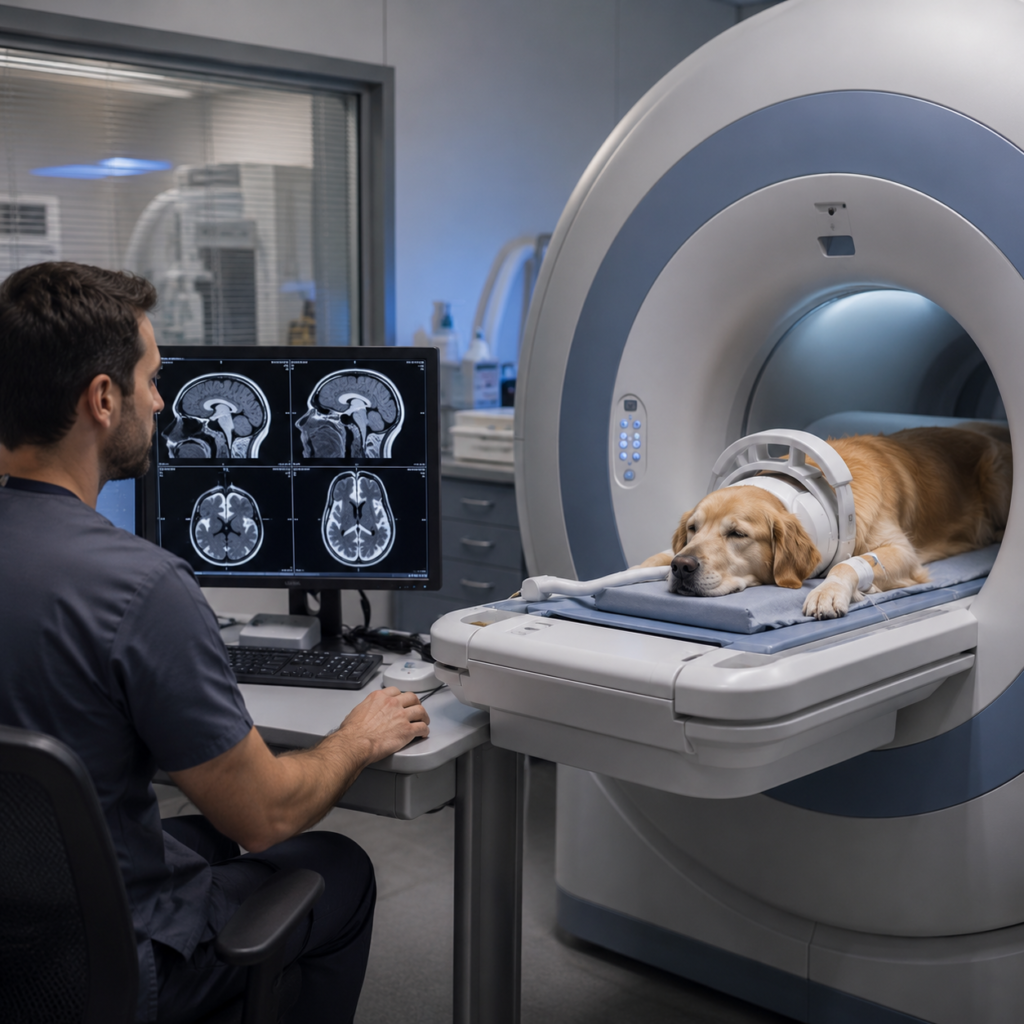
An MRI — magnetic resonance imaging — creates detailed, high-resolution images of your dog’s internal structures using magnetic fields and radio waves. Unlike X-rays, which show bones well, MRI captures soft tissue: the brain, spinal cord, ligaments, and muscles that standard imaging can miss entirely.
Your vet typically recommends an MRI when:
- Your dog has unexplained seizures or neurological symptoms
- X-rays and bloodwork haven’t identified the cause of ongoing symptoms
- Spinal pain, weakness, or sudden paralysis suggests a disc or cord problem
- A suspected brain or spinal tumor needs to be precisely located before surgery
- Ligament injuries (like shoulder instability or CCL tears) need deeper imaging before surgical planning
Because dogs can’t stay still in a scanner, every dog MRI requires general anesthesia. That’s what makes it significantly more expensive than the same procedure in human medicine — and it’s also why the total bill includes more than just the scan itself.
Key Takeaway: Vets don’t recommend MRIs lightly — they’re typically ordered after simpler diagnostics haven’t given enough answers. When your vet says your dog needs one, it’s usually because the information it provides is genuinely necessary for diagnosis or treatment planning.
Does Pet Insurance Cover MRI Scans?
Yes — most comprehensive pet insurance plans include MRI coverage as part of diagnostic imaging. This is one area where pet insurance consistently delivers, because MRIs are clearly medically necessary and not elective. Coverage only applies after your Pet Insurance Waiting Period has ended.
Here’s how coverage breaks down by plan type:
| Plan Type | MRI Coverage |
|---|---|
| Accident & Illness (comprehensive) | ✅ Covers MRIs for both injuries and illnesses |
| Accident-Only | ✅ Covers MRIs for accident-related injuries only |
| Wellness/Preventive Add-On | ❌ Typically does not cover diagnostic imaging |
| Routine Care Plans | ❌ Not covered — these cover check-ups and vaccines |
Many comprehensive accident-and-illness pet insurance providers include medically necessary MRI scans under diagnostic imaging benefits. However, coverage varies by insurer and policy, so always review your policy documents before assuming an MRI will be reimbursed.
That condition must be:
- New — not something your dog showed symptoms of before enrollment
- Post-waiting-period — developed after your policy’s waiting period ended
- Not excluded under a hereditary or breed-specific clause in your plan
If those three conditions are met, you file a claim after the procedure, and the insurer reimburses you based on your plan’s reimbursement rate after your deductible.
What This Means: Pet insurance does cover MRIs — but the key word is covered condition. The scan itself isn’t what gets evaluated; it’s what the scan is for. If the underlying condition qualifies for coverage, the MRI does too.
Which Pet Insurance Companies Cover MRI Scans?
| Company | MRI Coverage | Important Notes |
|---|---|---|
| ASPCA Pet Health Insurance | ✅ Usually Covered | Medically necessary diagnostics for eligible new conditions |
| Fetch | ✅ Usually Covered | Subject to waiting periods and policy terms |
| Embrace | ✅ Usually Covered | Covered under accident & illness plans |
| Lemonade | ✅ Usually Covered | Diagnostic imaging for covered conditions |
| Pets Best | ✅ Usually Covered | Reimbursement depends on selected plan |
Most comprehensive accident-and-illness plans include medically necessary MRI scans as diagnostic imaging. However, coverage always depends on your policy terms, waiting periods, deductible, reimbursement rate, and whether the condition is considered pre-existing. Always verify coverage directly with your insurer before scheduling the MRI.
What Does a Dog MRI Actually Cost in 2026?
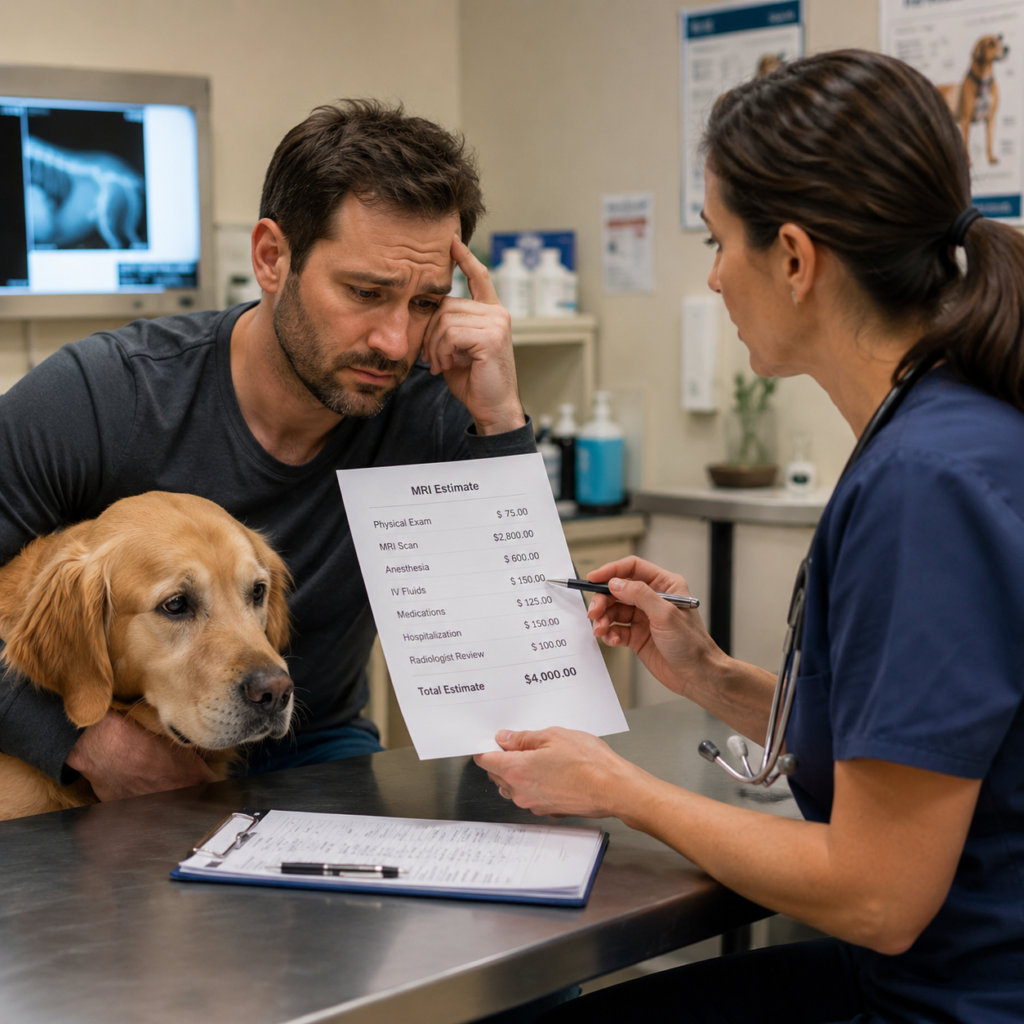
This is the number that stops most dog owners cold. A dog MRI is expensive — sometimes strikingly so — because the equipment costs millions of dollars to purchase and operate, specialists are required to administer anesthesia and interpret results, and the procedure itself often takes 45–90 minutes of scan time.
2026 national average cost ranges:
| Facility Type | Estimated MRI Cost Range |
|---|---|
| General veterinary practice (low-field MRI) | $2,000 – $3,000 |
| Standalone outpatient imaging center | $2,800 – $4,500 |
| Specialty veterinary hospital (high-field MRI) | $3,500 – $6,000+ |
| University / teaching hospital | $2,500 – $3,500 (subsidized) |
CareCredit’s 2024 national cost data puts the average dog MRI at $1,958, though real-world costs from specialty centers typically run higher — between $2,500 and $5,000 for most dogs. At a high-volume specialty neurology hospital in Los Angeles or New York, a full MRI with contrast imaging can reach $5,200–$6,000 or more.
What drives the cost up:
- Multiple scan areas — if your vet needs images of both the brain and spine, expect the cost to roughly double, since each area requires a separate imaging sequence and more anesthesia time
- Contrast dye (gadolinium) — used to highlight tumors or vascular issues; adds $200–$500 to the base cost
- Dog size — a 90-pound German Shepherd requires more anesthetic medication and longer monitoring than a 20-pound Beagle
- Radiologist fees — the specialist who interprets the scan often charges separately from the facility
- Urban vs. rural — clinics in San Francisco, Boston, or Chicago charge significantly more than the same procedure in rural areas or college towns with teaching hospitals
Cost Insight: Budget $2,500–$5,000 for a standard dog MRI in most parts of the US. Specialty neurology centers in high-cost cities can go higher. Always ask for an itemized quote — not just a single total — so you know exactly what’s included before you agree.
Average Out-of-Pocket Cost With Pet Insurance
| MRI Bill | Reimbursement | Estimated Owner Pays* |
|---|---|---|
| $2,500 | 80% | ~$500 + deductible |
| $4,000 | 80% | ~$800 + deductible |
| $5,500 | 90% | ~$550 + deductible |
Actual reimbursement varies depending on your deductible, reimbursement rate, annual limits, and policy terms.
What’s Included (and What Isn’t) in That Quote
This is the part that catches owners off guard. The number your neurologist or imaging center quotes may be only the scan itself. The full cost of an MRI appointment typically includes:
Usually included in the quote:
- The MRI scan itself
- Anesthesia administration
- Radiologist interpretation
Often billed separately:
- Pre-anesthesia bloodwork and exam: $50–$150
- Anesthesia monitoring and drugs: $200–$500
- Neurologist or specialist consultation: $250–$500
- Hospitalization if your dog needs to stay overnight: $300–$800
- Follow-up appointment to review results: $75–$200
A single MRI appointment can go from a $3,000 quote to a $4,500+ final bill once all associated costs are added. Most pet insurance plans cover these associated costs as part of the same claim — but only if they’re documented as part of the same diagnostic visit for the same covered condition.
Ask your imaging center specifically: “Does this quote include anesthesia, pre-op bloodwork, and radiologist fees?” Getting a written itemized estimate protects you — and it gives you documentation you’ll need for your insurance claim.
Practical Tip: The quoted MRI price rarely reflects the total appointment cost. Pre-anesthesia testing, specialist fees, and monitoring can add $500–$1,500 on top of the scan itself. Request an itemized estimate in writing and share it with your insurer before the procedure when possible.
How Reimbursement Works for MRI Claims
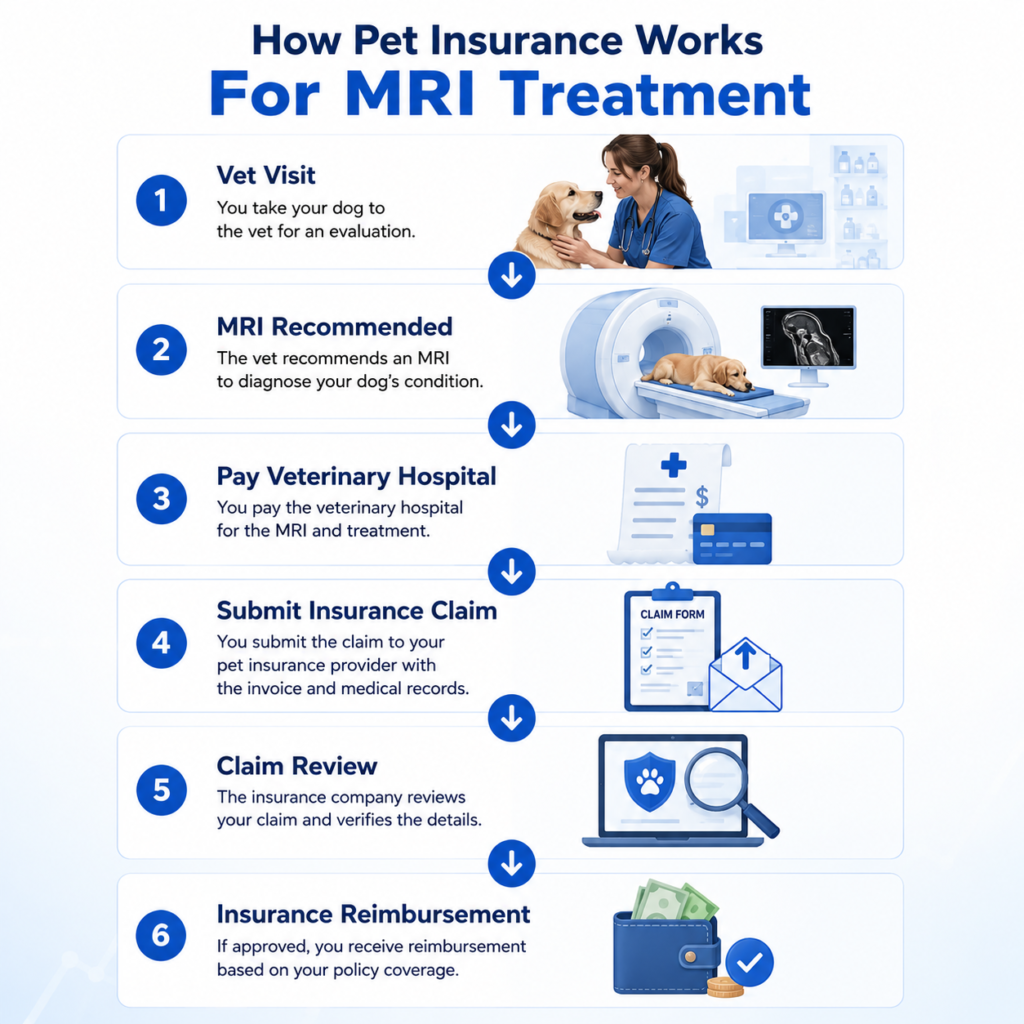
Pet insurance reimburses you — it doesn’t pay the vet directly. You pay the full MRI bill at the clinic, then submit a claim to your insurer with documentation. Understanding the three variables that control your actual reimbursement matters here.
The three numbers:
1. Reimbursement rate — 70%, 80%, or 90% of eligible costs depending on your plan tier.
2. Annual deductible — typically $100–$1,000. Once you’ve met this for the year, it doesn’t apply to subsequent claims.
3. Annual coverage limit — some plans cap reimbursement at $5,000 or $10,000 per year. If your dog has already had other expensive procedures this policy year, check your remaining limit before the MRI.
A realistic example:
Your 5-year-old Golden Retriever starts having seizures. Neurologist recommends an MRI. Full cost including anesthesia, pre-op bloodwork, and specialist fee: $4,800.
- Annual deductible: $250 (already met this year)
- Reimbursement rate: 80%
- Annual limit: $10,000 (plenty of room)
- Insurer pays: $3,840
- Your out-of-pocket: $960
Without insurance, the full $4,800 would be due at the clinic, typically before you leave. Most emergency and specialty clinics require at least a 50% deposit upfront. If your MRI claim is denied, follow our guide explaining how to appeal a denied pet insurance claim.
Tip worth knowing: Some insurers allow pre-authorization requests before the procedure. You submit the vet’s written recommendation and get a preliminary coverage determination before spending thousands. This isn’t a guarantee — but it significantly reduces the risk of an unexpected claim denial after the fact. Ask your insurer specifically whether they offer pre-authorization and how to request it.
Before You File a Claim: An 80% reimbursement plan can cover $3,800+ on a $4,800 MRI once your deductible is met. Pre-authorization from your insurer before the scan is the smartest way to avoid surprises. Always pay the full bill and submit the claim with itemized documentation.
When Pet Insurance Won’t Cover an MRI
Coverage is strong for MRIs — but there are specific situations where a claim will be denied. Knowing these in advance is more useful than discovering them while filing. Learn more about common exclusions in our guide on What Doesn’t Pet Insurance Cover?
Pre-existing conditions. If your dog has been showing neurological symptoms — wobbling, seizures, unexplained weakness — before your policy started, the MRI to investigate those symptoms will not be covered. Insurance companies review your dog’s vet records during the claims process, and documented symptoms that predate enrollment are used to classify conditions as pre-existing. Conditions classified as pre-existing conditions are generally excluded from coverage.
Waiting periods. Illness waiting periods are typically 14 days. If your dog develops a neurological condition within those first two weeks of enrollment, the MRI won’t be covered. Accident-related MRIs may be eligible sooner, since accident waiting periods are often just 24–48 hours.
Accident-only plans. If your dog needs an MRI for a brain tumor or a spinal cord disease — both illness-based conditions — an accident-only policy won’t cover it. These plans only reimburse for injuries from external accidents.
Hereditary and breed-specific conditions. Some policies exclude conditions common to specific breeds. Dachshunds are highly prone to intervertebral disc disease (IVDD), which frequently requires MRI for diagnosis. Boxers have elevated rates of brain tumors. If a policy excludes hereditary conditions, an MRI for a breed-predictable diagnosis may be denied. Not all insurers do this — ASPCA Pet Health Insurance’s Complete Coverage plan, for example, does cover hereditary conditions — but it’s worth checking before you enroll if your breed has known neurological risks.
Annual limit exhausted. If your dog has already had major procedures this policy year and you’ve hit your annual reimbursement cap, an MRI won’t receive additional coverage until the policy renews.
| Reason for Denial | How to Avoid It |
|---|---|
| Pre-existing condition | Enroll while your dog is healthy and symptom-free |
| Inside waiting period | Enroll early, before any symptoms develop |
| Accident-only plan for an illness | Choose a comprehensive accident & illness plan |
| Hereditary condition exclusion | Verify breed-specific exclusions before enrolling |
| Annual limit reached | Track your annual claims total throughout the year |
Key Takeaway: Most MRI claim denials come down to two things: pre-existing conditions and waiting periods. Both are avoidable if you enroll before your dog shows symptoms. If you have a breed prone to neurological issues, review your policy’s hereditary condition language specifically.
Should You Get Insurance Now If Your Dog Needs an MRI Soon?
This is a hard question with an honest answer.
If your vet has already recommended an MRI, or your dog is currently showing neurological symptoms — buying insurance now won’t cover that MRI. The condition is either pre-existing or it will fall inside the waiting period. Insurers will see the vet records, and the claim will be denied.
That’s the honest part.
The nuanced part: Buying insurance now still makes sense for everything else.
A dog who needs an MRI for one condition is a dog who may need surgery, specialist care, cancer treatment, or other expensive procedures in the future. Those future conditions — unrelated to the current issue — would be covered once the policy is active and past its waiting periods.
Should You Buy Pet Insurance Now?
| Your Situation | Worth Buying Now? | Why |
|---|---|---|
| Healthy dog, no symptoms | ✅ Absolutely | Best time — no exclusions, lowest premiums |
| Dog due for routine checks, no issues | ✅ Yes | Lock in coverage before anything develops |
| Dog with one prior condition, otherwise healthy | ✅ Yes | That one condition excluded; all else covered |
| Dog showing current neurological symptoms | ⚠️ For future only | Current MRI won’t be covered |
| Dog already diagnosed with a condition | ⚠️ For future only | That diagnosis excluded; future conditions covered |
| Dog needing MRI this week | ❌ Not for this MRI | Explore CareCredit, Scratchpay, or payment plans |
Bottom Line: If your dog needs an MRI right now, insurance won’t help with that procedure. But it’s still worth enrolling for future protection — especially for breeds with known neurological risks. For the immediate MRI cost, explore financing options like CareCredit or ask your clinic about payment plans.
How to Reduce Your MRI Cost Without Sacrificing Quality
If you’re paying out of pocket — or even with insurance, because you still have a deductible and co-pay — there are real ways to lower the total MRI cost without compromising the diagnostic result. MRI scans are often recommended before expensive procedures such as dog spinal surgery or other orthopedic operations.
1. Ask about outpatient imaging centers. Standalone veterinary imaging centers typically charge $500–$1,500 less than full specialty hospitals for the same quality scan. They have lower overhead, and many offer same-day results. Ask your vet if a referral to an imaging center is an option.
2. Check university veterinary hospitals. Teaching hospitals at veterinary schools — UC Davis, Cornell, Colorado State, Texas A&M — offer MRI services at reduced rates because cases support training. Costs typically run $2,500–$3,500 versus $4,500–$6,000 at private specialty centers. Wait times can be longer, but for a non-emergency MRI, this can save thousands.
3. Get a second quote. Just like human healthcare, it’s completely acceptable to get pricing from more than one facility. A 10-minute phone call comparing two imaging centers can save you $1,000+. Ask each one for an all-in estimate — scan, anesthesia, pre-op labs, and interpretation.
4. Ask about pre-authorization from your insurer. If you have insurance, contact your insurer before the MRI to request pre-authorization. This doesn’t guarantee coverage, but it identifies potential issues before the procedure and gives you documentation to support your claim.
5. Request an itemized estimate, not a single total. Knowing what’s included lets you identify any duplicated costs (e.g., bloodwork your regular vet already ran) and gives you a complete record for your insurance claim.
6. Apply for CareCredit or Scratchpay. If cost is an immediate barrier, both CareCredit and Scratchpay offer veterinary-specific financing with promotional interest-free periods. CareCredit is accepted at most specialty veterinary hospitals and can provide immediate approval at the clinic.
Key Takeaway: You can often reduce MRI costs by $1,000–$2,000 simply by choosing a standalone imaging center or teaching hospital instead of a full specialty clinic. Get itemized quotes from at least two providers before committing.
Action Checklist Before Your Dog’s MRI
- Confirm your pet insurance policy is active and past all waiting periods
- Contact your insurer about pre-authorization before the scan
- Request a written itemized estimate from the imaging facility — not just a total
- Verify the estimate includes anesthesia, pre-op bloodwork, and radiologist fees
- Check your remaining annual coverage limit for the current policy year
- Confirm the referring vet’s documentation clearly describes the condition as new
- Ask your vet if an outpatient imaging center is a medically appropriate alternative
- Check whether a university veterinary hospital nearby offers reduced-cost imaging
- If uninsured, apply for CareCredit or Scratchpay before the appointment
- Keep all invoices and medical records for the insurance claim submission
External Authority Sources
- NAPHIA (North American Pet Health Insurance Association)
- CareCredit Dog MRI Cost Guide
- American Association of Veterinary Medical Colleges (teaching hospitals)
- AVMA (American Veterinary Medical Association)
Frequently Asked Questions
Does pet insurance cover MRI scans for dogs?
Yes. Most comprehensive accident-and-illness pet insurance plans cover medically necessary MRI scans used to diagnose a covered illness or injury. However, coverage depends on factors such as waiting periods, deductibles, reimbursement rates, annual policy limits, and whether the condition is considered pre-existing. Always review your policy or contact your insurer before scheduling the MRI.
How much does a dog MRI cost?
A dog MRI typically costs between $2,000 and $6,000 in the United States. The final price depends on your location, the type of veterinary hospital, anesthesia, contrast dye, specialist fees, and the body area being scanned. High-field MRI scans at specialty neurology hospitals often cost $3,500–$5,500 or more.
Does an accident-only pet insurance plan cover MRI?
Yes, but only when the MRI is needed to diagnose injuries caused by a covered accident. If the MRI is ordered for an illness such as seizures, epilepsy, or a brain tumor, an accident-only policy generally won’t provide coverage. Comprehensive accident-and-illness insurance is usually required for illness-related MRI claims.
Does pet insurance cover the anesthesia required for a dog MRI?
In most comprehensive pet insurance plans, anesthesia is covered when it is medically necessary for an approved MRI procedure. Many insurers also reimburse related diagnostic expenses such as pre-anesthetic bloodwork, monitoring, and radiologist interpretation, provided they are part of the same covered claim.
Will pet insurance cover an MRI if my dog just started having seizures?
It depends on when your policy became effective. If the seizures began after your waiting period ended and are not linked to a pre-existing condition, the MRI is usually eligible for coverage. If symptoms appeared before enrollment or during the waiting period, the claim may be denied as pre-existing.
Can I get pre-authorization for a dog MRI from my insurer?
Many pet insurance providers allow you to request pre-authorization before an MRI. Your veterinarian submits the medical recommendation and supporting records so the insurer can review whether the procedure appears eligible for coverage. While pre-authorization is not a guarantee of payment, it helps identify potential coverage issues before you commit to an expensive diagnostic procedure. Always ask your insurer about its pre-authorization process before scheduling the MRI.
Does pet insurance cover follow-up MRIs?
Usually yes. Follow-up MRI scans are often covered if they are medically necessary for the same eligible condition and your annual coverage limit has not been reached. You’ll typically need updated medical records and invoices when submitting the additional claim.
What if my dog needs an MRI for a breed-related neurological condition?
Coverage depends on your insurance provider and policy terms. Many insurers cover hereditary and congenital conditions if your dog had no symptoms before enrollment, while others may exclude certain breed-related disorders. Review your policy carefully, especially if you own breeds with higher neurological risks such as Dachshunds, Boxers, or Cavalier King Charles Spaniels.
What happens if I can’t afford the MRI upfront?
Most veterinary hospitals require payment before or at the time of treatment because pet insurance usually reimburses you after the claim is approved. If paying upfront isn’t possible, ask your clinic about financing options like CareCredit, Scratchpay, payment plans, or referrals to lower-cost university veterinary hospitals.
Is a dog CT scan covered the same way as an MRI?
Generally yes. Most comprehensive pet insurance plans classify CT scans and MRI scans as advanced diagnostic imaging. Coverage depends on the same requirements, including medical necessity, waiting periods, policy exclusions, and whether the condition qualifies for reimbursement. CT scans usually cost less than MRIs but may not provide the same level of soft tissue detail.
Can a pet insurance claim for an MRI be denied?
Yes. An MRI claim may be denied if the condition is considered pre-existing, the waiting period has not ended, the policy doesn’t include illness coverage, required medical records are missing, or you’ve already reached your annual reimbursement limit. Checking your coverage before the procedure can help avoid unexpected claim denials.
What You Should Do Next
If your vet has already recommended an MRI and your insurance is active — call your insurer today and ask specifically about pre-authorization for the procedure. Get the coverage determination in writing before the scan happens.
If you don’t have insurance and your dog is currently healthy — this is the exact situation insurance is designed for. The next MRI, the next emergency, the next specialist referral — none of those would blindside you the way this one might. Enrolling now, before symptoms develop, is what gives you actual coverage when it counts.
And if you’re looking at that $4,000 quote with no coverage right now — get itemized quotes from two facilities, ask about outpatient imaging centers, and apply for CareCredit before the appointment. There are options that don’t require choosing between your dog’s diagnosis and your financial stability.
Disclaimer
This article is for informational and educational purposes only. Cost data reflects 2026 national averages from NAPHIA, Insurify, and MetLife Pet Insurance and will vary based on your dog’s age, breed, location, and the specific plan you choose. PetInsurePrime does not sell pet insurance and receives no compensation from any insurance provider. Always compare multiple quotes and read your policy documents carefully before enrolling.
PetInsurePrime | Independent • Research-Based | Helping US dog owners understand real vet costs and coverage options — without the sales pressure.