
You’re looking at a vet bill you can’t cover, and your dog or cat is still sitting in the exam room. Maybe you’re standing at the counter right now. Maybe you’re researching before your pet even gets sick, because the fear of this exact moment has been sitting with you for a while. Either way, here’s the complete picture: what to do in the next ten minutes, and every real option available after that.
Quick Answer : Can’t Pay a Vet Bill in the USA
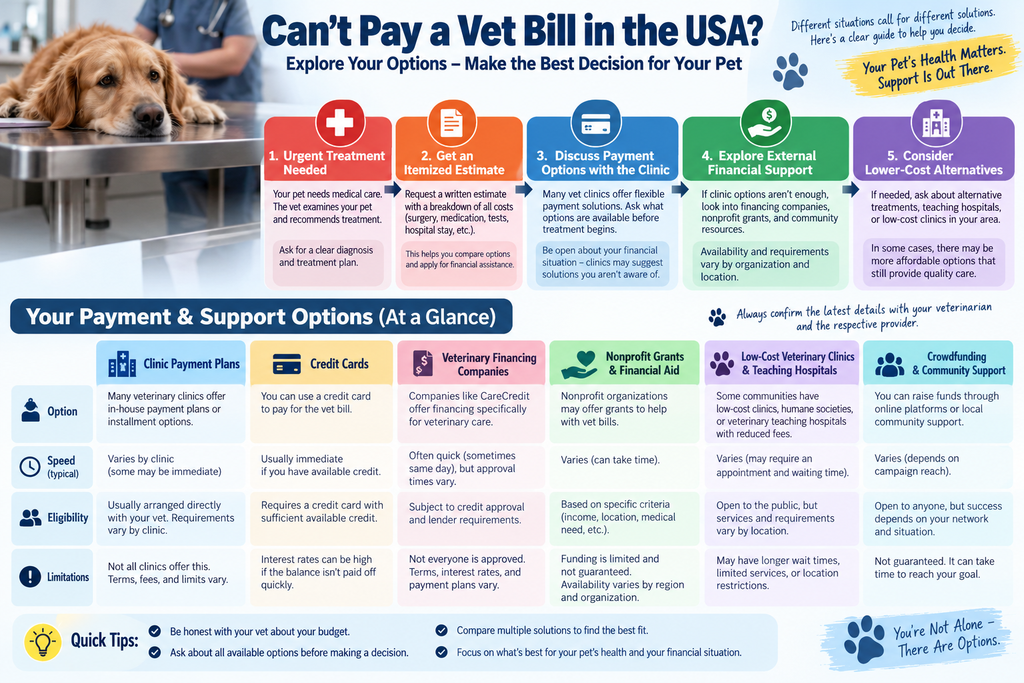
If you can’t afford your vet bill, don’t panic. Ask the veterinary clinic for an itemized estimate, a payment plan, or a lower-cost treatment option. You can also explore CareCredit, Scratchpay, emergency veterinary grants, nonprofit assistance programs, low-cost clinics, veterinary teaching hospitals, crowdfunding, and help from local animal-welfare organizations.
For urgent cases, tell the vet about your financial limits before treatment begins and ask which care is medically essential right now. Some assistance programs have strict eligibility rules and may not cover bills that have already been paid. Pet insurance usually cannot help with a pre-existing emergency, but it may help with eligible future veterinary expenses.
Read Related Article… Emergency Vet Costs in the USA (2026): What You’ll Really Pay by State
Table of Contents
- What to Do If You Can’t Pay a Vet Bill Right Now
- Can a Vet Refuse Treatment If You Can’t Pay?
- How to Choose the Best Way to Pay a Vet Bill
- CareCredit vs Scratchpay: Which Is Better for Vet Bills?
- How to Apply for Emergency Vet Financial Assistance
- How to Reduce the Cost of Veterinary Care
- What Happens If You Still Can’t Pay Your Vet Bill?
- Can Pet Insurance Help With Future Vet Bills?
- Frequently Asked Questions About Unpaid Vet Bills
- Final Steps: What to Do Before You Leave the Vet Clinic
What to Do If You Can’t Pay Your Vet Bill Right Now
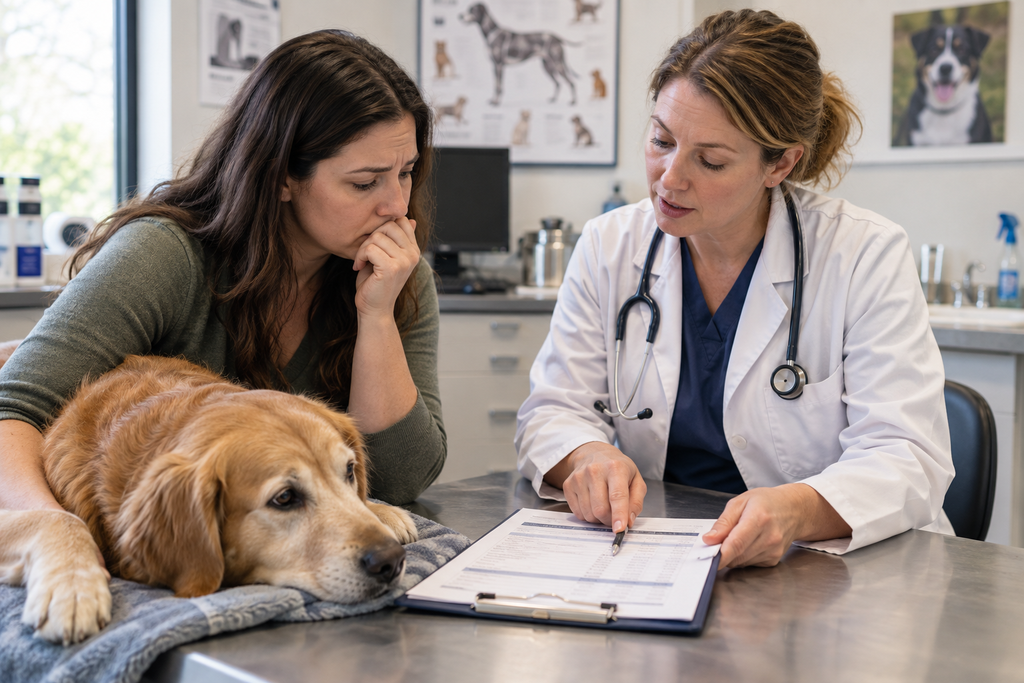
1. Ask Your Vet for an Itemized Estimate
Before agreeing to anything, ask for a written breakdown of every cost. This tells you exactly what you’re paying for and gives you something concrete to compare against financing or grant applications.
2. Ask Which Treatments Are Medically Urgent
Not every recommended test or treatment needs to happen today. Ask your vet directly what’s essential right now versus what could reasonably wait or be staged, so you’re not paying for everything at once out of uncertainty.
3. Ask About Payment Plans or a Partial Deposit
Some clinics can start treatment on a partial deposit or offer an internal payment arrangement, especially for established clients. This is never guaranteed, but asking costs nothing and takes thirty seconds.
Read Related Article… Can You Pay Vet Bills in Installments? Every Option Available in the USA (2026)
Can a Vet Refuse Treatment If You Can’t Pay?
Do Vets Have to Treat a Dog Without Payment?
No — veterinary clinics are private businesses, not legally mandated emergency providers the way human hospital ERs are, so they’re generally permitted to require payment or a deposit before extensive treatment. Many will still provide basic stabilization while you arrange payment, but this varies by clinic and isn’t guaranteed. For the full legal and ethical breakdown, see our dedicated guide on whether a vet can refuse emergency treatment if you can’t pay.
What Can Happen If You Leave an Unpaid Vet Bill?
Clinics may bill you directly, send the account to a collections agency, or, for established clients, restrict future non-emergency services until the balance is resolved. Policies vary significantly by practice.
Can an Unpaid Vet Bill Go to Collections?
Yes. Like most consumer debts, an unpaid veterinary bill can be sent to collections, which can affect your credit. This is a strong reason to communicate with the clinic about hardship before a balance goes unpaid, rather than after.
15 Ways to Get Help Paying a Vet Bill in the USA
1. Ask Your Veterinary Clinic About a Payment Plan
Eligibility: Often limited to established clients. Speed: Immediate if offered. Limitations: Not every clinic has one, and it’s discretionary. How: Ask the front desk or practice manager directly, ideally before treatment begins.
2. Apply for CareCredit for Veterinary Expenses
Eligibility: Credit-based approval (hard credit check). Speed: Instant decision, usable the same visit. Limitations: Promotional 0% periods convert to high deferred interest if not paid in full by the deadline. How: Apply online or at the clinic; accepted at a majority of US vet practices.
3. Compare Scratchpay With Other Vet Financing Options
Eligibility: Soft credit check only — no impact on your score, more accessible than CareCredit for some applicants. Speed: Approval typically in minutes. Limitations: Smaller clinic network than CareCredit; confirm your clinic accepts it first. How: Apply online from your phone; funds go to the clinic directly.
4. Apply for Emergency Veterinary Grants
Eligibility: Varies by organization, generally aimed at owners with steady income who can’t absorb a sudden large bill — not just those at the poverty line. Speed: Ranges from 1–2 business days to about a week. Limitations: Grants typically pay the clinic directly and must be applied for before the bill is fully paid — once you’ve settled it yourself, that option generally closes. How: Apply online, often while your pet is still being treated.
5. Contact RedRover Relief for Eligible Cases
RedRover Relief is generally the fastest major national grant program, aimed at life-threatening situations, with eligibility extending to households with meaningful income — not only those in poverty. Apply directly through their website as early as possible in the process.
6. Check Frankie’s Friends and Other Assistance Programs
Frankie’s Friends focuses on critical and specialty care, with eligibility around 250% of the federal poverty level (roughly $73,000/year for a family of four). It typically takes longer to process than RedRover, so apply as early as possible if your situation allows any lead time.
7. Look for Local Animal Welfare and Nonprofit Funds
Many states and cities have smaller, lesser-known funds — sometimes run by breed rescues, local humane societies, or community nonprofits. A quick search for “[your state] pet emergency fund” alongside the national names can surface faster-moving local options.
8. Contact a Veterinary Teaching Hospital
University veterinary teaching hospitals often charge meaningfully less than private specialty or emergency hospitals for equivalent care, since part of their model involves supervised residents. Worth a same-day phone call if your pet’s condition allows travel or a short wait.
9. Find Low-Cost Veterinary Clinics Near You
Nonprofit and low-cost clinics exist in many areas, particularly for non-emergency and preventive care. These are rarely a fit for a true middle-of-the-night emergency but worth knowing about for future planning.
10. Ask About a Veterinary Charity or Hardship Fund
Some individual practices maintain a small internal hardship fund or discretionary discount they can apply case by case — not advertised, but worth asking about directly.
11. Consider Crowdfunding for Your Dog’s Medical Bills
Platforms like GoFundMe or Waggle (built specifically for vet bills) can raise meaningful money quickly, especially with a specific photo, diagnosis, and dollar goal shared widely and immediately. Not guaranteed, and best used alongside other options rather than as your only plan.
12. Ask About State and Local Pet Assistance Programs
Some state agriculture departments, county animal services, or 2-1-1 community referral lines maintain lists of regional assistance programs not well indexed by national searches. A call to 2-1-1 can surface options specific to your area.
13. Check Whether Pet Insurance Can Reimburse Eligible Costs
If you’re already insured, this bill may be partially reimbursable after you pay. It won’t solve the immediate cash-on-hand problem, but it changes your net cost once reimbursement arrives — worth confirming with your insurer right away.
14. Ask About a Second Opinion or Lower-Cost Treatment Options
Ask your vet directly whether a less extensive but medically appropriate treatment path exists, or whether a second opinion — including from a lower-cost general practice — might reveal a more affordable option without compromising care.
15. Ask Family, Friends, or Community Organizations for Help
Directly asking people in your life, or posting in local community groups (Nextdoor, neighborhood Facebook groups, breed-specific communities), is a legitimate and commonly used option — not something to feel embarrassed about in a genuine emergency.
How to Choose the Best Way to Pay a Vet Bill
Which Option Is Best If You Need Help Today?
Financing — CareCredit or Scratchpay — is generally your fastest same-day option, since both can approve within minutes and pay the clinic directly. Grants and crowdfunding take longer, so apply to those in parallel rather than waiting on them alone.
Which Options Require Good Credit?
CareCredit runs a hard credit check and credit-based approval. Scratchpay uses a soft credit check, making it more accessible if your credit is limited or you don’t want a hard inquiry. Grants and crowdfunding don’t involve credit checks at all.
Which Programs May Help With Emergency Surgery?
RedRover Relief is specifically built around emergency, life-threatening situations. Frankie’s Friends focuses on critical and specialty care. Both are worth applying to for surgical emergencies, alongside financing to cover whatever gap remains.
Read Related Article… How Much Does Dog Stomach Surgery Cost? Real Emergency Prices (2026)
Can You Combine Grants, Financing, and Personal Savings?
Yes — and this is genuinely the most effective approach. Most owners who successfully cover a large bill stack multiple sources: financing to start treatment immediately, grants applied for in parallel to offset the balance, and personal funds covering whatever’s left. Applying to multiple grant programs simultaneously is standard practice, not something that hurts your chances.
CareCredit vs Scratchpay: Which Is Better for Vet Bills?
Read Related Article… Best Vet Payment Plans in the USA (2026): CareCredit vs Scratchpay
| Factor | CareCredit | Scratchpay |
|---|---|---|
| Credit check | Hard credit check | Soft credit check (no score impact) |
| Clinic acceptance | Wide — most US vet practices | Growing, smaller network — confirm your clinic accepts it |
| Approval speed | Instant | Typically minutes |
| Promotional terms | 0% interest for a set promotional period (commonly 6–24 months) | Fixed installment plans, typically 12–24 months |
| Key risk | Deferred interest applies retroactively if the balance isn’t paid in full by the promo deadline | Structured as a fixed payment plan without a deferred-interest trap |
| Best fit | Ongoing or repeat pet care needs, or when Scratchpay isn’t accepted | A single, specific bill where predictable fixed payments matter more than a promotional window |
How to Apply for Emergency Vet Financial Assistance

Documents You May Need for a Vet Grant
Most programs ask for a written veterinary estimate, basic proof of identity, and sometimes documentation of household income. Requirements vary by organization, so check each program’s specific application before applying.
How to Get a Written Veterinary Estimate
Ask your vet’s front desk directly for a written, itemized estimate — this is standard practice and most clinics can provide one quickly, often within the same visit.
How to Apply to Multiple Assistance Programs
Apply to two or three programs at once rather than waiting to hear back from one before trying another. Most organizations explicitly allow simultaneous applications, and this materially increases your odds and total coverage within the timeframe that matters.
Why Some Programs May Not Pay an Already-Settled Bill
Most grant programs pay the veterinary clinic directly, not you — which generally means the application needs to happen before the bill is fully paid. Once you’ve settled it yourself, many programs can no longer contribute toward that specific balance. This is one of the most important reasons to start grant applications immediately, in parallel with financing, rather than after you’ve already found a way to cover everything yourself.
Read Related Article… 15 Organizations That Help Pay Vet Bills When You Can’t Afford Care (2026)
How to Reduce the Cost of Veterinary Care
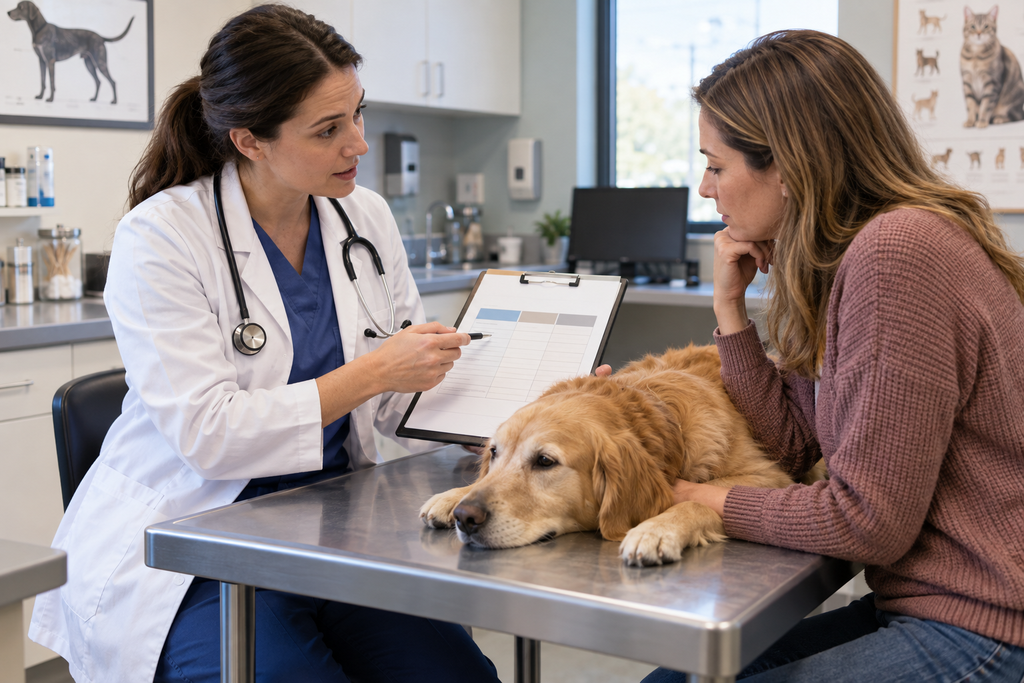
Ask for a Written Treatment Estimate
Beyond helping you plan, a written estimate lets you spot which line items you can ask questions about — some may be adjustable, others may not be.
Ask Whether a Lower-Cost Treatment Is Medically Appropriate
Not every condition has just one treatment path. Ask directly whether a less extensive option exists that’s still medically sound for your pet’s specific situation.
Compare Veterinary Hospitals When Time and Safety Allow
If your pet’s condition permits any delay, a quick call to a university teaching hospital or a second clinic for a comparison quote can reveal meaningful savings — this only applies when it’s genuinely safe to take the time.
Ask About Discounts, Payment Terms, and Follow-Up Costs
Ask whether the clinic offers a multi-pet, military, senior, or rescue discount, and ask about the full cost of any expected follow-up visits so you’re planning for the complete picture, not just today’s bill.
Read Related Article… Low-Cost Vet Clinics in the USA: How to Find Affordable Emergency Care (2026)
What Happens If You Still Can’t Pay the Vet Bill?
Can a Vet Send Your Account to Collections?
Yes, this is a real possibility for an unpaid balance, similar to most other consumer debts, and it can affect your credit. See our guide on whether a vet can refuse treatment for more detail on how unpaid balances are typically handled.
What Should You Do About an Unpaid Veterinary Invoice?
Contact the clinic proactively rather than waiting for them to reach out. Many practices are willing to set up a payment arrangement for an existing balance if you communicate before it becomes seriously overdue.
How to Communicate With the Clinic About Financial Hardship
Be direct and specific: explain what you can realistically pay and by when, and ask what options they have for the remainder. Clinics generally respond better to a concrete plan than to silence.
Can Pet Insurance Help With Future Vet Bills?
Does Pet Insurance Cover Emergency Vet Visits?
Many accident-and-illness pet insurance plans cover emergency visits as long as the condition isn’t pre-existing and your waiting period has passed — but coverage always depends on your specific policy’s terms.
Read Related Article… Pet Insurance Waiting Period: How Long Before Coverage Starts? (2026 Guide)
Why Pre-Existing Conditions May Be Excluded
If a condition was present or showing symptoms before your policy started, or during the waiting period, it’s typically treated as pre-existing and excluded from coverage — even years later, for a recurrence of the same issue.
Read RelatedArticle… Does Pet Insurance Cover Pre-Existing Conditions? The Truth Most Pet Owners Learn Too Late (2026)
Why Buying Insurance After an Emergency Usually Won’t Cover That Bill
This is one of the most important things to understand: pet insurance is not retroactive. If you buy a policy today because your dog needs treatment today, that specific condition will almost certainly be excluded as pre-existing. Insurance is worth having in place before an emergency happens, not as a response to one already underway.
Read Related Article… Dog MRI Cost in the USA (2026): Average Cost, Insurance Coverage & Financing
Read Related Article… Dog Spinal Surgery Cost in the USA: What Most Owners Pay in 2026
Read Related Article… Does Pet Insurance Cover Emergency Vet Visits? What Most Dog Owners Don’t Know (2026)
Frequently Asked Questions About Unpaid Vet Bills
What can I do if I can’t pay my vet bill today?
Tell the veterinary team immediately that you cannot pay the full amount. Ask for an itemized estimate, the most urgent treatment options, a partial-payment arrangement, or an available payment plan. You can also check financing options such as CareCredit or Scratchpay and apply for emergency assistance. Do not delay emergency treatment while waiting for grant approval because funding is not guaranteed.
How can I get help with a $5,000 vet bill?
A $5,000 bill may require combining several options. Ask the clinic about financing, staged treatment, or a lower-cost medically appropriate alternative. You can also apply for nonprofit assistance, contact local shelters or rescue groups, start a crowdfunding campaign, and ask trusted family members or friends for help. Grants may cover only a small portion of the total bill, so apply before treatment is completed whenever possible.
Can I get a payment plan for emergency vet care?
Sometimes, but payment plans depend on the clinic’s policy, your payment history, and the type of treatment required. Emergency and specialty hospitals may require payment upfront or a deposit. Ask whether the clinic offers internal payment arrangements, financing through a third-party provider, or staged treatment. Never assume a payment plan is available—ask the billing team before authorizing care.
Can I apply for a vet-bill assistance grant?
Yes, if your situation meets the organization’s eligibility requirements. Many programs require a current veterinary diagnosis, treatment estimate, proof of financial hardship, and permission to speak with your veterinarian. Some programs will not help with treatment that has already been completed. For example, RedRover Relief states that its urgent-care grants are intended for qualifying urgent cases and cannot cover completed treatment.
Will a vet grant pay my entire veterinary bill?
Usually, you should not expect one grant to cover the entire bill. Many assistance programs are designed to fill a limited funding gap rather than pay for all treatment. The amount, eligibility rules, and payment process vary by organization. Ask the clinic for the remaining balance after any approved assistance and make a plan for the amount that is still unpaid.
What documents do I need to apply for emergency pet assistance?
You may need a written diagnosis, treatment plan, itemized estimate, veterinary contact information, proof of household income, identification, and details about your financial hardship. Some organizations may also ask for medical records or permission to contact the clinic. Prepare digital copies of these documents so you can submit applications quickly while treatment is still pending.
What happens if I don’t pay my veterinary bill?
The clinic may contact you about the balance, require payment before future non-emergency services, or send the account to a collection agency. Whether an unpaid veterinary bill affects your credit depends on the collection process and applicable reporting practices. Ask the clinic for a written payment arrangement and communicate proactively instead of ignoring the balance.
Can I negotiate my vet bill?
You can ask, although clinics are not always able to reduce their prices. The most realistic options may include a payment schedule, a partial deposit, a less expensive medically appropriate treatment plan, or a referral to another clinic. Request an itemized estimate and ask which charges are essential, optional, or able to be postponed safely.
Can I ask for a cheaper treatment option?
Yes. Ask the veterinarian whether there is a medically reasonable alternative that costs less, whether treatment can be staged, or whether a general-practice veterinarian or veterinary teaching hospital could provide part of the care. Do not choose a cheaper option solely on price—ask the veterinarian to explain the risks, benefits, urgency, and likely outcome of each option.
Can a veterinary teaching hospital help reduce costs?
A veterinary teaching hospital may offer different pricing or access to specialized services, but costs and eligibility vary by location. Ask whether the hospital treats emergency cases, accepts referrals, has financial-assistance programs, or can provide a second opinion. A transfer may not be appropriate for every emergency, so discuss the risks and timing with your current veterinarian first.
Can crowdfunding help with an emergency vet bill?
Crowdfunding may help cover a large remaining balance, especially when family, friends, local communities, or rescue supporters share the campaign. Include the veterinary estimate, diagnosis, treatment goal, amount already raised, and a clear explanation of how the money will be used. Be transparent about fees and update supporters regularly. Crowdfunding is not guaranteed, so use it alongside other options.
Can local shelters or rescue organizations help with vet bills?
Some shelters, rescue groups, humane societies, and community organizations may know about local clinics, hardship funds, vouchers, or fundraising resources. Assistance varies widely by location and may be limited to certain conditions, income levels, or animals adopted through the organization. Contact them early and ask specifically about emergency veterinary financial assistance—not just adoption or surrender services.
Can pet insurance pay a vet bill I already owe?
Pet insurance generally cannot be purchased after an emergency and then used to cover that same condition. To receive reimbursement, you usually must have had an active policy when the accident or illness occurred, completed any applicable waiting period, and met the policy’s coverage rules. Pre-existing conditions and excluded treatments may not qualify. Check your policy documents before assuming a claim will be paid.
Can I use pet insurance and CareCredit together?
If you already have eligible pet insurance, you may be able to use financing to pay the veterinary bill first and then seek reimbursement from your insurer. The exact process depends on your insurance provider, financing account, and policy terms. Reimbursement may not cover the entire bill, and you remain responsible for any excluded costs, deductibles, co-insurance, or promotional financing balance.
Should I wait for a grant before taking my pet to the vet?
No. If your pet has a life-threatening injury or illness, seek veterinary care immediately. Assistance programs may have eligibility requirements, limited funds, application windows, or processing delays, and approval is never guaranteed. Tell the veterinary team about your financial limit while asking about the safest immediate treatment, payment options, and possible sources of assistance.
What if I cannot afford any treatment for my pet?
Explain your financial situation honestly and ask the veterinarian what minimum care is medically necessary, what can safely be delayed, and whether another clinic may provide appropriate treatment at a lower cost. You can also contact local animal-welfare organizations for referrals. If you are considering surrendering your pet because of medical costs, ask about temporary assistance, rescue partnerships, or supported-care options before making a final decision.
Final Steps: What to Do Before You Leave the Vet Clinic
- Get a written, itemized estimate before agreeing to treatment
- Ask directly what’s medically urgent right now versus what can wait
- Apply for CareCredit and/or Scratchpay from your phone if needed
- Apply to RedRover Relief and Frankie’s Friends (or local equivalents) the same day
- Ask the clinic about a payment plan or hardship option
- If your pet is insured, contact your provider to confirm what may be reimbursed
- Save the clinic’s billing contact information in case you need to follow up about the balance
External Authority Sources
- RedRover Relief
- Frankie’s Friends Fund
- CareCredit
- Scratchpay
- AVMA (American Veterinary Medical Association)
Disclaimer: This article is for informational and educational purposes only and does not constitute financial or legal advice. Program eligibility, grant amounts, financing terms, and clinic policies change frequently and vary by organization, lender, and location — always confirm current details directly with each provider. PetInsurePrime does not sell pet insurance or financial products and receives no compensation from any lender or assistance organization.
PetInsurePrime | Independent • Research-Based | Helping US dog owners understand real vet costs and coverage options — without the sales pressure.