
Updated: May 2026 | Reading Time: 9 Minutes | Reviewed Sources: American Veterinary Medical Association (AVMA) Principles of Veterinary Medical Ethics
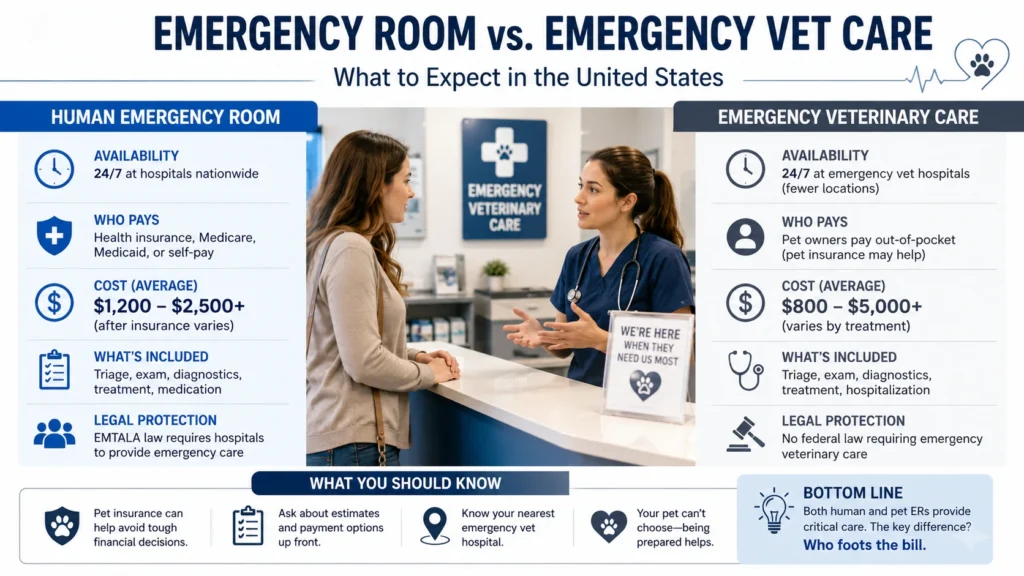
Yes. In most U.S. states, veterinary clinics can require payment before treatment begins because veterinary care is generally considered a private service. However, many emergency clinics may offer stabilization, financing options, payment plans, or referrals before refusing care entirely.
Your dog is injured. The vet says treatment needs to start immediately. Then you hear the estimate: $2,000, $5,000, or more. At that moment, many pet owners ask the same question: Can a vet refuse emergency treatment if I can’t pay?
Quick Answer Can a Vet Refuse Emergency Treatment If You Can’t Pay
In many cases, a veterinarian may require payment before treatment. However, policies vary by clinic, and some emergency hospitals may discuss financing options, payment assistance, or alternative treatment plans.
| Question | Answer |
|---|---|
| Can a vet refuse treatment if you can’t pay? | Usually yes |
| Are vets legally required to treat pets? | Usually no |
| Can emergency vets stabilize a dog first? | Sometimes |
| Are payment plans available? | Often yes |
| Can you get financial help? | Yes |
Organizations That Help Pay Emergency Vet Bills
- RedRover
- The Pet Fund
- Waggle
- Local Humane Societies
Can a Vet Legally Refuse Treatment If You Have No Money?
In most US states:
Yes.
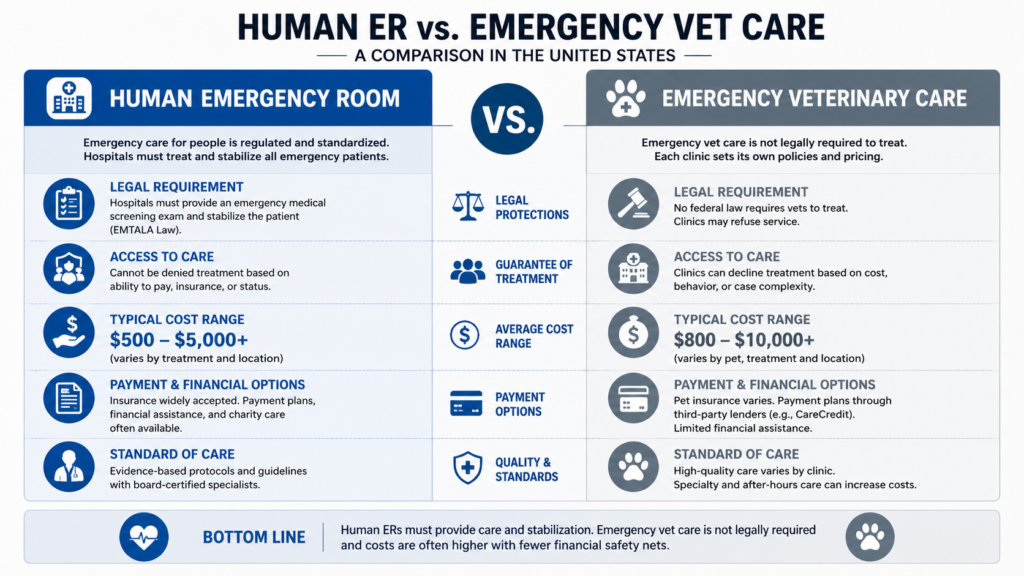
Veterinary medicine is considered a private service.
Unlike human hospitals covered under EMTALA laws, emergency veterinary clinics generally have the legal right to require payment before treatment begins.
There is currently no federal law that forces veterinarians to provide full emergency treatment regardless of a client’s financial situation.
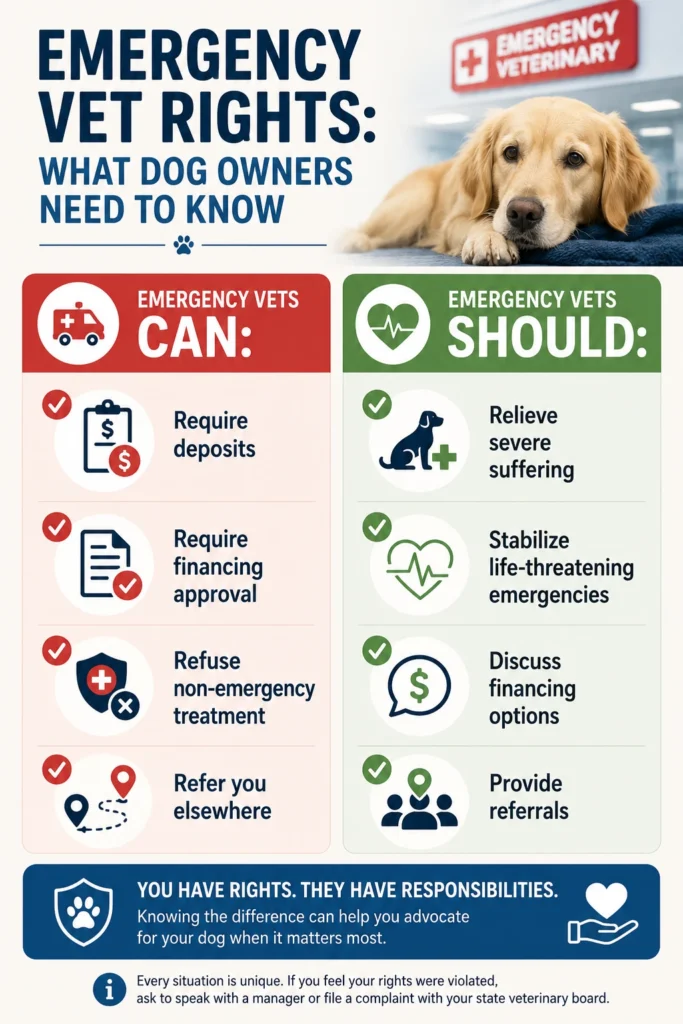
That means a clinic may legally:
- Require a deposit
- Require financing approval
- Refuse non-critical treatment
- Refer you elsewhere
- Decline admission before treatment begins
This is often shocking for owners because emergency situations feel morally different from ordinary appointments.
Legally, however, the clinic typically has discretion before accepting the patient.
Why More Dog Owners Are Struggling With Emergency Vet Bills
Example:
- U.S. pet ownership reached 77.5 million households in 2025.
- Veterinary costs continue rising.
- More owners are turning to financing and assistance programs.
Why Human Emergency Rooms Are Different
Many owners assume veterinary hospitals follow the same rules as human hospitals.
They do not.
Human emergency rooms are governed by federal laws requiring stabilization regardless of ability to pay.
No equivalent federal law exists for companion animals.
This legal gap is one reason emergency veterinary bills often become a crisis for families without savings, pet insurance, or access to financing.
What Happens Once Treatment Starts?
An important legal line exists:
Before Treatment Begins
The clinic can often refuse service.
After Treatment Begins
The situation changes.
Once a veterinarian accepts the patient and starts care, they establish a professional duty of care.
Abandoning a patient mid-treatment can create malpractice exposure and professional liability concerns.
This is why the highest risk of refusal usually happens at intake, before diagnostics, medication, or hospitalization begin.
What the AVMA Says About Emergency Care
The American Veterinary Medical Association (AVMA) has published ethical guidelines regarding emergency treatment.
According to the AVMA Principles of Veterinary Medical Ethics:
Veterinarians have an ethical responsibility to provide care aimed at relieving suffering when they are physically presented with an animal experiencing extreme pain or life-threatening distress.
That care may include:
- Emergency stabilization
- Pain management
- Temporary life-saving measures
- Euthanasia when suffering cannot be relieved
Importantly:
This is an ethical standard, not a federal legal requirement.
However, it still carries significant weight because veterinary boards can investigate complaints involving ethical violations.
Are Emergency Vets Required to Stabilize a Dying Dog?
In many real-world situations:
Yes, at least ethically.
The AVMA specifically states that veterinarians should provide essential services necessary to save life or relieve suffering in emergency situations.
This does NOT mean:
- Free surgery
- Unlimited hospitalization
- Full treatment without payment
Instead, stabilization may include:
- Oxygen therapy
- IV fluids
- Pain medication
- Basic monitoring
- Temporary emergency treatment
The goal is to prevent immediate suffering while determining the next step.
Why Some Emergency Clinics Still Refuse Patients
This is where theory and reality collide.
Emergency veterinary hospitals face:
- High staffing costs
- Overnight labor expenses
- Expensive medical equipment
- Unpaid bills
- Staffing shortages
Because of this, many clinics require:
- $300–$1,000 deposits
- Financing approval
- Payment plans
- Partial payment commitments
Some clinics unfortunately refuse admission if no payment solution exists.
While emotionally devastating, this often reflects financial limitations rather than a lack of compassion.
What Emergency Clinics Usually Do Instead
Most emergency vets do not immediately say:
“No money? Leave.”
Instead, they typically try several options.
1. CareCredit
Most emergency hospitals accept CareCredit.
Applications often take only minutes.
2. Scratchpay
Another popular veterinary financing program.
Approval requirements are often more flexible.
3. Partial Deposits
Many clinics allow treatment to begin after a reduced initial payment.
4. Stabilization First
Some clinics provide temporary stabilization before final financial arrangements are completed.
5. Referrals
Responsible hospitals often refer patients to:
- Veterinary schools
- Teaching hospitals
- Humane society clinics
- Lower-cost emergency facilities
Emergency Vet Payment Options
| Option | Approval Speed | Typical Amount |
|---|---|---|
| CareCredit | Minutes | Up to $25,000 |
| Scratchpay | Minutes | Varies |
| Personal Credit Card | Immediate | Depends on limit |
| Family Loan | Immediate | Flexible |
| Veterinary Assistance Grants | Several days | Limited |
| Local Humane Society Programs | Varies | Limited assistance |
What To Say If You Have No Money
The first few sentences matter more than most owners realize.
Avoid:
“I don’t have any money.”
Instead say:
“I want to treat my dog. I just can’t pay the full amount upfront. What options do I have?”
Then ask:
“Can I apply for CareCredit or Scratchpay while my dog is being stabilized?”
And:
“If treatment can’t happen here, where should I go right now?”
These questions immediately move the conversation toward solutions.
If Your Dog Is Refused Emergency Care
Do not spend 30 minutes arguing.
Time matters.
Instead:
Immediately
- Ask for a referral
- Call the next emergency clinic
- Drive immediately
- Apply for financing while traveling
After the Emergency
If you believe the refusal violated professional ethical standards:
- Document everything
- Record dates and times
- Save paperwork
- File a complaint with your state veterinary board
Why Emergency Vet Bills Have Become a Growing Financial Problem
A growing number of owners are facing emergency vet bill crises.
Veterinary costs have increased dramatically over the last several years.
Many families simply do not have:
- $2,000 available overnight
- Emergency savings
- Pet insurance
- Access to immediate credit
This is one reason searches like:
- can’t pay emergency vet bill
- emergency vet bill help
- vet bill assistance
- emergency vet payment plans
continue to rise every year.
The problem is no longer rare.
It’s becoming normal.
How To Protect Yourself Before an Emergency Happens
The best options happen before the crisis.
Pet Insurance
Most accident-and-illness plans cost roughly $35–$75 monthly depending on breed, age, and location.
Emergency Pet Fund
Even saving $30 monthly creates a useful emergency buffer over time.
Know Your Closest Veterinary School
University veterinary hospitals often charge significantly less than private emergency clinics while still providing high-quality care.
Frequently Asked Questions
Can a vet legally refuse treatment if I have no money?
Yes. In most US states, veterinarians can legally refuse to begin treatment if payment cannot be established. However, AVMA ethical guidelines encourage emergency stabilization when animals are suffering or facing immediate life-threatening conditions.
Are vets required to stabilize a dying dog?
Ethically, yes. The AVMA states veterinarians should provide emergency care necessary to save life or relieve suffering when possible. This may include stabilization or euthanasia.
Can an emergency vet treat my dog before payment?
Some emergency clinics do. Many provide stabilization while financing applications are completed or temporary payment arrangements are discussed.
What is CareCredit?
CareCredit is a healthcare financing program accepted by many veterinary clinics. It allows qualified applicants to finance emergency veterinary expenses.
What if my dog is refused treatment?
Request a referral immediately and proceed to the nearest emergency hospital, veterinary school, or lower-cost clinic without delay.
Can I file a complaint against an emergency vet?
Yes. Complaints can usually be filed through your state’s veterinary medical board if you believe professional ethical standards were violated.
What happens if treatment starts and I can’t pay later?
The unpaid bill generally becomes a financial collections issue rather than a criminal issue. Policies vary by clinic and state.
Final Takeaway
If your dog needs emergency care and you have no money:
Go anyway.
Do not assume the answer will be no.
Many emergency clinics can offer:
- Stabilization
- Financing
- Payment plans
- Referrals
- Emergency vet bill help options
Be honest immediately.
Ask for solutions.
And if one clinic cannot help, get a referral and keep moving.
In a true emergency, every minute matters.
Related Emergency Cost Guides
If you’re facing a veterinary emergency right now, these guides may help:
👉 Dog Surgery Cost in the USA (2026)
👉 Emergency Vet vs Regular Vet Cost: What’s the Difference?
👉 How Much Does an Emergency Vet Visit Cost at Night? (2026)
👉 15 Organizations That Help Pay Vet Bills in the USA
Disclaimer
Disclaimer: This article is for informational and educational purposes only. Cost data reflects 2026 national averages from NAPHIA, Insurify, and MetLife Pet Insurance and will vary based on your dog’s age, breed, location, and the specific plan you choose. PetInsurePrime does not sell pet insurance and receives no compensation from any insurance provider. Always compare multiple quotes and read your policy documents carefully before enrolling. This article does not constitute legal advice — consult a licensed attorney in your state for guidance specific to your situation.
PetInsurePrime | Independent • Research-Based | Helping US dog owners understand real vet costs and coverage options — without the sales pressure.