
Updated: May 2026 | Reading Time: 8 Minutes
The vet just handed you an estimate.
Maybe it’s $900.
Maybe it’s $4,000.
Either way, your brain freezes for a second because the numbers don’t make sense with the money you actually have.
That moment is brutal. Can’t Afford an Emergency Vet Bill?
A lot of dog owners panic silently in emergency vet waiting rooms every single day — not because they don’t love their dog, but because they genuinely don’t know how they’re supposed to pay.
The good news: you usually have more options than you think.
Some are financing programs.
Some are nonprofit grants.
Some are emergency payment arrangements.
And most owners who successfully cover emergency vet bills end up combining several solutions together.
Quick Emergency Vet Help Checklist
✓ Ask the clinic about payment plans immediately
✓ Apply for CareCredit or Scratchpay on your phone
✓ Submit RedRover Relief application today
✓ Start a crowdfunding campaign immediately
✓ Contact local humane societies for emergency aid
✓ Apply for multiple grants at the same time
✓ Ask about lower-cost teaching hospitals nearby
Quick Answer (Can’t Afford an Emergency Vet Bill?)
If you cannot afford an emergency vet bill, the fastest options are:
- CareCredit
- Scratchpay
- emergency nonprofit grants
- crowdfunding
- vet payment plans
Most successful owners stack several options together instead of relying on only one source.
Table of Contents
- Before You Panic
- Payment Plans Through Your Vet
- CareCredit
- Scratchpay
- Emergency Vet Grants
- Crowdfunding Options
- Teaching Hospitals
- What Happens If You Still Can’t Pay
- Emergency Vet Cost Breakdown
- FAQ

Before You Panic: What Most Dog Owners Don’t Realize
Most people assume emergency vets only have two options:
- pay in full
- or walk away
That’s usually not true.
Emergency clinics deal with financial panic constantly. They understand that most people don’t keep thousands of dollars sitting around for sudden surgery or overnight hospitalization.
The biggest mistake owners make is staying quiet.
Be honest immediately.
Say this directly:
“I want to help my dog, but I cannot pay this entire amount today. What options do we have?”
That single sentence changes the conversation.
1. Ask the Vet Directly About a Payment Plan
This should be your first step — not your last.
Some clinics offer:
- in-house installment plans
- split payments
- partial deposits
- delayed billing
Independent clinics are usually more flexible than corporate emergency hospitals.
If you’ve visited the clinic before, your chances improve significantly.
Even when clinics don’t officially advertise payment plans, many will still try to work with owners who communicate honestly and early.
2. Apply for CareCredit Before Leaving the Clinic
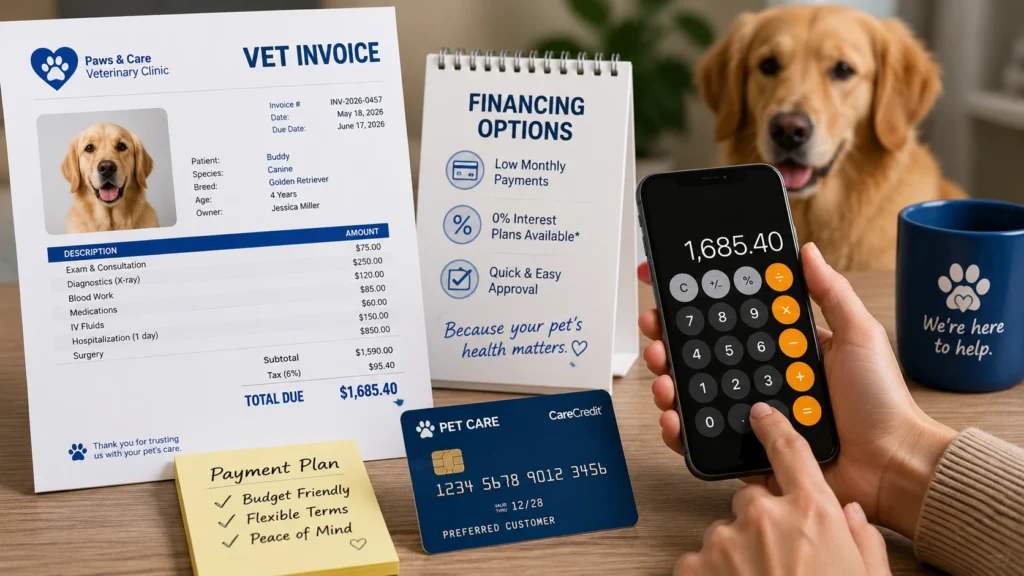
CareCredit is one of the most common emergency vet financing options in the United States.
You can apply directly from your phone inside the waiting room.
If approved:
- the clinic gets paid immediately
- your dog receives treatment immediately
- you repay monthly over time
Many plans include:
- 6–24 months promotional financing
- possible 0% interest periods
But read the terms carefully.
If you don’t pay the balance before the promo period ends, deferred interest can become expensive quickly.
3. Scratchpay — Often Easier to Get Approved For
Scratchpay works differently from CareCredit.
Instead of a revolving credit card, it gives fixed installment loans with predictable monthly payments.
Many dog owners with lower credit scores report better approval chances with Scratchpay compared to CareCredit.
Terms typically range:
- 3 months
- 6 months
- 12 months
- up to 36 months
Always ask the clinic first because not every emergency vet accepts Scratchpay.
4. RedRover Relief Emergency Grants
RedRover Relief is one of the fastest nonprofit emergency grant programs for pet owners in financial crisis.
This is important:
they are specifically designed for urgent situations.
Many emergency requests receive responses within two business days.
Typical grants:
- around $250
- sometimes more depending on the case
That may not cover the entire bill, but it can reduce the immediate financial pressure significantly.
5. Frankie’s Friends Foundation
Frankie’s Friends helps owners facing expensive emergency or specialty procedures.
The organization focuses on:
- treatable conditions
- good recovery chances
- verified financial hardship
Some grants reach:
$2,000+
The clinic is paid directly, which simplifies the process.

6. Bow Wow Buddies Foundation
Bow Wow Buddies specifically helps dogs needing urgent care.
This matters because many nonprofits help all animals broadly — but this foundation focuses directly on dogs.
Grants can reach:
$2,500
One huge advantage:
they may still help even after treatment already happened.
7. Waggle Crowdfunding for Emergency Vet Bills
GoFundMe works.
But Waggle is built specifically for pet emergencies.
That means:
- pet-focused audience
- better emotional engagement
- easier sharing
- higher donor intent
Campaigns perform much better when they include:
- exact diagnosis
- exact remaining balance
- vet estimate screenshots
- emotional but honest storytelling
8. Local Humane Societies Can Sometimes Help
Many owners never even check locally.
That’s a mistake.
Some local:
- humane societies
- rescues
- municipal shelters
- breed organizations
have emergency medical assistance funds that are not heavily advertised online.
Call directly.
Do not rely only on Google results.
Related Article
- Can’t Pay a Vet Bill in the USA? Here’s What Actually Happens (2026)
- Emergency Vet Costs in the USA (2026): What You’ll Really Pay by State
- Dog Surgery Cost in the USA: Real Prices for 2026
- Low-Cost Vet Clinics in the USA: How to Find Affordable Emergency Care (2026)
9. Veterinary Schools Can Be Dramatically Cheaper
Teaching hospitals can reduce costs massively.
In some cases:
30–70% cheaper
than private emergency hospitals.
The care is supervised by licensed veterinarians and specialists.
This works best for emergencies that are urgent — but not life-or-death within the next hour.
10. 0% APR Credit Cards
If your credit is decent, this can buy time.
Some cards offer:
- 12–21 months 0% APR
That gives breathing room if:
- the bill is manageable
- you have a realistic payoff plan
Do NOT use this if you already struggle heavily with credit card debt.
11. Personal Loans for Emergency Vet Bills
Online lenders sometimes fund within:
24 hours
This can work for:
- surgeries
- overnight hospitalization
- orthopedic emergencies
Credit unions usually offer better rates than traditional banks.
12. Breed-Specific Rescue Funds
Some breed communities have emergency financial aid programs.
Examples:
- Doberman911
- CorgiAid
- WestieMed
You’ll often find smaller rescue funds that many owners never hear about.
13. Friends and Family Loans
Not glamorous.
But realistic.
A lot of emergency vet bills are solved through:
- temporary borrowing
- small family loans
- multiple smaller contributions
People are often more willing to help when they see:
- treatment estimate
- urgency
- exact amount needed
14. Low-Cost Emergency Clinics
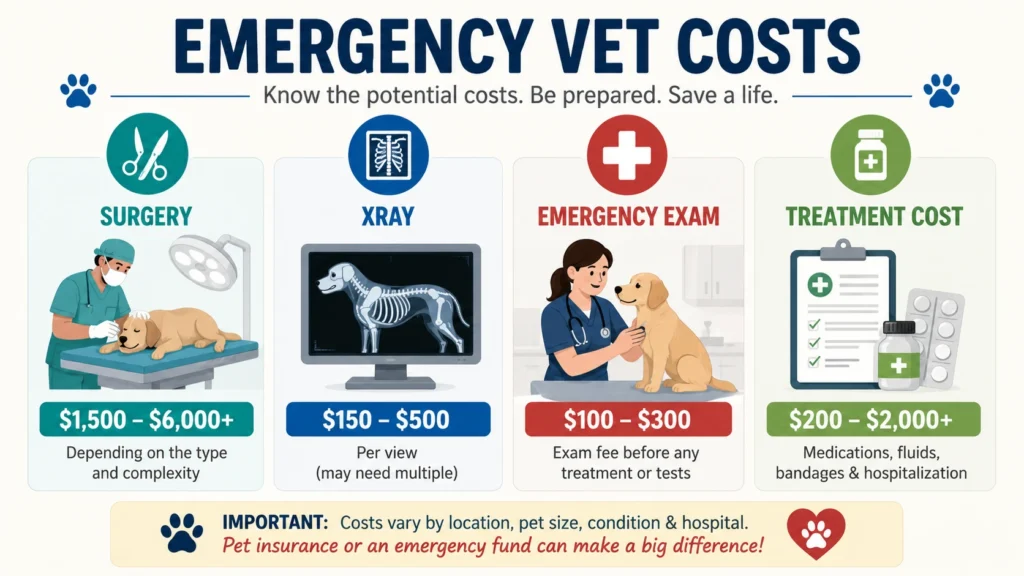
Prices vary massively by location.
One clinic may quote:
$5,000
while another nearby charges:
$2,800
for similar procedures.
Always ask:
- nearby emergency clinics
- nonprofit clinics
- veterinary schools
before assuming the first quote is your only option.
15. Stack Everything Together
This is what actually works.
Not one magical solution.
Most owners who successfully fund emergency care combine:
- financing
- grants
- crowdfunding
- payment plans
- local aid
all at the same time.
That’s the real strategy.
What Happens If You Still Can’t Pay?
This is the part nobody likes talking about.
Some owners:
- max out cards
- borrow money
- ask family
- surrender pets temporarily
- negotiate collections later
It’s emotionally devastating.
But it happens every day.
Be honest with the clinic.
Most emergency vets genuinely want to save the animal first and work through payment logistics afterward whenever possible.
Emergency Vet Cost Breakdown (2026)
| Emergency Situation | Typical Cost |
|---|---|
| Emergency exam | $150–$300 |
| Bloodwork + X-rays | $300–$800 |
| Overnight hospitalization | $800–$2,000 |
| Emergency surgery | $2,500–$8,000 |
| Intestinal blockage surgery | $3,000–$7,000 |
| Broken bone repair | $2,000–$6,000 |
| Bloat surgery (GDV) | $3,000–$8,000 |
Can a vet refuse treatment if I have no money?
In severe emergencies, many clinics stabilize first and discuss payment afterward. Policies vary by clinic, but being upfront about your financial situation immediately improves your chances of finding options.
What is the fastest way to get emergency vet bill help?
CareCredit and Scratchpay are usually the fastest because approvals can happen instantly online.
Can I apply for multiple emergency pet grants at once?
Yes — and you should. Most owners combine several smaller grants together.
Does Scratchpay approve lower credit scores?
Many owners report higher approval chances with Scratchpay compared to CareCredit, especially with limited credit history.
Are veterinary teaching hospitals safe?
Yes. Licensed veterinarians supervise all treatment inside accredited veterinary schools.
Final Thoughts
If you’re reading this while sitting in a parking lot outside an emergency vet clinic:
take a breath.
You are not the first person this has happened to.
And you are not out of options yet.
Move quickly.
Apply everywhere.
Stack multiple solutions together.
And focus on stabilizing your dog first.
Disclaimer
Disclaimer: This article is for informational and educational purposes only. Cost data reflects 2026 national averages from NAPHIA, Insurify, and MetLife Pet Insurance and will vary based on your dog’s age, breed, location, and the specific plan you choose. PetInsurePrime does not sell pet insurance and receives no compensation from any insurance provider. Always compare multiple quotes and read your policy documents carefully before enrolling.
PetInsurePrime | Independent • Research-Based | Helping US dog owners understand real vet costs and coverage options — without the sales pressure.